

- Joined
- Jan 10, 2010
- Messages
- 1,818
The idea started for this after I attended Ric Furrer's shear steel course. I was looking for something to use the rest of my shear steel billet for and Chuck Burrows recommended a belduque. Belduques were basically earlier equivalents of bowies and were brought to the New World by the Spanish. They were often seen in the American Southwest and Mexico and were very long, pointy fighters with thick spines, forge welded iron fittings and full tangs. Maybe Chuck will pipe in with further info and pictures of originals. In fact... Delarond's belduque seen in Chuck's last post was what got my butt moving on this again.
I'm typically not interested in strict historical reconstructions therefore mine deviates in a couple of respects. First... the fittings were probably individually forge welded while I basically welded on a couple of big wrought iron bars in the vicinity of the handle and bolsters (see pics). Also.... after attending Blade this year I've become interested in thin, light bladed, well balanced fighting knives. I love the graceful elegance of the thin blade with nice distal taper. As well as the speed of handling. Therefore mine doesn't have the typical 1/4" spine but a hair over 1/8". I also elected for a morticed, hidden tang contruction of the scales placed between the forge welded bolster and pommel. Mine is also a bit shorter.. some of the historical examples had 15" plus blades.
But the over-all profile and look reflect the spirit of this knife I think.
I'm calling it 'Spanish Dancer' as it is just so graceful, fast and a joy to handle. It is 15.5" long, with 10.5" blade. The steel is Aldo 1084 with multiple edge quenching that brought out some very interesting alloy banding that actually shows some shiny areas (vanadium??) from extended ferric soak. The balance is right at the bolsters, closer to the handle. The wood is some very unique 'curly black oak burl' given to me by Mr. Mark Farley. I've never seen anything like it. Then there are some buffalo horn spacers.
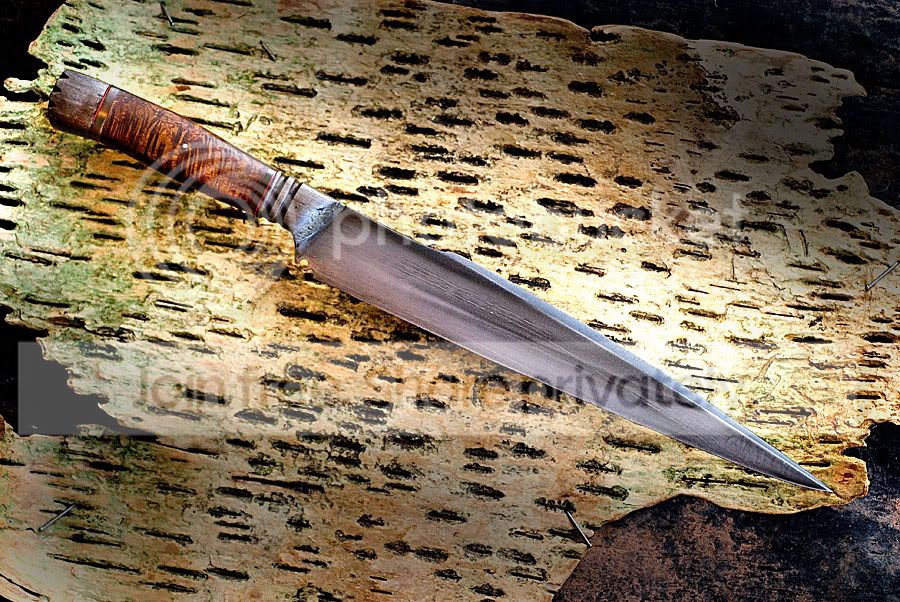
(edit: not sure where the red cast came from... I swear the original doesn't look like that! Photobucket!)
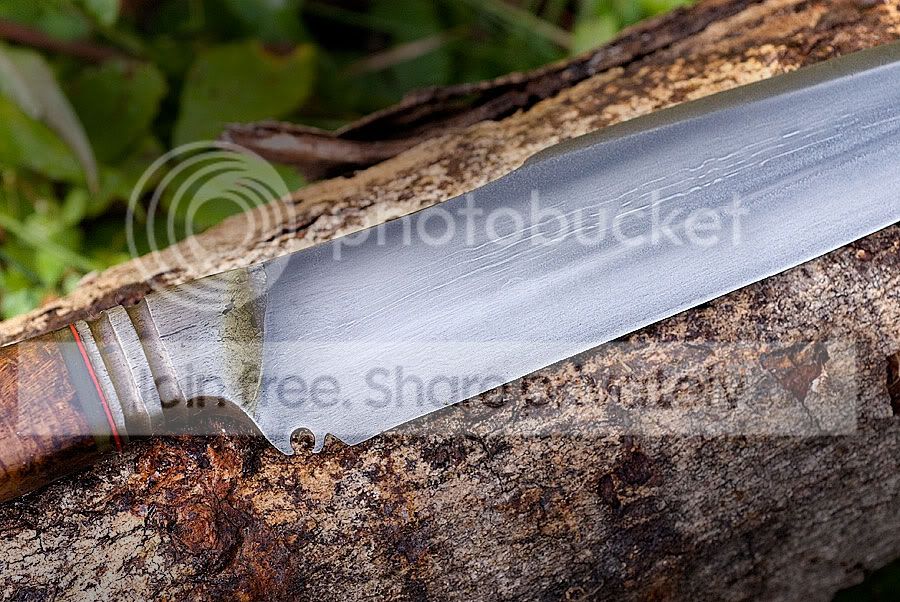
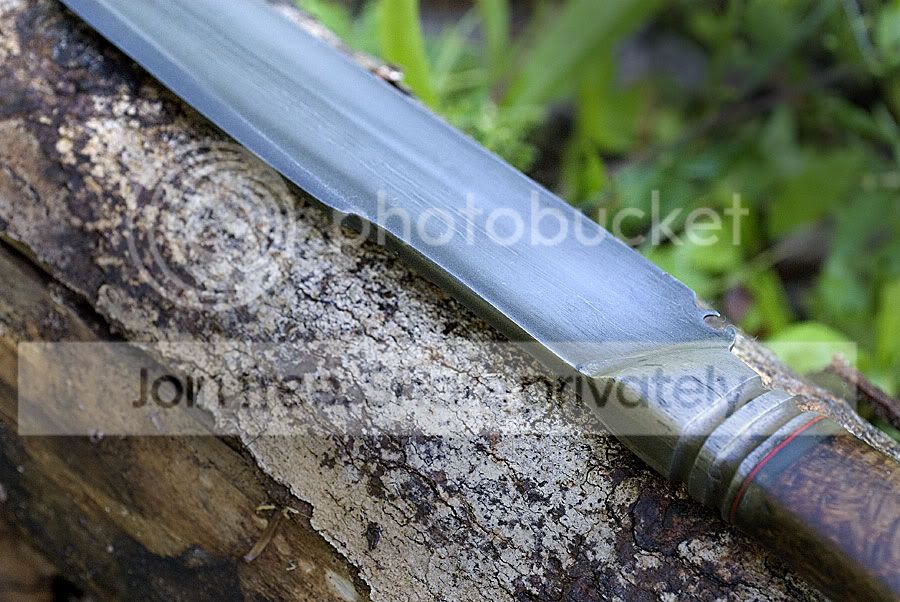
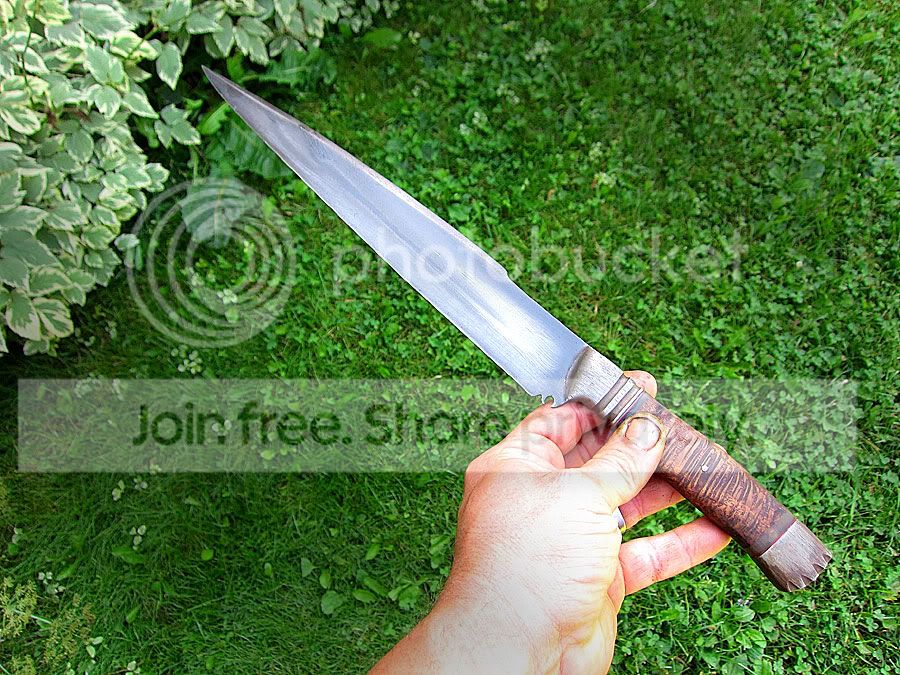
(looks so much smaller in this picture.. guess it's my big, gnarly paws)
A quick snap of the spine:
Here are some steps in the construction:
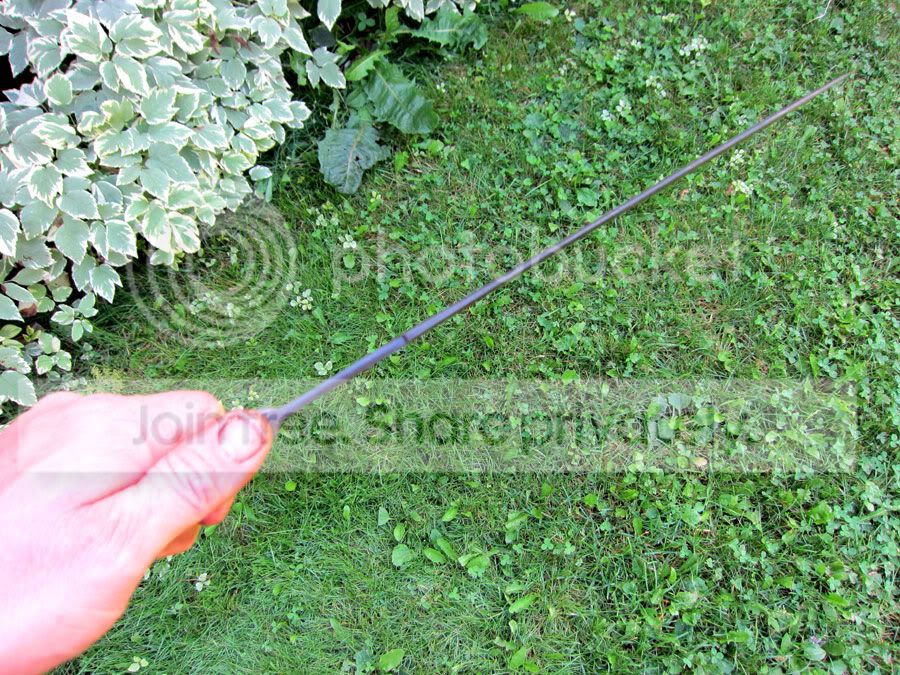
Wrought iron tack welded to 1084 -
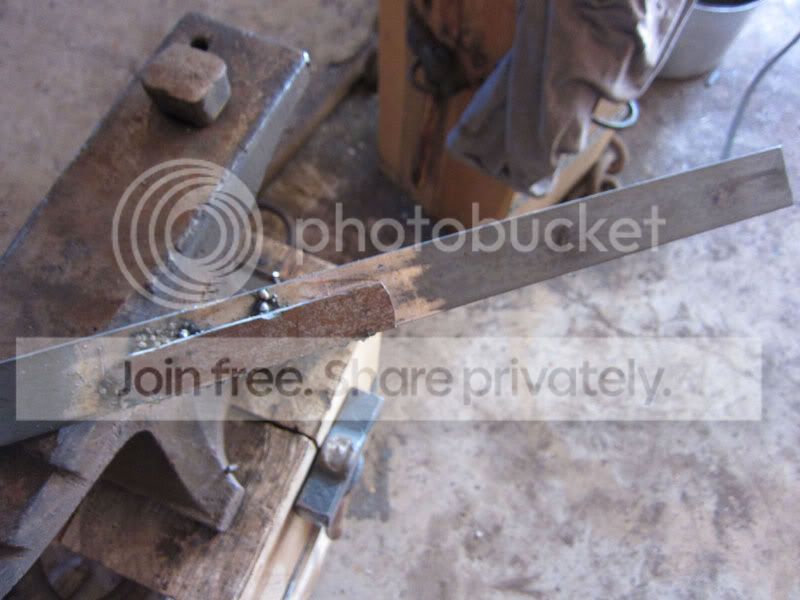
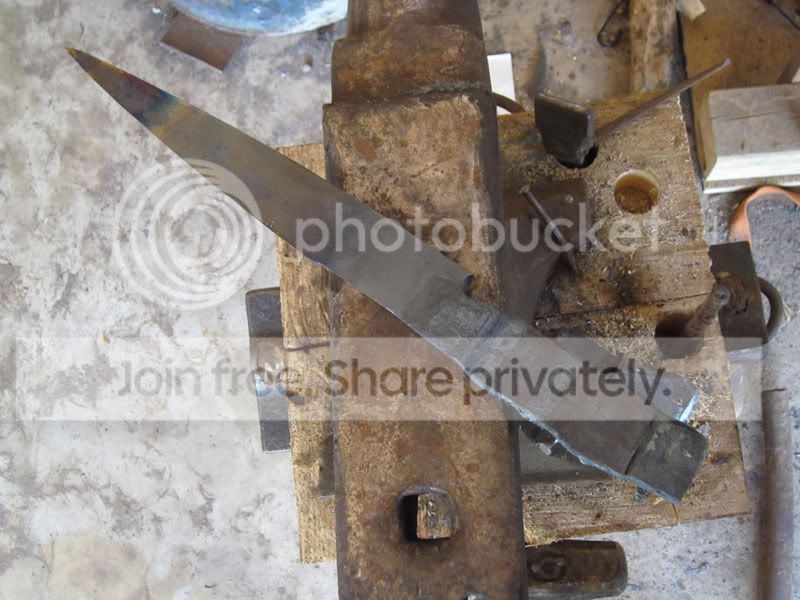
Wrought iron forge welded on and blade profile forged. Next time I will forge the blade first and then weld on the fittings. Duh.
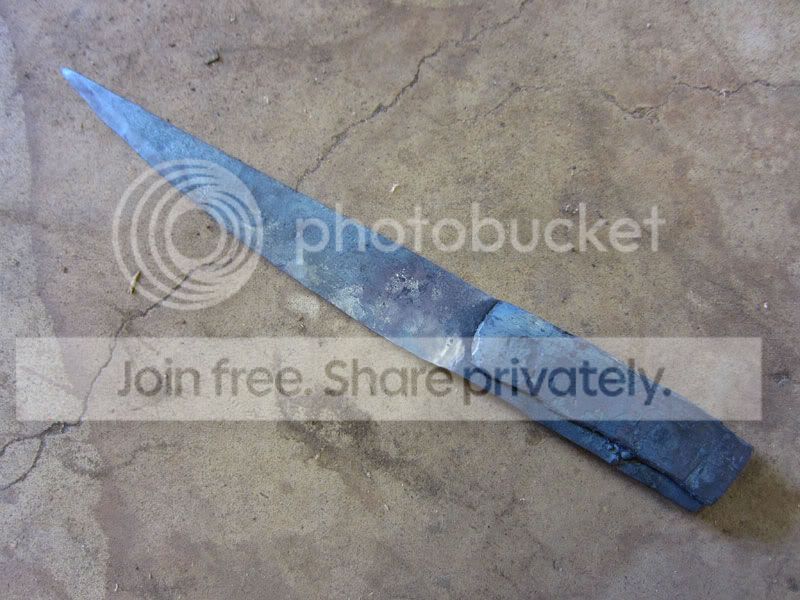
Might be hard to see but this after using my press to forge down the handle area between the bolster and pommel:
I'm typically not interested in strict historical reconstructions therefore mine deviates in a couple of respects. First... the fittings were probably individually forge welded while I basically welded on a couple of big wrought iron bars in the vicinity of the handle and bolsters (see pics). Also.... after attending Blade this year I've become interested in thin, light bladed, well balanced fighting knives. I love the graceful elegance of the thin blade with nice distal taper. As well as the speed of handling. Therefore mine doesn't have the typical 1/4" spine but a hair over 1/8". I also elected for a morticed, hidden tang contruction of the scales placed between the forge welded bolster and pommel. Mine is also a bit shorter.. some of the historical examples had 15" plus blades.
But the over-all profile and look reflect the spirit of this knife I think.
I'm calling it 'Spanish Dancer' as it is just so graceful, fast and a joy to handle. It is 15.5" long, with 10.5" blade. The steel is Aldo 1084 with multiple edge quenching that brought out some very interesting alloy banding that actually shows some shiny areas (vanadium??) from extended ferric soak. The balance is right at the bolsters, closer to the handle. The wood is some very unique 'curly black oak burl' given to me by Mr. Mark Farley. I've never seen anything like it. Then there are some buffalo horn spacers.
(edit: not sure where the red cast came from... I swear the original doesn't look like that! Photobucket!)
(looks so much smaller in this picture.. guess it's my big, gnarly paws)
A quick snap of the spine:
Here are some steps in the construction:
Wrought iron tack welded to 1084 -
Wrought iron forge welded on and blade profile forged. Next time I will forge the blade first and then weld on the fittings. Duh.
Might be hard to see but this after using my press to forge down the handle area between the bolster and pommel:
Last edited:


