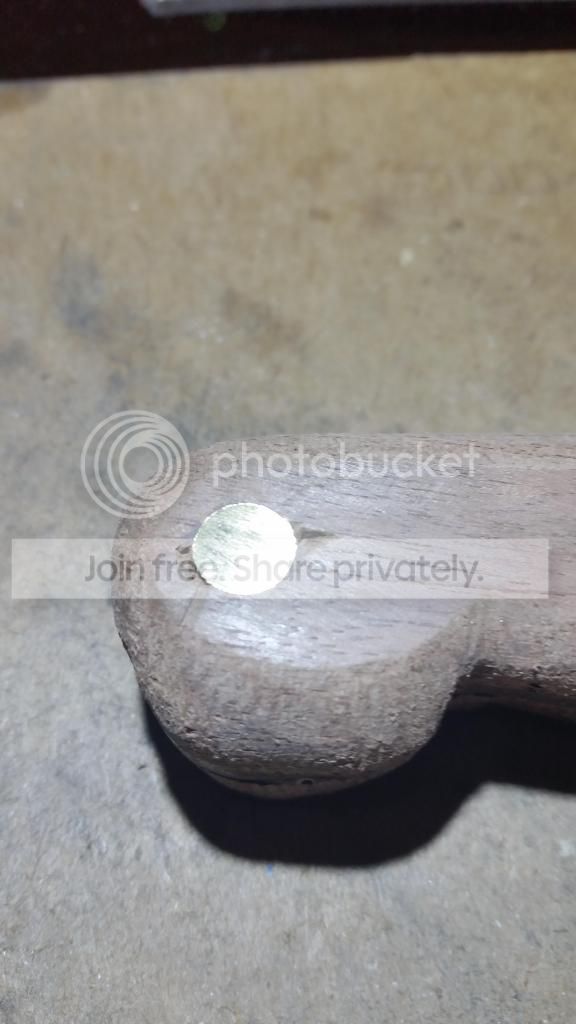
Wood handle materials benefit from being sealed in my opinion - even stabilized stuff; especially user knives that will see blood, dishwater, etc. The main functional issue with poly finishes is that they tend to be film-forming. Not good for the long run, especially if that maintenance falls on the non-maker user. Wood moves. Fact of life as long as there are changes in humidity and temperature. Chipping will likely become a problem with many film finishes because of that. They would likely need a complete strip and refinish to look acceptable from my experience.
Besides all that - I have yet to see a poly finish that doesn't look like a dip in cheap plastic regardless of material to be finished. But I am biased so grain of salt is advised here...
Alternatives to polyurethane are mostly old school. Tung oil, boiled linseed oil, Kramer's Best, etc. A more modern oil-type finish is Birchwood Casey's Tru-Oil, but it too is formulated not just to seal, but build toward a shiny film-like finish that's too glossy for this application to my eye. It can be scuffed back to a matte finish though and it is relatively easy to clean and recoat over time.
The other mentioned natural oils will likely all darken most woods used for handle material over time but the other benefits greatly outweigh this issue. Floor wax or Ren wax make good final finishes for both steel and many handle materials. They help minimize fingerprints and "morning-after spit dot" corrosion when you finally show them off to your buds.
Look at what the replica gunstock makers are doing if you want a real education on these topics. We have a lot to learn from them.