Splitting Wood...Again

Joined
Aug 26, 2006
Messages
3,799
the recent post, "would you baton your only blade?", inspired me to put this together real quick, and i wanted to take advantage of the fresh edge i just put on my knife...:D

Splitting A Piece Of Wood With A Less-Than-Optimal Toolset

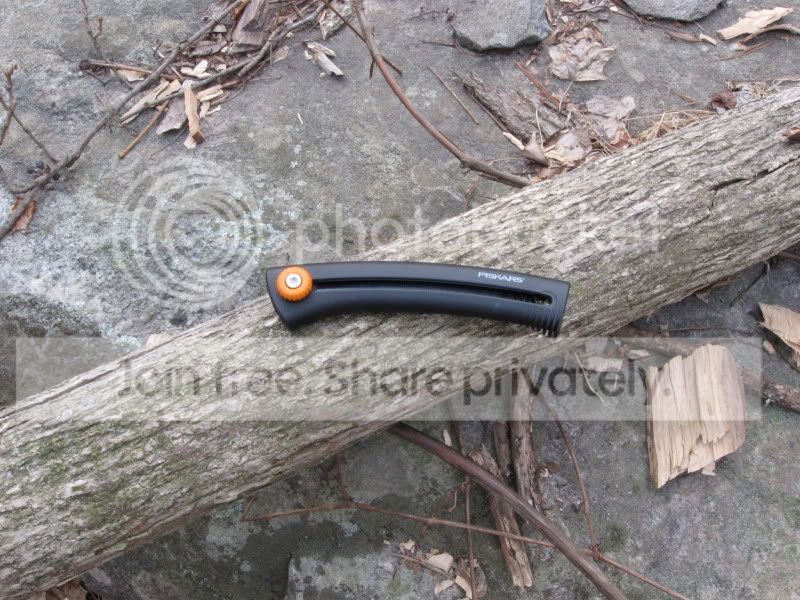
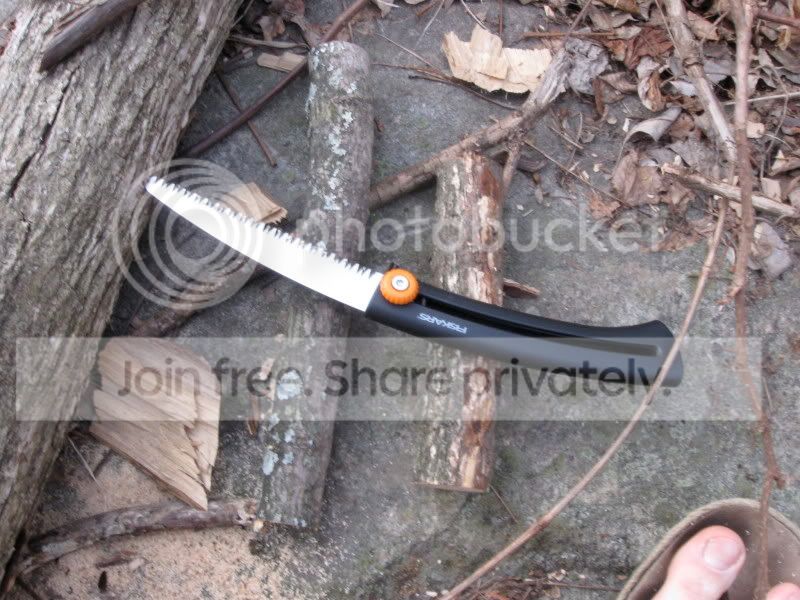
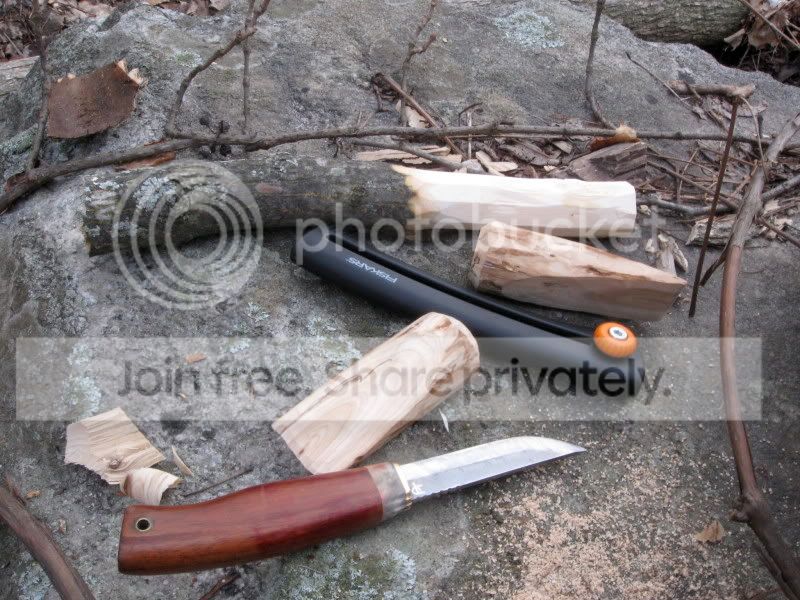
I took my fairly common dayhiking setup out in the yard with me: Fiskars slide saw, Puukko style fixed blade.

I decided that I was simulating needing to gather some firewood, and for some reason needed to split it.

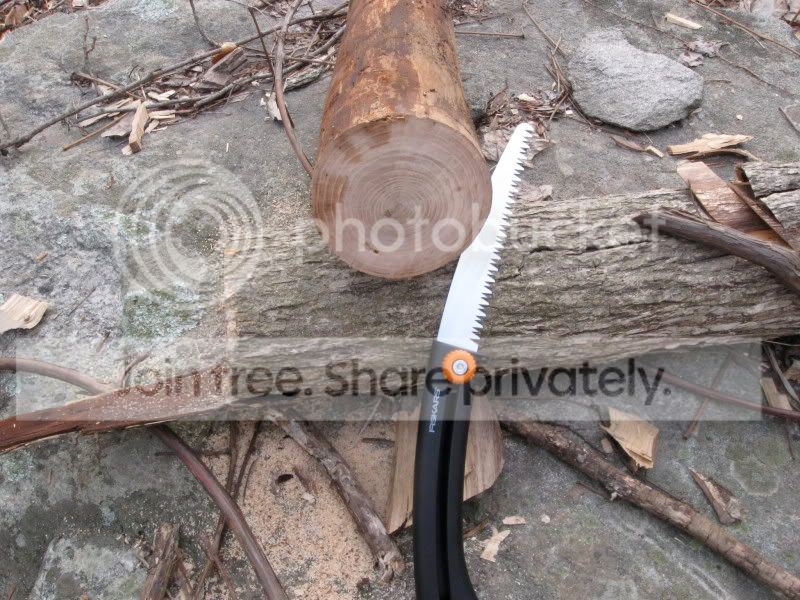
First I cut a piece of a hickory log that was suspended off the ground, but still damp on the outside. The piece was about 4.5" diameter, about maximum capacity for this saw.
IMG_2211.jpg


IMG_2212.jpg


Once the piece was cut, I then went and found a stick of hard, dry hickory that was convenient, and cut off about a 10" piece, maybe 1-1.5" diameter. I also fetched a baton to use.
IMG_2214.jpg


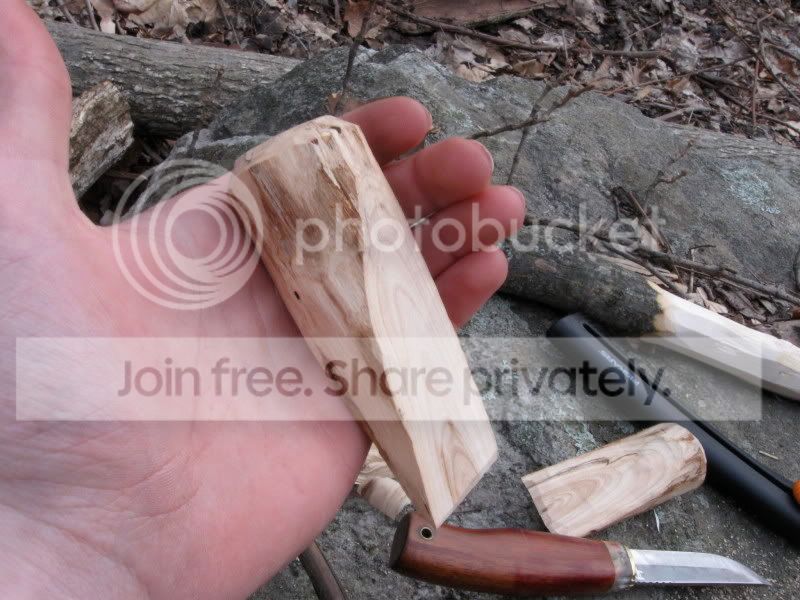
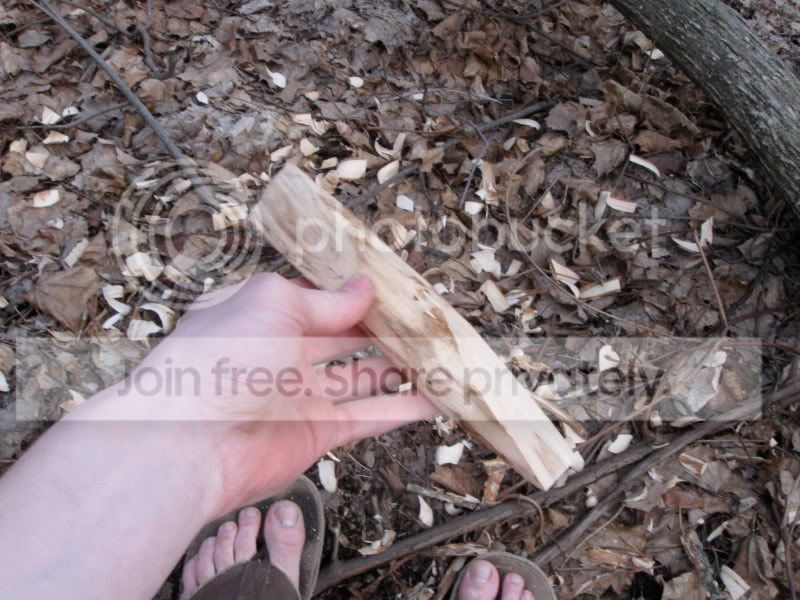
Whittled a couple of wedge-shape edges on the end, nicely tapered. Aim for flat or slightly convex sides. Make the front edge fairly thin, maybe 1/16" wide, and apply a small bevel at the edge.
IMG_2215.jpg


Using the saw, I cut the wedges off. I chamfered the edges to help prevent splitting.
IMG_2219.jpg


IMG_2221.jpg


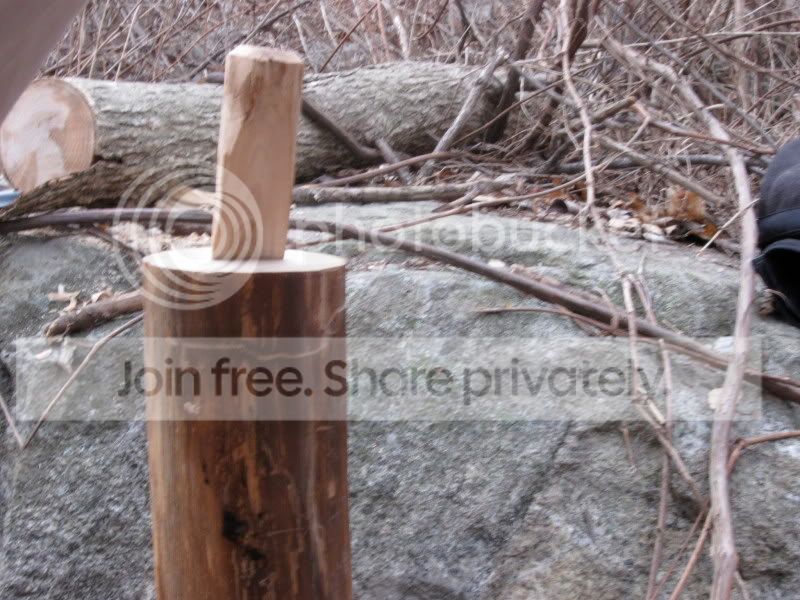
Pound the knife into the end of the log, starting a split. Make the starting split go all the way across the top. You don't need to go real deep, I only went to about the spine of the knife, less than an inch.
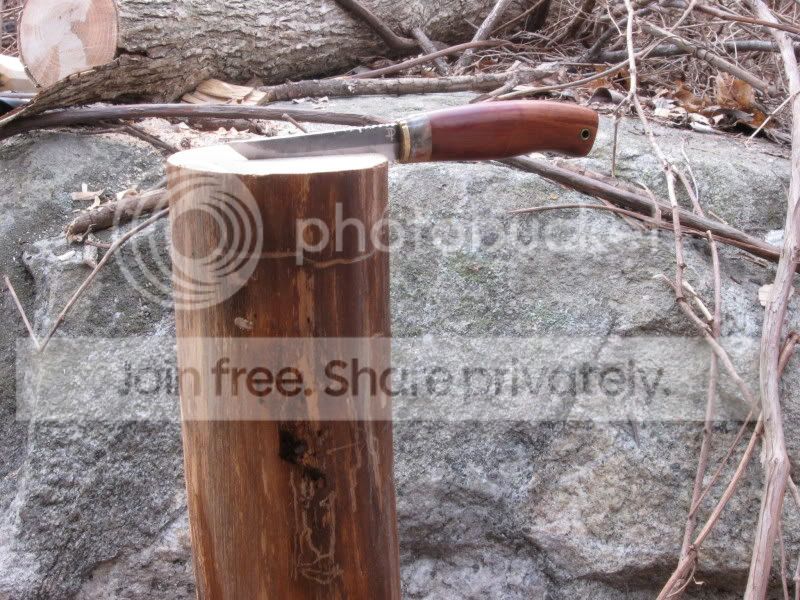
IMG_2224.jpg
 
Set the knife aside and set a wedge into the split. Pound away! :D Beat it in until the split opens up enough to fit a wedge in on the side of the log. Insert the wedge and pound that until it goes no further. Move the first wedge (should be loose or have fallen out by this point) farther down the split, and pound in. Lather, rinse and repeat until the log is split.
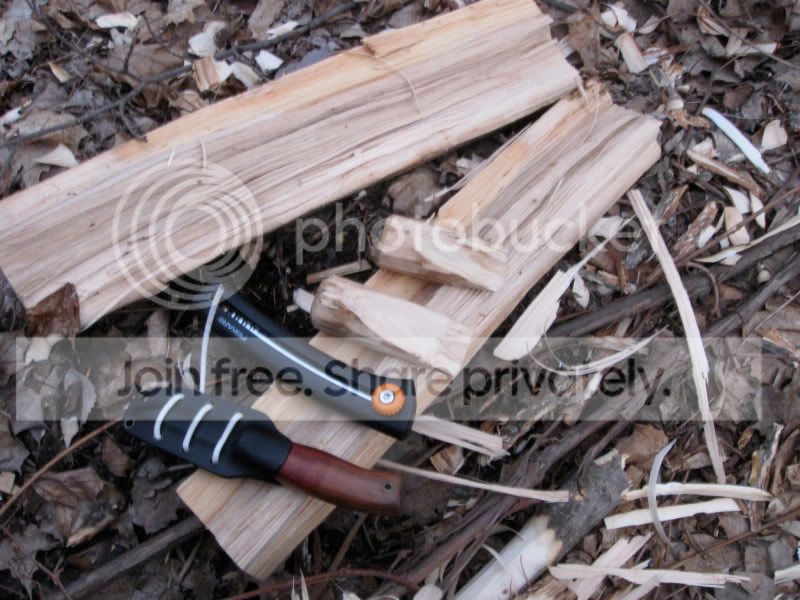
IMG_2225.jpg


IMG_2229.jpg


Once the wood is split up this way, you can simply straight baton the pieces down into kindling or other smaller pieces. :thumbup:

Video coming later on, after I get it all edited etc...
 
I wonder if the log could be as easily split if the saw were used to cut a slit in the top for the wedge to fit into. Some people prefer not to baton at all, even to start a split (I'm not one of them ,though ;))
 
rather than using the knife to make the initial cut, you could use the saw. seems like it might be easier that way. all in all, good demonstration and pics.
 
this saw in particular is decent at rip-sawing (most saws with this teeth style are) but I personally find it simpler and eaier to swing the baton a couple of times instead of doing more sawing...

the biggest issue with a saw notch is that the bottom is flat and doesn't keep running down the log like a knife split (which is what makes it great for other applications). you would have to make it deep enough so that your wedge could pry the wood apart before it hit the bottom of the notch (not necessarily difficult to do).
 
Siguy, that is an excellent idea. I normally dont mind batoning with my my knives, but I had never even thought of making a hardwood wedge. Great pics also. You rock!!:thumbup:
 
Really good job, nice photos and description. :thumbup:

I often use this same method when splitting logs into staves for bow wood. Occasionally I will make the wood wedges too, instead of using steel or plastic wedges. For use in the remote camp, the wood wedges are the only way to go. One can also slam a billet over a sharp rock and split it out for dry kindling. Several of these methods can really save needless wear and tear on the knife.

Goodness. I think I see a primitive bow in that straight hickory log you just sawed in half. :eek::) We live smack in the middle of millions of acres of prime Northwest forest but not a hickory tree to be found. Very envious.
 
Well you see siguy, thats why I carry the RC6, much less work.:D

Goog work man, that is a great way for splitting wood length wise whould the need arise.
 
Great threat Siguy. I was going to pipe in the same thing about the saw as a start. You get some good 'shock' value by starting the split with a baton, the crack will likely extend well beyond the depth to which you baton the to and make the split that much easier.

There is a video out there where a guy split a huge log on the West coast with just his small axe and a couple of wedges.
 
Nice Job Siguy, Just like you said in that other thread most times battoning is not really necessary, just grabbing a stick and start carving a fuzz stick is easy to do, even after a good rain most sticks you can carve into a fuzz stick. the outer wood is damp but the inner wood is still nice and dry. I showed my nephew one day after a good couple of days of rain just how easy it is to carve up a fuzz stick and then light it. I had some small kindling about thumb size all ready spilt up and they were ( well looked like they were soaking wet) wet all over. I just shaved up the stick into a fuzz stick and showed it to my nephew. He looked at it and said just the out side of the stick was wet but the inner wood was dry.

Again great job Siguy,

Bryan
 
thanks for all the comments guys, glad you all like it!

Dannyboy, you should see the standing dead hickory i dropped a while back, about 8-9" diameter. I think it's going to make some nice axe handles, but i suppose it would probably work nicely for a few self bows too. ;)
 
That has convinced me to learn this method, rather carry a small lightweight saw always than an axe sometimes. You don't need always to split wood but if you do this info is gold. How much time did it took you to prepare the wedge and baton?
 
dante,

the wedges took me about 10 minutes probably, not too long really.

the saw i show weighs 3 oz, so light that i can't come up with an excuse to leave it behind.

the first time or two you try it, it's a bit akward. after that though, it starts to feel pretty natural.
 
the biggest issue with a saw notch is that the bottom is flat and doesn't keep running down the log like a knife split (which is what makes it great for other applications). you would have to make it deep enough so that your wedge could pry the wood apart before it hit the bottom of the notch (not necessarily difficult to do).

I have had that same issue when I tried using a saw for this method, just doesn't 'start' the same. But this is a great pictorial on this method, it's another tool to have in your belt if you don't like batoning, or more importantly if you're stuck in the woods with no blade!
 
Back
Top