

- Joined
- Nov 27, 1998
- Messages
- 2,602
I haven't seen much in the way of commentary about the relatively new Spyderco Des Horn on the various knife boards, but I think it's an excellent entry into the somewhat rarefied modern gent's knife category that warrants some attention.
South African custom knife maker Des Horn adapted the design of this knife from one of his small handmade patterns. Built for Spyderco in Taichung, Taiwan, it’s a refreshingly compact, lightweight folder at 4.12" closed (7.19” OAL) and only 1.95 oz., especially when compared to the plethora of overwrought folding bulldozers glutting the market these days.
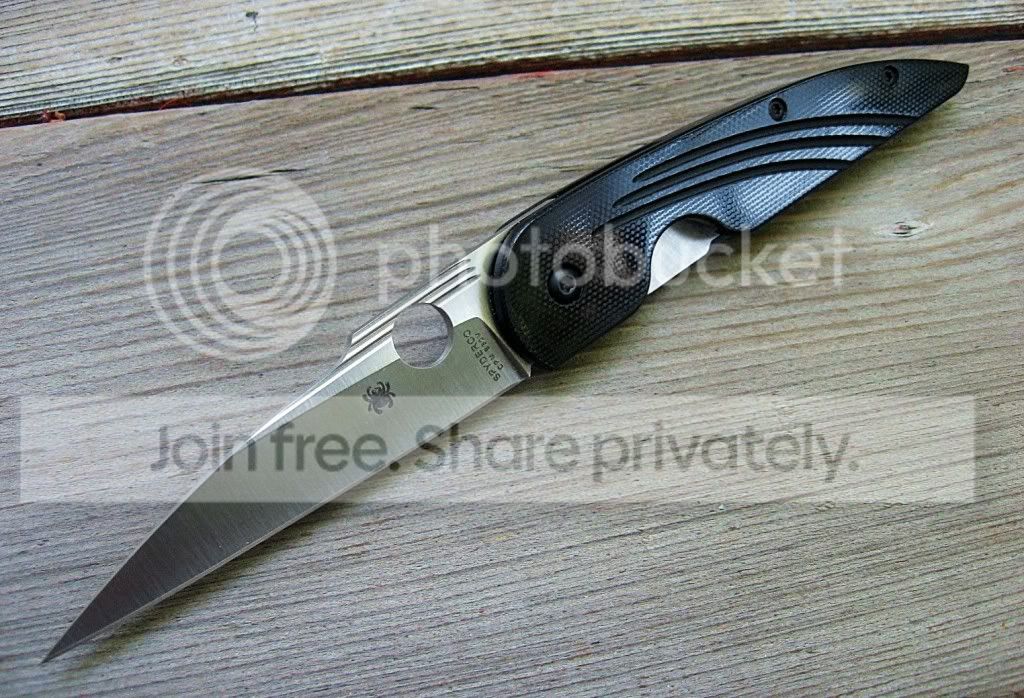
The 3.11" long, .118 thick CPM S30V semi-Wharncliffe blade is hollow ground and tapers to a flawless needle-fine point. The edge profile has a subtle convex curve and the bevels are even and symmetrical from end to end. Sharpness out of the box is adequate; it will shave arm hair and cleanly cut newspaper, but it could use a light touch-up of you want it truly hair-popping sharp.
The polished flat G-10 handle scales are reinforced on both sides with recessed skeletonized steel liners, and the locking liner has enough spring force to inspire confidence. It requires a very firm press on the liner to disengage the lock, so an unintentional release is unlikely, even when positioning your index finger in the handle cutout for some extra grip purchase. The detent is crisp and retains the blade firmly in the closed position.
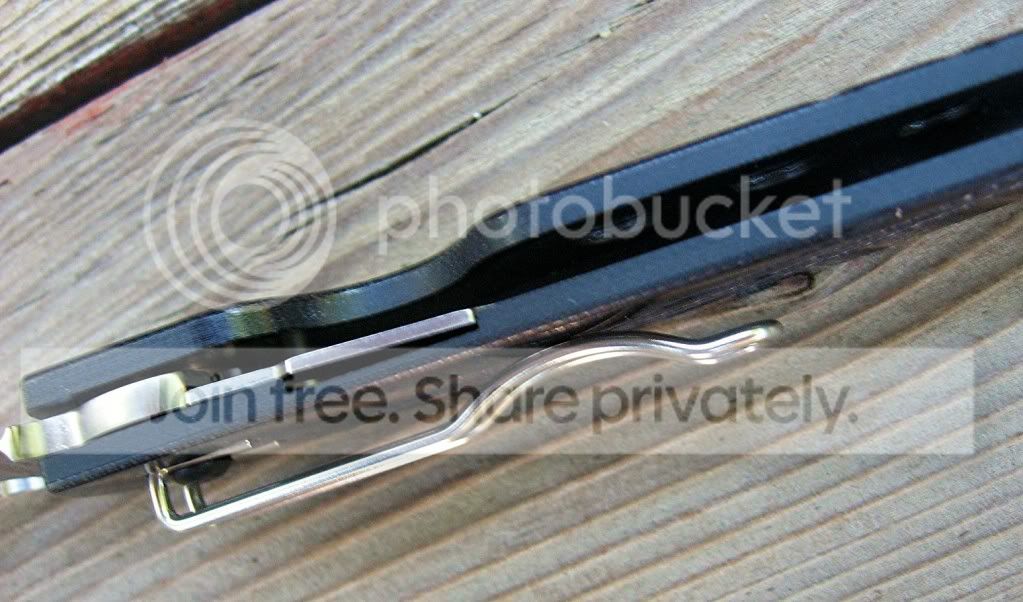
The .40" thick handle feels somewhat boxy in the hand, though not uncomfortable, but I would have preferred that the edges were more deeply radiused to further enhance both the ergonomics and aesthetics. Speaking of aesthetics, it would have been a nice touch if the locking liner was given a uniform satin finish, since it’s so visually prominent.
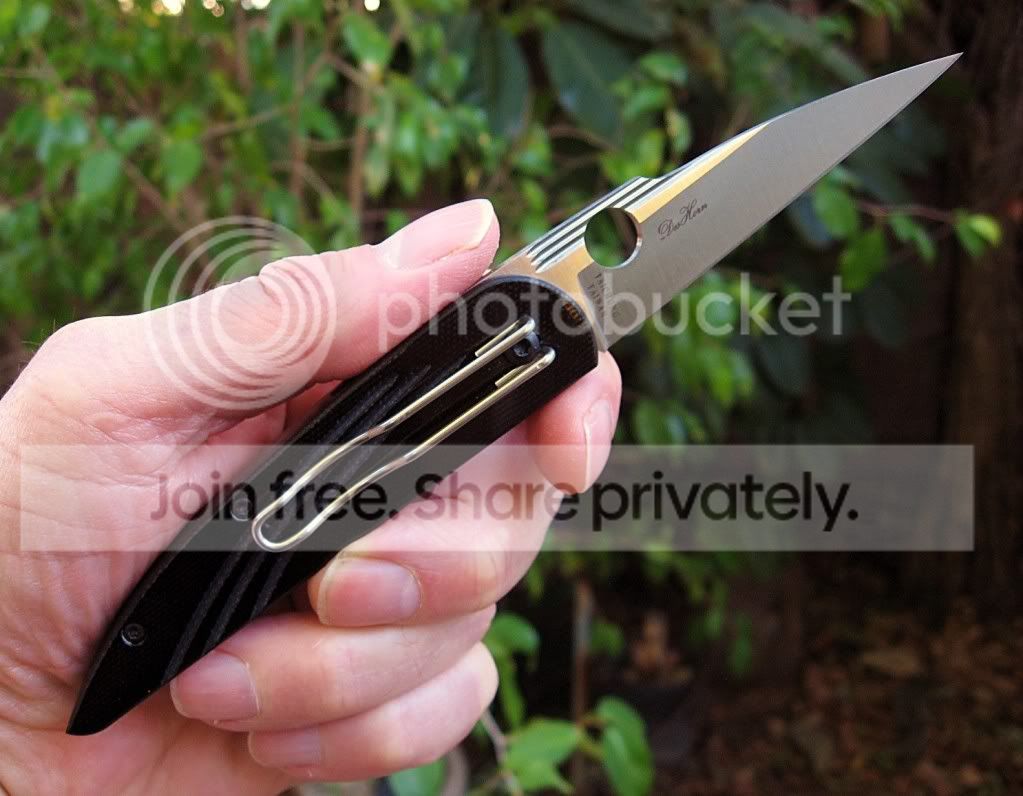
The removable wire pocket clip is unusual for Spyderco, in that it's mounted at the pivot for tip-down carry, and there are no provisions for either tip-up or left hand mounting. I've read one or two complaints about the clip interfering with grip comfort, but I have no problem with it so far.
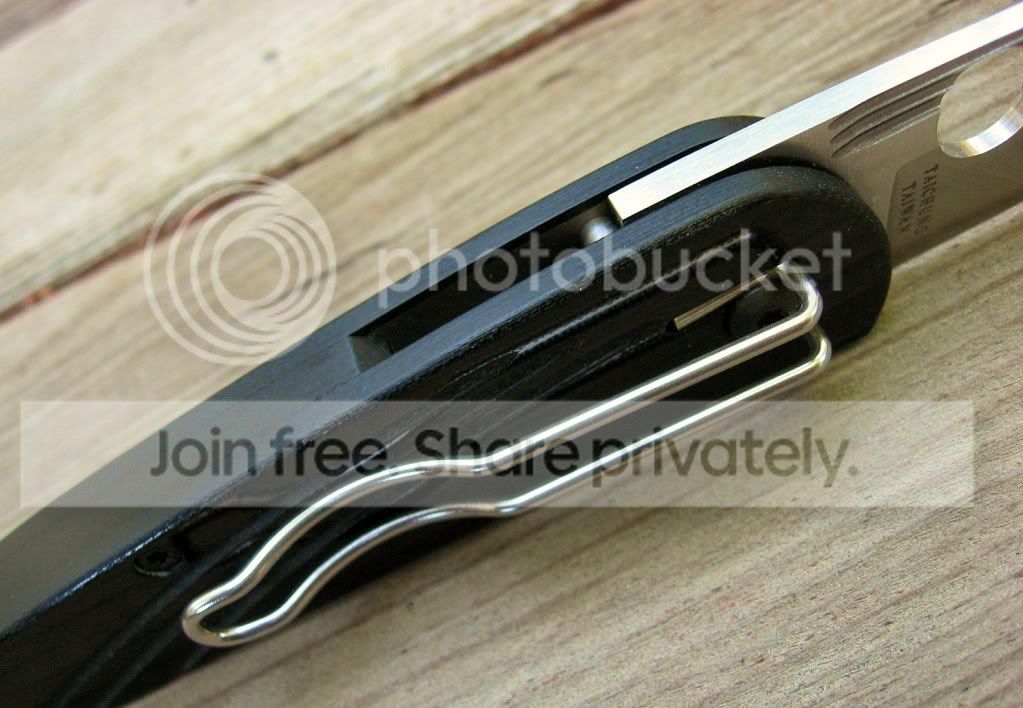
Deploying the blade isn't as effortless as some of the other Spydie designs in my experience. The opening hole is located about a 1/4" further from the pivot than I find comfortable for natural thumb engagement, so I tend to open my index finger and push the front of the handle away from my palm a bit in order to position my thumb in the hole more easily. You also need to assure that the tip of your little finger doesn’t interfere with the blade travel, given that the end of handle is quite narrow and doesn’t provide much purchase for said digit. No big deal; just a bit fiddly. I'm sure I'll get used to it, but I wouldn't want to open the knife quickly under stress in an emergency.
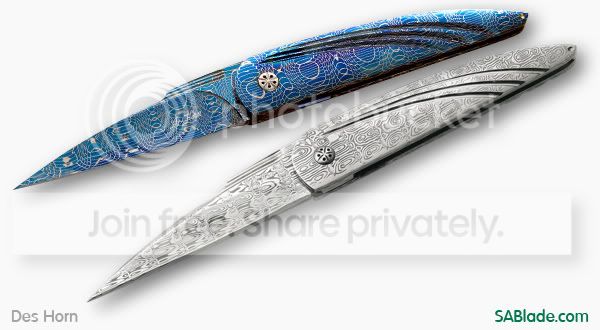
On the plus side, the horizontal corrugated grooves machined above the hole seem to provide enough traction to thumb open the blade without relying on the hole at all, which makes me wonder if the hole, along with its large associated handle cutout, was really even necessary beyond Spyderco's trademark appearance. Many of Mr. Horn's designs open by flicking your thumb across the knurled edge of the blade spine much like striking a lighter, while the custom version of this knife appears to rely solely on the horizontal groove pattern.
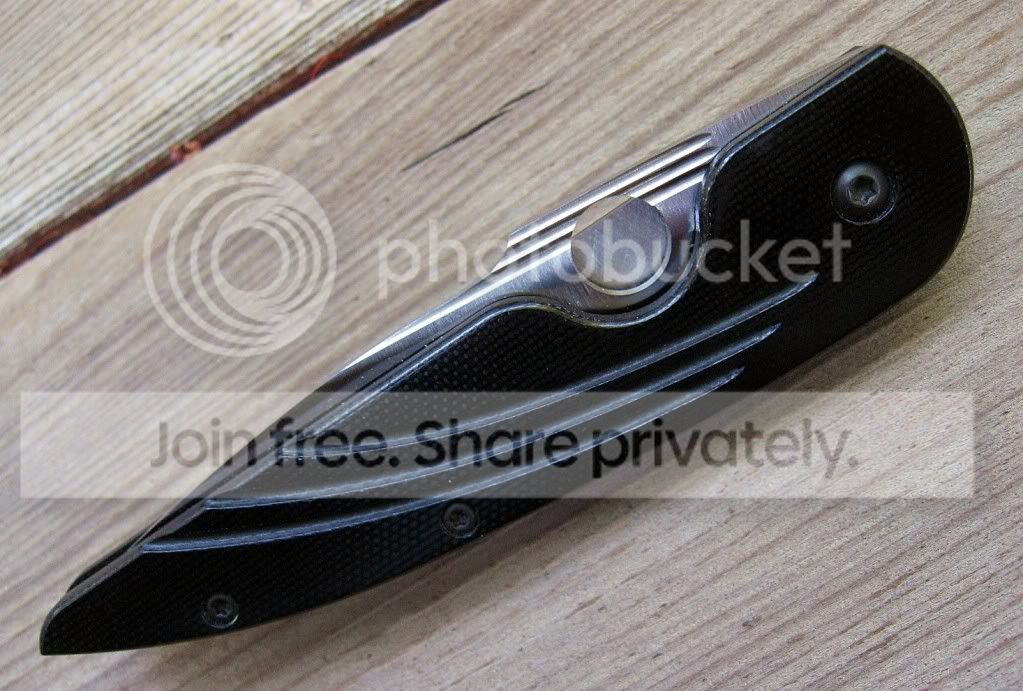
Fortunately for the design’s aesthetics, the blade profile dodges the company’s usual homely-but-distinctive spine hump, as the smallish (.39" dia.) hole is set low enough in the blade that it doesn't extend much beyond the handle profile. While this helps maintain the pattern's sleek lines and compact width, it precludes one-hand opening for lefties.
The blade locks up firmly, with a solid snap and no hint of play in any direction. The pivot tension (and/or the detent pressure against the tang) is set firmly enough from the factory that there's a noticeable amount of resistance, and while the blade feels uniformly smooth along its full travel, thanks to its bronze bushings, there’ll certainly be no mistaking it for an IKBS pivot.
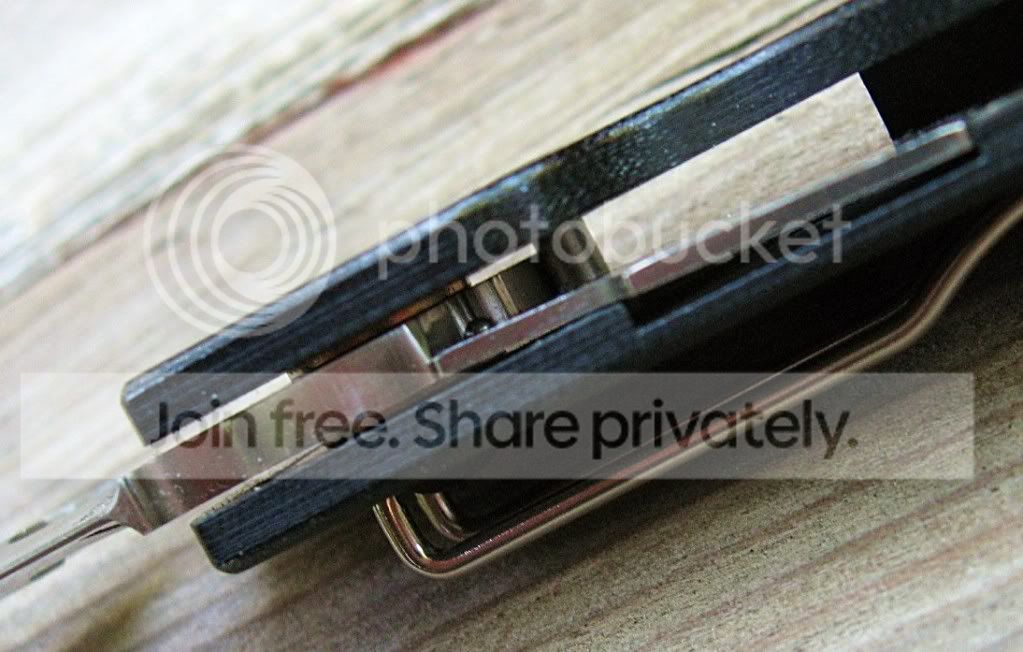
The blade spine blends smoothly with the handle in both the open and closed positions, which is a classy touch. There’s no finger choil or “jimping” anywhere, but the smooth G-10 scales with their decorative grooves offer enough purchase for the knife’s intended light duty use, and there’s always that large handle cutout if you need some extra traction.
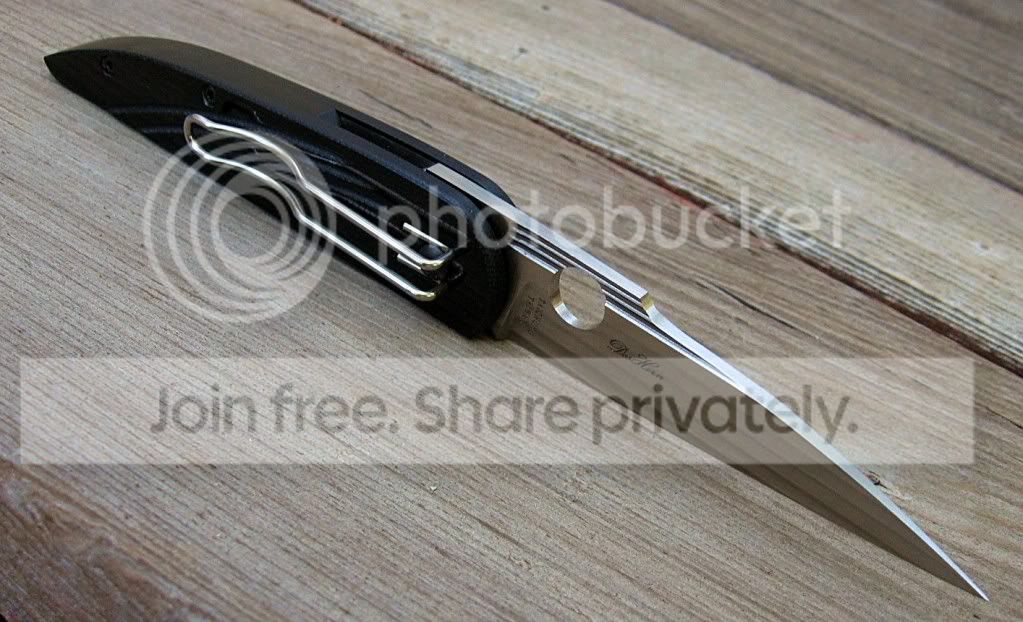
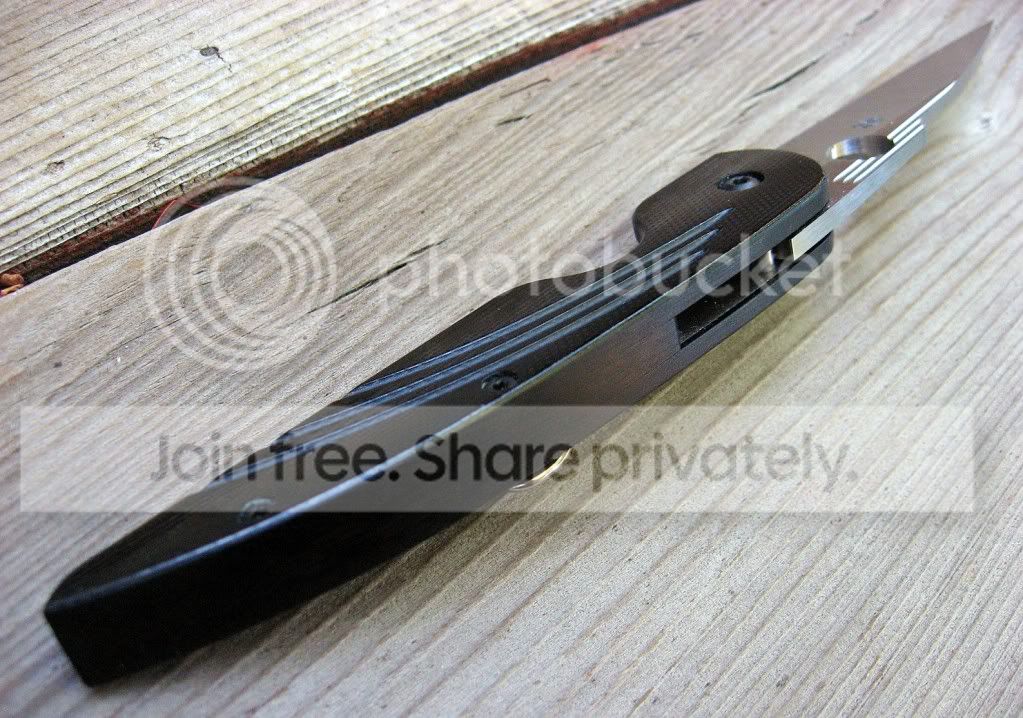
Conclusion: As a small, sleek, lightweight, classy modern gent’s folder, this design is a breath of fresh air in a market oversaturated with “tactical” clunkers that sacrifice decent cutting ability for hardcore cachet. After carrying and using a reasonably thin svelte little blade like this for opening mail, trimming a loose thread, cutting an apple or picking a splinter, using a folding pry bar for routine cutting tasks feels like using a hammer to scratch an itch . The Des Horn is also less likely to stampede the herd compared to its “tactical” brethren when used around excessively domesticated individuals, but it is more imposing than a small slipjoint, so discretion is still recommended.
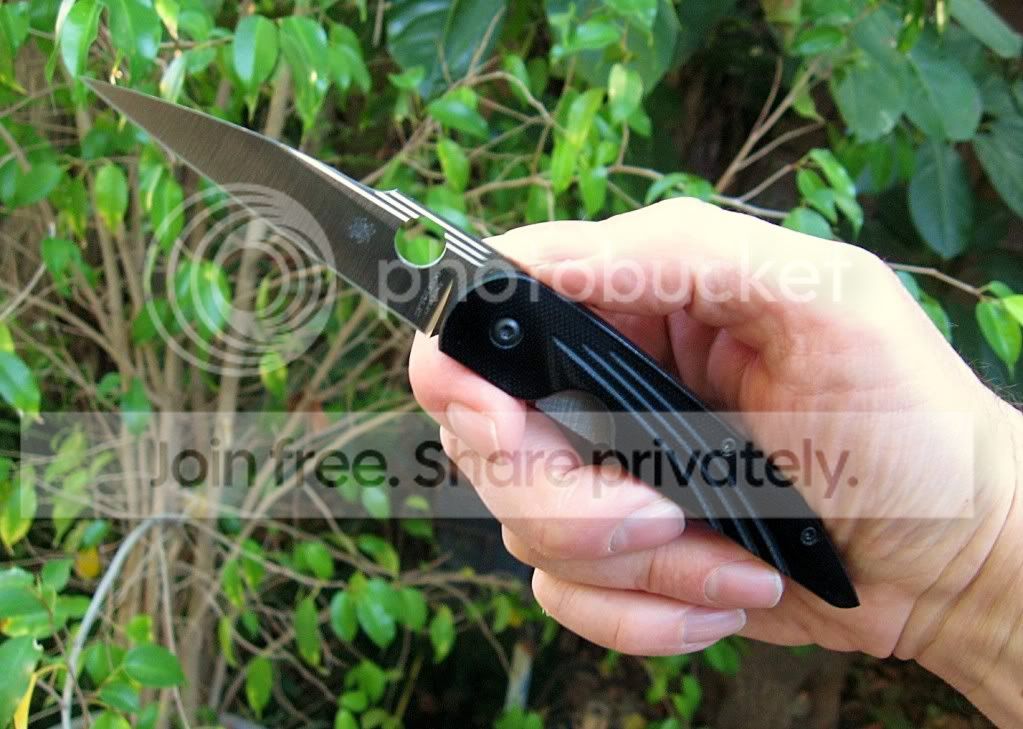
The knife appears larger than it really is in this pic:
That's more like it:
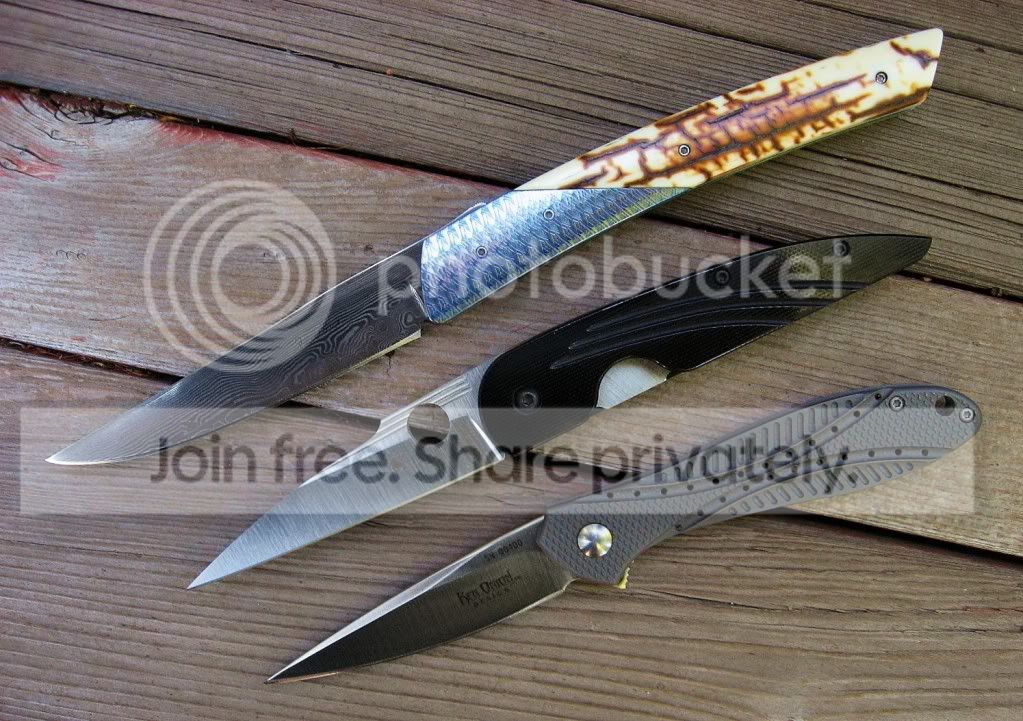
Here's a comparison shot with another lightweight modern gent's knife, the CRKT/Ken Onion "large" Eros, along with a sizable Des Horn custom:
South African custom knife maker Des Horn adapted the design of this knife from one of his small handmade patterns. Built for Spyderco in Taichung, Taiwan, it’s a refreshingly compact, lightweight folder at 4.12" closed (7.19” OAL) and only 1.95 oz., especially when compared to the plethora of overwrought folding bulldozers glutting the market these days.
The 3.11" long, .118 thick CPM S30V semi-Wharncliffe blade is hollow ground and tapers to a flawless needle-fine point. The edge profile has a subtle convex curve and the bevels are even and symmetrical from end to end. Sharpness out of the box is adequate; it will shave arm hair and cleanly cut newspaper, but it could use a light touch-up of you want it truly hair-popping sharp.
The polished flat G-10 handle scales are reinforced on both sides with recessed skeletonized steel liners, and the locking liner has enough spring force to inspire confidence. It requires a very firm press on the liner to disengage the lock, so an unintentional release is unlikely, even when positioning your index finger in the handle cutout for some extra grip purchase. The detent is crisp and retains the blade firmly in the closed position.
The .40" thick handle feels somewhat boxy in the hand, though not uncomfortable, but I would have preferred that the edges were more deeply radiused to further enhance both the ergonomics and aesthetics. Speaking of aesthetics, it would have been a nice touch if the locking liner was given a uniform satin finish, since it’s so visually prominent.
The removable wire pocket clip is unusual for Spyderco, in that it's mounted at the pivot for tip-down carry, and there are no provisions for either tip-up or left hand mounting. I've read one or two complaints about the clip interfering with grip comfort, but I have no problem with it so far.
Deploying the blade isn't as effortless as some of the other Spydie designs in my experience. The opening hole is located about a 1/4" further from the pivot than I find comfortable for natural thumb engagement, so I tend to open my index finger and push the front of the handle away from my palm a bit in order to position my thumb in the hole more easily. You also need to assure that the tip of your little finger doesn’t interfere with the blade travel, given that the end of handle is quite narrow and doesn’t provide much purchase for said digit. No big deal; just a bit fiddly. I'm sure I'll get used to it, but I wouldn't want to open the knife quickly under stress in an emergency.
On the plus side, the horizontal corrugated grooves machined above the hole seem to provide enough traction to thumb open the blade without relying on the hole at all, which makes me wonder if the hole, along with its large associated handle cutout, was really even necessary beyond Spyderco's trademark appearance. Many of Mr. Horn's designs open by flicking your thumb across the knurled edge of the blade spine much like striking a lighter, while the custom version of this knife appears to rely solely on the horizontal groove pattern.
Fortunately for the design’s aesthetics, the blade profile dodges the company’s usual homely-but-distinctive spine hump, as the smallish (.39" dia.) hole is set low enough in the blade that it doesn't extend much beyond the handle profile. While this helps maintain the pattern's sleek lines and compact width, it precludes one-hand opening for lefties.
The blade locks up firmly, with a solid snap and no hint of play in any direction. The pivot tension (and/or the detent pressure against the tang) is set firmly enough from the factory that there's a noticeable amount of resistance, and while the blade feels uniformly smooth along its full travel, thanks to its bronze bushings, there’ll certainly be no mistaking it for an IKBS pivot.
The blade spine blends smoothly with the handle in both the open and closed positions, which is a classy touch. There’s no finger choil or “jimping” anywhere, but the smooth G-10 scales with their decorative grooves offer enough purchase for the knife’s intended light duty use, and there’s always that large handle cutout if you need some extra traction.
Conclusion: As a small, sleek, lightweight, classy modern gent’s folder, this design is a breath of fresh air in a market oversaturated with “tactical” clunkers that sacrifice decent cutting ability for hardcore cachet. After carrying and using a reasonably thin svelte little blade like this for opening mail, trimming a loose thread, cutting an apple or picking a splinter, using a folding pry bar for routine cutting tasks feels like using a hammer to scratch an itch
. The Des Horn is also less likely to stampede the herd compared to its “tactical” brethren when used around excessively domesticated individuals, but it is more imposing than a small slipjoint, so discretion is still recommended. The knife appears larger than it really is in this pic:
That's more like it:
Here's a comparison shot with another lightweight modern gent's knife, the CRKT/Ken Onion "large" Eros, along with a sizable Des Horn custom:
Last edited:


