Stabilized wood questions

Joined
Aug 28, 2009
Messages
7,951
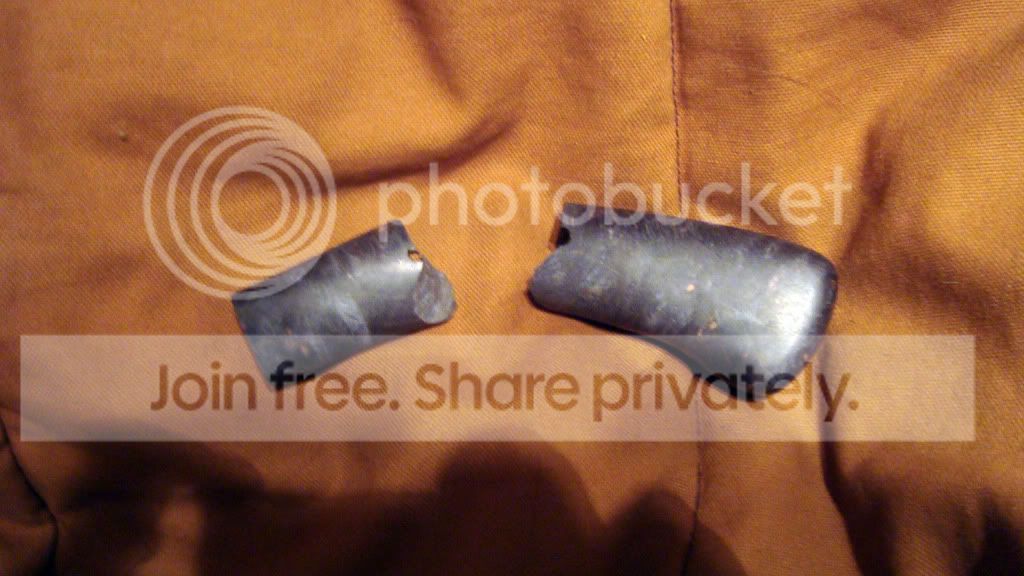
earlier I had some questions about finishing stabilized wood, and they were answered quite well and I was satisfied with the results, that is until early this morning when I had decided that the handle was good enough. I disassembled the knife to make sure that the tang and everything was dry. Things were snug but I could push the pin out with little pressure. I cleaned and oiled the tang and started to reassemble the knife and when I went to slide the temporary pin back in, the handle split at the pin hole. I was under the impression that stabilized wood was tougher then non stabilized wood:confused:

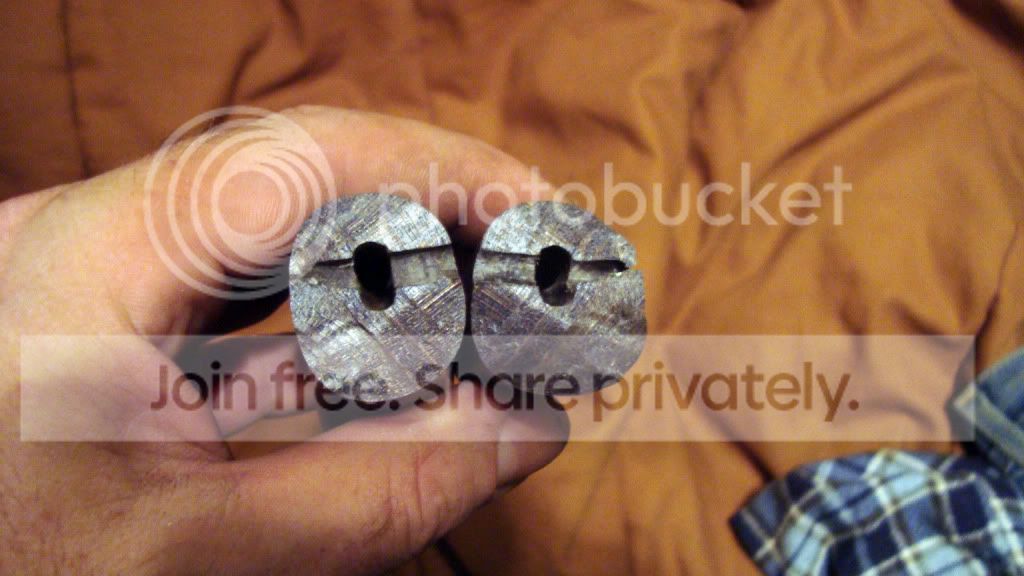
DSC01406.jpg


DSC01408.jpg


So here is the big question, is stabilized wood more delicate then non stabilized wood until every thing is buttoned down? If so how do you pin this stuff?

My pin was undersized so that I could take it out and put it back in to test fit as I went on the finishing. I don't peen my pins I just drill my holes a couple thou under my pin size, press them in with glue. Knowing that i would be taking this one apart a number of times while finishing it I stuck some pin material in a drill and sanded it till it was 1000th under my hole size and chamfered the ends, so I know that isn't what cracked it. It is almost as if there was an unseen flaw in the grain that I happened to drill through and the last time I slide the pin through was the final stress it could take. I am glad it didn't break while in use, but after 50 bucks and 2 days of making the tang hole, shaping, and finishing (all done with files and sandpaper) I am wondering if it was worth the extra money for the fancy color and hard finish.

Any how pipe in and give your opinions, I am taking today off from making and will start cutting up a piece of non stabilized wood tomorrow to make a new handle, it just wont look as good.
 
Some times that happens,glue it back together with a good CA and fill with epoxy when you put it back together.A little light sanding and the crack will dissappear.
Wood is fragile when you have holesdrilled in it with the grain and across the grain at the same time.Did you drop it at anytime during finishing?Or just pushing too hard on it while finishing will cause it to give in a fault line,but once glued up will seldom fail.
Stan
 
Never dropped, side loaded and everything side together smoothly. Will gluing it work being that it isn't through tang construction? The tang only goes about an inch past the break and everything was going to be held together with epoxy and the pin. I would love to save the handle because it looked really good, my best work yet, but I would like to be able to use the knife too. My other thought was to weld some threaded rod to the end of the tang, and drill the rest of the way through the handle and bolt it together.
 
If this is gonna be pesonal user,yeh it will work.CA the handle back together,grind or file some grooves in the top and bottom of the tang for the epoxy to grip.Glue it all up and clamp it together for about a day or so an it should be fine.I would not sell it like that but I have one like that around the shop and pretty well miss treat it and it has held up fine for a couple of years.
Stan
 
More of a personal show piece that I could use :o

Okay then guess I will crazy glue it back together finish polishing the bras bits and fill it up with epoxy. thanks for the advice fingers crossed that i get it lined up right the first time because when lined up you have to search for the crack.
 
Unki
Thats the bad thing about all burl woods,stabilized or not.They will some time fail along grain lines in the burl.But once you have them glued up solid they hold up well.
Good luck
Stan
 
Its glued back together now, I can see the crack a bit along the bottom but that should go away when I sand it again after I epoxy everything in place later this week.

thanks again for the advice, think I will be sticking to full tang for awhile till I have some more experience under my belt
 
Unky
I like to glue up everthing in block form and then do all my finish after glue up.After seeing Bruce Bumps tutorial on it seems to work a lot better.
Alittle searching you should be able to find it.Lot of good info in it.
Stan
 
Stabilizing can make some woods that would be unusable harder, but not necessarily break resistant. Stabilizing makes wood resist absorption of moisture, and thus the wood moves less due to humidity and damp use. On very soft woods the stabilizing resin "glues" the fibers together, and fills the spaces within and between the fibers with resin. This makes it harder, since the cured resin is harder than the soft wood.

If you look at the break on your handle, you will see that it was along the burl grain. This type of break is not uncommon. The more support to the wood the better. Full tang construction is often the only way to use some delicate burl woods. Through tang is also a good idea. Hidden tangs needs to be done carefully, or the handle may easily break at or near the end of the tang hole. Until the hole is filled with a good grade epoxy and cured, the handle should be considered as fragile as glass.

Chances are you did nothing wrong to cause this break. It was set and ready to go since the wood started drying. Redwood burl is notorious for this problem ( can't clearly see what type of wood you have). Buckeye burl is another that can break easily,too. When using any wood, try and align the grain down the handle if at all possible. Some woods have a stunning grain pattern when cut across the grain ( black palm for example), but are also very weak when cut in that direction. Burl woods are a crap shoot as far as which way the grain goes.

To avoid these problems, newer makers should try and stick with the harder and tighter grained burls - maple burl, walnut burl, black cherry burl, desert ironwood,etc. If the wood is soft in nature, the stabilized burl will be fragile. Thus, redwood, buckeye, thuya, madrone, moabi, etc. are all beautiful, but require careful processing.

An added note is the grinding of burl woods.
As said, stabilization makes the wood move less due to moisture. However, this stiffness can create problems when the wood gets hot. When grinding, heat buildup is bad for wood in all cases, but can create shearing of the grain in stabilized woods more easily. A break like the one shown can come from pressing too hard while grinding/sanding, letting the wood get too hot,....and those occasional "Oops" when the handle flips down to the floor - these can all end up in two pieces.
 
Unky........
There is a balance between too hard and brittle and too soft where it gums up belts etc, in the stabilizing process. I know that WSSI adds a chemical to their mix to keep the wood from becoming too brittle once its cured. I had questions about this when I sent down some end grain pieces and Mike explained that it was part of their process. I have accidentally dropped scales / blocks on the cement floor and never had a problem where it cracked on me, but I'm sure everyone's mileage will vary on that.

Hopefully you can get the CA to hide the cracks once its glued back together. When you do the CA make sure you sand while you fill the crack with CA so the CA picks up the dust while its wet, and then the crack will blend..... Good luck -Larry
 
Last edited:
Back
Top