- Joined
- Oct 21, 2014
- Messages
- 168
I have a bad habit of starting lots of projects and being slow to finish projects.
TLDR:
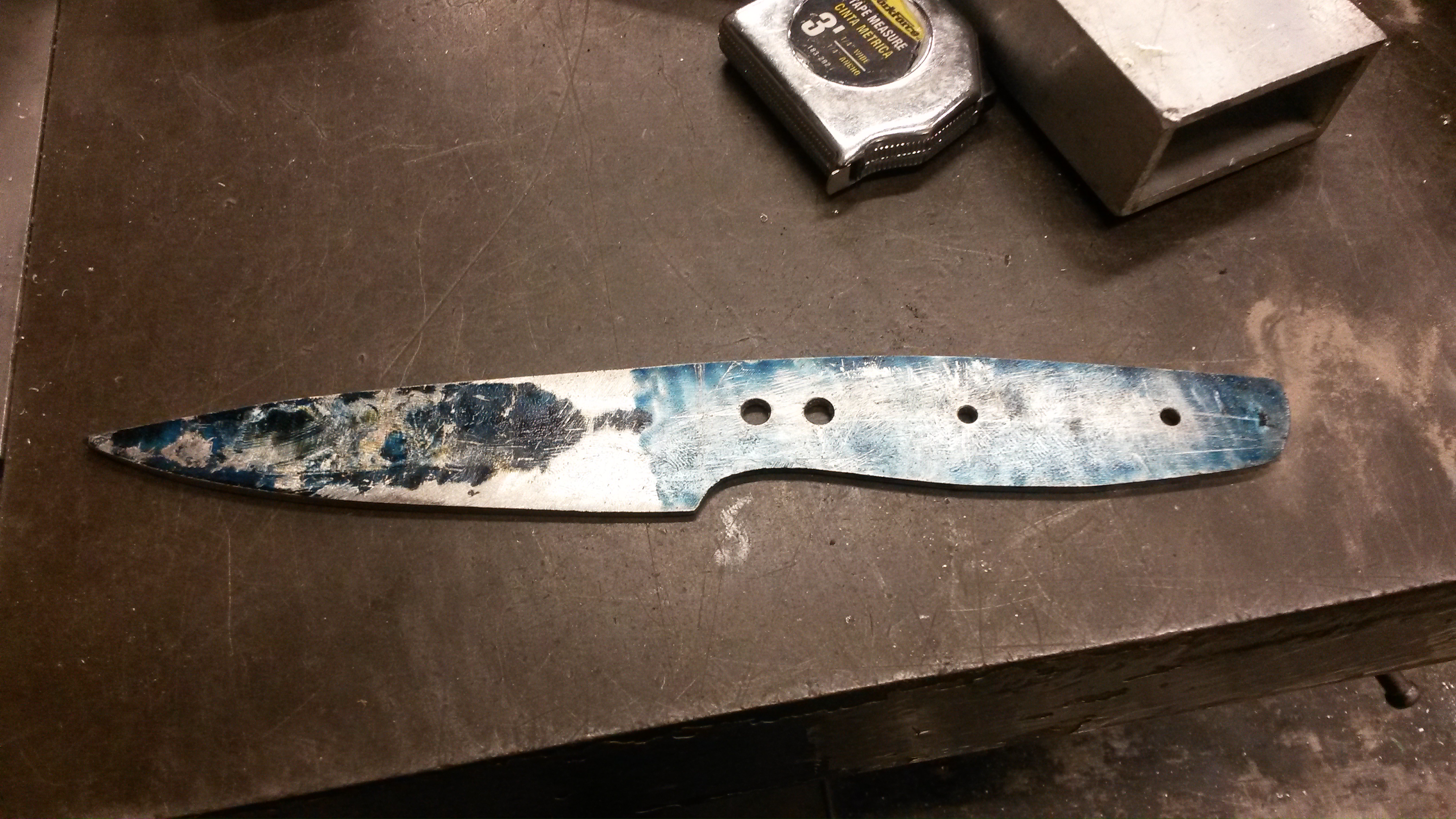
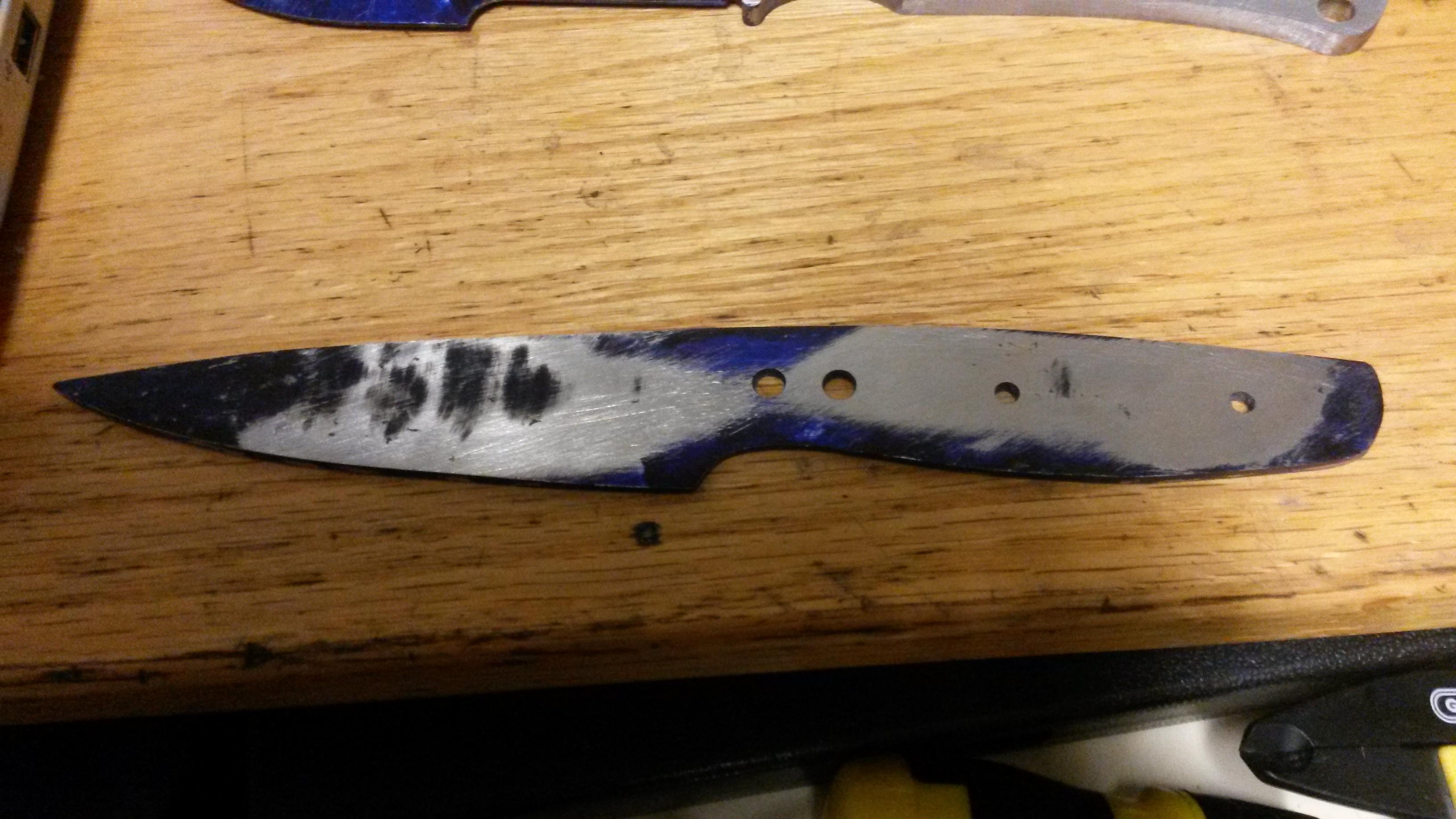
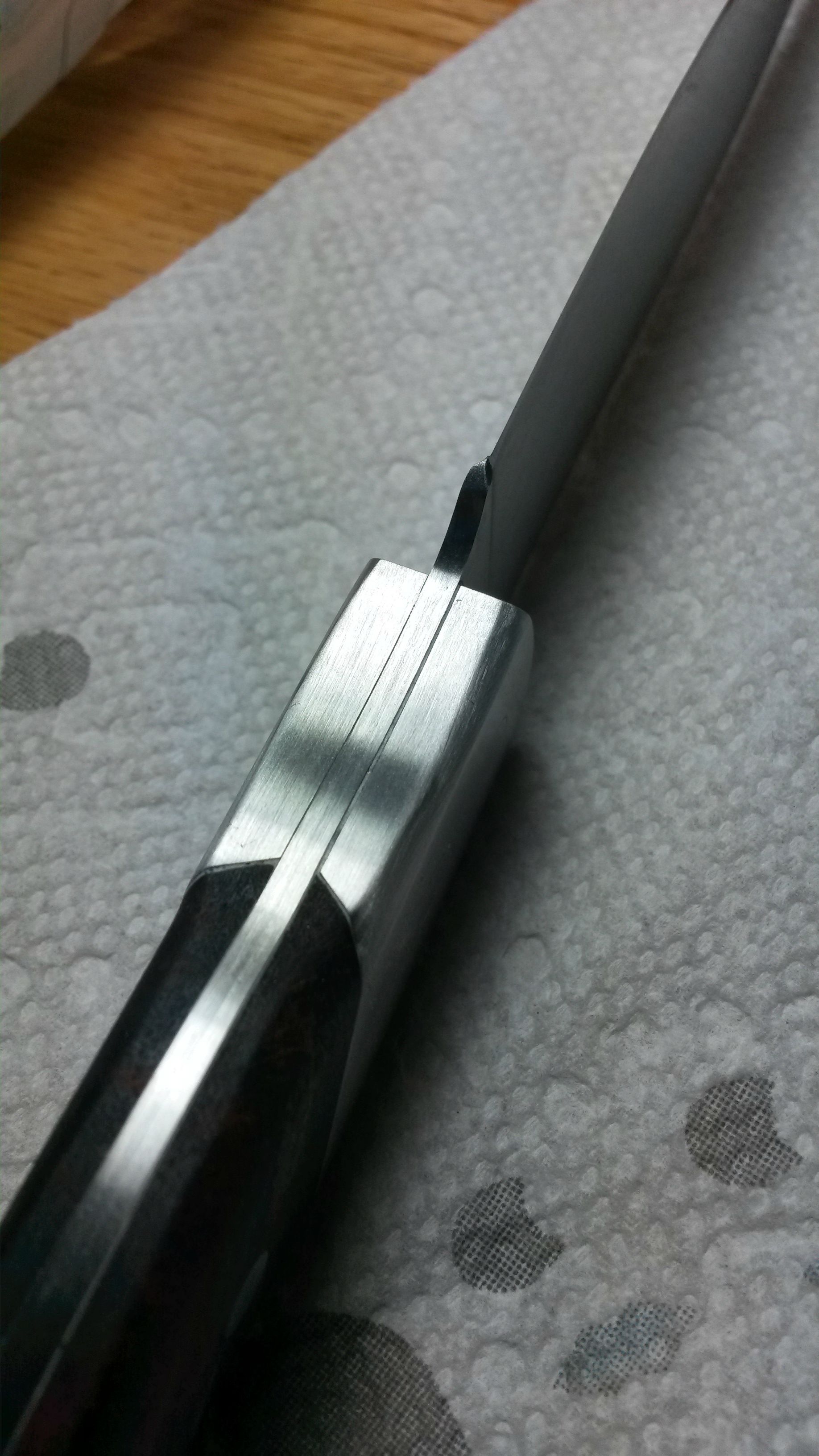
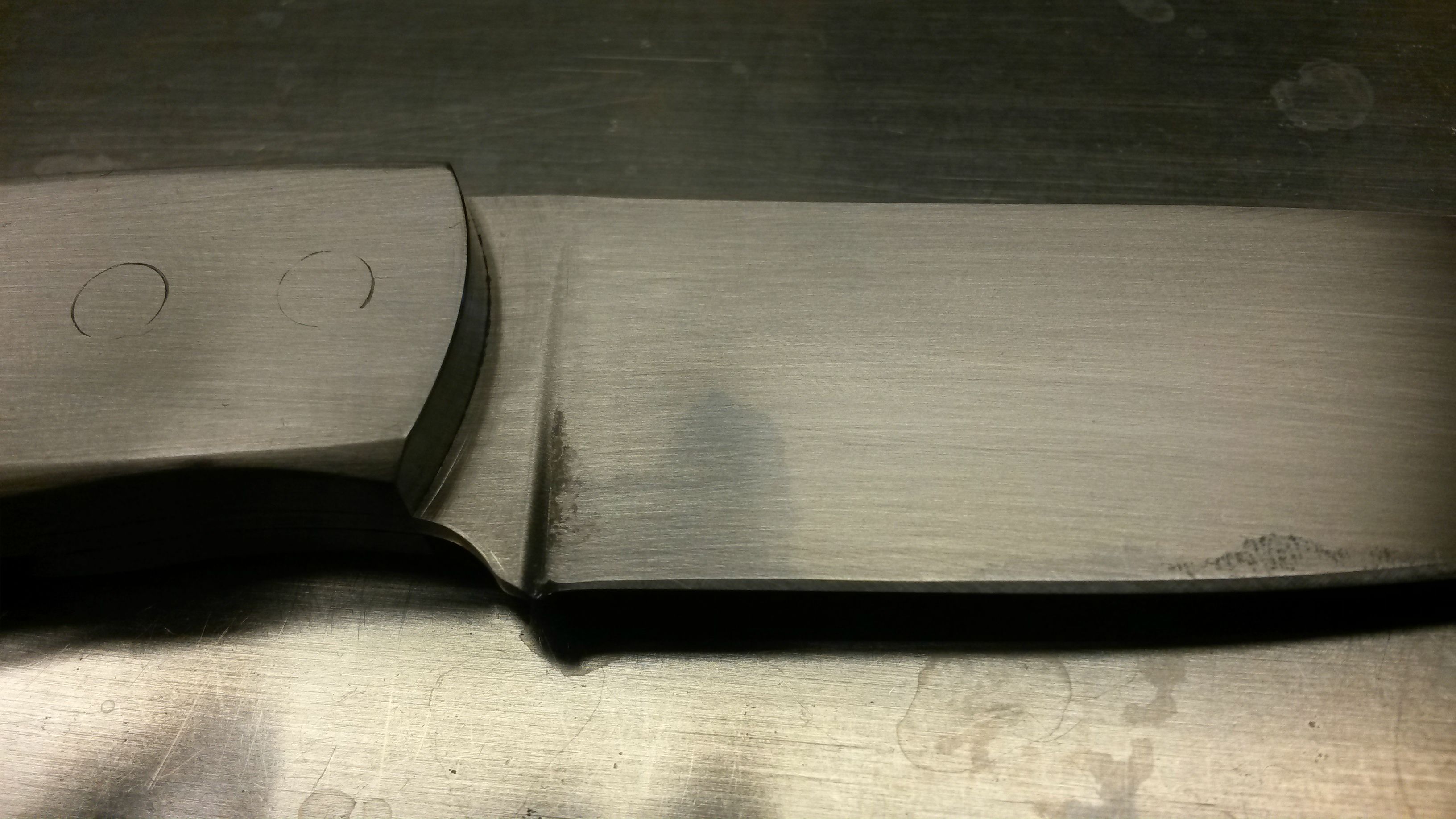
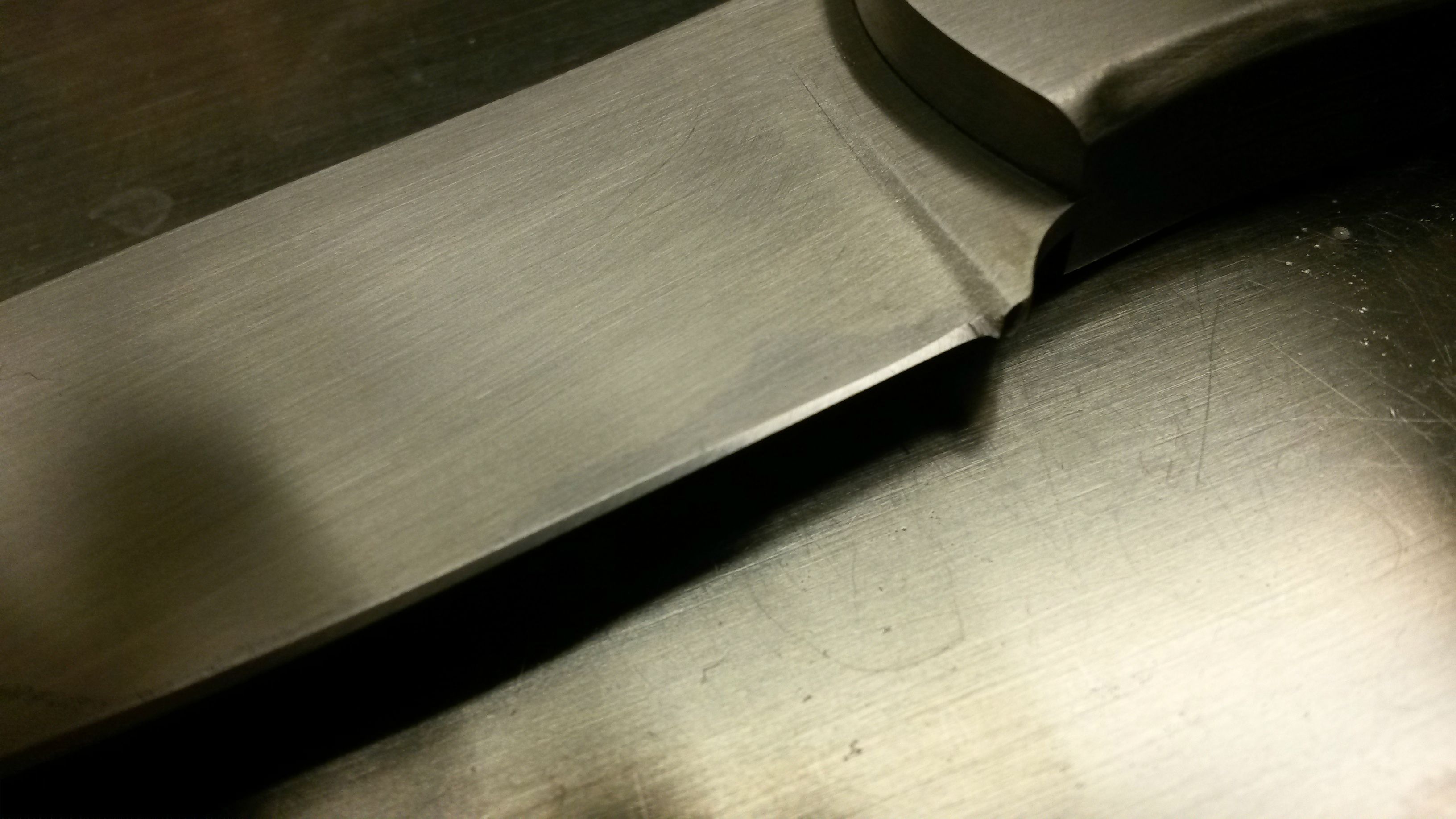
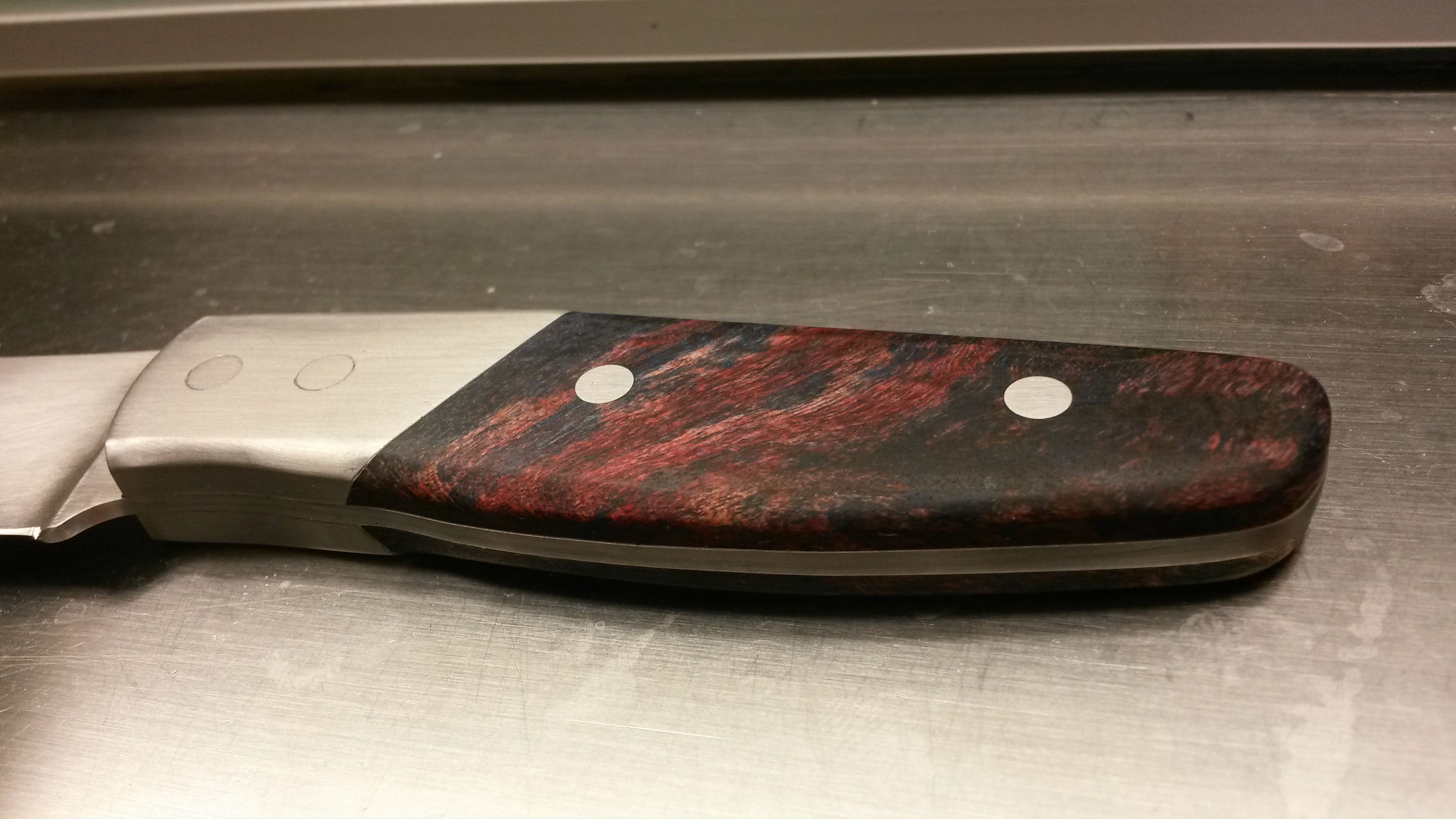
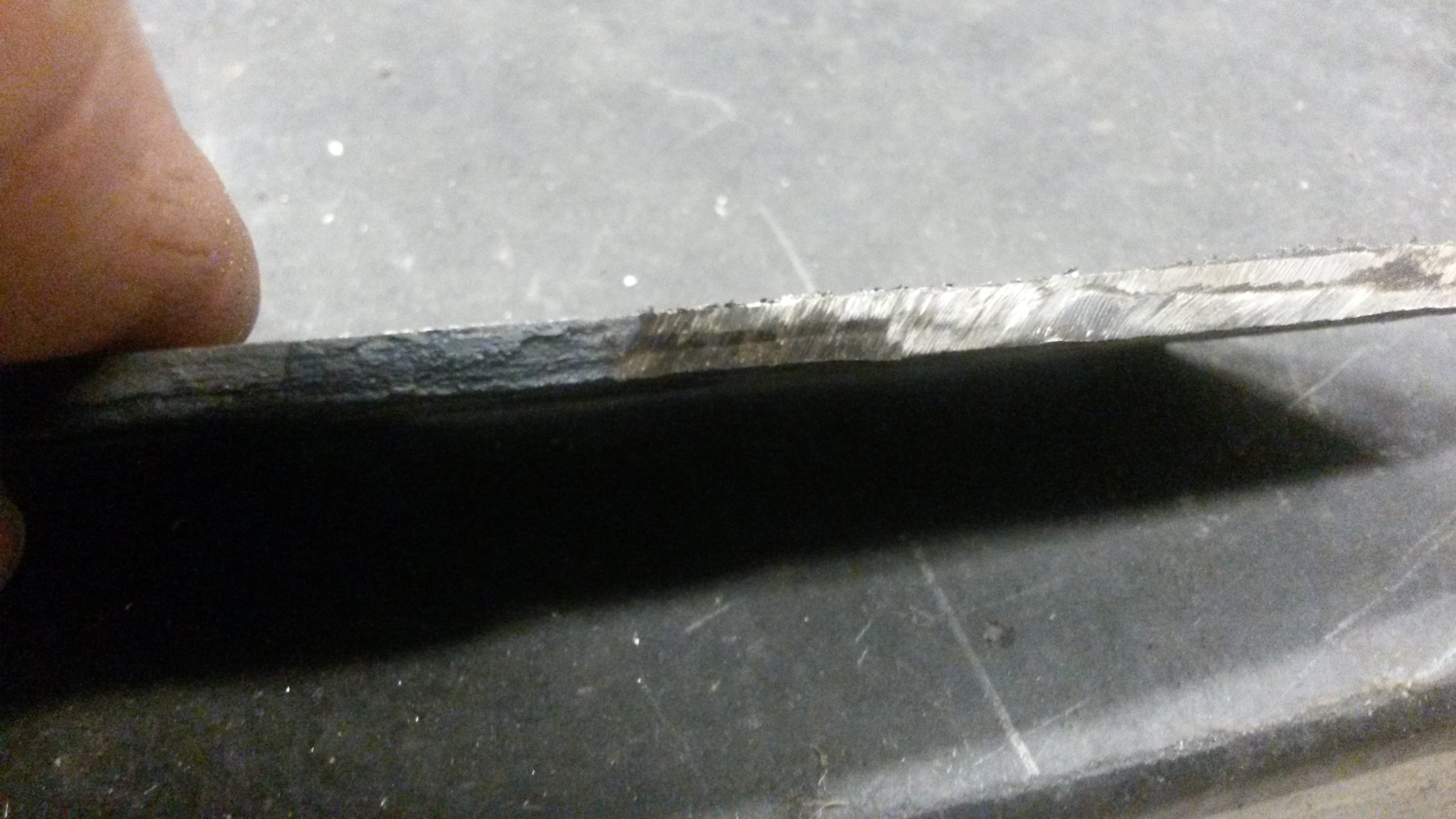
How do I remove deep pitting on a forged billet without a proper 2x72? Right now my current plan is either an eternity of filing or maybe roughing things out with an angle grinder and then filing things flat. I don't want to use a mill or surface grinder because it's only about 1/8" including all the scale, so probably 3/32" without scale at the thickest, and it's not perfectly flat so I'm afraid a mill or surface grinder would take off too much material to get things flat. I buzzed off some of the scale with a bench grinder, but I'm not sure that's a viable solution to get everything out.
Fluff:
My university's forge just got an updated space, and along with it, a forge press. I got to demo the forge press for some sponsors and Materials Science professors. One of the sponsors/professors said he was gonna try to invite Bob Kramer to visit our blacksmithing shop
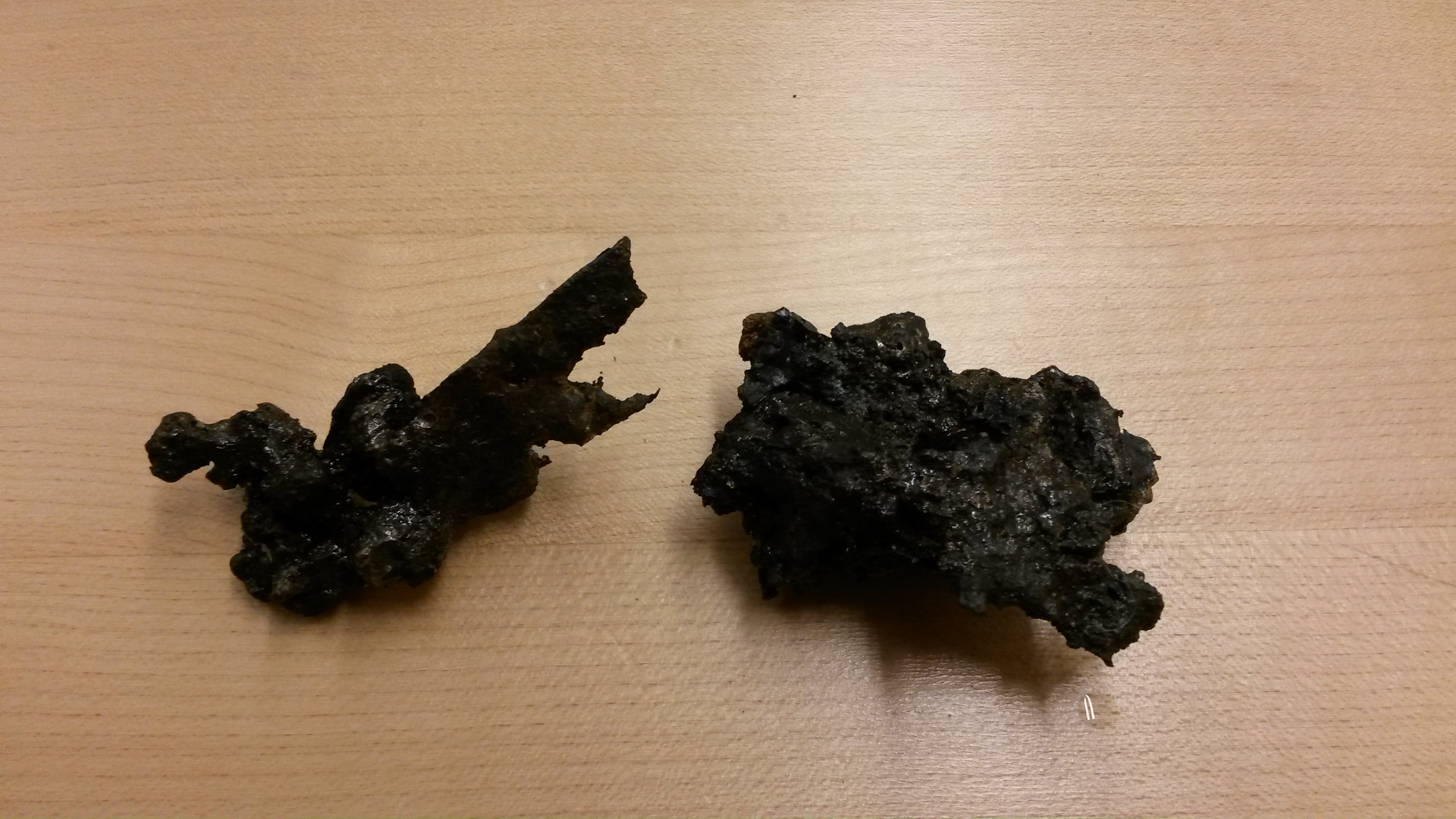
I made some wrought-O1 san mai, but forgot it in the fire and it turned into a modern art sculpture. I was sharing the fire with someone but I guess neither of us noticed it fall in because the wrought didn't spark very much, even when it was melting.
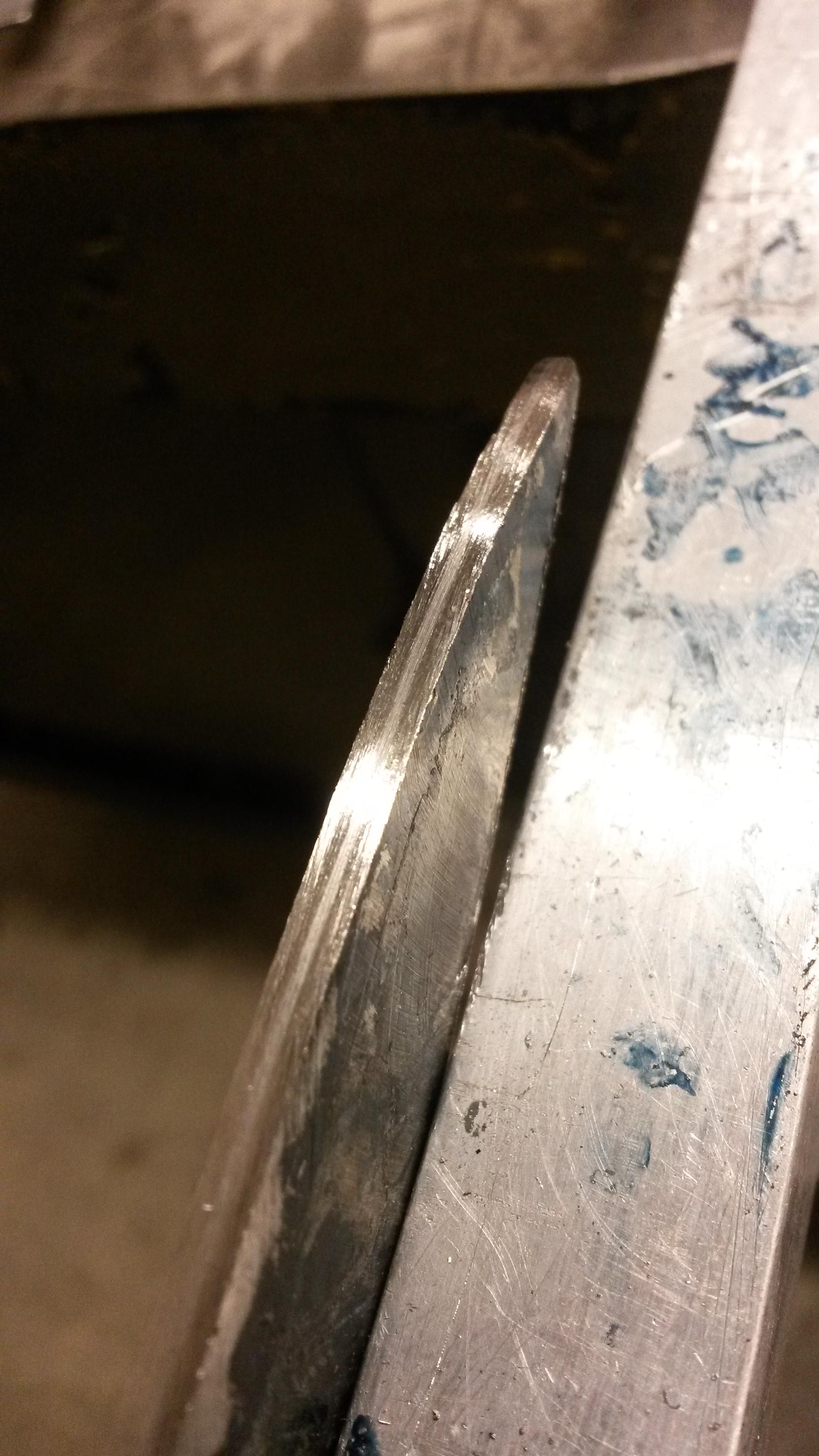
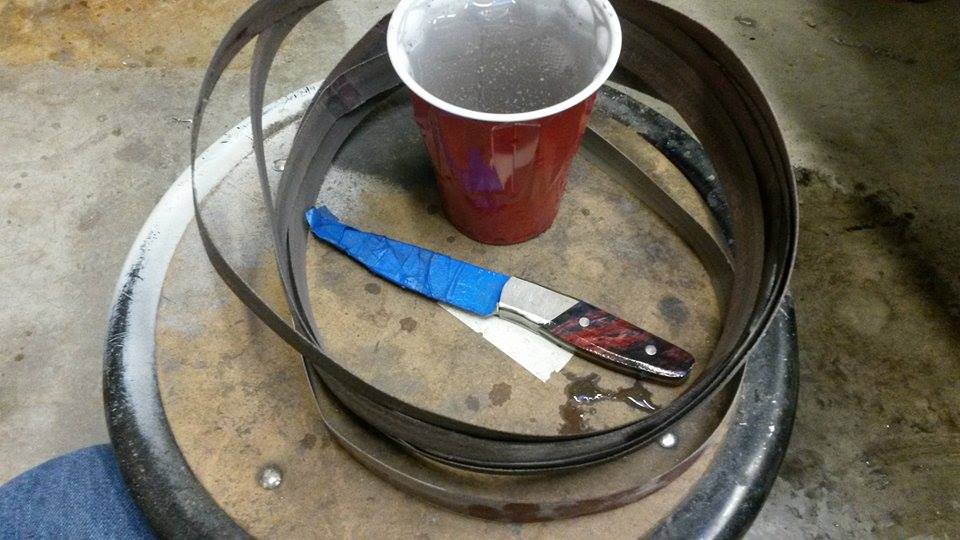
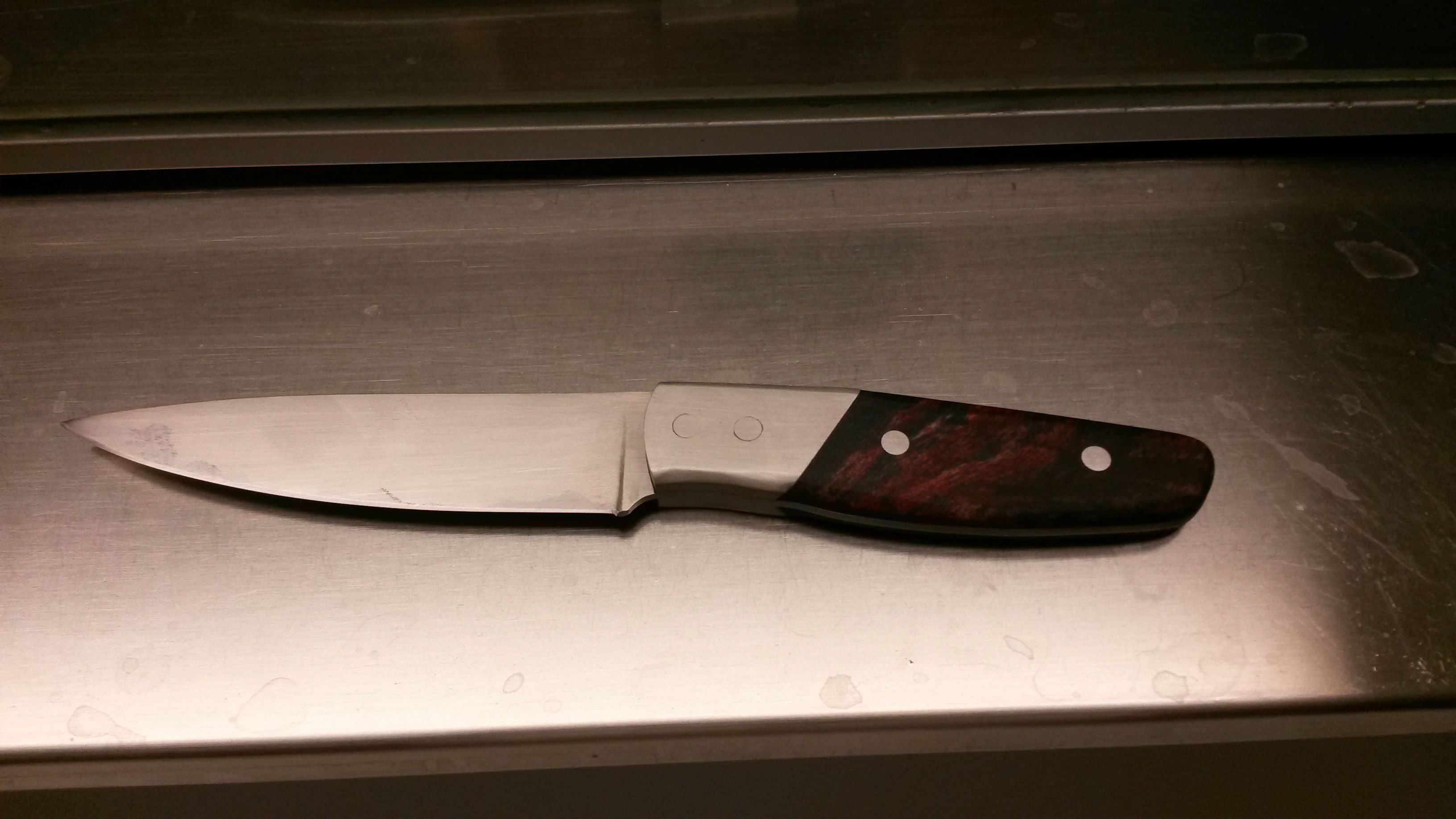
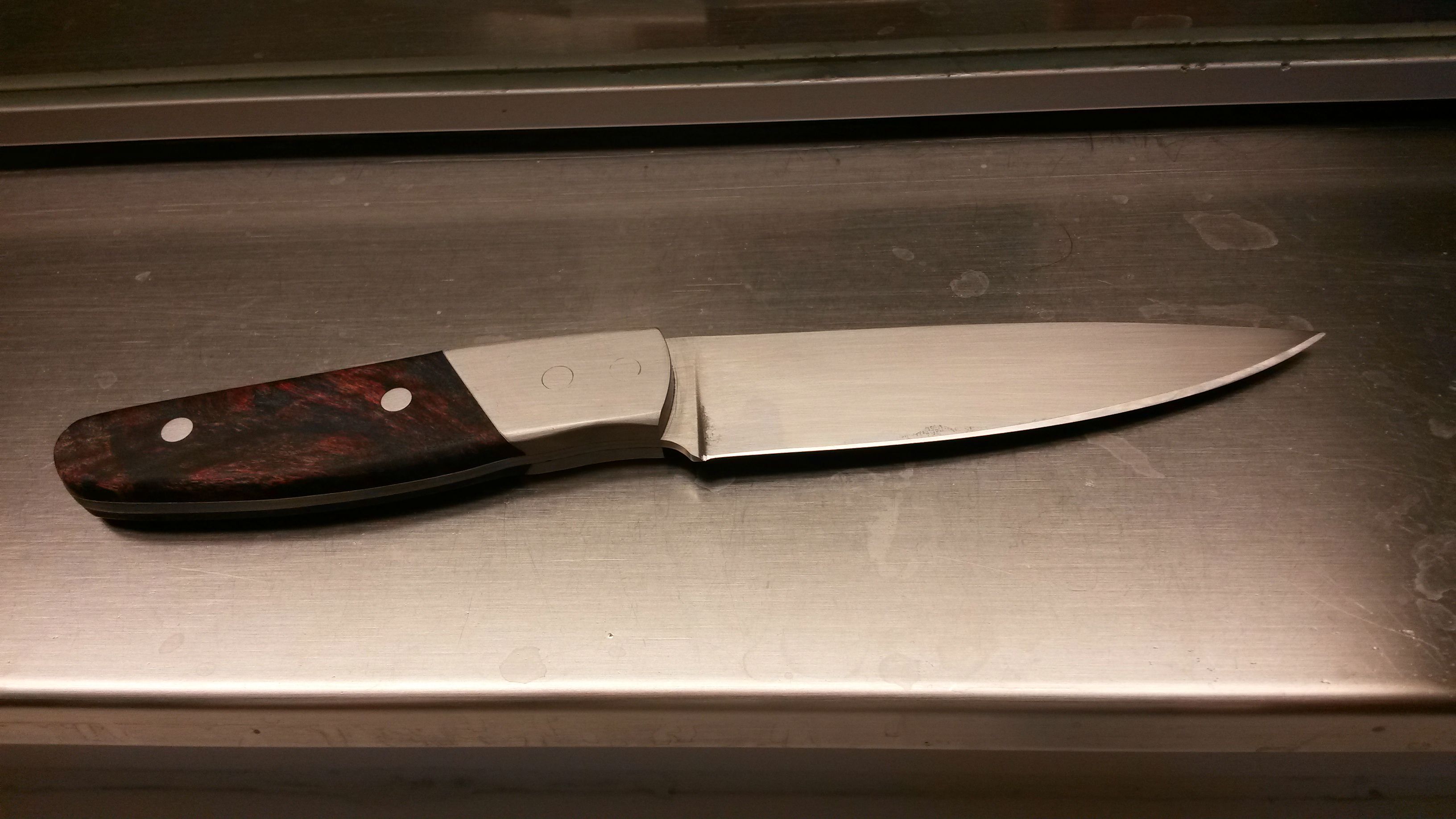
After reading up on stainless san mai, I decided to use said forge press to make a billet from scraps I had. Materials weren't ideal, but I had 316 and O1 on hand. I asked a friend to weld the sides shut and started with a 1" x 1.5" billet of 2 1/4" pieces of 316 and 1/8" piece of O1. I drew it out to a billet roughly 7~8 inches long, 1" wide, and maybe about 1/8" thick.
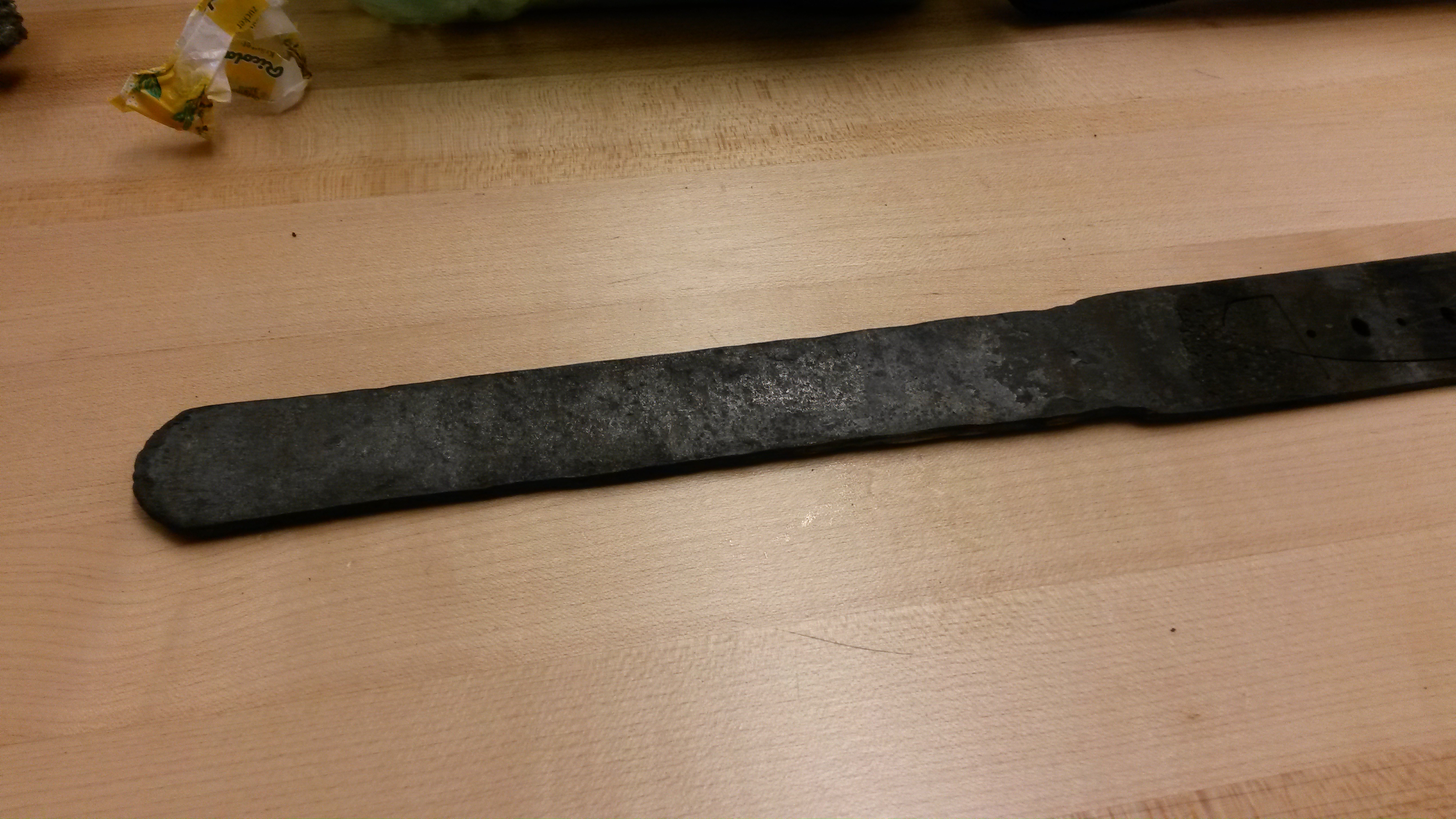
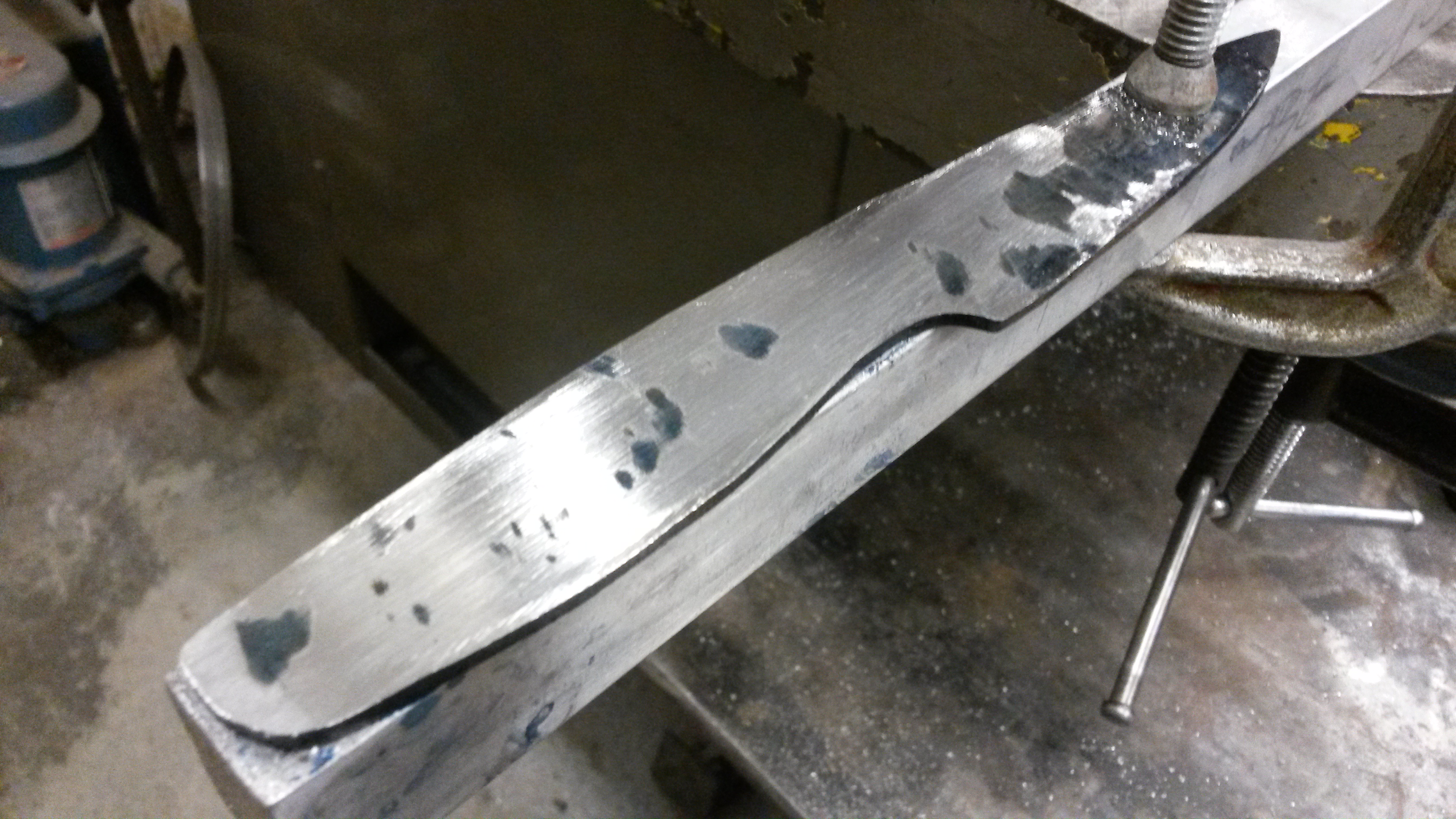
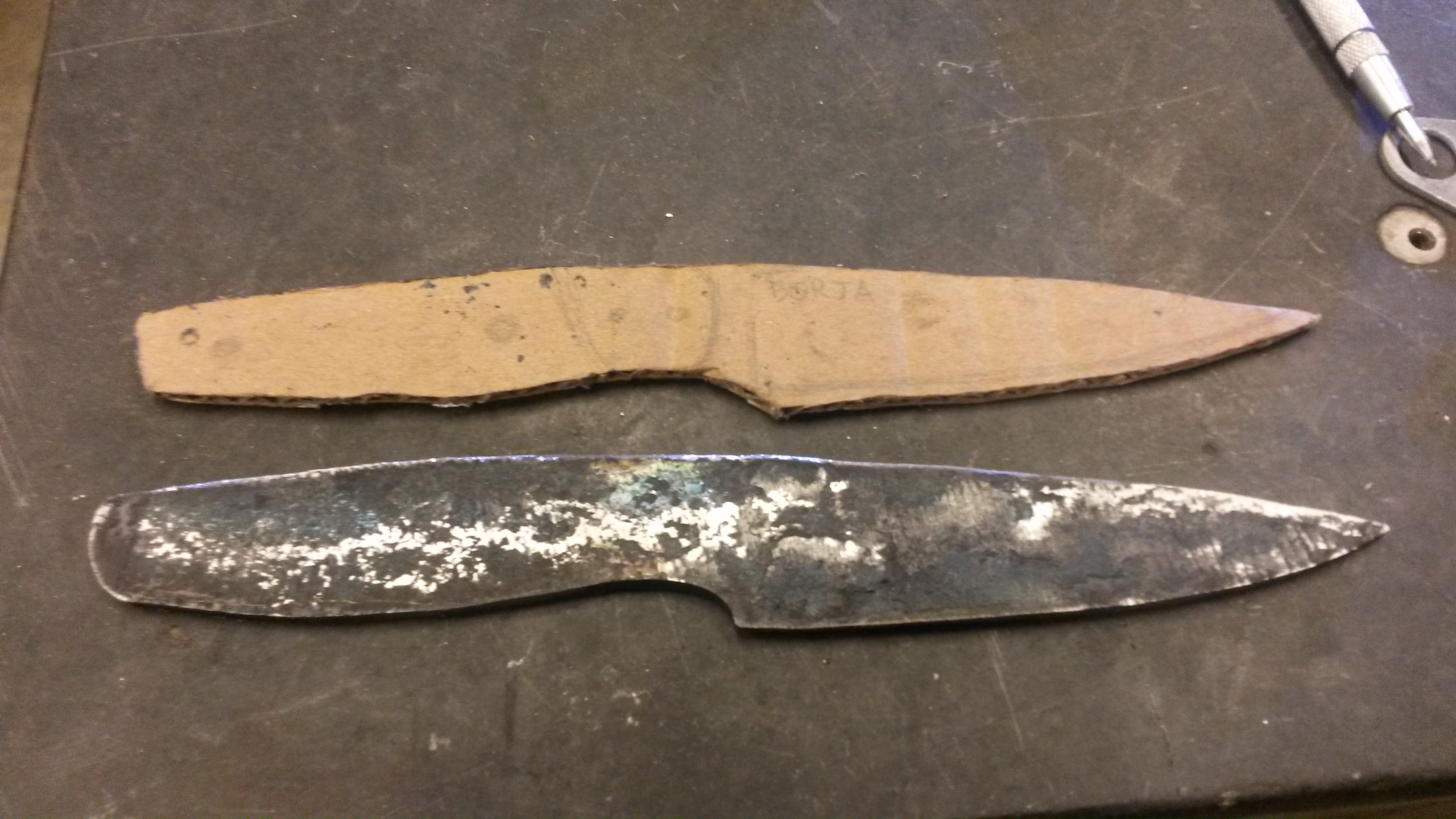
Profile grinding seemed pretty promising, though I hope I'll still have some stainless left after I remove the pitting.
TLDR:
How do I remove deep pitting on a forged billet without a proper 2x72? Right now my current plan is either an eternity of filing or maybe roughing things out with an angle grinder and then filing things flat. I don't want to use a mill or surface grinder because it's only about 1/8" including all the scale, so probably 3/32" without scale at the thickest, and it's not perfectly flat so I'm afraid a mill or surface grinder would take off too much material to get things flat. I buzzed off some of the scale with a bench grinder, but I'm not sure that's a viable solution to get everything out.
Fluff:
My university's forge just got an updated space, and along with it, a forge press. I got to demo the forge press for some sponsors and Materials Science professors. One of the sponsors/professors said he was gonna try to invite Bob Kramer to visit our blacksmithing shop
I made some wrought-O1 san mai, but forgot it in the fire and it turned into a modern art sculpture. I was sharing the fire with someone but I guess neither of us noticed it fall in because the wrought didn't spark very much, even when it was melting.
After reading up on stainless san mai, I decided to use said forge press to make a billet from scraps I had. Materials weren't ideal, but I had 316 and O1 on hand. I asked a friend to weld the sides shut and started with a 1" x 1.5" billet of 2 1/4" pieces of 316 and 1/8" piece of O1. I drew it out to a billet roughly 7~8 inches long, 1" wide, and maybe about 1/8" thick.
Profile grinding seemed pretty promising, though I hope I'll still have some stainless left after I remove the pitting.