-
The BladeForums.com 2024 Traditional Knife is available! Price is $250 ea (shipped within CONUS).
Order here: https://www.bladeforums.com/help/2024-traditional/
You are using an out of date browser. It may not display this or other websites correctly.
You should upgrade or use an alternative browser.
You should upgrade or use an alternative browser.
Stainless tig wire for pins
- Thread starter Nsewell
- Start date


Stacy E. Apelt - Bladesmith
ilmarinen - MODERATOR
Moderator
Knifemaker / Craftsman / Service Provider
- Joined
- Aug 20, 2004
- Messages
- 38,525
for something as critical as a pivot, I would suggest using precision round stock. Also, reaming the holes with carbide reamers make a snug and solid fit.

- Joined
- Oct 17, 2010
- Messages
- 2,424
Actually, I gotta disagree here guys.
Crown ER-410 tig is dimensionally accurate, and beautifully finished, better than ANY pin stock I've ever been able to source. I use it for all my stainless pins. Most TIG rod however, is drawn and not that accurate, and 309 is *NOT* suitable for any pin that needs to be peened. It will crack and splinter extremely quickly and is a bitch to cold form.
I highly recommend using 410 over 416 or any 300 series, because it specifically has high formability as opposed to being freer machining like 416. Yes, 416 is easier to machine, (although in our application I find the difference marginal), but has low cold formability (peening), and will crack and splinter from heavy peening quickly. 410 you can beat on all day, form as large or small a domed pin as you want, and it moves readily.
Crown brand ER-410, I buy it in 1/16, 3/32 and 1/8, it's bright, clean finished, very round, accurate sized, and doesn't have pinched ends. It honestly looks precision ground. I can't recommend it enough.
Crown ER-410 tig is dimensionally accurate, and beautifully finished, better than ANY pin stock I've ever been able to source. I use it for all my stainless pins. Most TIG rod however, is drawn and not that accurate, and 309 is *NOT* suitable for any pin that needs to be peened. It will crack and splinter extremely quickly and is a bitch to cold form.
I highly recommend using 410 over 416 or any 300 series, because it specifically has high formability as opposed to being freer machining like 416. Yes, 416 is easier to machine, (although in our application I find the difference marginal), but has low cold formability (peening), and will crack and splinter from heavy peening quickly. 410 you can beat on all day, form as large or small a domed pin as you want, and it moves readily.
Crown brand ER-410, I buy it in 1/16, 3/32 and 1/8, it's bright, clean finished, very round, accurate sized, and doesn't have pinched ends. It honestly looks precision ground. I can't recommend it enough.
- Joined
- Oct 17, 2010
- Messages
- 2,424
There's got to be some difference in various 309 then. I've flattened it many times to thin out a rod when I didn't have a smaller diameter.
But getting some ER-410 sounds like a plan.
Maybe I'm thinking of 308-L either way, there's no advantage to using the 309 in this application. 410 is really the best choice for pocket knife work. You can get thin sheet for liners, plate for integrals or bolsters, and matching nice pin stock, all of which machines fine, and forms extremely well. Check it out and let me know what you think.
I hated using 416, and had a lot of color matching problems with it, and would crack the edges of domed pins if I didn't have everything just perfect and had to wail on it a little longer than expected, especially trying to move a pin off flat into a low section of stag or whatever. Don't have any of those issues with 410. Jantz carries 410 sheet and plate for the other parts.

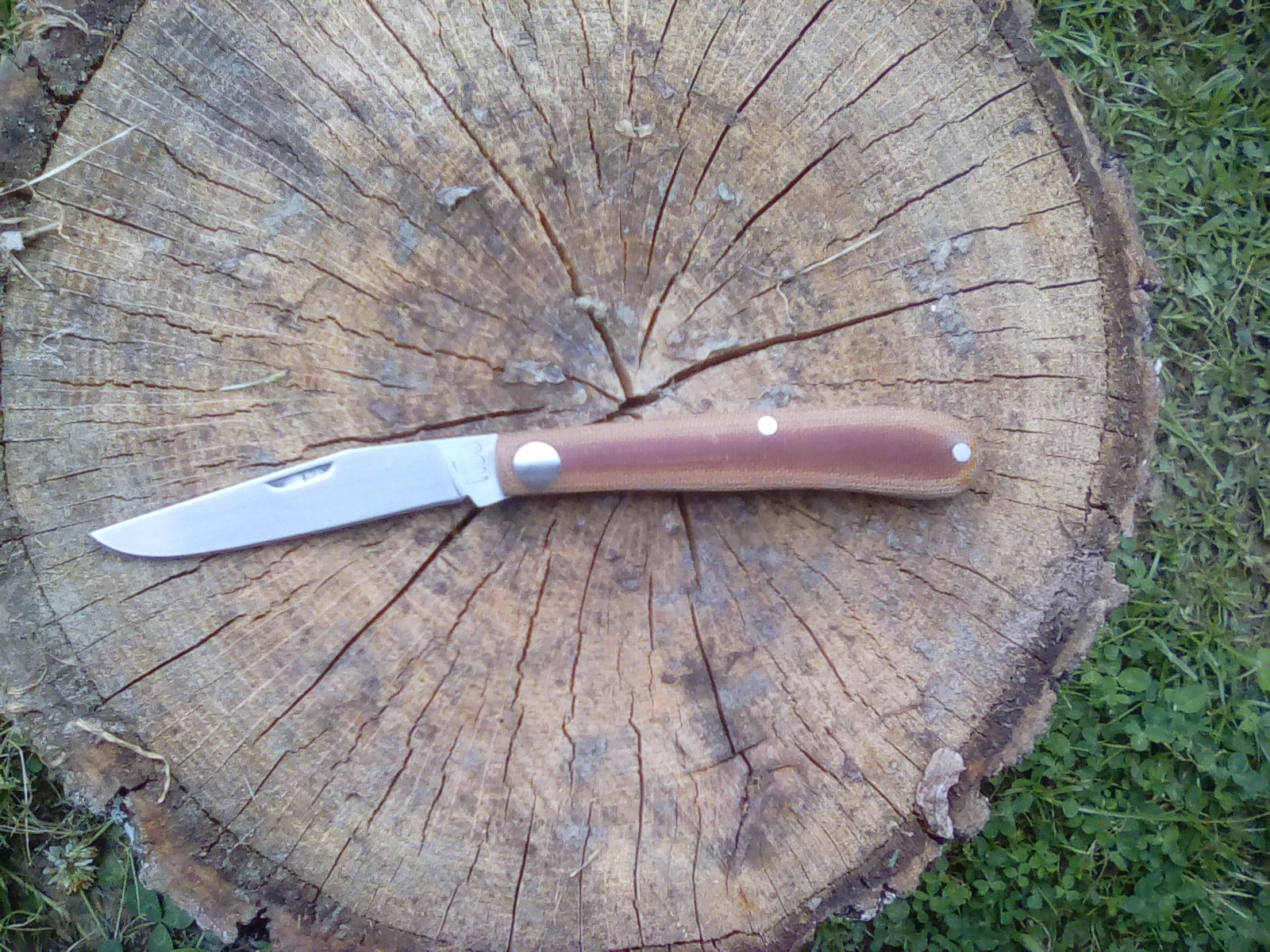
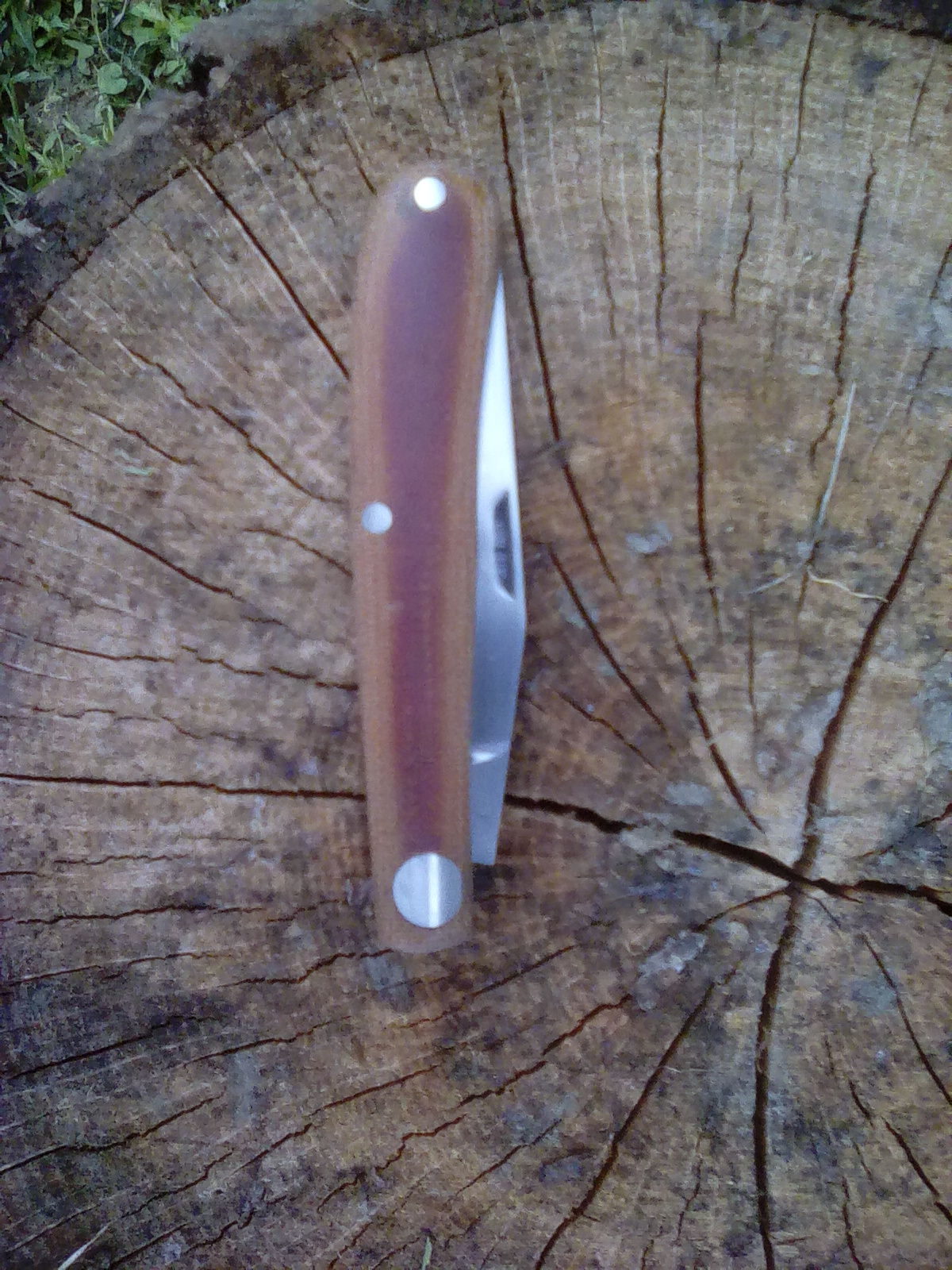
Well I did some experiment with 309 annealed and 416 annealed and the way it came. The 309 peene d the easiest followed by the 416 annealed with a few cracks. The 416 the way it came cracked very badly. I'm glad I practiced on some mild steel before I did the knife. I used the annealed 416 since it matches the bushings. I think it turned out ok for my first slip joint. I took apart a case trapper to use as a pattern.