Steel Chart draft 1

After a couple of updates, I still wonder how you are ranking these? Is it by gut instinct, some rather odd toughness charts, or something else? What do you mean by toughness? Are you strictly speaking of impact toughness? It still looks pretty random. One chart at a time. Corrosion resistance is next.

More than a couple, although that last post was not the latest update. The one that is there now the latest, and not very random at all.
 
I think the chart has gotten worse. cpmD2 is second on that list? no way in hell. It will not be tougher than a lot of steels below it.

I would personally never show these charts to anyone. I applaud the effort but the results are far from meaningful and only muddy the water. They don't explain anything and only attempt to say one steel is better than another without any quantifying, defining parameters or even proof. It's all subjective and a lot of it is just plain wrong. Or it could be right one day and wrong the next depending on what the steel is used for. It's trying to tackle too much without enough actual information to back up the claims.

If the goal is to steer ignorant people into buying knives made of steel the guy wants to work with, I can see that, but it shouldn't be a reference source whatsoever. It's just marketing at this point. No educational benefits. IMO the OP would be better off pointing to the knife steel app and calling it a day.

If the dude just erased it all and started over by ranking the steels he liked best based on his uses and then explained what specifically about the steel made it work well for his applications I think it'd be a much more fruitful endeavor.

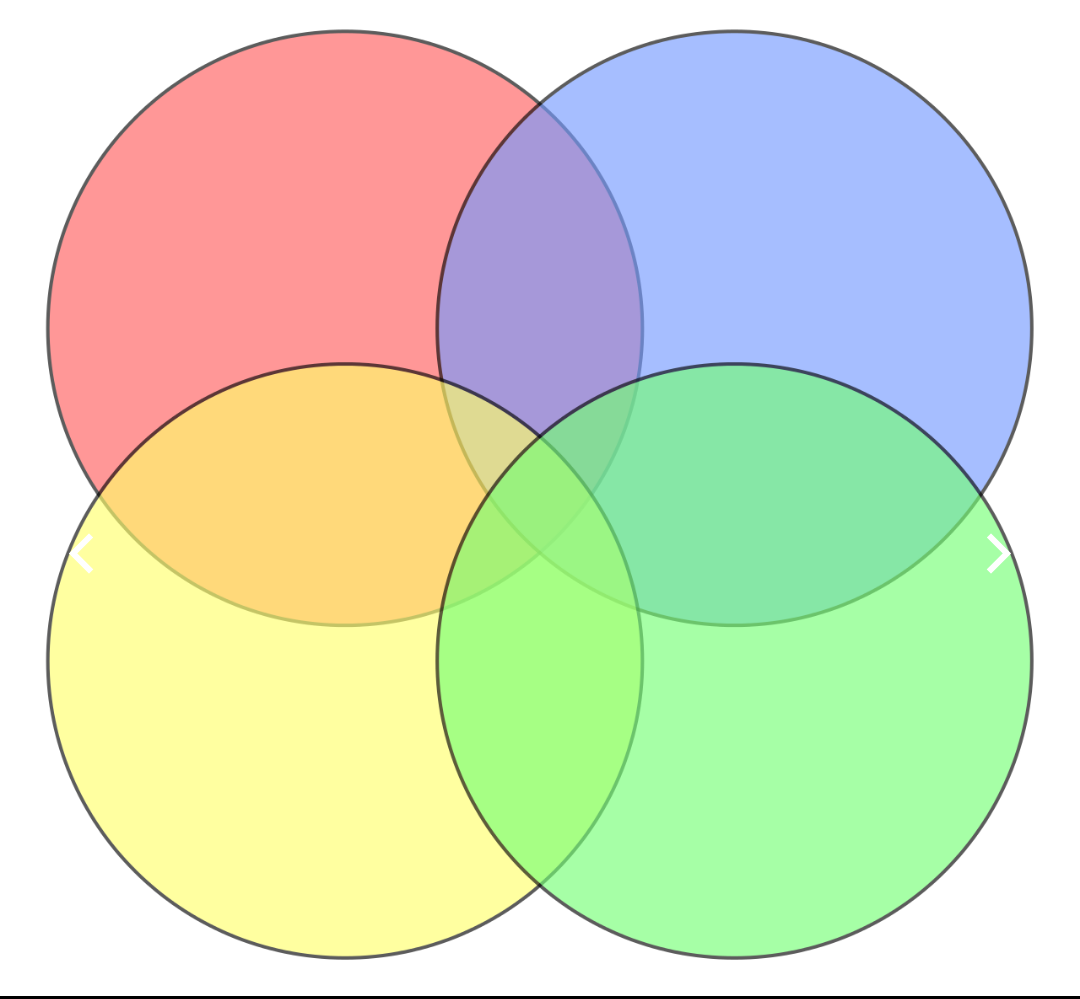
Or if there were four overlapping circles (venn diagram) of wear resistance, hardness, corrosion resistance, and gross fracture resistance, with the most balanced steels in the overlapping section depending on known properties of the steels and then told customers that he tries to make EDC knives by choosing steels right in the middle, fillet and fishing knives by going to the far side of corrosion resistance and wear resistance, tried to make skinning knives with steels on the far side of wear resistance and hardness, etc, then that'd be super beneficial to his less than informed customers. But that's not ranking anything, that's just plotting steels on an infograph of overlapping quandrants. There'd also have to be a disclaimer that a good or bad heat treatment and good or bad geometry can significantly alter where the steel falls on the diagram.

UmdfVGZ.jpg
 
Last edited:
I would personally never show these charts to anyone. I applaud the effort but the results are far from meaningful and only muddy the water. They don't explain anything and only attempt to say one steel is better than another without any quantifying, defining parameters or even proof. It's all subjective and a lot of it is just plain wrong. Or it could be right one day and wrong the next depending on what the steel is used for. It's trying to tackle too much without enough actual information to back up the claims.

If the goal is to steer ignorant people into buying knives made of steel the guy wants to work with, I can see that, but it shouldn't be a reference source whatsoever. It's just marketing at this point. No educational benefits. IMO the OP would be better off pointing to the knife steel app and calling it a day.

If the dude just erased it all and started over by ranking the steels he liked best based on his uses and then explained what specifically about the steel made it work well for his applications I think it'd be a much more fruitful endeavor.

It is interesting to me that you see a chart like this and think it is saying one steel is "better" than another. It is not describing every knife made of that steels performance, it is a pretty fair representation of how the steels potential compare to one another. I get it if it is not your thing, but it will be educational and useful to a number of people.

And if the chart is "plain wrong", it would be helpful to me to know particularly where you think it is plain wrong?

-"the dude"
 
Here is a more objective chart that some might find interesting:

14361261_10154485034219491_5049007888585792414_o.jpg


14361338_10154485053584491_597965634825579670_o.jpg
 
Last edited:
It is interesting to me that you see a chart like this and think it is saying one steel is "better" than another. It is not describing every knife made of that steels performance, it is a pretty fair representation of how the steels potential compare to one another. I get it if it is not your thing, but it will be educational and useful to a number of people.

And if the chart is "plain wrong", it would be helpful to me to know particularly where you think it is plain wrong?

-"the dude"

No offense meant. I think what you're trying to do is outstanding. It just really can't be done with the method you're working with because of all the variables. The venn diagram method allows some subjectivity and leaves room for the variables without specifically saying this steel ranks higher than another. You can't say that. 3V heat treated one way is more corrosion resistant than some other steels, but if it's heat treated another way then it's less corrosion resistant than those other steels. It's definitely not tougher than L6 unless L6 was poorly done all the way around. These ranking charts are a cheap, easy, and often inaccurate depiction. A venn diagram is a cheap, easy, and less inaccurate depiction that allows for variables to introduced and explained. In the end, that should be the goal, in my humble opinion, of a small time maker. Being able to introduce and explain those small variables and why a small maker can control those variables better than a large scale manufacturer or even the foundry producing the steel.

Really thick S110V likely would have less edge retention than thin, really hard CTS-XHP in soft media whereas really thick S110V would have less gross fracturing (simple breaks) than too thin 3V. A venn diagram allows for that to be explained whereas a simple ranking chart doesn't. That's not even including getting into what Peters is doing with steels like 3V and 4V vs a guy heat treating according to the manufacture's recommended processes.

That's why I respect Ankerson's lists. He's not saying "x" steel is better than another or ranks higher than another. He simply says this knife in this steel made by this person cut more rope or cardboard than this other one. That cannot be argued unless you question his testing method or his honesty. You can tell yourself you use your knives differently so his lists don't really mean anything to you but it's not saying his findings are wrong.
 
Last edited:
Here is a more objective chart that some might find interesting:

14361261_10154485034219491_5049007888585792414_o.jpg

Now that's more like it. That cannot really be meaningfully argued unless someone introduces the variable of the foundry not producing the steel to spec. But it still needs to be "maxamet" and not "maxamelt"
 
Now that's more like it. That cannot really be meaningfully argued unless someone introduces the variable of the foundry not producing the steel to spec. But it still needs to be "maxamet" and not "maxamelt"

oops! I went in and fixed it. Getting micromelt mixed in there.
 
Okay, so what am I to make of ZDP-189 at the top of both charts (Carbon and Chrome)? What is the charts saying to me as a knife buyer?
 
Now you have CPM-154 tougher than L6 :confused:

Edge retention come from many factor such as edge geometry, the sharpening, the material being cut, the way you cut etc. If you ground very acute edge like less than 10 degree per side, most high carbide steel especially the one that normally has large grain (like D2) will suffer significantly compare to the lower carbide one.
 
Now you have CPM-154 tougher than L6 :confused:

Edge retention come from many factor such as edge geometry, the sharpening, the material being cut, the way you cut etc. If you ground very acute edge like less than 10 degree per side, most high carbide steel especially the one that normally has large grain (like D2) will suffer significantly compare to the lower carbide one.


No, L6 is at the top of the toughness list. There was an older version of that chart on the first post, I just updated that one with the latest list, which is pretty dialed in I think.

I did put the elemental composition charts together for those who like hard empirical data, but one could make some wrong assumptions based on those as well.


Okay, so what am I to make of ZDP-189 at the top of both charts (Carbon and Chrome)? What is the charts saying to me as a knife buyer?

One would probably assume the high carbon would equal top edge retention, and the high chrome would equal top corrosion resistance. Although the addition of significant amounts of vanadium would increase wear resistance. You could also assume with that much carbon and chrome its toughness would not be too great. But with a composition chart you would need to know a little more about the effects of alloying elements. Not a bad thing to know, but not all buyers do.
 
Hardened ZDP-189 usually has less free Cr to consider as stainless (12% free Cr) because significant of its Cr locked in carbide form. Aeb-l has 13%Cr and after hardened it still has more than 12% of free Cr, so for fact - aebl is more corrosion resistance than zdp189.

Although 10V has only 2.45%C but carbides are mostly Vanadium, which overall is much more wear resistance than zdp189 higher volume but softer chromium carbides.


...
One would probably assume the high carbon would equal top edge retention, and the high chrome would equal top corrosion resistance. Although the addition of significant amounts of vanadium would increase wear resistance. You could also assume with that much carbon and chrome its toughness would not be too great. But with a composition chart you would need to know a little more about the effects of alloying elements. Not a bad thing to know, but not all buyers do.
 
Hardened ZDP-189 usually has less free Cr to consider as stainless (12% free Cr) because significant of its Cr locked in carbide form. Aeb-l has 13%Cr and after hardened it still has more than 12% of free Cr, so for fact - aebl is more corrosion resistance than zdp189.

Although 10V has only 2.45%C but carbides are mostly Vanadium, which overall is much more wear resistance than zdp189 higher volume but softer chromium carbides.

Good point with the ZDPCorrosion resistance. I moved it next to D2.

You are right abount the Vanadium carbides (they are also a pain to grind), ZDP however would typically have 2-4 RC points on 10V which would close some of that gap in real world edge retention.
 
Ya got a typo on the top chart's title, it says "Cleely" instead of Creely.

I like the chrome and carbon comparison chart since they can be accurately measured, but of course performance results for all blades will vary based on HT, shape, etc! :)
 
Back
Top