Strange hamon behavior

Joined
Dec 27, 2013
Messages
2,696
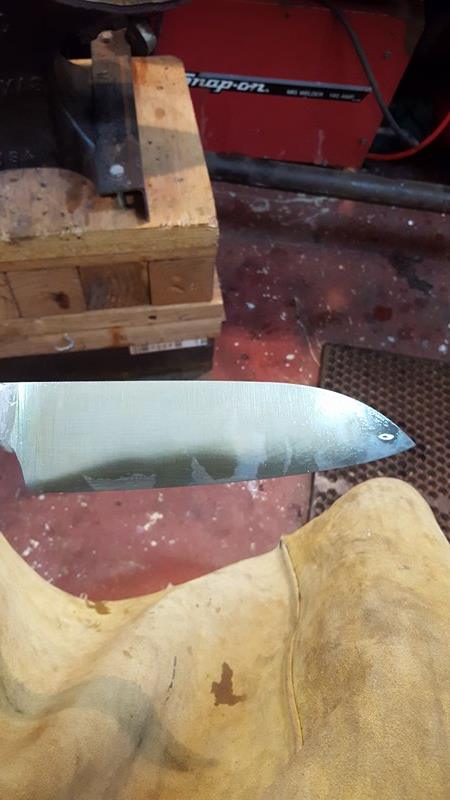
Hey guys, so im working on a new hamoned kitchen knife. Steel is W2, I quenched it in oil. The clay was applied pretty well "I did a similar one a day ago but it cracked in the water quench and the hamon was exactly were I applied the clay"

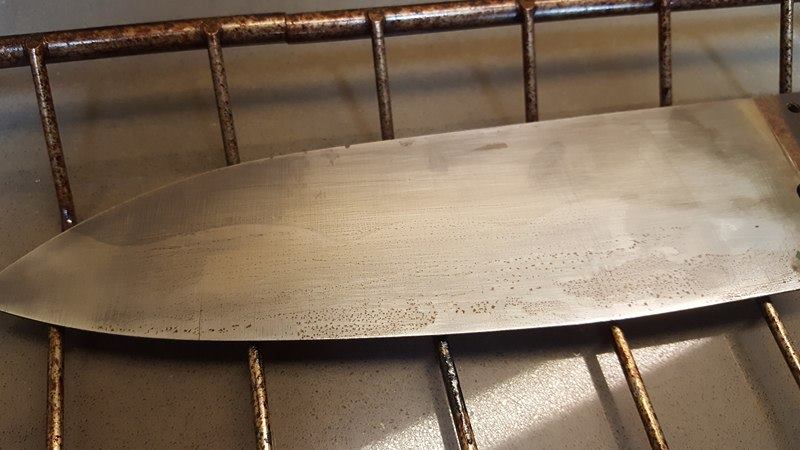
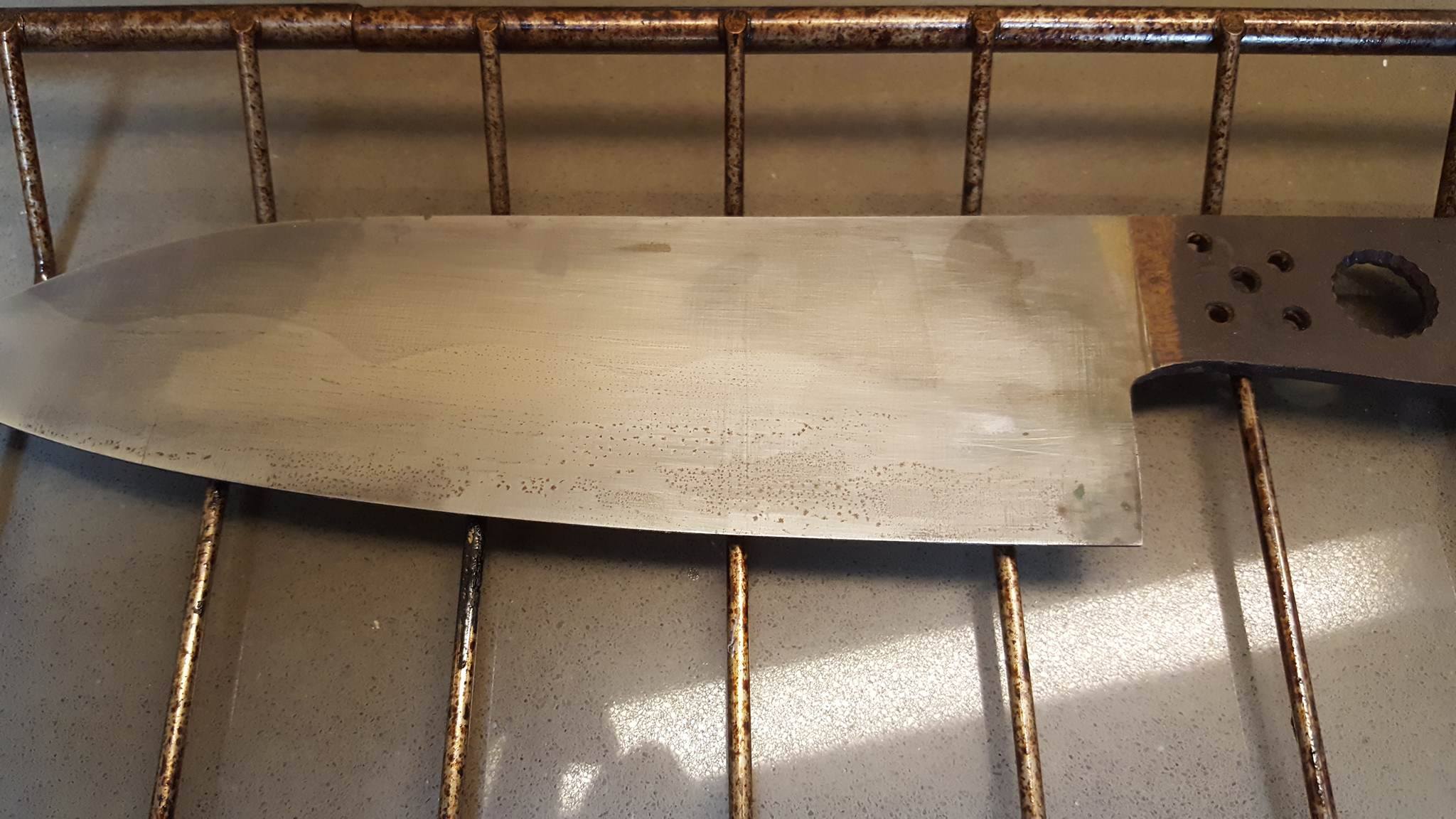
I just ground it down with 60 grit to near the final thickness and did an etch just to text. This is what I got
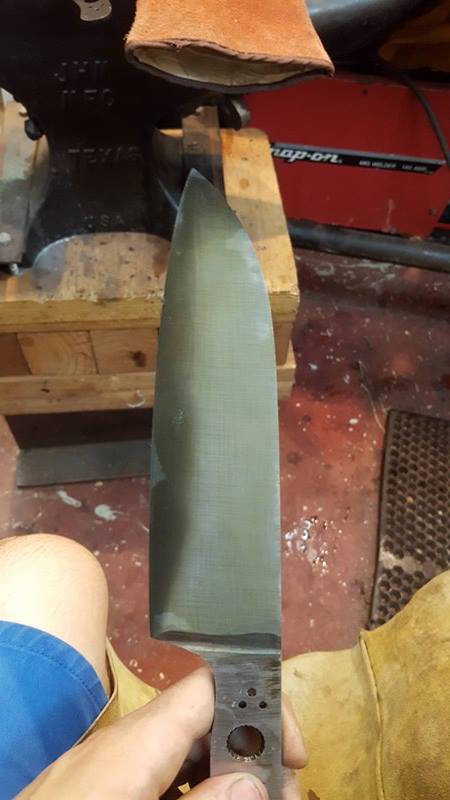
7pvRrNh.jpg

kIKZgeu.jpg


The issue is thats not where I put the clay at all.

This is how I applied it and how the other hamon showed up
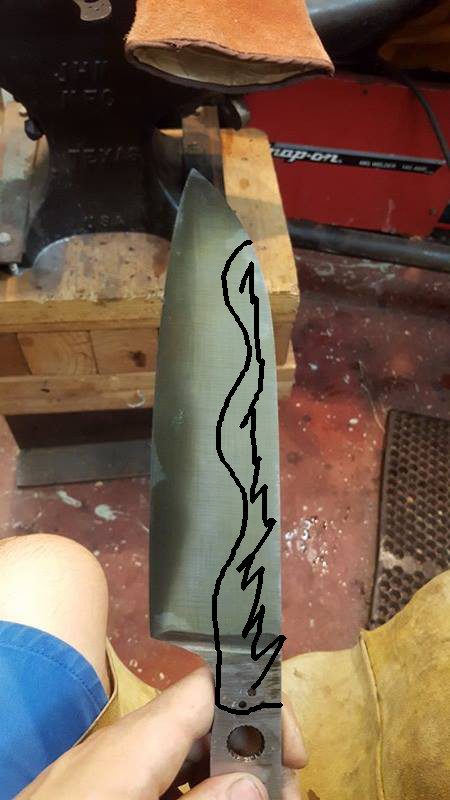
aSCIRXx.jpg


This is only at 60 grit, and Im going to polish it all the way up. Any ideas?
 
In my experience with W2 and hamons, this was one of three things or a combination.

Either your clay was too thick, your soak time wasn't long enough, or your temperature wasn't high enough.

You can always redo it if you aren't happy with the hamon.
 
In my experience with W2 and hamons, this was one of three things or a combination.

Either your clay was too thick, your soak time wasn't long enough, or your temperature wasn't high enough.

You can always redo it if you aren't happy with the hamon.

The soak was not very long. But I have another piece I water quenched and it had some crtacks, I ll take some photos. The hamon went quite well on the piece.

What I was wondering was How it moved so far down when the clay was applied rather high on the blade.
 
Did you quench this blade after the cracked one? Did it have time to get back up to temp before you quenched it? That is assuming that you are using a kiln...

I ran into the problem of losing heat when the kiln door was open, when quenching 3 blades one after another. By the time I quenched the 3rd blade, the oven had lost too much heat, and I didn't give it time to rebound to aus temp. The hamon ended up looking like yours, so I did the HT again.
 
Here is the one that was water quenched. As you can see, the tip part has a very well devolped hamon that followed the clay, but towards the tang it lost all detail

9G6tiMI.jpg

rA5dCBp.jpg
 
I also get that weird Hamon with to thick of clay because I have a tendency to glob it on.
 
Its strange. The one I did before showed some great detail in the tip.

Im obviously going to keep at this "I love W2 and I love hamons, just palced an order for a bunch more bars" but I guess ill figure it out.

How thick do you guys like to apply clay? And at what thickness do you leave the W2? Im always a little afraid of leaving it to thick before and grinding through the hamoned parts.
 
Use very thin clay with W2. Make sure you have your whole blade up to critical. It's possible that only the edge was up to critical and the rest didn't harden because of it.


Sent from my iPhone using Tapatalk
 
Did you take off enough decarb on photo #1 ?

BTW if you polish the blade by HAND youmight get some nice delicate structure at the edge of the hamon.
 
Yes. There was zero Decarb left.

I will hand sand, just wanted to check the pattern. And wondering why my first piece had so much more precise of a hamon
 
Don's right on of course, that oil will probably work, but preheat to 130 and thin clay. I've gotten hamons that way, in even motor oil back in the day.:eek: They won't have real fine details, though.

I apply clay with a wide artist's brush, to get a smooth thin layer, then scrape off the edge.
 
I have only done a dozen or two knives with a hamon but I never got any decent activity (worth the time I spent polishing) with canola. I switched to satanite with a water quench and my hamons went from plain to full on clouds. I got decent activity with Rutlands cement and water quench but nothing like the satanite. The canola was also more unpredictable. I also tried several with McMaster 11 second oil and they didn't cut it for me either.

I've been saving all of my W2 blades for that bucket pf Parks 50 I want to buy though... I haven't cracked anything in a while but these latest traditional tantos have way too much time in them to risk.
 
Satanite & Parks 50 is where it's at for W2

If one wants to play with Canola use 1095 or any low Mn 10xx steel.

Don Fogg did some of the most active hamon ever seen with 1095 and Brownell's tough quench.
 
Back
Top