
Stress Fracture, and Test Break

RyanW

Moderator
Joined
Jul 17, 2009
Messages
3,327
I had a differentially heat treated knife I was diligently working on develop a Stress Fracture, I was machine finishing it when I noticed. As usual my heart dropped, thinking of the time involved to this point.

It is a little hard to see in the photo. It is right above the Choil Notch
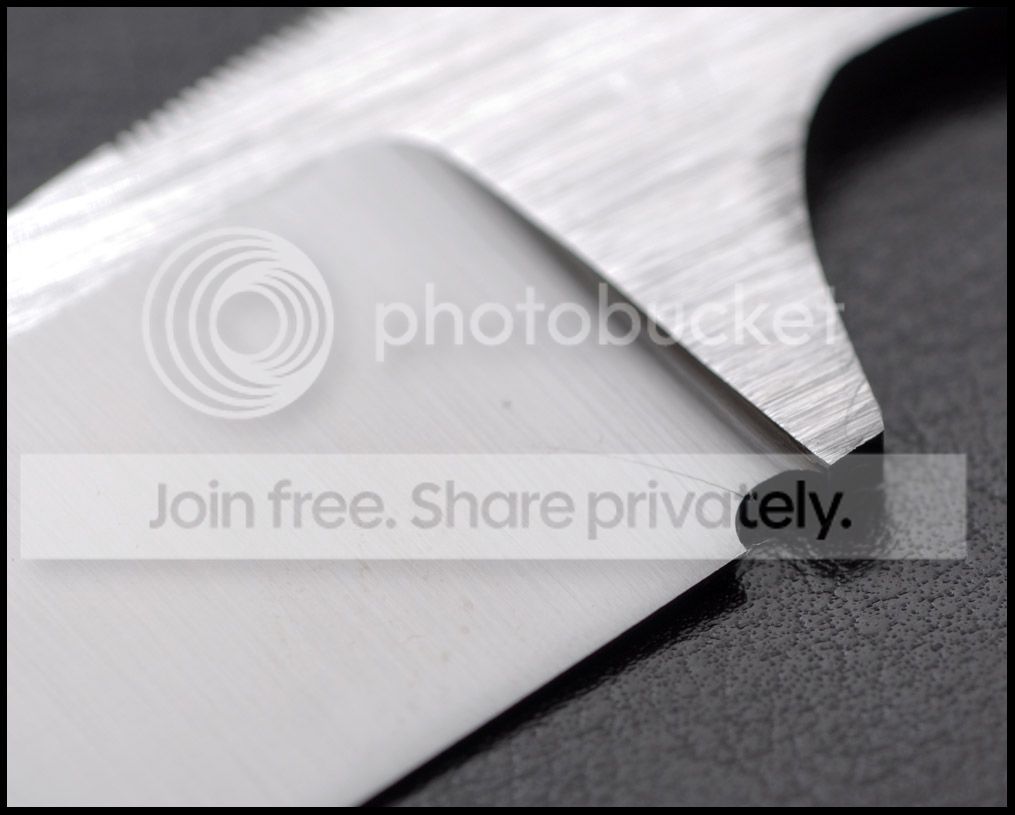
StressFracture_zps06653ef6.jpg


I wanted to etch the blade to darken the steel inside the fracture so I could see where and how far it ran. I then put it in the vice and she snapped. The break followed the fracture then went straight up to the spine.
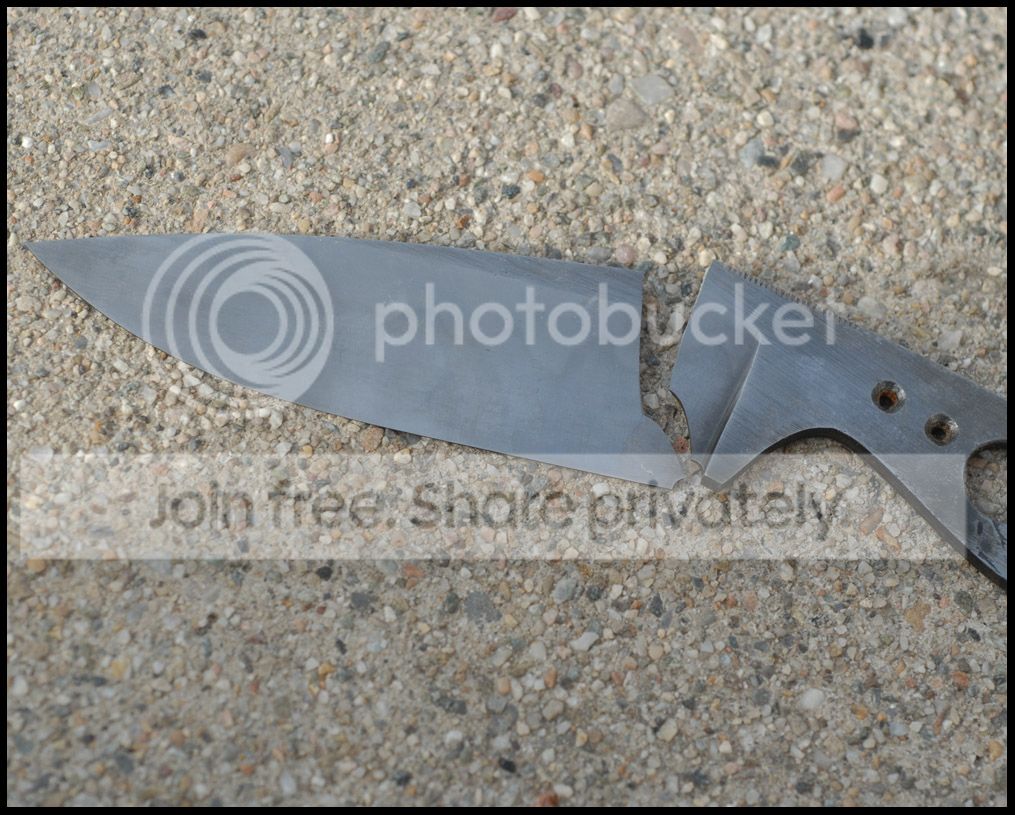
TestBreak2_zpsdf945eeb.jpg


You can see in the photo where the dark/rust colored section is the fracture then the fine powdery grain of the hardened steel, followed by the sparkly coarse grain of the clay coated spine.
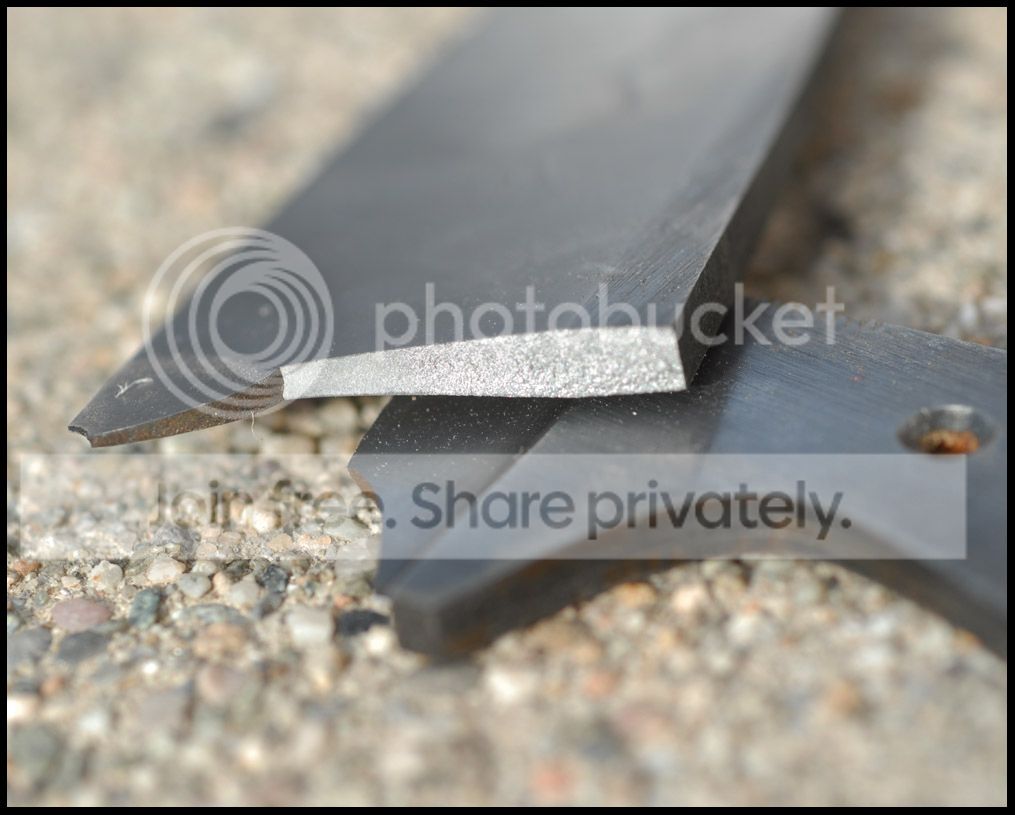
TestBreak1_zpsda80a3b5.jpg


Time to start over on this knife order!!
 
That sucks man! What grit did you stop at prior to HT?
 
I always hate seeing those, sorry man. I have been getting those a lot, in the same spot. I found that it was because I have been grinding to a thin .015" - .020" before I heat treated. I bumped the edges back up to .040" and I had no more problems.
 
That is precisely why I have very little interest in edge-quenched or clay-coated blades.
 
Well Hoss, welcome to the world of metal. Speaking of metal, what was it and how did you baby it prior to heat treat?

Pretty coarse grain on the spine. Since I see a hint of a "Clay-Induced-Line", I will assume it was something in the 10XX-ish through perhaps 1095 or W-1-or-W-2.

Just from an "Old-Mans" perspective, judged only by the photos, I would suspect that, either you lost control of your heat and over heated the blade prior to quench, OR, you didn't do any normalizing cycles prior to quench.

It happens, but we have to remember that steel somewhat is like our children......... We have to bring them along slowly, gently, and with purpose, paying strict attention to their upbringing. Even then, they sometimes go awry.

Give us a tad bit more info.........

Robert
 
Man, I can only imagine the string of four and seven letter words that came out of you when that happened...

Thank you for sharing this with us, do you have any idea as to its cause?
 
Ryan I have been making knives about as long as you and would proudly say I have only about 1/2 to 2/3 the skill you do! Your skill and projects have amazed me for the amount of time you have been making knives. Id chalk this up as one of those I didn't fail but learned somethimg situations when you figure things out more about what happened. Heat trsting is the soul of the knife they say. Look at it as your first hand learning experience into that realm. We all know you can design and make a beautiful knife now to work on the sol of the beautiful ladies you bring to the world heh!
 
thanks for the comments everyone...

Let me try to answer all the questions, sorry If I miss any.
The steel is 3/16" 1095 from Aldo. I rough ground and tapered the tang, the edge was right at .030" and the grind was even. on both sides.

I finished it to 400 grit then ran it through the following thermal cycles in my Evenheat OVEN:
1600F hold for 15 Cool to black
1475F hold for 15 Cool to black
1425F hold for 15 Cool to room temp

Cleaned up to 400 Grit applied clay (Rutlands) and did my usual HT that has worked for hundreds of blades... I quench in Parks 50.
 
Yeah, that sucks - a tough "break" as it were... too soon? :rolleyes:

Just sorry to see you put all that work in and then have to do it again. I will admit that it's interesting/educational though. I just spent a few hours last night reading about heat treating, tempering, etc - maybe it's my fault, I jinxed it (especially since you're building this one for me :D, well Traci actually - same same..)
 
haha Shane, Yeah it is a little soon. But I have the replacement blade tempering in the oven right now! STOP READING ABOUT HT and Tempering for the next 24 Hrs!

It happens! onward and upwards. I think the new Hamon is much better ;)
 
haha Shane, Yeah it is a little soon. But I have the replacement blade tempering in the oven right now! STOP READING ABOUT HT and Tempering for the next 24 Hrs!

Done. There weren't enough pictures anyway...too many big words..

It happens! onward and upwards. I think the new Hamon is much better ;)

:thumbup:
 
The coarse grain concerns me, Ryan. Have you calibrated your kiln recently? Do you let your kiln equalize before puting the blade in?

Personally, I would use 1600F, 1500F(oil quench below 900F), then 1450F with a full quench, followed by a few heats to 1100F or so. I also wouldn't soak during the normalization.
 
Last edited:
The "Coarse Grain" is where the clay was. Is that not the purpose of a Differential Heat Treat? This knife does have a hamon. I agree that the Grain over all could be more refined.
 
Rick, I was talking with another maker and think I will add a quench at the lower temps during the Normalizing cycles as you suggest. Probably not in Water though ;)
 
Sorry to hear about your trouble Ryan, does make for an educational read for all of us. I haven't been quenching in my normalization process, but I might research that.

Cody
 
Thanks Cody, I will be doing some test HT's next week and break them to check the grain structure I will be using some of the suggestions here as the test subjects, I am sure it has been done in the past, but I am getting a new shipment of steel and want to know what I have when It arrives this week.

1/8" 1095:
Sample #1
No Clay, No Normalizing Cycles, Heat to 1450F Hold for 6 minutes quench in Parks 50

Sample #2
My Past Process (Which may change after this)

Sample #3
Rick M.'s Suggestion

i am open to any other suggestions for test pieces at this point.
 
I will be doing some test HT's next week and break them to check the grain structure I will be using some of the suggestions here as the test subjects

I love this idea, Ryan! I'm looking forward to seeing your results.
 
Back
Top