Strider stop pin sizes

Joined
Aug 1, 2015
Messages
1,351
Dose anyone know why Strider uses two different size stop pins on there knives?
Id understand if they used smaller stock for a SnG vs a SMF because of size but that's not the case...
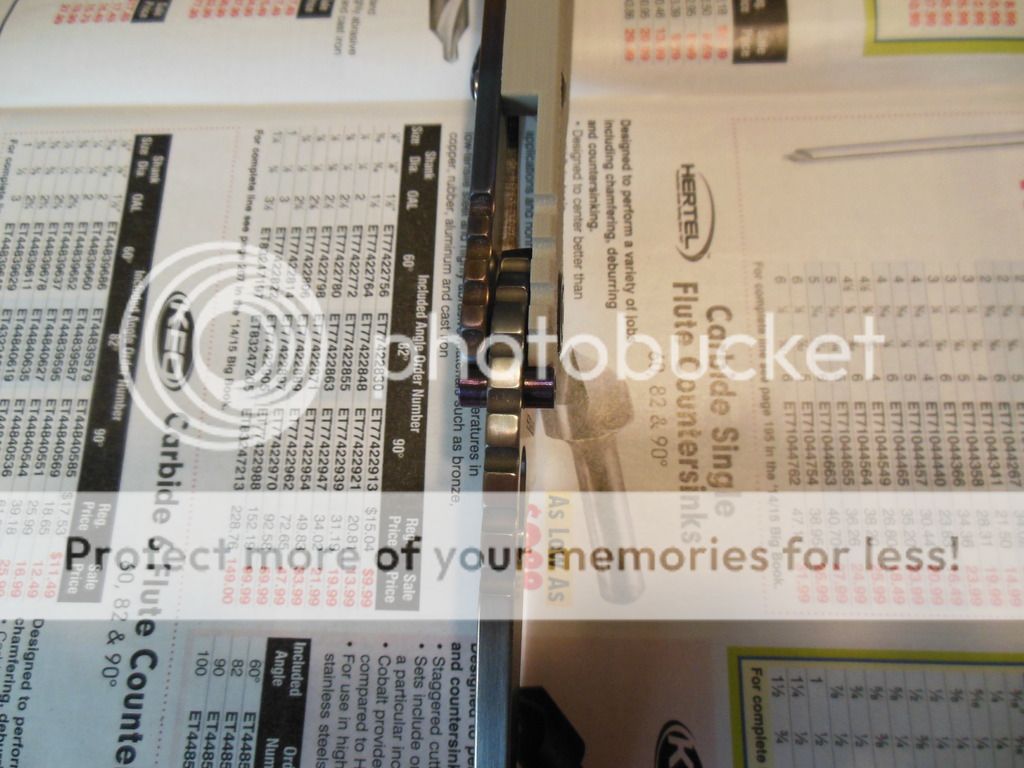
Here is a picture of two current model offerings from Strider, both the SMF with different stop pin sizes. :confused:
There must be a reason.....

 
Newer models have the smaller stop pins. Probably no real reason other than a design change. They've changed various small details like that on their knives over the years
 
They seem to use them to help set their lockup on their knives in order to make it easier to adjust.

If you have lockup issues on a Strider later on, they usually seem to fix it by changing the stop pins instead of having to do any work on the lockface itself.
 
There is no adjustment on the Strider production design for frame lock..it is set by the fixed thumb stud/stop pin size.

Try take another picture showing both side of the thumb stud/stop pin like this:

DSCN2265_zpst1pkzxyj.jpg


If the lock bar side is larger, there was a geometric problem between lock bar interface with blade tang and larger stop pin was needed to compensate.

Not saying that did not happened, unless there is a design change in the meantime, it is very unlikely that from the get go, one of your Strider started, having a combined condition of a shorten lock bar, as well as a bigger stop pin hole on the blade, which requires a lager stop pin to fill....! If there was a design change in the form of an improvement, maker, with this brand in particular, would most likely glorified it - certainly it would not have been kept as a secret up to this point.

Are both Strider new??

Do post another picture...curious to see!
 
Thanks for the replies! The pictures in my first post are of two new knives offered on GP.
 
I actually was going to ask this question as I'm a little bit of a strider noob.

I bought my first smf a few weeks ago loved it .

Saw another go up in cpmd2 and I had to have it despite want a SNG next
Lol.

But I'm leary of fakes because I'm new to striders.
On my knives the one with d2 has the small pin . The 154 cm has the large pin.
The only other difference i can see is the label size is slightly larger on the one with the big pin .
And the etching is slightly deeper on the d2

But they have not giving me nay reason to believe they are fake

Also the g10 slightly different even though I think they are both the green
 
It also has to do with the fact that only one stud/stop pin makes contact-the ti side. so that is the one you would adjust to a larger size. The performance series makes contact on both sides since the presentation side is either ti or has a ti liner.
 
It also has to do with the fact that only one stud/stop pin makes contact-the ti side. so that is the one you would adjust to a larger size. The performance series makes contact on both sides since the presentation side is either ti or has a ti liner.

The studs are one single stud, that is pressed through the blade and fixed there. The "adjustments" I was talking about refer to when Strider takes out the stop pin and will either put a larger one in, or they used to put sleeves on the stop pin to make it wider. By doing this, they would force the lock to engage earlier, and it would take care for the lock rock that striders used to be notorious for.

Lately I haven't see as many people need the change made, but I do think Strider still uses different sizes of stop pins to change how the lock engages when they make a knife. Kind of seems like they still have trouble getting their lockup to be consistent without something like this to make it easier.
 
The studs are one single stud, that is pressed through the blade and fixed there. The "adjustments" I was talking about refer to when Strider takes out the stop pin and will either put a larger one in, or they used to put sleeves on the stop pin to make it wider. By doing this, they would force the lock to engage earlier, and it would take care for the lock rock that striders used to be notorious for.

Lately I haven't see as many people need the change made, but I do think Strider still uses different sizes of stop pins to change how the lock engages when they make a knife. Kind of seems like they still have trouble getting their lockup to be consistent without something like this to make it easier.
I agree except that there never have been any caps or sleeves as you put it for the stop pins-That is a internet myth. They have always press fitted a new larger stud.
 
Thanks for the replies! The pictures in my first post are of two new knives offered on GP.

Thats too bad! Would have been nice to witness the opposite side to confirm whether stepped stop pin was used... For a new knife..I would not venture to make any guess that would be speculation.....

However:

In the recent past, there was a believe that Strider used sleeve to enlarge side of stop pin, Ti lock bar side for optimize lock bar to provide an earlier engagement....rumor'ed fix for the many reported lock rock!?

However, using the sleeve method for enlarging one side of the stop pin was speculation! Not saying it can not be done, but it is more involved and using more common stepped stop pin is more economical and much more easily accomplished.

There are many ways to accomplish a better lock pin engagement, but inherent problem areas must be eliminated for a durable long term fix.

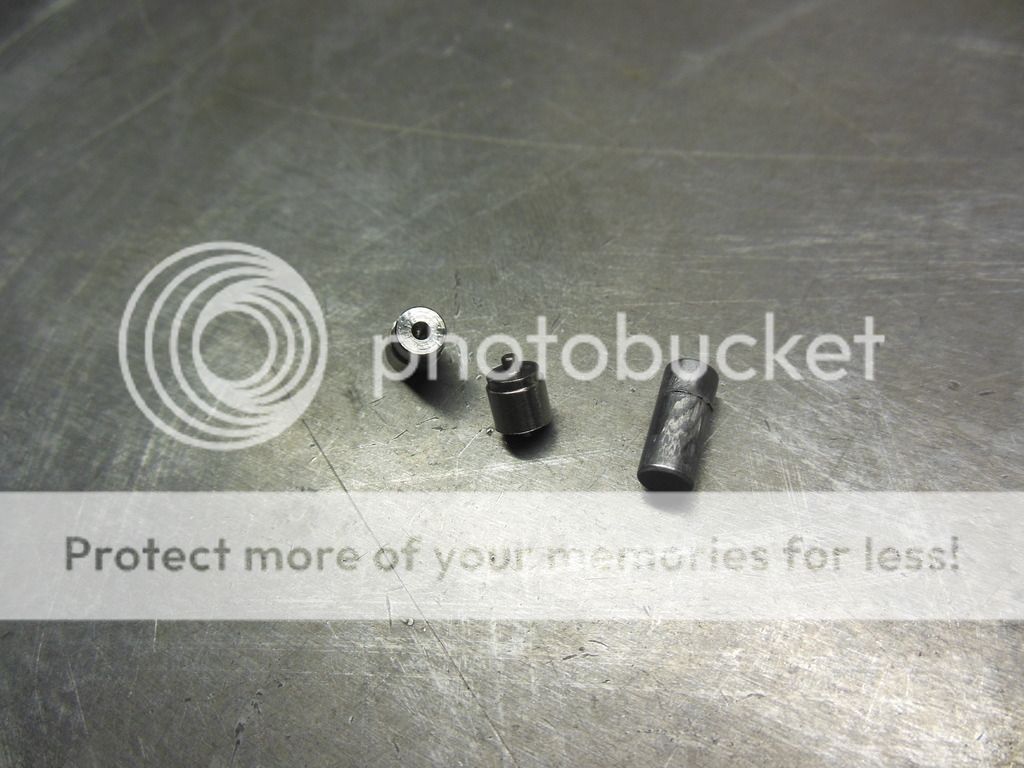
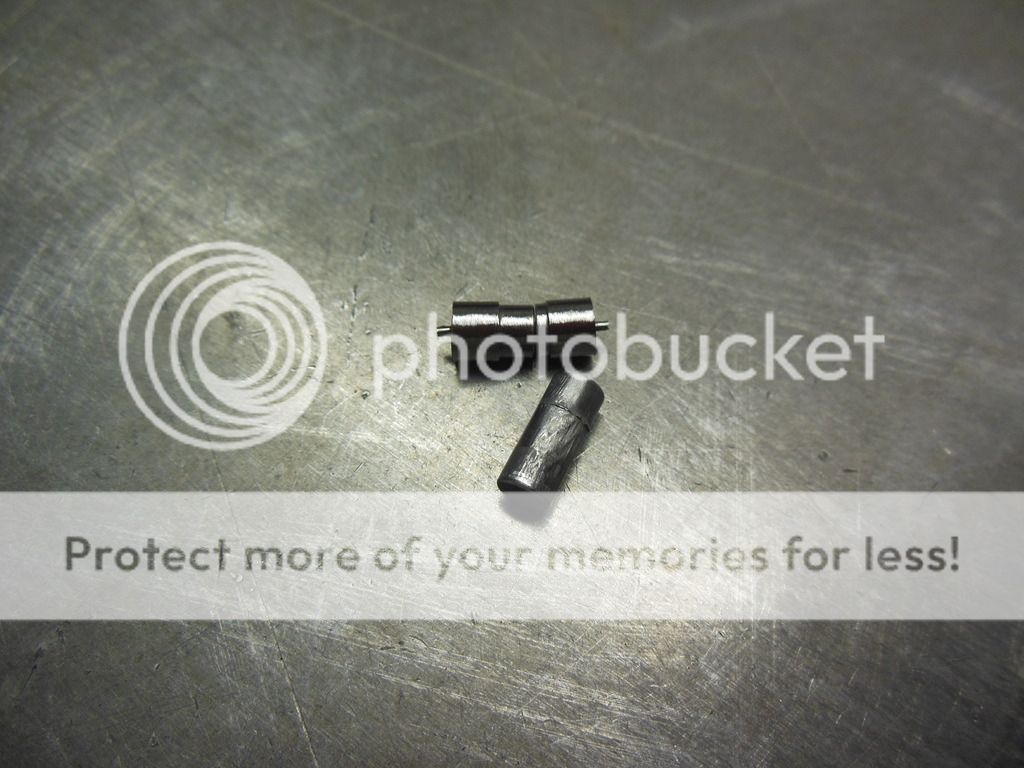
As an example, on dealing with my lock rock, after smoothed out rough grind blade tang/Titanium lock bar interface surface finish and measured and established what is needed to compensate for a desire final fit. I machined two piece Titanium multiple interlocking stop pin to provide a double press fit to replace the less than ideal factory stop pin:

DSCN2259_zpsg6xwcdwn.jpg


DSCN2260_zpspcs7mrna.jpg


***lock bar side OD to provide the desire lock bar % with room for future wear:

DSCN2264_zpskyqk5o0p.jpg


***and G10 handle side couple of thousandth smaller to provide a better visual symmetry:

DSCN2265_zpst1pkzxyj.jpg


DSCN2261_zpsnk4zwlnu.jpg


Many ways...in the hands of a Machinist/Toolmaker types.....but OP's first pic's is intriguing of having two different size....both knives being new and all....

 
Sorry-misread the original ? . I am not really sure -why the 2 different size pin on the 2 knives. I do know that Strider does do a lot of hand fitting of their knives. Maybe one size set the lock right on one and the other size set the lock right on the other.
or could it just be the photo makes one look bigger than the other?
Some of the studs do have tapered tops which could cause them to look smaller from certain angles.
all just guesses-not sure on this one.

I just looked at the tapered compared to the barrel. The tapered were ever so slightly smaller in diameter(exact measurement), but looked considerably smaller to the eye.
 
Last edited:
I physically have 2 smf with different pins

The smaller ones look a little cleaner imo

Only time and use will tell which is better
 
I have a few Striders right from the factory the pin sizes are different right from the get go, they were not sleeved. The strange thing is that the frames are identical in measurement and so are the blade lock interfaces. There seems to be no reason or rhyme to why the larger or smaller pins were chose for the knives. Its almost as though they were made in two different factories, one that only has 3/16 stop pins and the other factory with 1/4 inch stop pins.:confused:
 
I have a few Striders right from the factory the pin sizes are different right from the get go, they were not sleeved. The strange thing is that the frames are identical in measurement and so are the blade lock interfaces. There seems to be no reason or rhyme to why the larger or smaller pins were chose for the knives. Its almost as though they were made in two different factories, one that only has 3/16 stop pins and the other factory with 1/4 inch stop pins.:confused:

I believe what you are measuring there is the height of the stop pin rather than the diameter. They can vary for 2 reasons.
1 they have used different height stop pins(pretty obvious answer). Mine vary from 1/4" down to 1/8" on my performance SnG. The basic design hasn't changed much, but they do make small adjustments.
2. is the reason people sometimes think they have caps or sleeves on their stop pins. That is because the pins are only pushed in until they lock. Sometimes this is not completely flush with the blade. Thus 2 levels of the stop pin will show. This could also vary the height depending on how it seats.
 
Last edited:
I have a few Striders right from the factory the pin sizes are different right from the get go, they were not sleeved. The strange thing is that the frames are identical in measurement and so are the blade lock interfaces. There seems to be no reason or rhyme to why the larger or smaller pins were chose for the knives. Its almost as though they were made in two different factories, one that only has 3/16 stop pins and the other factory with 1/4 inch stop pins.:confused:

DSCN2264_zpskyqk5o0p.jpg


This lock up % was same as when my SnG was new...before lock up failure and developed lock rock in less than a month, due to premature wear on the soft Titanium's lock bar.

Permanent fix was done to remove rough grind finish on blade tang to eliminate soft Titanium lock bar's future wear, seemingly insignificant amount of metal removal resulted in decrease blade tang length...correct sized larger stop pin, therefore, required to compensate for the geometric change in order for a desire lock up %. Stock stop pin diametrically was @ .191", after metal removal, measured and determined replacement oversize two piece titanium stop pin were made to .214" OD - differential sum of .023" - .0115" on the side over sized - lock bar side to compensate to obtain the desired 25% lock up % and accordingly, .020" on the G10 side for clearance:

DSCN2260_zpspcs7mrna.jpg


I suppose, similarly from the factory, during fit up, different sized stop pin is used for compensation due to fit up dimensional variance...although, visually, their frame and lockup % appears to be same.
 
Back
Top