Strongest traditional knife design

chevyrulez1

Gold Member
Joined
Oct 2, 2007
Messages
887
I was thinking about traditional knife construction, materials and strength. I have heard that the sodbuster knife is supposed to be a strong working knife, but it has brass liners and pin, and brass isnt exactly the strongest material. I have dropped knives with brass liners that landed on the corner of the bolster, and bent the liner slightly causing the bolster to sit kind of wonky.
I know larger bolsters like the barlow are supposed to reinforce the design alot. I suppose a knife with a steel liner, large bolster and steel pin would be the strongest? Also wondering how strong nickle silver is compared to brass when it comes to pins and such.
Regarding slip joints, the backspring can also be an Achilles heel to a knife. If the backspring breaks then that blade will just flop and isnt really useable anymore. I have heard of the old all stainless demo knives having this issue. I have never heard of a Victorinox breaking a spring, but maybe it has happened to someone?
Maybe an all steel option like the douk douk, or perhaps a lockback like the 110 is the way to go for ultimate reliability?

I guess I was curious on what everyone's thoughts on the strongest, most reliable traditional knife designs and what are some examples of them. Thought it might make for an interesting discussion and I might learn something from it.
 
Strongest traditional knife?
Fixed blade.
The issue causing "Demo Knife" springs to break is simple and easy to avoid:
Open the two blades on the same spring part way at the same time.

Brass and nickle silver (AKA: "White Brass") have the same strength for all intents and purposes.

The covers and liners are not the only thing that determines a folders resistance to bending. The back springs prevent bending much more than the liners, covers, and bolsters do. (if it has bolsters; Shadow Patterns, like the Sod Buster you mentioned, and shell construction knives (such as the 1955 to 2004 Imperial, Imperial Hammer Brand, and a lot of the Colonial knives of the same period do not have bolsters. They may LOOK like they do, but the "bolsters" and "covers" are actually a thin shaped sheet of tin or steel clipped to the liners.
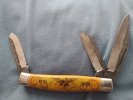
A shell Imperial stockman: the bolsters are fake. The "covers" are a thin sheet of acrylic (antique shell knives had thin sheets of Celluloid) What looks like bolsters and covers is one pice of tin or steel, clipped to the ends of the liners.
IMG_20250620_072542502~2.jpg

Brass/Nickle Silver steel/iorn, and bronze pins have been used for hundreds of years.

There are plenty of 100 plus year old slipjoints that have been worn out - the blades sharpened to "toothpicks", that have zero blade wiggle.
There are even 100 plus year old slipjoints that have been used, but have plenty of blade life left, that have no blade wiggle.

You don't really need to fret about how sturdy a traditional folding knife is.

Heck! Check out these sturdy traditional knives:
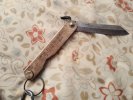
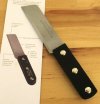
5 peices: blade, bent brass handle, (a steel handle version is also available) 2 washers, and a rivet
IMG_20250611_084159952~2.jpg
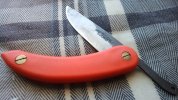
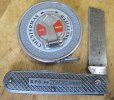
6 pieces: 2 handle halves, 2 Chicago screws, blade, and a stop pin, located inside the handle halves.
IMG_20241108_131123.jpg
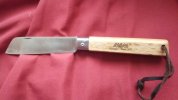
4 pieces blade, bolster ring, steel pin, one piece wood handle.
IMG_20240810_101624.jpg
Friction folders date back to 600 to 800 BCE. (age of the oldest one discovered so far.) They are still made and used today.
They do not have a backspring. Some have a optional push tab liner lock, or like Opinel and Big Bear, a use optional ring lock.
(The friction folders shown do not have a blade lock. I removed the ring lock on my Opinel number 6 and number 8. I never used it. My big Bear's ring lock (which I never use) cannot be popped off.)
The first one shown, a Japanese Higonhami (spelling?) has been in continous manufacture since the late 1890's, without any changes.

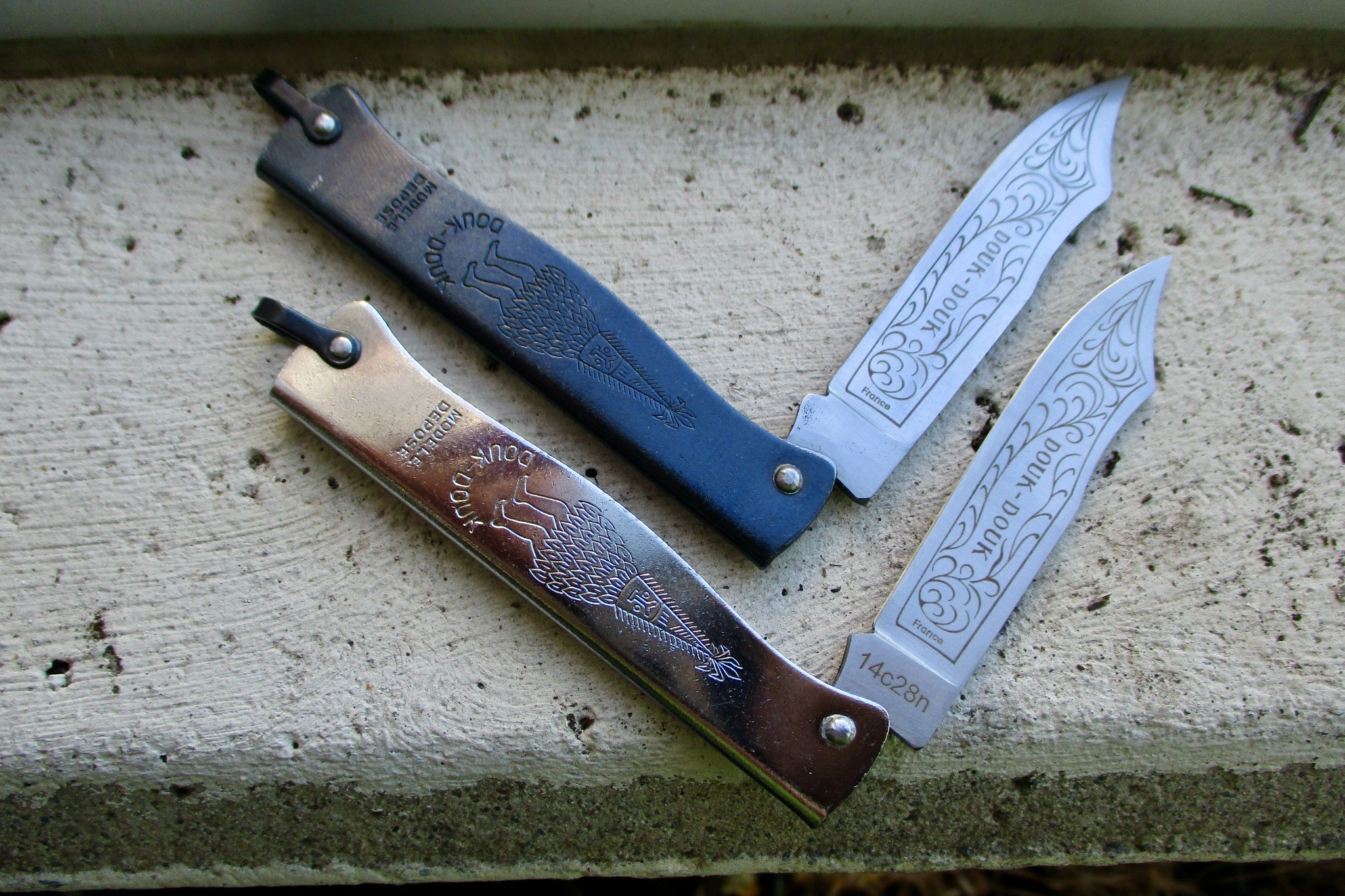
The Douk Douk and Okapi knives are also simple and quite sturdy knives.

You are overthinking it.
With proper care (strop before sharpening with a stone, sharpen on a stone when necessary only enough to restore the working edge, lube the joints, don't torque the blades, use as a screwdriver or pry bar, etc.) A slipjoint will outlast your grand kids ... possibly your great grand kids ... presuming you do not lose it.
 
Last edited:
afishunter: Can you please elaborate on this?
The issue causing "Demo Knife" springs to break is simple and easy to avoid:
Open the two blades on the same spring part way at the same time.

Did you mean don't do this, or do this if you must open two blades at once?...or something else?
 
You are overthinking it.
With proper care (strop before sharpening with a stone, sharpen on a stone when necessary only enough to restore the working edge, lube the joints, don't torque the blades, use as a screwdriver or pry bar, etc.) A slipjoint will outlast your grand kids ... possibly your great grand kids ... presuming you do not lose it.

I agree. I've worked at a horse ranch, and as a hunting and mountain guide before I was really into folding knives (or had the funds to buy really nice ones). I spent a couple of weeks outdoors on the saddle at a time. Opinels, SAKs and fixed blades got me through just fine. My SAKs from back then have a few dents, scratches and the occasional cracked scale (we didn't get Alox down here).

I've got a bunch of modern strong folders now with lovely super steels and ultra proven locks, and like them a lot, but my workhorses will always be simple fixed blades. I wouldn't carry something like a Cold Steel AD10 for a long trip through the woods. I can get a decent fixed blade for the same weight or a SAK that will do so much more than just cut.

It's been my humbling experience when checking out the gear of very talented locals that they use very simple stuff backed by enormous skill. I always remember a young kid on the Peruvian Andes who worked with his father, they were helping us haul equipment and supplies to an archaeological dig. High in the mountain, right next to a glacier. All of us wore the best boots we could afford, waterproof, well insulated. This child wore simple Wellington boots, slept in caves (we offered them a tent and they refused) and wore an Adidas tracksuit. He walked three or four times as long as we all did, and had energy left to run around the camps at night, while all of us were knackered.

Look at the thread on which we post our EDCs, lots of folks here are carrying knives that were made decades ago and they are still going strong. As long as you pick a design that suits your needs, any knife made by a reputable company should hold up just fine.
 
I don't want rocks thrown at me but I do NOT think the Buck 110/112 is that strong of a design. Anything with brass pins holding it together is going to have the brass pins as the weakest link. My old 110 finally fell apart from me tapping it with a ball peen hammer trying to remove blade wobble. Had I known I could send it in for repair I would have done that. Ah to be young and dumb again.
 
afishunter: Can you please elaborate on this?
The issue causing "Demo Knife" springs to break is simple and easy to avoid:
Open the two blades on the same spring part way at the same time.

Did you mean don't do this, or do this if you must open two blades at once?...or something else?

I think what he means is if you have a knife with two blades at opposite ends that share a spring, and the blades don't have half stops, if you open both blades halfway at the same time you're putting undue strain on the spring as you're flexing both ends at the same time. Not what it was designed for. A well tempered spring should have no issue with this but if there's a flaw in the steel or tempering was off, this added strain can cause the spring to break. On that note, if a certain pattern or issue of knives develops a reputation for broken springs the fault is likely in the tempering of a large batch of springs, not in the knife itself.

Eric
 
While I agree some pocket knives last for many years, there are probably more that didn't. I have seen old knives that were hard used and developed horrible blade wobble side to side or up and down (swindon key construction and some of the previouly mentioned shell handle knives were the worst)
Back when I was a kid in the 70's and early 80's, people would buy a knife and use it everyday until either the blades wore down, wore out, broke, rusted up, rusted shut, etc. Then they would trash them or drop them in a junk drawer and buy another.
I am just thinking that some models or designs of traditional folding knives are maybe stronger or tougher than others?
 
afishunter: Can you please elaborate on this?
The issue causing "Demo Knife" springs to break is simple and easy to avoid:
Open the two blades on the same spring part way at the same time.

Did you mean don't do this, or do this if you must open two blades at once?...or something else?

I think what he means is if you have a knife with two blades at opposite ends that share a spring, and the blades don't have half stops, if you open both blades halfway at the same time you're putting undue strain on the spring as you're flexing both ends at the same time. Not what it was designed for. A well tempered spring should have no issue with this but if there's a flaw in the steel or tempering was off, this added strain can cause the spring to break. On that note, if a certain pattern or issue of knives develops a reputation for broken springs the fault is likely in the tempering of a large batch of springs, not in the knife itself.

Eric
Eric is right about opening two blades without half stops half way causing undue stress on the spring.

Concerning a bad tempering or defective steel, that can have something to do with it, but I personally do not think that is the only reason for the breakage.
The "Demo Knife" has a long history of broken springs, be it an issued knife or a private purchase, regardless of the manufacturer.
(I believe Camillus made the majority of the Mil issued Demo Knives. However, Imperial, Colonial, and Western, among others made significant numbers of them (I am not sure if Case had a contract for them. I believe they did during the Korean War, and possibly during the Vietnam war. I find it difficult to believe that Camillus and the rest would make that many bad springs. ... I heard that from its introduction in the late 1940's to its replacement by multitools during Daddy Bush's war*, over 1,000,000 Demo Knives suffered busted springs.)
(*Has the US military really stopped issuing the Demo Knife?)

Opening the spear and punch or the cap lifter and can opener half way at the same time is an "excellent" way to break a spring. (as many thousands of troops discovered the hard way.)

Of course the same holds true for the Scout/Camp knife, and any other knife that has two blades sharing a spring.
When I want to show the blades on my Demo/Scout knife, I open the punch and can opener fully (they are on different springs) then open the spear and cap lifter/screwdriver half way. I close the spear and caplifter first.
On my single spring 2 blade knives, one blade is opened fully, the other half way. Stockmans the Spey gets opened fully, sheepsfoot & clip around 1/3 and 2/3 (in a "V").

To me it just makes sense not to risk breaking the spring.
 
Last edited:
I don't want rocks thrown at me but I do NOT think the Buck 110/112 is that strong of a design. Anything with brass pins holding it together is going to have the brass pins as the weakest link. My old 110 finally fell apart from me tapping it with a ball peen hammer trying to remove blade wobble. Had I known I could send it in for repair I would have done that. Ah to be young and dumb again.
I have a “hard use” warncliffe trapper made by Don Hanson. It’s “hard use” qualities compared to his standard build are warncliffe blade, thicker brass liners, thicker blade & spring, full convex grind (no micro bevel), O1 steel blade (61Rc) and steel pivot pin. It was commissioned by a trucker who wanted a knife strong enough to cut though a damaged truck tire but a slipjoint so it’d be legal to carry in all states.

Edited to add: the handle shape is similar to a Remington bullet knife (R1123).
 
Last edited:
First of all, I don't think pocket-knives are actually intended for prolonged 'hard' use anyway. Depends what you mean by 'reliable'/strongest as well ? Why should a knife be exposed to really extreme conditions anyway, everything fails if you stress it long enough. Naturally, fixed blades are more durable but only if they are not used for extreme prying, batoning through wood with metal in it or where their handles are going to be smashed by repeated hammer blows.

Nor do I regard friction folders as strong or reliable, anything but-they depend on the strength, dexterity and relexes of the person holding them- one moment's lack of concentration and off goes the blood letting- hence spring knives and lock knives were developed...;)

However, I'd argue that the Douk-Douk is likley the most reliable and durable of pocket knives due to its genius simplicity: Single piece of metal folded as a handle, spring concealed, easy to open strong to close. The handle won't give problems unlike knives with scales made of wood, bone, stag, horn which may crack relatively easily. No brass liners to react with the blade or scales either. External pin so if blade play develops (very seldom) you can fix it with ease without damage to bolsters or handle slabs. The all stainless version offers excellent resistance to corrosion and if dirt does get inside flushing it out is simplicity with no fear of damage to scales, springs etc. It may not be the most alluring of knives, although I respect them greatly, but they are capable of long periods of low maintenance use, and they come in various sizes to suit the hand, and colours, steels to suit the taste of the user.

 
Nor do I regard friction folders as strong or reliable, anything but-they depend on the strength, dexterity and relexes of the person holding them- one moment's lack of concentration and off goes the blood letting
As long as the user is not doing something stupid, such as stabbing, or trying to cut/slice with the blade spine, a friction folder and non-locking slipjoint cannot close the blade on the users digits while using the knife.
The normal cutting action forces the blade open.
The back spring's only job is to prevent the blade from flopping 1/2 closed during use between cuts, and partially opening when the knife is in the pocket. The back spring does not "lock" the blade open. (Possible exception: Okapi ratchet lock.)
 
Last edited:
On barlows and "regular" bolsters, I personaly think that the size of the bolster isn't as important as it's construction.
An integral small bolster will be stronger then a pinned barlow bolster.

Tony Bose sayd that the strongest construction of a slipjoint is a shadow pattern out of modern materials.
This has no seam between the bolster and cover, the strenght of the cover material runs all the way from the front to the back of the handle.

But to be honest, if you manage to brake a well made slipjoint, you did something with it a slipjoint is not intended for.
 
Back
Top