sunken joint question

Wow, that Roby is awesome! Do you have any shots of it opened, and when was it made? The scales on that cigar are beautiful!
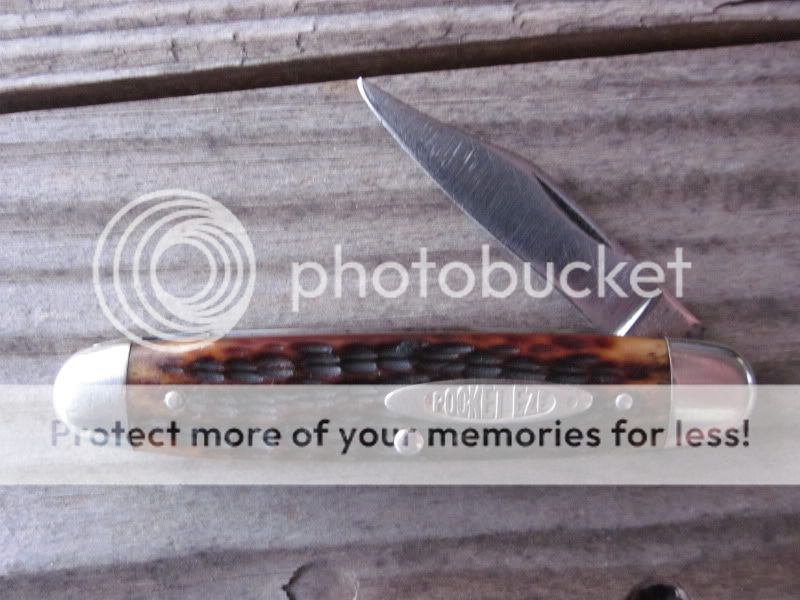
 
I feel that the Case Copperlock is an example of a sunken joint knife. A very nice, easy carrying, knife.

casecopperlockdarkamber.jpg
 
Whoa, that is nice.

What's its length?

~ P.

Wow, that Roby is awesome! Do you have any shots of it opened, and when was it made? The scales on that cigar are beautiful!

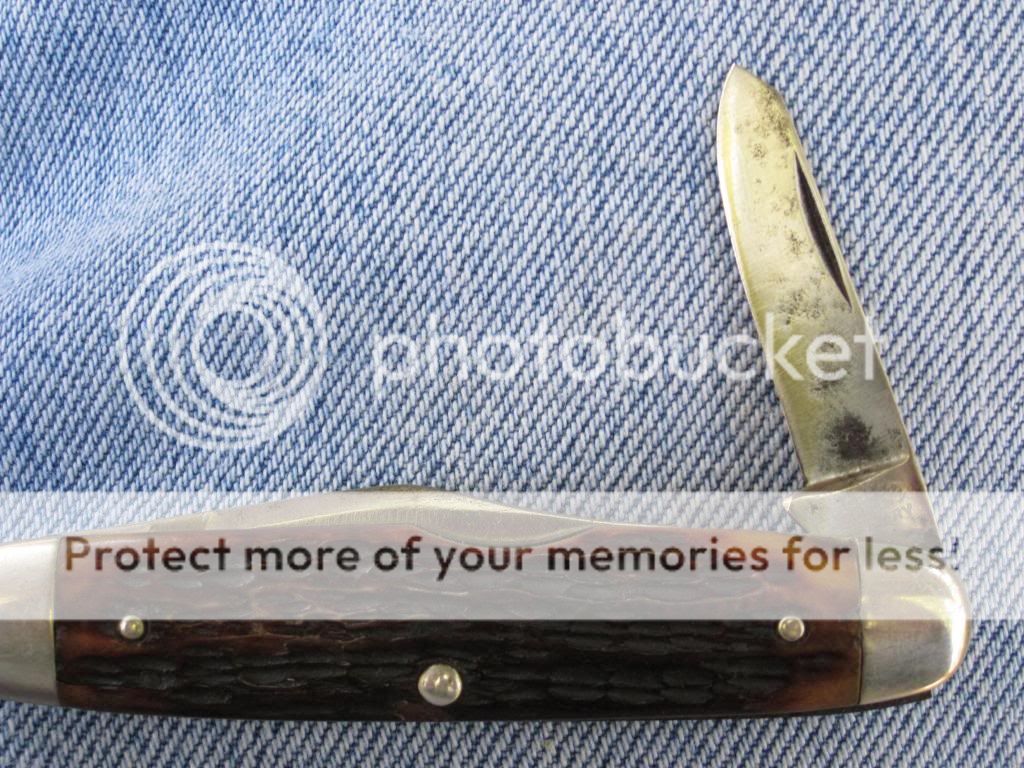
It dates to 1922-1939 and is 3 5/8" closed. Sadly it was pre-loved when I found it and its clip and spey blades have been sharpened away more than I'd like. It's still tight however and is very well made.

IMG_0249.jpg

robeson.jpg
 
Last edited:
Those Robesons are a marvel of carefully designed and made knives!
Nice one, BLMB!
 
that Robeson model looks really nice, it would be great if GEC or someone would imitate the pattern. I guess that a trade-off for the sunken joint is going to be a relatively small blade in comparison to the handle.
 
A copperlock like Ed shows is not a sunken joint, but a hidden tang.

The only "trade off" you may get with a sunken joint is not blade length, but maybe a smaller tang and a pivot lower set in bolsters.

The Howser in my avatar has sunken joints, and the size closed and blade length is about the same as a Case trapper, ie 4 & 1/8" closed.
 
In my view, sunk or semi-sunk joints are desirable and are a sign of cutler's skill. I often round off the tangs on my GEC knives as these can be real pocket-rippers they are that sharp. GEC has recently released a 57 Half-Whitt (not heard ANY talk about it on the Forum, maybe the name puts people off:D ) this appears to have a sunk or semi-sunk joint so they are moving in the right direction.

I've noticed some hidden tang patterns, Canoe, Copperhead as having tang edges sticking out! This is disappointing, the same I've heard said of GEC's Ben Hogan. What's the point of a Copperhead style knife that doesn't completely cover the tang??:confused:

The CASE/Bose Norfolk I have has really good sunk joints and yet the blades are relatively wide. I also have a Nowill Sheffield knife late c19th/early 20th 4 blade equal end with cut-outs in ivory, all joints are totally sunk and this is not a wide bolster pattern. Despite having 2 out of the 4 blades broken and the other 2 well sharpened, it shouts quality. This is a pocket friendly knife indeed:thumbup:
 
Back
Top
