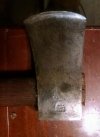
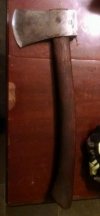
Axes marked Banko or Banco were evidently made by Säters, which reportedly existed from 1894 until 1966.
Säters Yxfabrik
...beyond Lerviken and Gessån outside Sater was built in 1894 a small factory plant for the manufacture of axes, right by the river's outlet from Björs Cab Sea. In Björs foundry can still see the mill stone foundation and the water pond that was built to produce electricity. It was Alderman Carl Rundqvist in Sater that with the assistance of itinerant workers took to the forging of the croft in Björs foundry.
The production was around 100 axes per day and workforce consisted of six workers. The operation went well and the factory became known for its excellent axes. Rundkvist decided in 1906 to expand the business and formed a limited liability company and a new factory building was built in Sater next to the highway and the railway. Now could yxtillverkningen operated more rationally with better access to electric power and communications. Säters yxfabrik eventually became a famous place of work and considerable industry. Yxfabrikens production of the so-called "Sater ax" eventually became widely known, and the factory received several awards for its quality manufacturing.
Besides the well-known "Sater ax" was made ​​even isbillar sledgehammers and kilsläggor. In the 1940s produced daily 800-900 axes in Sater factory. The workforce was about 50 men. Demand for the factory's products declined in the early 1960s and the factory was closed. Today is the factory premises including a cinema museum.
from http://www.geocaching.com/geocache/GC1J2DG_saters-yxfabrik-yxfabriken-2?guid=02e51ffa-d837-4c54-bb67-98bd7749faea
roughly translated by google
The Wetterlings History page says that Saters closed and was abandoned in 1966, leaving just 3 axe factories in Sweden (down from 20 factories in the early 1900s)
http://www.wetterlings.com/history/