
- Joined
- Dec 9, 2015
- Messages
- 392
This is my third knife, and first knife out of 1075 (from Admiral). I didn't do anything special to it, I don't think. I heated it to non-megnetic, made sure the color was nice and uniform, then dunked it point down in slightly warm-ish canola oil. I held it still and for what felt like a long time. Tempered at 400 and sanded to 800 grit, then hot vinegar etched.
One thing that may have affected it is that while thinning the stock (mostly done with a handheld grinder and 4x36, went from .130 to .65) it developed a bit of a bow in the middle of the blade, I heated it with a mapp torch to the very dullest red and tapped it straight. Then stuck it in the sand bucket until it was room temperature.
So what do you guys think? Is this a lucky fluke? Did I stumble across something? I've never attempted a hamon before, nor seriously researched them. I've seen clay hardening done many times on YouTube, and I've skimmed a few articles/write ups, but that's pretty much it. I know just enough to know just how little I actually know, if you know what I mean.
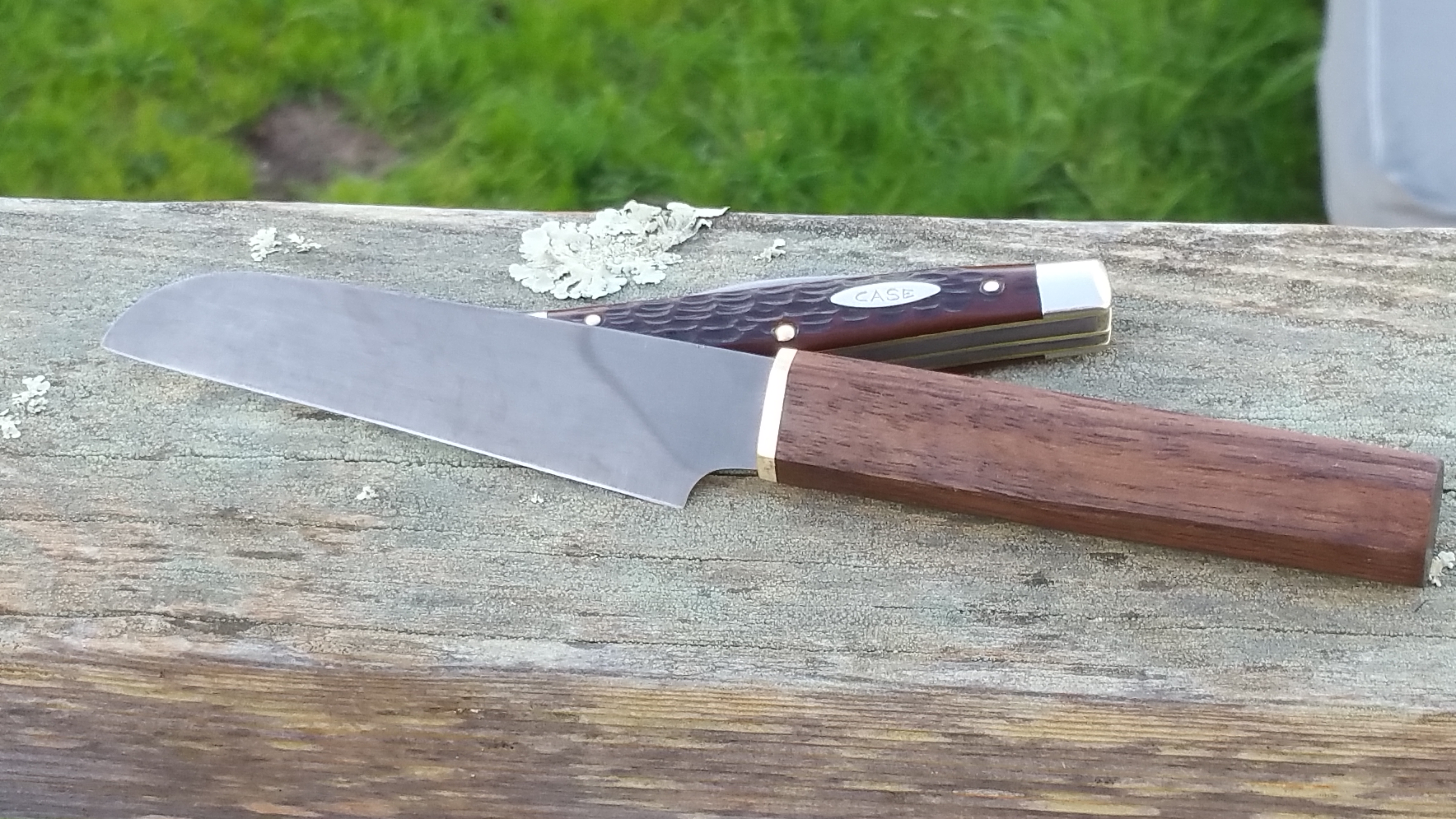
One thing that may have affected it is that while thinning the stock (mostly done with a handheld grinder and 4x36, went from .130 to .65) it developed a bit of a bow in the middle of the blade, I heated it with a mapp torch to the very dullest red and tapped it straight. Then stuck it in the sand bucket until it was room temperature.
So what do you guys think? Is this a lucky fluke? Did I stumble across something? I've never attempted a hamon before, nor seriously researched them. I've seen clay hardening done many times on YouTube, and I've skimmed a few articles/write ups, but that's pretty much it. I know just enough to know just how little I actually know, if you know what I mean.

