SWEET Hidden Tang Damascus Mammoth w/ Colored Mosaic Pommel...What should I charge?

Joined
Apr 10, 2008
Messages
423
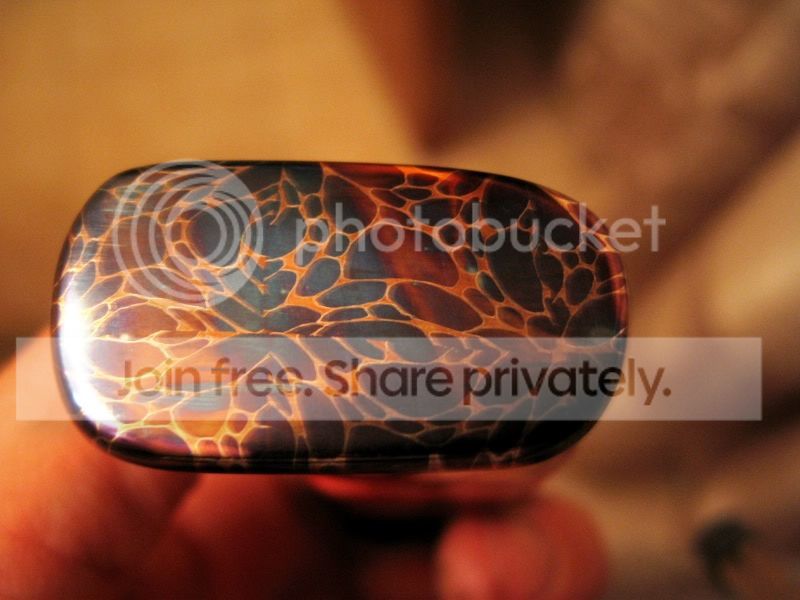
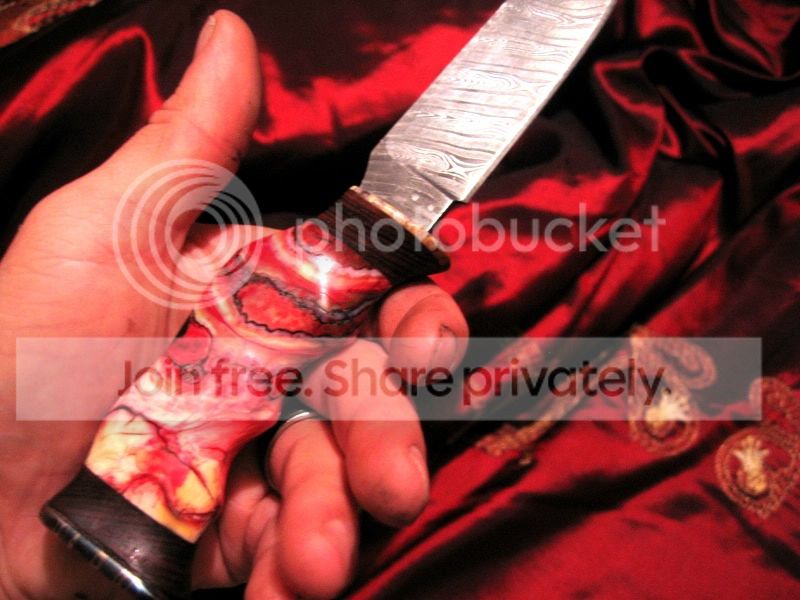
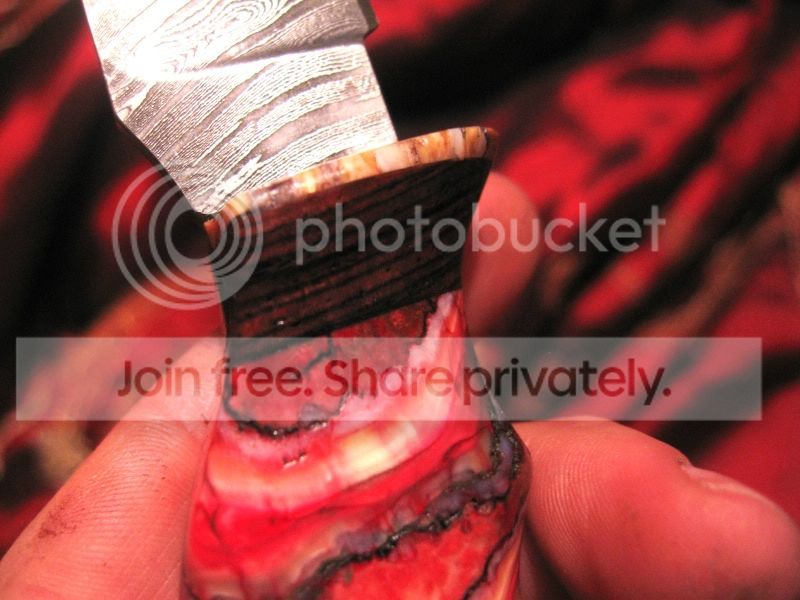
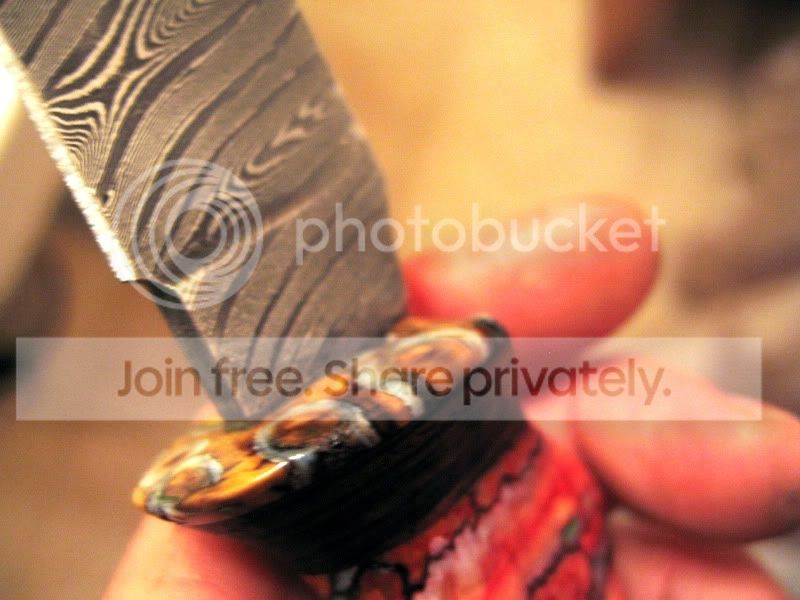
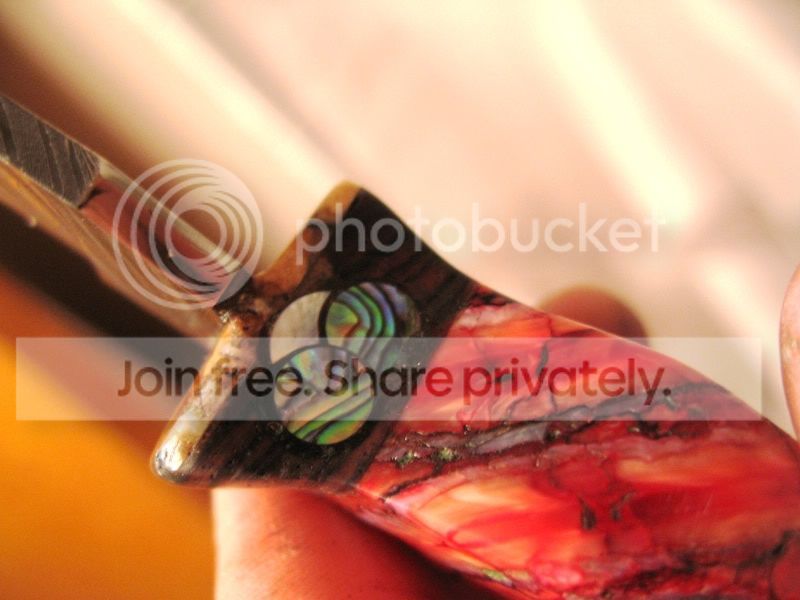
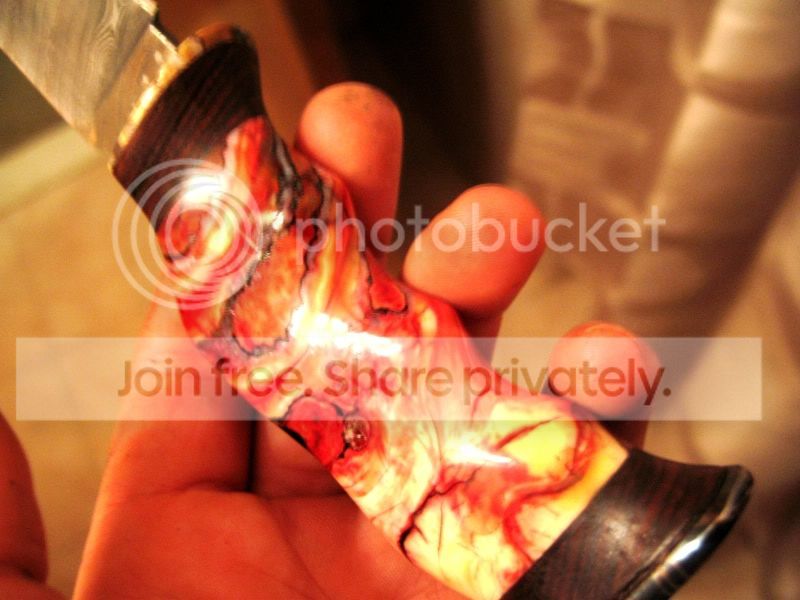
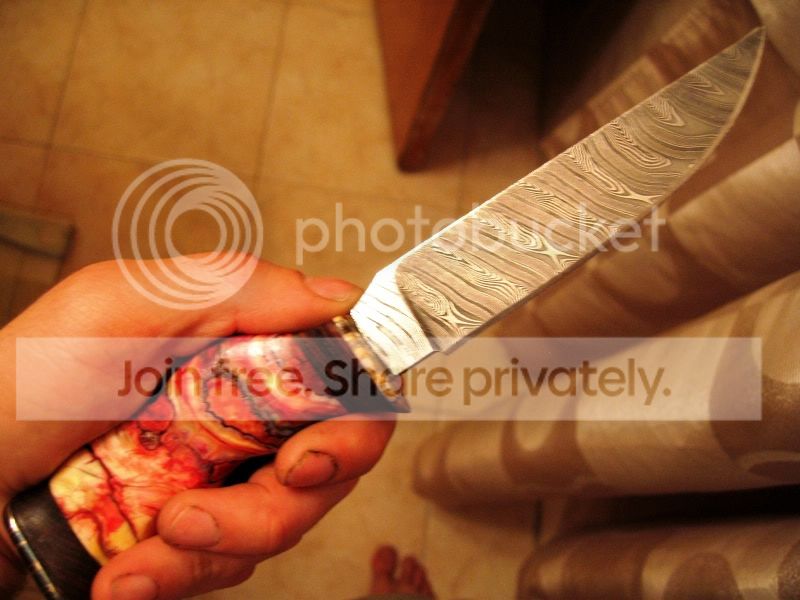
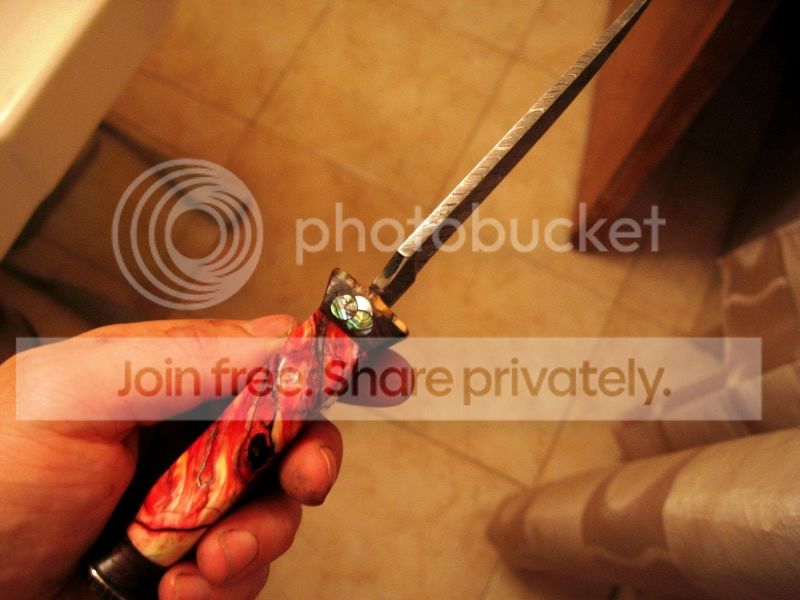
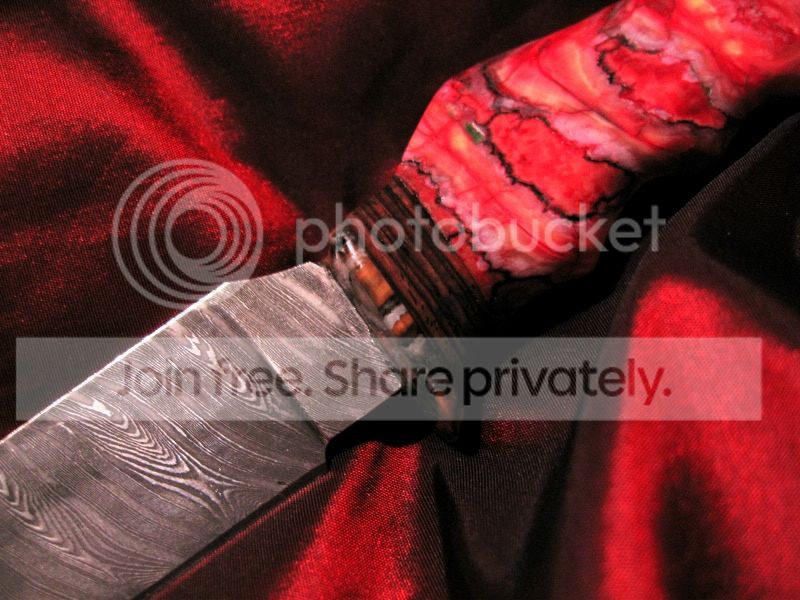
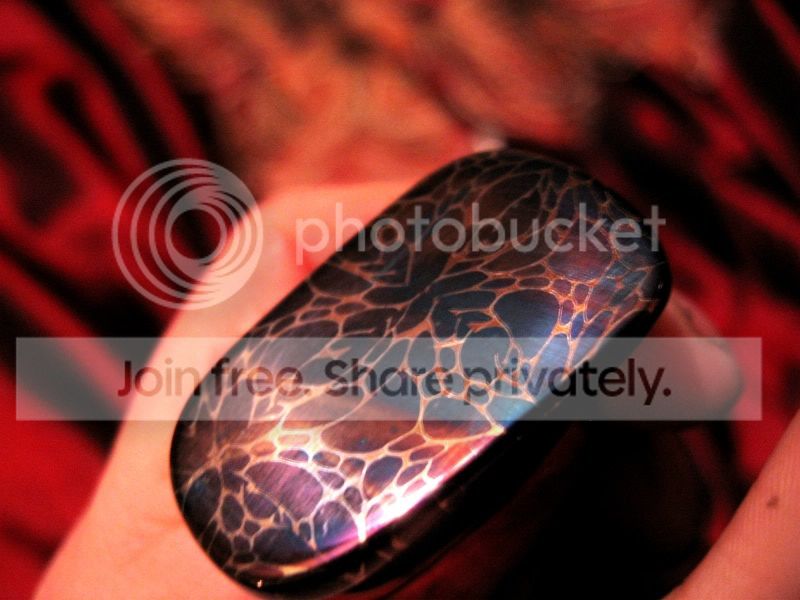
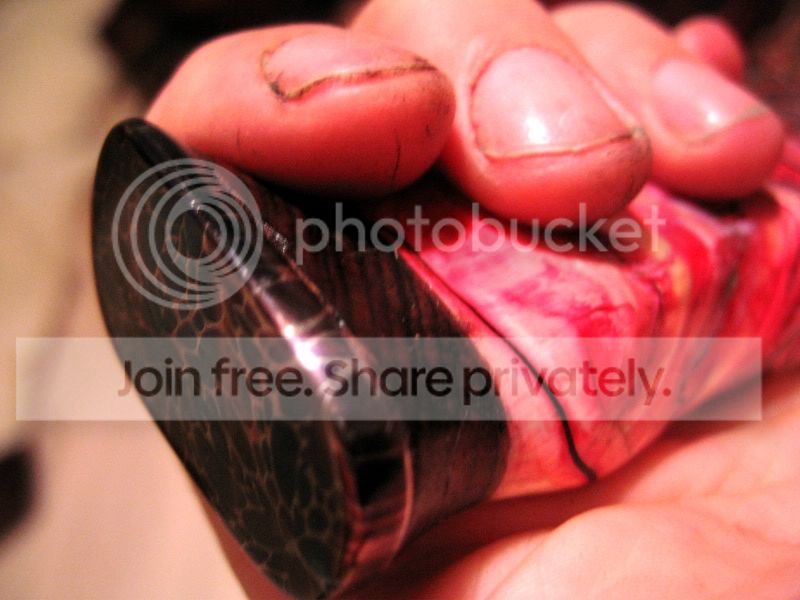
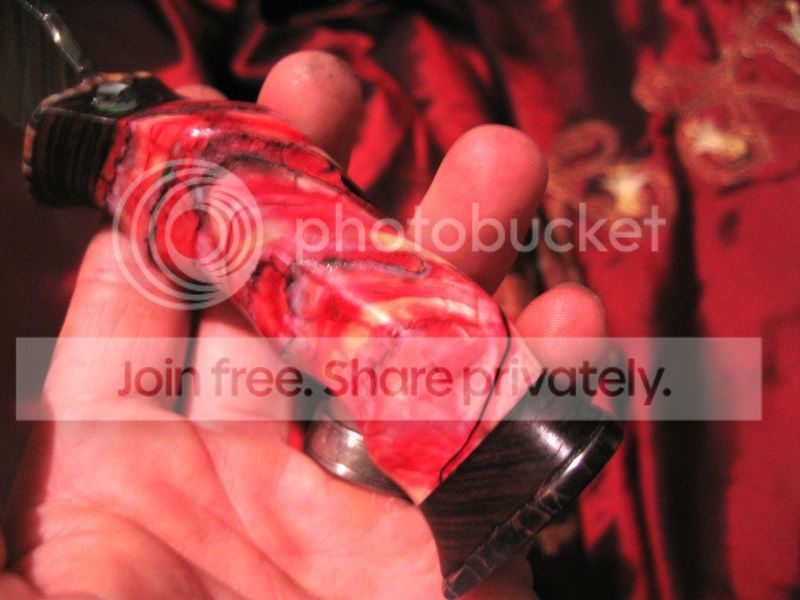
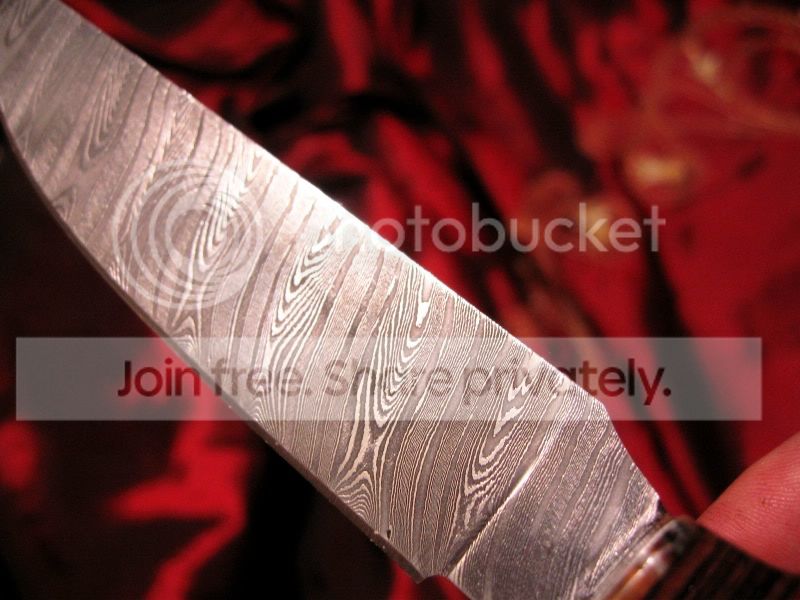
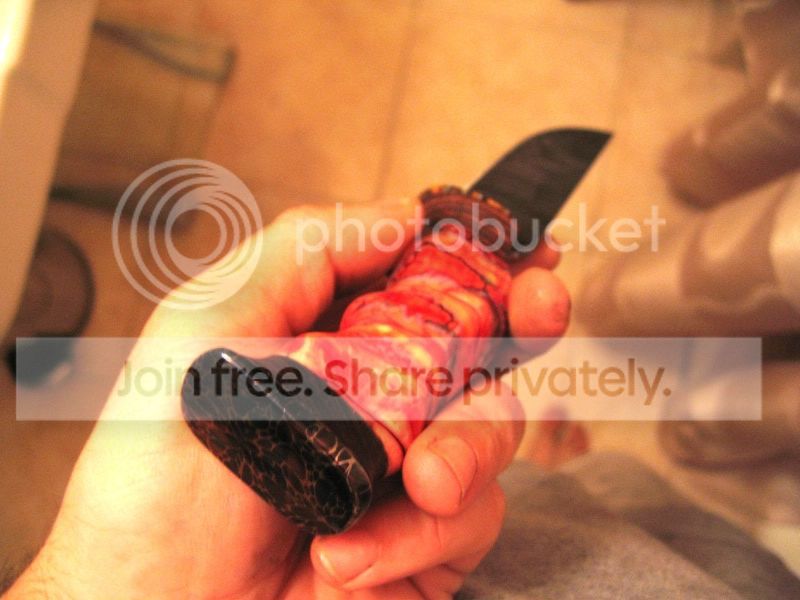
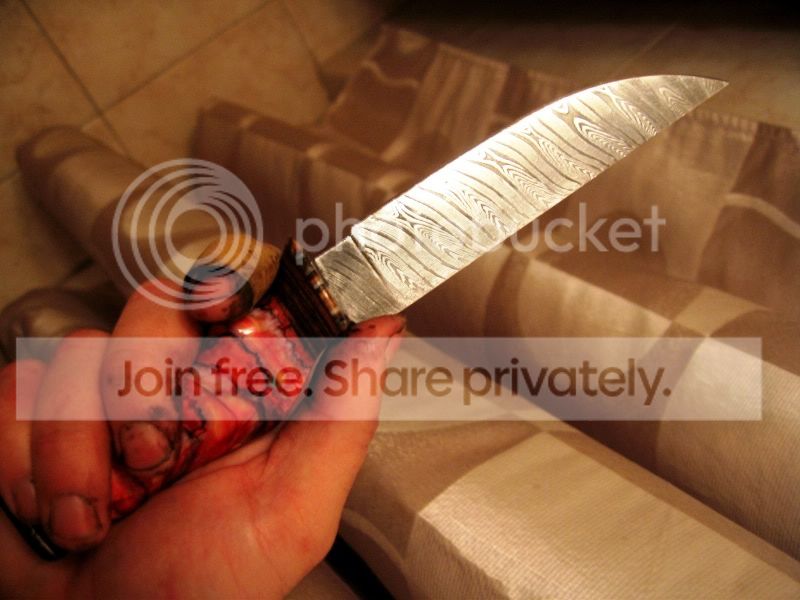
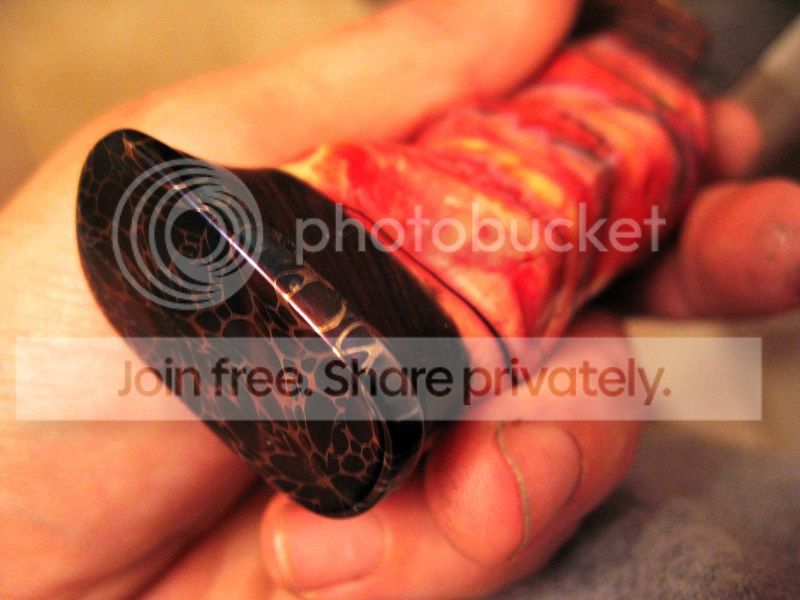
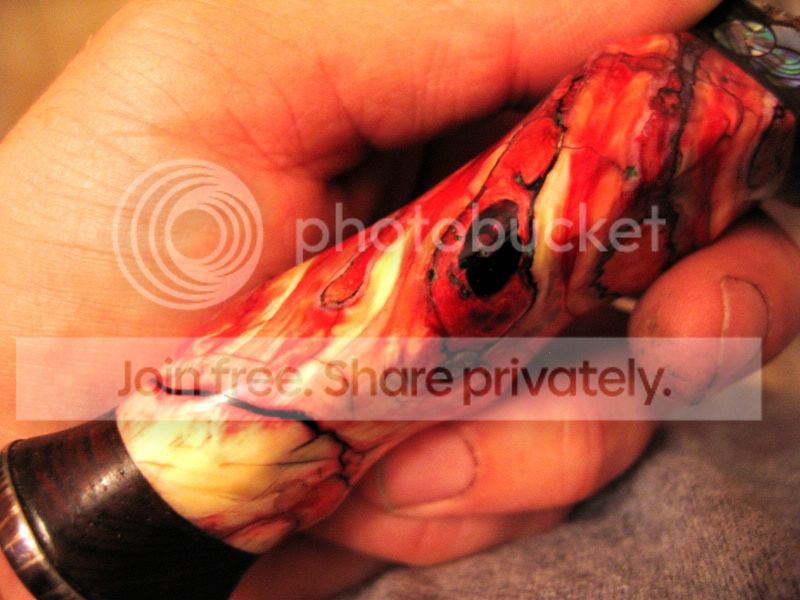
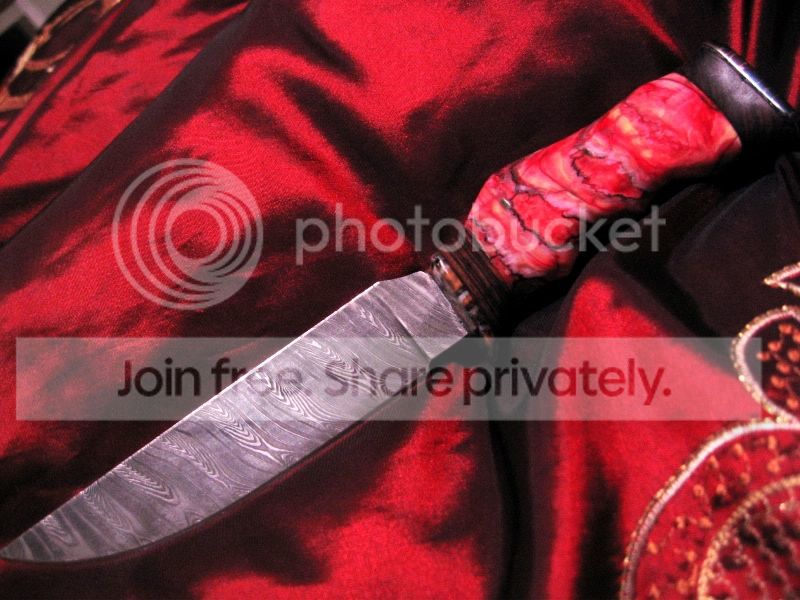
I need help determining a price for this knife. I am a newer knifemaker, and just starting to get into the big leagues (by my definition anyways). I just finished making what I consider to be one of my best knives. I still have to make a framed certificate of authenticity and order a solid oak display case, but the knife itself is done. The edge is 4 5/16" and overall length is 8 5/8". The blade is handmade by Snake River Knives and is RC 57-58. The handle is solid 15,000 year old mammoth tooth with some amazing colors (my wife absolutely loves this mammoth tooth, while the pommel is my favorite part). The pommel is made of colored mosaic damascus (I think from Chad Nichols) and looks totally wicked. The wood is Exotic Bocote, and the top of the guard is a scale of mammoth tooth. Smoothly inlaid in the thumb rest is a small piece of pearl with two abalone dots below it. The fit and finish of this knife is great, and the ergonomics are PERFECT for me. But I have small hands, so someone with above average hands probably wouldn't like it. I still have to wait for the oak display case to come in, but I'm trying to figure out what to price it at. I'm also interested in comments on how to be better so that I can be a great knife maker. Positive comments are welcome as well :D . Also, is anyone here in the knife maker's guild? I want to join (I carve my own blade from billets as well) and I'd like to ask some questions.

God Bless,
Richard
Knives15226.jpg

Knives15245.jpg

Knives15242.jpg

Knives15240.jpg

Knives15248.jpg

Knives15250.jpg

Knives15252.jpg

Knives15253.jpg

Knives15257.jpg
 
Last edited:
Two tips i will give you.

Tip One. dont use the flash on your camera. if you dont have a lighting setup you sun light and and white card stock to reflect the light onto the knife.

Tip Two. Never use a background that is the same color as your knife handle. Use contrasting colors that are not to bright.
 
Two tips i will give you.

Tip One. dont use the flash on your camera. if you dont have a lighting setup you sun light and and white card stock to reflect the light onto the knife.

Tip Two. Never use a background that is the same color as your knife handle. Use contrasting colors that are not to bright.

Thanks a lot! I actually didn't use the flash. The lights are just so bright and the knife is just so shiny, heheh. I actually made a little photo studio from a cardboard box, and I drape different color clothes over it. I also have plexi glass knife stands. But I didn't use them since I'm not selling the knife right now. I'm just trying to get opinions on it. I actually had thought about the color and that I should use a white background. It probably would have turned out better, so I appreciate the tip. I knew better, but sometime I need to be reminded of the obvious :D . And thanks for the card stock tip. I'll definitely check it out!

God Bless,
Richard

God Bless,
Richard
 
Richard,
You may need to modify your profile. While it may be fun to put cute things in it, many of us check it to see who you are and what you do. The details are not in alignment with this post, and other posts. If you are a knifemaker, why are you asking this question ? Real info...age occupation,interests, etc, are the way honest knifemakers represent themselves. Not meaning to come down hard on you, but if the info isn't straight, some folks on this forum won't answer your questions. That will leave a lot of answers from those who may be less experienced. It is the exchange of useful information that makes this place so great.
Stacy
 
Richard,
You may need to modify your profile. While it may be fun to put cute things in it, many of us check it to see who you are and what you do. The details are not in alignment with this post, and other posts. If you are a knifemaker, why are you asking this question ? Real info...age occupation,interests, etc, are the way honest knifemakers represent themselves. Not meaning to come down hard on you, but if the info isn't straight, some folks on this forum won't answer your questions. That will leave a lot of answers from those who may be less experienced. It is the exchange of useful information that makes this place so great.
Stacy

Thank you for the informative post. I have updated my profile, but it won't let me add that much information. I have a little more information on my Myspace page. By the way, is there any way that I can upgrade to a Knife Maker membership? I just bought a gold one the other day, but I should have got the knife maker one.

God Bless,
Richard
 
Pricing stuff is a tricky one. It typically involves a tally of time and materials. There are various strategies, such as Stacey mentioned, like doubling your material costs. Sometimes this won't work though. If you have a couple of bucks in steel and a few buck in the handle, doubling it to ten dollars will leave you considerably short.

Of course, there's the other half of the basic equation, time. It's not uncommon to have these calculation go the other extreme. For instance 20 hours at a reasonable wage, say $25 per hour, for a sale price of $500, may price you out of the market. This would hold true for some of us that are just beginning, as well as using common materials (not this case).

It is also easy to forget the tangential costs involved like the overhead lease/mortgage and utilities. There are also the capital costs of shop equip, machine time, administrative time (ordering supplies, errand, bookkeeping, etc) and all the consumables (forge fuel, belts, adhesives, etc). It can get somewhat complex.

Some businesses will bill out time at different rates for different tasks. They also bill machine time at various rates per machine. This all gets tallied up, along with material costs, and marked up by some percentage, to cover overhead and admin costs, with the hopes of a net margin when all is said and done.

Many one-man-band tradespeople do something a lot simpler. They just come up with a flat hourly rate that, more or less, covers everything. Perhaps its $50 per hour for labor and shop time, or a $100.... It often boils down to what you can get away with, or as the saying goes, what he market will bear. Checking out similar products, makers and customers might aid the pricing process too.

Once something is done enough (product or service) often a flat rate is established independent of time. Cost per square foot for a building, or so much for each type of blade, so much for each type of handle, as a baseline with price increases for additions to the base product line. This is where one most past the beginner stage. Now the knife is made in half the time, but is twice as good and commands a better price with more net earnings to boot. Well, that's the theory anyway, or so I'm told.

Don't know if any of this is helpful. I've been trying to figure some version of this question out for years. Still broke, still having fun!

All the best, Phil
 
Wow, thanks a lot Phil. That's some good information. I couldn't really do the double the material cost thing because I usually get my materials at very good prices. For instance, that block of mammoth tooth that I used for the handle I was able to snag for $25 shipped! I'll probably go more by how much time I put into it than the material cost. Thanks again Phil.

God Bless,
Richard
 
I don't know if you REALLY want any constructive criticism. If you do, then maybe this will help. If not, then I guess I'll be able to add you to the long list of folks that think I'm an a$$hole :)


I highly recommend you spend time with basic materials,making basic knives.

The finish flaws that can be seen just in these photos will not allow you to command the kind of price you'll want to after investing in those materials.

I won't say anything about the design because that's subjective and Ed Fowler would say I'm trying to make you like what I like ;) but it is pretty funky... and if you're going to pull off anything, but especially something funky, it had better be CLEAN. :)

Please keep it up, and keep us posted on how you do with it. :)
 
And to think, I've been selling skinning knives with $20 dollars in raw material for six or eight times that. Stacy, I suspect you don't really mean that, no?

I think a better way to price things is your hard costs plus a realistic shop rate.

But obviously, the best way to price things is: it is worth what someone is willing to pay for it, which is largely a function of how well it is made (and how good it looks), not how expensive the raw materials are or how much time it took to make it. Rarity figures into it too, and knives this fancy are uncommon.


So you have to figure out what it is worth. And I think asking a bunch of knife makers is one good way to do that. I have a number in my head, but I'm not gonna share it on a public forum. But the gist of it is, one "ah sh*t" undoes a thousand "atta boys" in business, in marriage, in life and in a knife. One serious flaw in a knife and the value drops quick, which is why what Nick is saying is good advice. A new maker, who is more likely to make a mistake at any point, will often be better off sticking to simple stuff at first where he can stay safely away from the "ah sh*ts" and still make a great knife.

BTW, beautiful knife, nice work.
 
I think Bob Engath's recommendation to new makers was to charge four times the price of materials, but that was referring to normal knife parts. Closer to home, experience can help set a price. My rule is, if I'm not building up an inventory of unsold work, my prices are too low. I have no unsold inventory, yet I often feel I'm asking more for my work than is fair. I base that on looking at other maker's work that I admire, and notice that their prices are often lower than mine for similar knives. So where does that leave me? I figure the option for a second income is working in a bookstore or in some company's collections department, where I'd make less than $10 per hour and pay taxes on that. So I'm shooting for $10 per hour after the cost of materials and supplies, and depend on honing my shop practices to steadily increase my "wages." I make knives for personal satisfaction though, not for money, and I have no aspirations toward being a "name" maker. I just like making stuff, and I love knives.

Abrasives are a big part of my cost of making a knife, and I track every belt and piece of sandpaper that I use. I also keep track of my time. At the end of a project I tally it all up, set a price based on how I perceive the market for similar work, and determine what my wage was. It's usually below $10 per hour, but not always.

I will second Nick's suggestion to focus on the basics. Your knife is pretty, but very specialized. Some makers like Michael Kantor can use high end materials to great effect, and develop a following from it, but I think there's probably a limited market for that kind of work, particularly considering the esthetic involved. And craftsmanship is key, before anything else. I'd focus on "perfection" before materials or unusual design elements.

You didn't mention your intended sales venue. Where do you plan to offer your knife? Go there, look at other work available, judge yourself harshly, and set a fair price. Then stick to it. I understand your enthusiasm for this work, but the market is pretty dispassionate. And like Stacy mentioned, knife buyers are interested in who you are. "Name" makers are people that buyers relate to (often that means "humble" - but not always! :D), and who have perfected their workmanship and personal style.

Please keep us posted. I'm really interested in seeing your own blades and materials. You clearly have a passion for beautiful knives - let's see some more of it.
 
I should come clean on this one. My first answer was flippant, and I apologize .

I read his prior posts and his profile. He states he is a professional knifemaker (occupation). In this post he says he is a new maker. He is selling lots of knives on other forum areas and on ebay,some in big batches. Six months ago he was asking how to do things, and showed in his posts that he had little experience ( his idea about putting the blade in water and heating only the edge to critical with a torch is a good example).This knife has a commercial blade (not made or shaped by him), and he adds a handle and finishing. I won't go into style and colors, but from the photos, the extreme mix of materials, as well as the design and ergonomics, seems a bit odd to me personally.

My guess is that most of his sales are re-selling, and I was giving him a good business procedure ,used by many who re-sell. 100% profit is good.

There are many threads about pricing, and my advise in most has been to figure your time and materials, including consumables,then figure what return price it will bear.

For example: ( excluding famous makers)
Many swords have 100 hours in them, but only $100 in materials. I doubt that any customer would pay $2000 based on just labor, and I doubt any smith would sell for $200 based on just material. The real price is somewhere between the two. Depending on the experience and name recognition of the maker ( and what the sword looks like), the price may range from $201 to $1999.

Stacy
 
I do have to agree with Stacy. I don't want to sound off and come off with negative responses, but this forum offers honest replies to workmanship and choices.

The pictured knife would appeal to some buyers, but personally, I think it has too much bling, too many different materials that don't blend well.
 
I also agree with Stacy, I don't mean to be harsh, but it's a slapped together "kit" knife -so double the parts cost and that would be very profitable for the "maker."

Personally, if I didn't grind the blade I would feel funny about claiming to be a "knifemaker" and selling it.

Otherwise, good luck -and practice drawfiling on some O1 like how a good number of us started. :D :thumbup:
 
OK, I just put on my plaid shirt and stripped pants and now this knife looks great.
I think a basic knife is a thing of beauty. Bob Loveless doesnt worry about pricing his work. Learn from him.
 
Two tips i will give you.

Tip One. dont use the flash on your camera. if you dont have a lighting setup you sun light and and white card stock to reflect the light onto the knife.

Tip Two. Never use a background that is the same color as your knife handle. Use contrasting colors that are not to bright.

Tip Three. Ditch the color filters, and don't fiddle with the saturation after you've taken the picture. You're selling this knife based on the natural coloring of the materials. Based on how orange your hands look, I think your buyer is going to be very disappointed to see this knife in person.
 
OK, I just put on my plaid shirt and stripped pants and now this knife looks great.
I think a basic knife is a thing of beauty. Bob Loveless doesnt worry about pricing his work. Learn from him.

I agree with Bruce,and others but dont fake the funk keep up the hard work.Start more simple and work your way up from their. Brett M.
 
Tip 4. when i edit my pictures with photo shop i have the knife in my hand and adjust the picture to look as close to the knife as possible. I want the picture and knife to look the same. when a customer gets the knife i want them to say man it looks just like it did in the picture.
 
Back
Top