For those not familiar with doing togi ( shaping and polishing ,done as a continual process) there are two styles. Both employ increasing grits of stones and/or papers from 100 grit to 8000 grit, and final polishing with super fine polishing compounds. This can be quite expensive if one is a purist, and only uses natural Japanese stones; or can be quite affordable, utilizing modern diamond sharpening plates/stones, good quality synthetic stones, quality wet-or-dry papers, and commercial polishes, like Flitz. Use of these alternative materials, and doing part of the rough shaping on grinders is called hybrid polishing.
The more traditional style ( regardless of stone type) uses the stones/sandpaper placed on a raised block and the sword/knife moved over the abrasive surface. Water is constantly splashed on the stone/sandpaper. This is wet and messy and requires a sturdy polishing bench, called a togi-dai. The water is in a bucket ( togi-oke) that is only used for clean polishing water. The water is changed, and the bucket and togi-dai are washed at ever grit change .The water has soap and sodium carbonate in it to make the cutting smoother,faster, and retard rusting ( which can happen as you watch). This style allows a lot of controlled pressure to be applied to the blade as shaping and smoothing are done. Rapid removal of the metal is possible with practice. The disadvantage is that you have to lift and turn the blade often to monitor the progress. Togi done this way can be done sitting on the floor (traditional), sitting on a stool at a raised togi bench ( not uncommon, especially for those with old knees and bad backs), or standing at a table/bench ( more western, often used in hybrid polishing).
The other style is done seated ,with the sword grasped in the hand, and/or rested against a post, and the nakago (tang) or kissaki ( point) gripped between the thighs. The wet stone or sanding block is moved along the surface. This style allows seeing the cutting as it is done, and delivers the stroke with less pressure, but more control. There is a bucket of polishing water that the stone/block is dipped into frequently. The water and swarf runs down the blade, so you need to put a towel in your lap, or you will look ( and feel) like you wet your pants. The disadvantage of this system is that you are moving one hand up and down along a razor sharp blade. Extreme care must be taken.
In either style the sword becomes sharp at an early point in the polishing, and gets sharper as it goes. There is no final sharpening as in western sanding/polishing. The sword is tightly gripped ( you don't want it sliding in you hand) by hand, wrapped in cloth once the edge starts to develop. I find old towels great for the earlier stages of shitaji togi ( foundation polishing), and new diapers perfect for the final stages. When you get to the final stages of shiagi togi ( finish polishing), you are often using tiny pieces of thin stones, called jizuya, to polish the ha (sharp edge) and define the hamon. This is done with the thumb pressing on the tiny stone, while it is rapidly moved in tiny strokes along the super sharp edge.
I have built a folding togi bench that works well. I will try and take some photos when I get a chance. It has interchangeable posts that allow several types of polishing/filing/sanding functions to be done. It can be used to file and hand sand knife blades, and polish swords. It allows a firm and back/knee friendly solution to hours of sanding and polishing. I can bring it inside for rainy day or evening polishing, take it with me to a demo, or sit out on the deck and relax on a sunny day while polishing.
Stacy


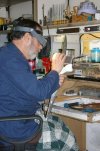
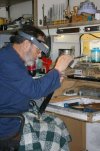
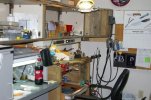
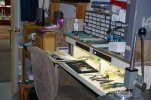
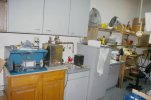


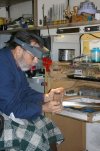

 in the background


 . That ring is great! especially given the short amount of time it took you to actually do the work! :thumbup: