No
 FortyTwoBlades
, tools were not almost universally imported rather than domestically produced up until European companies (I think you are referring to the Central and Northern European ones) started setting up locally. Manufacture didn't stop when Iberians reached the Americas.
I think we need a bit of context. We’ll be discussing a vast span of time, territories and populations, so I’ll try to be as brief and concise as possible.
When the people we know as the conquistadors reached the Americas and conquered them their true image was far from the Space Marine portrayal often shown in mass media. Yes they possessed more advanced industrial technology, but the reality was far more complex and mundane.
The conquistadors’ weaponry and the tools they used were diverse and adapted to local conditions. Rather than representing straightforward technological superiority it reflected practical adaptation and reliance on indigenous resources and production, showing a complex technological interaction between Europeans and Indigenous peoples.
The social structure that emerged in this context resembled the Iberian model. Metal producers were organized into guilds, and they were so important that they were established as early as the first half of the 16th century. There was considerable variability in everything involving these organizations, but they all followed the rules imposed by law and necessity.
Classical thinking held that steel and iron production and processing were legally monopolized by the metropolis, with local manufacturing allowed only to meet demand. However,
further research suggests that there was no legal prohibition on producing iron and steel locally.
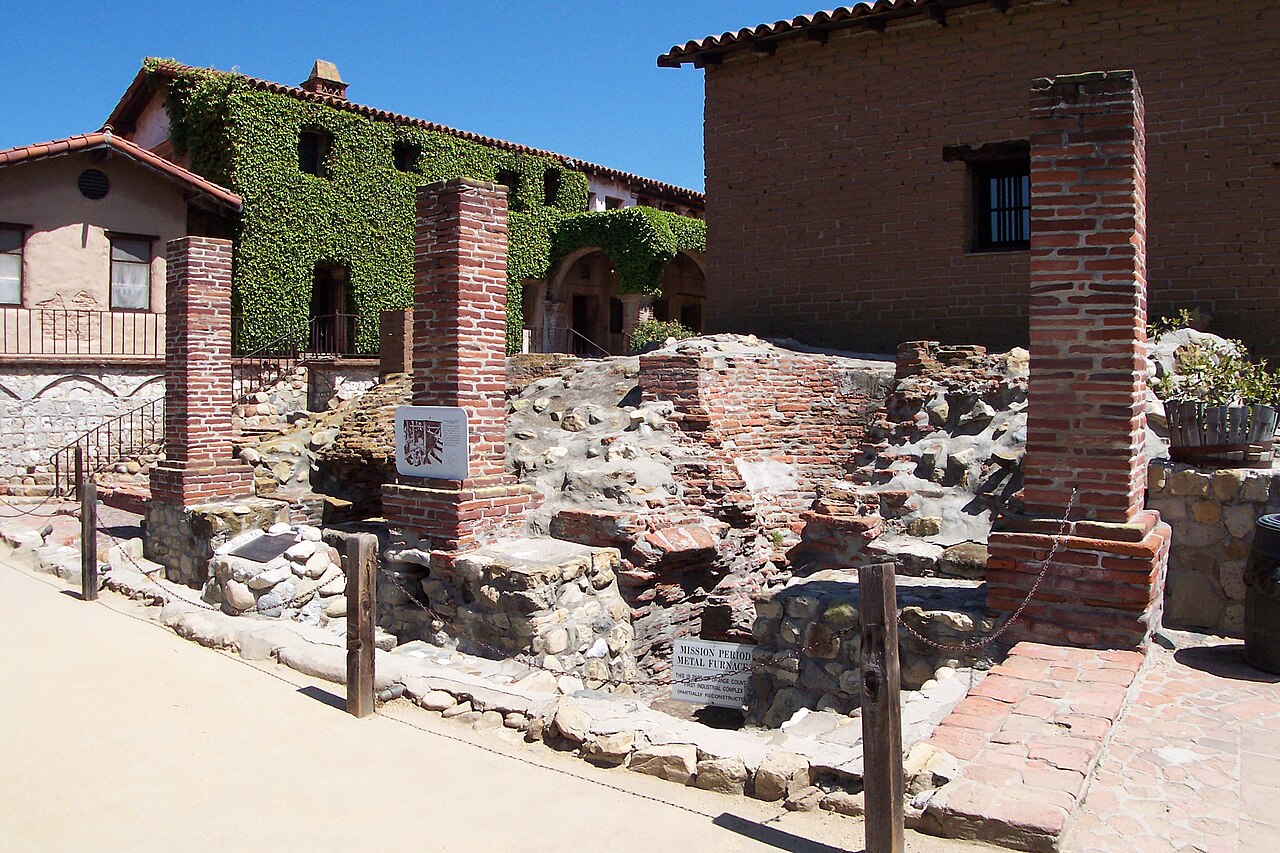
Nevertheless, demand continued to grow over time and iron and steel production combined with local indigenous toolmaking (both metal and stone) could not keep up. By the 18th century industrial-scale iron reduction facilities began to appear. One of my favorites to show to English speaking people is a true jewel of the Mexican iron industry of the era: the Catalan forge at Mission San Juan Capistrano in California.
For those unfamiliar with
Catalan forges, they were a medieval technological marvel for iron processing (a kind of “rocket technology” of their time) that remained completely fully functional and in use until the 19th century. They could generate a continuous, compressed airflow using the Venturi effect. These facilities significantly increased iron, steel, and tool production in Latin America.
As I know trompe, a fascinating technology, has been used until the 70´s and the
last place I know it was used was in Ontario, Canada.
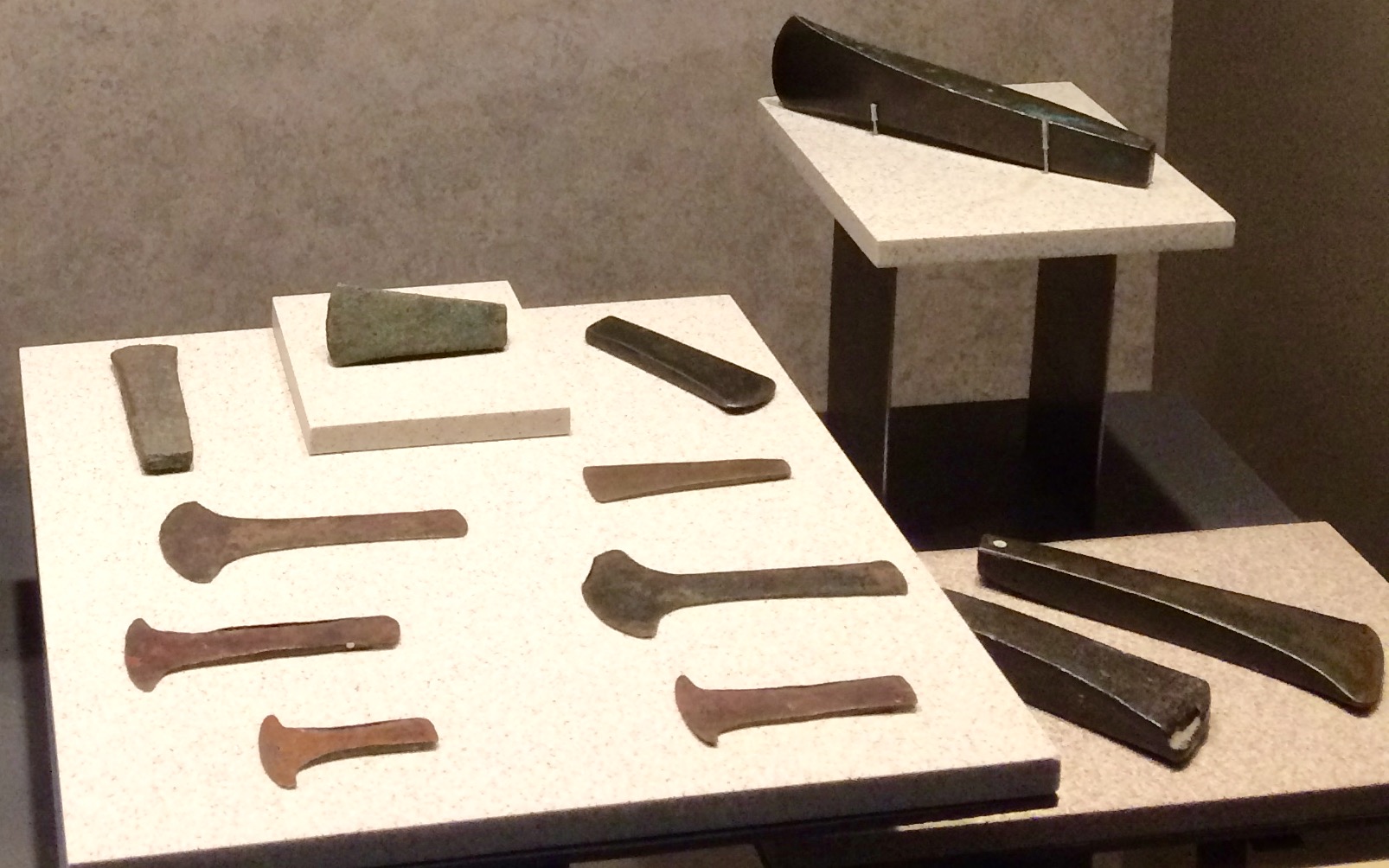
As you can see Latin America was not an industrial wasteland before new European players entered the market. There was ample room for the development of local axe patterns, especially in Mexico.
Yes, we both speculate though to different degrees, but the foundations of our arguments are quite different.
There are further reasons to support my view, for example, historical axe catalogs, particularly older ones from when these tools were in actual use, are commonly referenced. I have never seen anyone educated in axe culture question renowned axemakers based solely on conjecture and that includes you. Knowing the context I have serious doubts that the documents you mention (trade publications or governmental discussion of exports/imports about axe patterns) ever existed.
I know language is a living thing and current pattern names are so widely accepted that changing them is virtually impossible. However that doesn’t change the fact that the case I defend, in which pattern names have been changed, is well supported.
About slip fit and round eye axes, there are large parts of the world where these axes (specially those with oval eyes) are still common. Not only in Latin America, but they are also the most widespread axes in the agricultural sector of a region like Iberia, which has had extensive commercial ties with the rest of the world for centuries. Slip fit axes are neither a thing of the past nor the future, they have their advantages and disadvantages. Some regions prefer one type, others the other and some regions like the one I live choose between them depending on the task at hand.
Regards