
-
The BladeForums.com 2024 Traditional Knife is available! Price is $250 ea (shipped within CONUS).
Order here: https://www.bladeforums.com/help/2024-traditional/
You are using an out of date browser. It may not display this or other websites correctly.
You should upgrade or use an alternative browser.
You should upgrade or use an alternative browser.
Tapered tangs vs. skelotenized tangs
- Thread starter catcalls
- Start date
- Joined
- Aug 2, 2009
- Messages
- 7
I have been thinking about this as well.

- Joined
- Dec 24, 2005
- Messages
- 878
If my experience is anything to go by, I have found newer makers opt for skeletonised tangs. As they improve and gain confidence the mostly move on to full tapered tangs. I don't believe either is better than the other if done correctly. Visually I think a tapered tang looks far better.
The main issue to avoid with skeletonised tangs is too many holes and not staggering them. Too often we see tangs with not enough meat between holes compromising the integrity of the tang.
The main issue to avoid with skeletonised tangs is too many holes and not staggering them. Too often we see tangs with not enough meat between holes compromising the integrity of the tang.

- Joined
- Aug 3, 2013
- Messages
- 592
Not necessarily, If you mean if there is a strength difference with regulare knife use, the no there is no difference. Even if you are subjecting a blade to heavy batoning, which should be the limit, it would still have no effect. Sure if you apply an extravagant amount of force, sure maybe there is a difference, but that is beyond the limit of human strength.
Personally I prefer a skeletonized tang, not that it makes any difference other than weight.
Personally I prefer a skeletonized tang, not that it makes any difference other than weight.

james terrio
Sharpest Knife in the Light Socket
- Joined
- Apr 15, 2010
- Messages
- 22,618
Fixed blade knives very rarely break in the handle itself, regardless of build style. They almost always break off at the tip, or right at the tang/ricasso shoulder on hidden-tang blades.
The differences in raw strength (and balance) should be negligible if you're removing the same amount of steel from a full tang. Tapers definitely look more "custom" and sleek.
When newer makers get all excited and completely swiss-cheese their tangs, there could be problems. I've seen many that look like a spiderweb, they're drilled so many times - leaving less actual steel than a hidden tang of similar size would have. As Don said, there needs to be some kind of framework left to support everything.
The differences in raw strength (and balance) should be negligible if you're removing the same amount of steel from a full tang. Tapers definitely look more "custom" and sleek.
When newer makers get all excited and completely swiss-cheese their tangs, there could be problems. I've seen many that look like a spiderweb, they're drilled so many times - leaving less actual steel than a hidden tang of similar size would have. As Don said, there needs to be some kind of framework left to support everything.

Matthew Gregory
Chief Executive in charge of Entertainment
- Joined
- Jan 12, 2005
- Messages
- 6,698
I find it easier to achieve proper balance with a tapered tang, and it also provides for a different handle geometry with my Japanese/American style knives that make them more comfortable to carry IWB. Aesthetically, I find tapered tangs on knives where it's visible to be appealing.
Whether or not there's any improvement in strength from one method or another brings up the end use of the knife. If it will see these kinds of stressors, perhaps no reduction in weight should be attempted...
Whether or not there's any improvement in strength from one method or another brings up the end use of the knife. If it will see these kinds of stressors, perhaps no reduction in weight should be attempted...

- Joined
- Nov 10, 2010
- Messages
- 575
I use a combination of both tang holes and a tang taper now on all of my knives. I don't overly skeletonize the tang though and that is key. Just one single row of holes to include the pin holes. If the design allows for it I may have 2 larger (than the pin hole size) holes to help with weight reduction a bit. I've destruction tested two of my blades done this way and neither failed in the handle tang.
I make mostly smaller knives (5" or less in blade length). The smaller the knife the more difficult it seems to achieve proper balance and handling. Using both holes and a taper is crucial imo, on my knives, to help get that balance and handling the way I want it.
I make mostly smaller knives (5" or less in blade length). The smaller the knife the more difficult it seems to achieve proper balance and handling. Using both holes and a taper is crucial imo, on my knives, to help get that balance and handling the way I want it.
james terrio
Sharpest Knife in the Light Socket
- Joined
- Apr 15, 2010
- Messages
- 22,618
Of course, literally minutes after I mentioned that knives rarely break in the tang itself, I stumbled across this....
This is why I'm not a fan of differential hardening/quenching, no matter of the tang style. It creates a hard blade (which is good), a soft tang or spine (which is not necessary) - and a weak spot right in between... which can be very very bad.
It's much better to harden the entire piece fully, temper normally, and then draw the temper back just on the spine or tang. No transition areas that way. (It's also still not necessary IMO, but whatever)
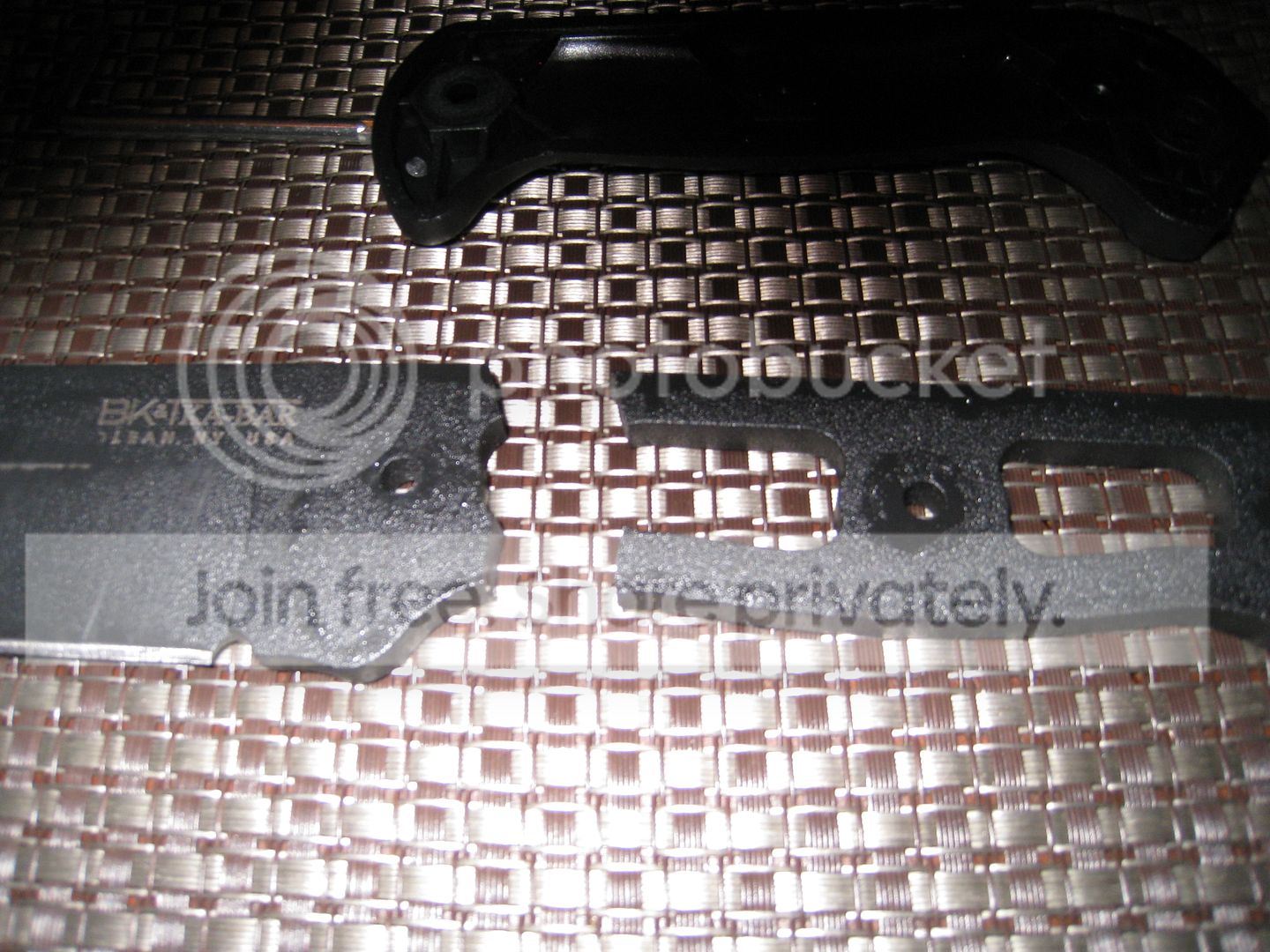
This is why I'm not a fan of differential hardening/quenching, no matter of the tang style. It creates a hard blade (which is good), a soft tang or spine (which is not necessary) - and a weak spot right in between... which can be very very bad.
It's much better to harden the entire piece fully, temper normally, and then draw the temper back just on the spine or tang. No transition areas that way. (It's also still not necessary IMO, but whatever)

- Joined
- Oct 19, 2005
- Messages
- 20,015
If my experience is anything to go by, I have found newer makers opt for skeletonised tangs. As they improve and gain confidence the mostly move on to full tapered tangs. I don't believe either is better than the other if done correctly. Visually I think a tapered tang looks far better.
The main issue to avoid with skeletonised tangs is too many holes and not staggering them. Too often we see tangs with not enough meat between holes compromising the integrity of the tang.
I find my customers like both. Once I started tapering tangs, I felt I liked them better, but a big contingent of my customers wanted thicker, heavier, and nothing to do with tapered. So I do both.
- Joined
- Jun 26, 2005
- Messages
- 1,835
3/16 stock / the knife will work for u
- Joined
- Dec 31, 2003
- Messages
- 335
It's hard to tell from that picture due to the coating but it looks like the skeletonizing still has a ninety degree edge. If you are going to skeletonize you have to get rid of the ninety degree edge. Chamfering your drill holes as well. A properly built skeletonized handles is fairly strong. That picture is a good example of what happens when you cut corners to make a buck.
I'm doing another large batch of knives, this one with skeletonized handles. Everyone of them I have gone over with a carbide die grinder, file, and sandpaper to remove burrs, ninety degree edges, and swarf marks from the water jet cutting.
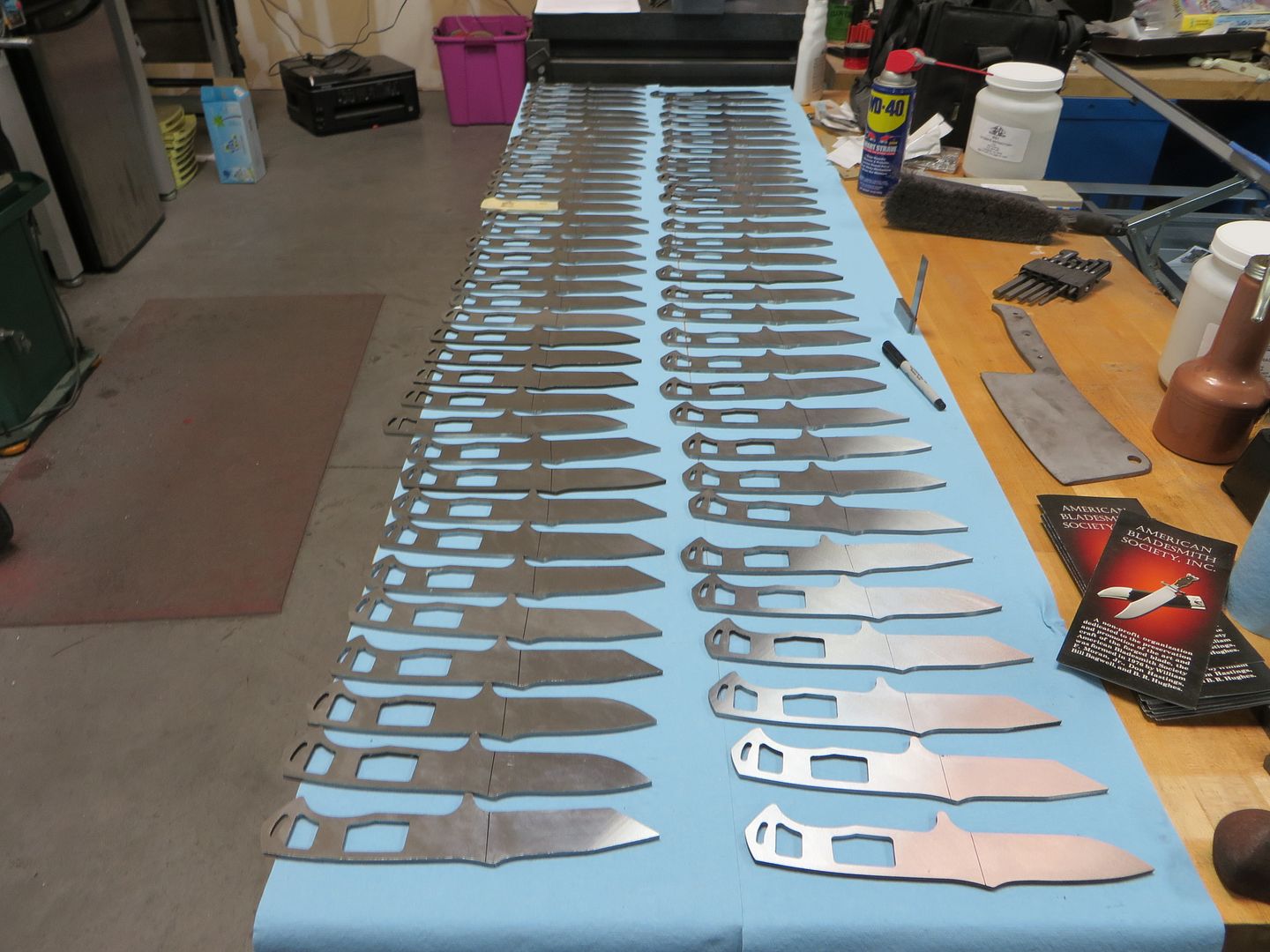
I think skeletonized handles are less attractive than tapered tangs, but strength wise I would be hard pressed to put a percentage on how much a tapered tang will perform better than a properly skeletonized handle. The up side is on a large batch like in my picture it is a lot easier drilling the holes in the handle material than setting each one up in a jig to drill the holes in a tapered tang. Something else to remember do not skeletonize or drill large holes just behind the ricasso area, like in your picture. In mine the skeletonizing starts at nearly one third the length of the handle leaving the area that is subject to stress full size.
I'm doing another large batch of knives, this one with skeletonized handles. Everyone of them I have gone over with a carbide die grinder, file, and sandpaper to remove burrs, ninety degree edges, and swarf marks from the water jet cutting.

I think skeletonized handles are less attractive than tapered tangs, but strength wise I would be hard pressed to put a percentage on how much a tapered tang will perform better than a properly skeletonized handle. The up side is on a large batch like in my picture it is a lot easier drilling the holes in the handle material than setting each one up in a jig to drill the holes in a tapered tang. Something else to remember do not skeletonize or drill large holes just behind the ricasso area, like in your picture. In mine the skeletonizing starts at nearly one third the length of the handle leaving the area that is subject to stress full size.
Of course, literally minutes after I mentioned that knives rarely break in the tang itself, I stumbled across this....
This is why I'm not a fan of differential hardening/quenching, no matter of the tang style. It creates a hard blade (which is good), a soft tang or spine (which is not necessary) - and a weak spot right in between... which can be very very bad.
It's much better to harden the entire piece fully, temper normally, and then draw the temper back just on the spine or tang. No transition areas that way. (It's also still not necessary IMO, but whatever)

- Joined
- Apr 7, 2006
- Messages
- 5,215
I find my customers like both. Once I started tapering tangs, I felt I liked them better, but a big contingent of my customers wanted thicker, heavier, and nothing to do with tapered. So I do both.
Does anyone every request an un-skeletonized un-tapered tang?

Nathan the Machinist
KnifeMaker / Machinist / Evil Genius
Moderator
Knifemaker / Craftsman / Service Provider
- Joined
- Feb 13, 2007
- Messages
- 19,156
The obligatory photograph:
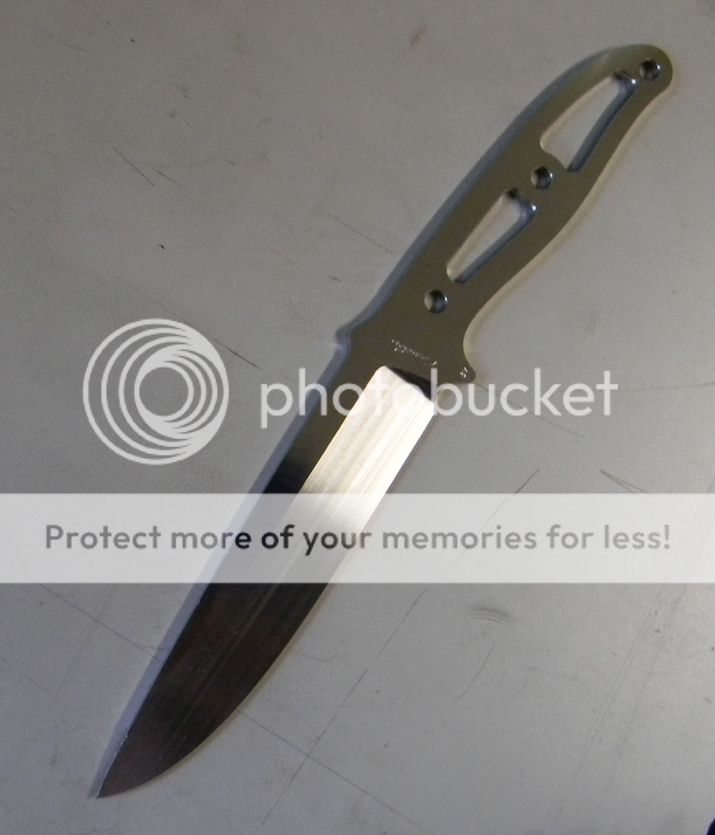
I've done both and I think there are pros and cons to both.
One advantage to skeletonized over tapered is you can hammer on the end of the tang to use the knife as a chisel. You might not do this, but there are people who do.
One advantage to tapered over skeletonized is there is more surface area for a bonded scale. And it looks nice.
So I think you'll see more skeletonized on tactical knives and more tapered tangs on classical styles.
Properly executed both are strong. From a balance perspective they can both do a fine job of weight distribution with a nod to skeletonized for removing as much weight from a tang as tapered without making the end too light.
Here is an interesting point - there are knives where the balance is not enhanced by a tapered tang. There are knives who would be better served adding weight to the end rather than removing it. We see a lot of tapered tangs but not a lot of weighted pommels. Why is that? Light is usually nice, and balance on the first finger is often, but not always, nice. A utility knife like a skinner is nice if it is light and balances on the first finger. But a proper fighter will balance in front of the guard. A chopper, by necessity, will be point heavy, but a tapered tang is not called for and in fact a weighted pommel would improve chopping power. Some knives should be fast to rotate while others should resist rotation. And, sometimes what feels best is not what performs best. The ubiquitous tapered tang is not always correct.
I've done both and I think there are pros and cons to both.
One advantage to skeletonized over tapered is you can hammer on the end of the tang to use the knife as a chisel. You might not do this, but there are people who do.
One advantage to tapered over skeletonized is there is more surface area for a bonded scale. And it looks nice.
So I think you'll see more skeletonized on tactical knives and more tapered tangs on classical styles.
Properly executed both are strong. From a balance perspective they can both do a fine job of weight distribution with a nod to skeletonized for removing as much weight from a tang as tapered without making the end too light.
Here is an interesting point - there are knives where the balance is not enhanced by a tapered tang. There are knives who would be better served adding weight to the end rather than removing it. We see a lot of tapered tangs but not a lot of weighted pommels. Why is that? Light is usually nice, and balance on the first finger is often, but not always, nice. A utility knife like a skinner is nice if it is light and balances on the first finger. But a proper fighter will balance in front of the guard. A chopper, by necessity, will be point heavy, but a tapered tang is not called for and in fact a weighted pommel would improve chopping power. Some knives should be fast to rotate while others should resist rotation. And, sometimes what feels best is not what performs best. The ubiquitous tapered tang is not always correct.
james terrio
Sharpest Knife in the Light Socket
- Joined
- Apr 15, 2010
- Messages
- 22,618
It's hard to tell from that picture due to the coating but it looks like the skeletonizing still has a ninety degree edge. If you are going to skeletonize you have to get rid of the ninety degree edge. Chamfering your drill holes as well.
We're still talking about sections of 1095CV roughly 3/16 - 1/4 square. Go ahead and make/fully harden and temper a little bar like that - square corners or not - and break it... tell me how much force it takes. Now make the same size piece and only quench half of it. Guess where it will break?
Chamfering is ALWAYS a good idea, but it wouldn't account for a tiny percentage of many hundreds of knives breaking in exactly the same place. I've seen that happen to that brand of knives before. It's an HT issue, not a physical/mechanical one.
- Joined
- Jul 1, 2013
- Messages
- 32,479
I also do both,
Usually three 1/2"-1" holes in the tang, My bolts holes and then taper for the aesthetics of a distal blade and then a distal tang when viewing from the spine.
You have to keep the end use of the knife in mind. Since I make mostly culinary and a few hunters. They are not big hand axe chopper type knives which I would only skeletonize a bit in the tang and not taper. I also countersink the bolt holes and get rid of as many right angles inside the Tang.
Usually three 1/2"-1" holes in the tang, My bolts holes and then taper for the aesthetics of a distal blade and then a distal tang when viewing from the spine.
You have to keep the end use of the knife in mind. Since I make mostly culinary and a few hunters. They are not big hand axe chopper type knives which I would only skeletonize a bit in the tang and not taper. I also countersink the bolt holes and get rid of as many right angles inside the Tang.
- Joined
- Oct 19, 2005
- Messages
- 20,015
Does anyone every request an un-skeletonized un-tapered tang?
Well, I don't do requests, so no. The only time I do un skeletonized un tapered is on very small knives.
- Joined
- Jun 13, 2007
- Messages
- 7,743
Here is an example of a Fiddleback Kephart and its balancing point.

One fellow measured the weight of his 1/8" with a drilled tang.
5.22oz
Mine is 5/32" with a tapered tang.
5 7/8oz (whatever that works out to)
Andy drills the same holes in both tangs so the differences are the thickness and the taper.
Aside from the mentioned ability to hammer on the tang, I don't believe that there is a working difference in strength. I do believe that it makes a difference in weight and visual appeal.
One fellow measured the weight of his 1/8" with a drilled tang.
5.22oz
Mine is 5/32" with a tapered tang.
5 7/8oz (whatever that works out to)
Andy drills the same holes in both tangs so the differences are the thickness and the taper.
Aside from the mentioned ability to hammer on the tang, I don't believe that there is a working difference in strength. I do believe that it makes a difference in weight and visual appeal.
- Joined
- Oct 19, 2005
- Messages
- 20,015
The handle material (g10 and heavy) for that knife effects the balance as much as the tapering IMO. If it had been burlap, or some lightweight wood like Bocote, it would have been much lighter and the balance point would have been farther out toward the tip.
I've found, much to my puzzlement, that there are just a whole bunch of folks, men and women alike, who will pass up a slinky bird/trout made of nice, shiny D2 in favor of a very basic "bushcraft" knife made from a 3/16 file, with a full weight handle- they like the solid feel of a heavy handle.
Not MY preference, but I'm not making em for myself.
Some of the best cooks I sharpen for have clunky favorite knives with heavy fore-and-aft bolsters.....go figger.
Not MY preference, but I'm not making em for myself.
Some of the best cooks I sharpen for have clunky favorite knives with heavy fore-and-aft bolsters.....go figger.
- Joined
- Oct 19, 2005
- Messages
- 20,015
Yep. Thick heavy knives sell too. Not what I carry, but I make them. There are guys with giant hands too. Big ugly fat handles feel horrible in my hands, but I make those as well because it takes all kinds. For me to carry one of mine it has to have a tapered tang so when I show it to folks, they know I know how to taper a tang. Its a status symbol among knifemakers but it isn't the only way to go.