

Today as I was working on several straight razors I have been doing a bunch of hand sanding. While looking for hidden scratches I remember there have been some recent threads asking about it. Now I'm not going to discuss techniques, or materials, or secret lubes that make the paper last for ever, but one thing is very rarely mentioned, the light source.
Many shops are stuck with just the traditional overhead floresent tube lighting, which is fine, but unless the roll up door is open it is often the only source of light. I took some pictures of the same blade in different lights that really highlights the difference.
First up is incandesant light, 100W buld in my drafting light. I use this to spotlight my drill press and also where I do lots of hand sanding. The factory grind marks on this blade are clearly viable, looks like tons of sanding to do...
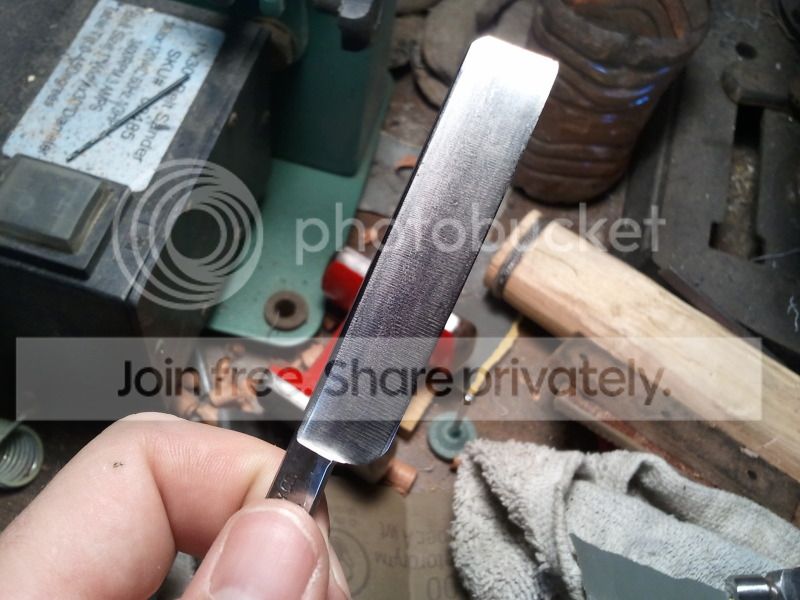
Next is a flouresent light. My camera died so I moved inside and put it on the charger to take these pics. The factory grind marks disappear, but what's that? Yep, some nasty scratch/scuff marks showed up plain as day...
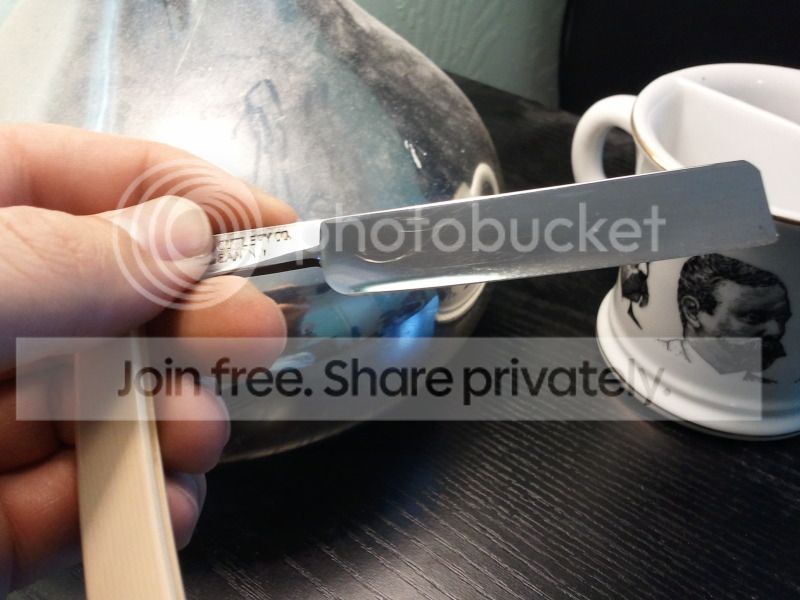
Lastly is natural difussed light. This is the most forgiving, hiding most all defects very well. This is why photographers spend so much money on good studio lights to replicate the color temperature of daylight. The blade don't look too shabby now, does it!

I hope this thread encourages new makers to get some more and different lighting into their shop, and also highlights the phenomenon of magically appearing scratches the next day.
-Xander
Many shops are stuck with just the traditional overhead floresent tube lighting, which is fine, but unless the roll up door is open it is often the only source of light. I took some pictures of the same blade in different lights that really highlights the difference.
First up is incandesant light, 100W buld in my drafting light. I use this to spotlight my drill press and also where I do lots of hand sanding. The factory grind marks on this blade are clearly viable, looks like tons of sanding to do...
Next is a flouresent light. My camera died so I moved inside and put it on the charger to take these pics. The factory grind marks disappear, but what's that? Yep, some nasty scratch/scuff marks showed up plain as day...
Lastly is natural difussed light. This is the most forgiving, hiding most all defects very well. This is why photographers spend so much money on good studio lights to replicate the color temperature of daylight. The blade don't look too shabby now, does it!
I hope this thread encourages new makers to get some more and different lighting into their shop, and also highlights the phenomenon of magically appearing scratches the next day.
-Xander
Last edited:


 LOL
LOL


