the physics of chopping

Of course knife A and knife B would show different results because you're basically keeping velocity of the chop constant. You are correct in saying that a heavier knife while swung at the same speed as a lighter knife will transfer more energy to the wood. But you are wrong in saying that mass has more of an effect on the amount of energy transferred.

No, because the results will speak for themselves, the heavier knife will remove more wood than the lighter knife given all other variables being the same.

The heavier knife will have more mass than the lighter knife.
 
Exact. Like a felling axe will have more mass than a heavy knife.

When you chop the mass is very important.
When you slice a thin blade geometry will perform better.
 
Of course knife A and knife B would show different results because you're basically keeping velocity of the chop constant. You are correct in saying that a heavier knife while swung at the same speed as a lighter knife will transfer more energy to the wood. But you are wrong in saying that mass has more of an effect on the amount of energy transferred.

Analysis 1
Knife A = 1 kg
Knife B = 2 kg
Swing speed = 20 mph = 8.9408 m/s

Knife A:
Kinetic Energy = 1/2 mv^2
(1/2)(1)(8.9408^2) = 39.969 Joules

Knife B:
(1/2)(2)(8.9408^2) = 79.9379 Joules

Therefore, Knife B, which is twice as massive as Knife A, transfers TWO times more energy to the block of wood.

Analysis 2
Knife A = Knife B = 2 kg (Knife A and B both have same mass)
Swing speed 1: 8.9408 m/s
Swing speed 2: 17.8816 m/s (double swing speed 1)

Knife A, swing speed 1
(1/2)(2)(8.9408^2) = 79.938 Joules

Knife B, swing speed 2
(1/2)(2)(17.8816^2) = 319.752 Joules

Therefore, Knife B which has same mass as Knife A, which you also swung twice as fast as Knife A, transfers FOUR times more energy to the block of wood than Knife A.

That's common since put into a math equations. :)

Yes, if you have two knives that weigh the same and have the same mass and swing one twice as fast as the other one it will work better because you are transferring more energy to the wood.

I don't need math to tell me that. :D

It's the same as taking the same knife and swinging it twice as hard, it should perform better in theory depending on the variables.
 
That's common since put into a math equations. :)

Yes, if you have two knives that weigh the same and have the same mass and swing one twice as fast as the other one it will work better because you are transferring more energy to the wood.

I don't need math to tell me that. :D


Well that's all I was trying to say. It appeared to me that everyone was saying that velocity of the blade was less important than mass, assuming all else equal.
 
Well that's all I was trying to say. It appeared to me that everyone was saying that velocity of the blade was less important than mass, assuming all else equal.

It wasn't me that was saying that. :D

I understood exactly what you were saying. :)

I understand the math, all I was saying is that I don't need it to tell me what's gonna happen. :D
 
This is what I was referring to. Sorry if I misunderstood you.

That's OK. :D

It's all good. :D :thumbup:

It's been over 20 years since I was in College and I don't use math in my job so you know how that goes. :D
 
Well, it matters also about length and weight placement on the blade. For instance: an axe has all the weight at the end of a long handle. so that will have an effect on swing speed and concentration of the mass hitting the target. A long thin blade can not hold up to this because you can generate more power with more effectively shaped tools (ie levers and pulleys)
 
Well, it matters also about length and weight placement on the blade. For instance: an axe has all the weight at the end of a long handle. so that will have an effect on swing speed and concentration of the mass hitting the target. A long thin blade can not hold up to this because you can generate more power with more effectively shaped tools (ie levers and pulleys)

Right. In my argument, variables like those were held constant.
 
Well, it matters also about length and weight placement on the blade. For instance: an axe has all the weight at the end of a long handle. so that will have an effect on swing speed and concentration of the mass hitting the target. A long thin blade can not hold up to this because you can generate more power with more effectively shaped tools (ie levers and pulleys)

That's the reason why a Khurki will out chop a Bowie style blade.
 
I have been trying to follow this thread and just wanted to say eventually it will lead here........

beating-a-dead-horse.gif
 
If you look at the bullet theory light versus heavy. The light bullet starts out faster than a heavy bullet but in the end the heavy bullet keeps going where the light bullet falls off. Thats why heavys are used in africa. So I suppose the same holds true for heavy blades versus light blades. I would assume anyway.

both bullets fall at the same rate, due to gravity not their masses relitivity too it.

however, because deacceleration units are (weight) x (v^2),the 22 slows down much quicker.
 
I don't think the difference in swing speed is large enough between say a BWM and a FFBM to overtake the size/mass advantage of the larger knife

The answer is still this. Yes, v is important, but if we cannot come close to increasing v in a meaningful way....

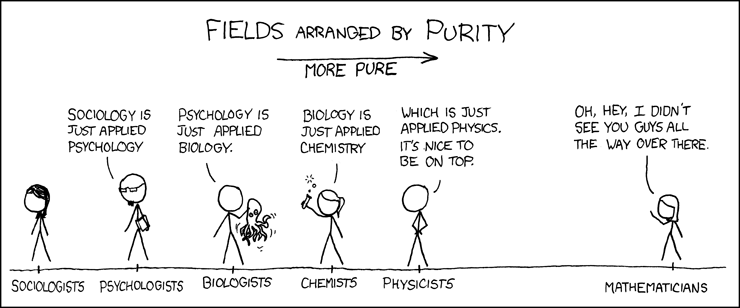
What I don't get, however, is the somewhat odd disdain for physics (and seemingly science in general) some members here have. After all, remember what you're using to discuss this topic.
 
The answer is still this. Yes, v is important, but if we cannot come close to increasing v in a meaningful way....

What I don't get, however, is the somewhat odd disdain for physics (and seemingly science in general) some members here have. After all, remember what you're using to discuss this topic.

We know what "the answer" is. The point of our (my) discussion was purely theoretical because a lot of people seemed to not realize the effect that velocity has on energy. In real life a more massive blade would do more damage because like you said, we can not increase velocity enough to make a difference.

Also whoever said that weight determines how fast a bullet slows down in air is wrong. Weight/mass has NOTHING to do with it. It's a matter of the aerodynamic properties of the projectile and air resistance (friction). Classic example is dropping a bowling ball and golf ball from a certain height. Both balls hit the ground at the same time because mass does not make a difference. If you dropped a feather and a bowling ball, the feather takes longer to hit the ground because of air resistance, not because it's lighter.
 
however, because deacceleration units are (weight) x (v^2),the 22 slows down much quicker.
This is wrong. Acceleration is in units of distance/time^2. AKA meters/second^2

Unless I misunderstand what you're trying to say....
 
A lot of this thread reminds me of people out to prove a theory ... usually at the
expense of those who in reality have to live with it ...

- .38 Specials are a better manstopper than 9mm Para because the bullets usually stay inside the body as opposed to going through it ....

- .308 is all you need for a Sniper Calibre in the modern battlefield ... 800 yards is plenty far enough for most people's skills ...

- the Military don't need square canopies for parachutes .... it is much better to use round ones with limited steering ability .... that way they will all land in tighter clusters ...

- combat boots don't need to be waterproof as none waterproof boots dry out quicker and easier if filled with water ...

Now we have .... chopping with lighter knives should enable faster speeds which in turn will enable greater performance ....

Sorry ... it is entertaining up to a point ... but nothing beats "using" to get to the truth of matters ....

It’s true that you need real world testing. Without falsifyability, science is not science. That’s why some people argue that string theory is only philosophy.

On the other hand, without science there would be no parachutes. Nor any airplanes for paratroopers to jump out of.
 
this thread saddens me a little.


This thread saddens me a lot. I've avoided reading most of what has been said recently because it reminds me too much of some of the clueless students I've had to deal with ;)


The biggest problem with high school / intro college level physics? Many professors don't put enough effort into exaplaining just how simple the stuff they are teaching is, and how much MORE sophisticated understanding exists of even simple things like kinematics. What you end up with is a bunch of students who know just enough to convince themselves that they understand things well, and then they start making all kinds of crazy statements, like the ones we are seeing in this thread.

It is entirely possibly to model the impact of a knife hitting a piece of wood in a way that provides useful and real world applicable information. Most of what has been discussed in this thread is in no way connected to that possibility :D
 
Back
Top