The smallest anvil and hammer combination for a 4" traditional Scandinavian blade

Joined
Apr 14, 2012
Messages
663
I'm starting to realise that my dream about at dedicated blacksmith forge might not happen. A large garage is probably what i will have to settle for.

What is the smallest anvil and hammer combination that could be used to forge a 4" traditional Scandinavian blade.
 
You could do it with a small ball pein and a small piece of railroad track for that matter. Doesn't mean it will be the most efficient but WHERE THERE IS A WILL, THERE IS A WAY! Just do what you have to do to make the knives you want. We see people here all the time make awesome stuff with little or not the most ideal tools.
 
For bladesmithing in general though, I'd think the smallest anvil you would want is around 75 lbs and at least a 2lbs hammer
 
If space is your concern, I say go for a post anvil. Many people here use them. You can get a 50+ kilo post anvil for cheap from a steel yard or scrap yard. I have seen people take a tall chicken feeder and set the post in it then fill it with concrete.


-Xander
 
I talked with a blacksmith who suggested a 1.5 pound hammer for a beginner. I've read about knife makers using a bar of steel set in concrete for their anvil. I'd guess a lighter piece of metal that is well anchored to something a lot heavier will work. I seem to remember reading about something called a stump anvil. One thing that I have read about smaller anvils is that they will not dissipate the heat as well as a larger anvil. I suppose you could get them hot enough while forging to start tempering them softer.
 
I've discovered an anvil with three letters on one side of the face. Maybe something like "PFE", "FFE", or "FEE." Something along those lines. I'ts too rusted to tell and I havent had the chance to sand it yet. Also, it has the number 40 in white toward the bottom. There's no way this thing is 40lbs. I dont have a scale, but I picked up one of my 45lb plates and it definitely didnt weigh the same. Anyone have any idea what I got? Soon as I get a scale Im weighing it.
 
Once you start forging, you'll find that you will want to forge other blades sizes and/or other
projects...so I'd suggest aiming for a larger anvil than you now think you need.

Also, Anvil size should be based on the stock size you'll start with....not on the size of
blade you expect to finish with.
 
I've discovered an anvil with three letters on one side of the face. Maybe something like "PFE", "FFE", or "FEE." Something along those lines. I'ts too rusted to tell and I havent had the chance to sand it yet. Also, it has the number 40 in white toward the bottom. There's no way this thing is 40lbs. I dont have a scale, but I picked up one of my 45lb plates and it definitely didnt weigh the same. Anyone have any idea what I got? Soon as I get a scale Im weighing it.

You may want to start a new thread with some pictures. Also, there are some blacksmithing forums on the web where you can get some information.
 
Once you start forging, you'll find that you will want to forge other blades sizes and/or other
projects...so I'd suggest aiming for a larger anvil than you now think you need.

Also, Anvil size should be based on the stock size you'll start with....not on the size of
blade you expect to finish with.

I respectfully disagree. Size doesn't matter as much with blade forging as it does black smithing. Jesus Hernandez forges Katanas on a small post anvil. You are only forging a small section at a time and you don't need a massive anvil imo
 
I think a 75 pound anvil and a 1 kilo hammer will do most any bladesmithing task. It is more a matter of accurately controlling the metal movement than it is using brute force to move the metal.

I have seen excellent blades that were forged on a yard sale 12# sledge head set in a bucket of concrete, and a hardware store machinists hammer. Total cost was about $30.
 
I think a 75 pound anvil and a 1 kilo hammer will do most any bladesmithing task. It is more a matter of accurately controlling the metal movement than it is using brute force to move the metal.

I have seen excellent blades that were forged on a yard sale 12# sledge head set in a bucket of concrete, and a hardware store machinists hammer. Total cost was about $30.

Absolutely spot on!
 
You guys are fantastic! :)

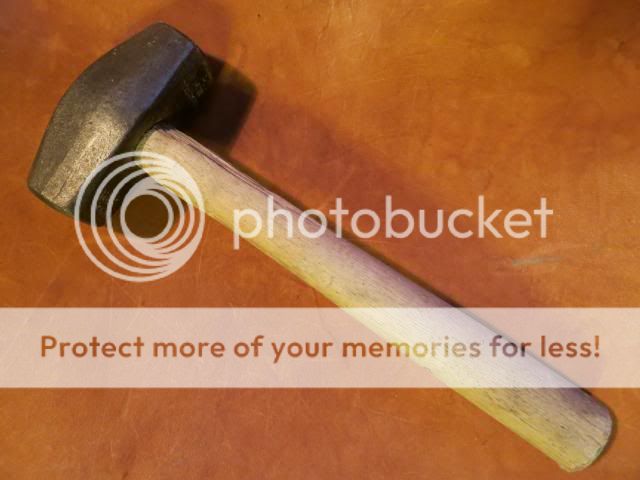
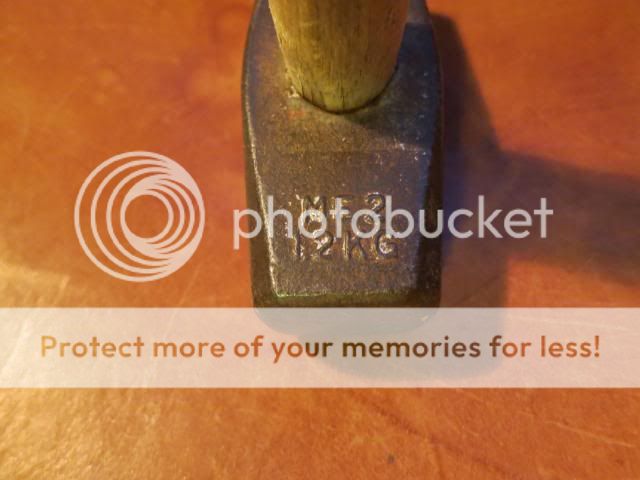
I just remembered that i found this hammer in the dirt by an old ship yard. Its a 1.2kg (2.64 Lbs) Swedish made hammer by the maker Tors (Thor's). Could It be of any use?

IMG_0356-1.jpg


IMG_0357-1.jpg


IMG_0358.jpg
 
I respectfully disagree. Size doesn't matter as much with blade forging as it does black smithing. Jesus Hernandez forges Katanas on a small post anvil. You are only forging a small section at a time and you don't need a massive anvil imo

You missed the point of what Russ was saying.

For instance, I have some 2-3/4" rounds of W2. If I'm making 4" scandi knives from it I'd need a bigger anvil and a striker to easier work it down. If Peppen has a source for barstock in Sweden then a small anvil would be fine.

Peppen,

Prices for anvils in Europe are generally pretty decent. I'd get a 60 kilo anvil give or take a few. I am thinking a size you can easily move about. Without a seperate smithy I'd expect you'll move it more often than you'd expect.

A simple post anvil works too. But you are in Europe. Swedish anvils are superb and the older Bavarian, German etc anvils are often works of art. I know a couple guys who buy anvils by the container load and re-sell in the US.
 
You missed the point of what Russ was saying.

For instance, I have some 2-3/4" rounds of W2. If I'm making 4" scandi knives from it I'd need a bigger anvil and a striker to easier work it down. If Peppen has a source for barstock in Sweden then a small anvil would be fine.

Peppen,

Prices for anvils in Europe are generally pretty decent. I'd get a 60 kilo anvil give or take a few. I am thinking a size you can easily move about. Without a seperate smithy I'd expect you'll move it more often than you'd expect.

A simple post anvil works too. But you are in Europe. Swedish anvils are superb and the older Bavarian, German etc anvils are often works of art. I know a couple guys who buy anvils by the container load and re-sell in the US.

He didn't ask what the smallest size anvil he could take down huge stock with. He asked what the smallest he could forge a knife with was :)
 
Plus haven't you seem the videos where the Japanese forge down tamahagane with 3 strikers on a tiny anvil on the floor? Where there is a will there's a way
 
I respectfully disagree. Size doesn't matter as much with blade forging as it does black smithing. Jesus Hernandez forges Katanas on a small post anvil. You are only forging a small section at a time and you don't need a massive anvil imo

Nowhere did I suggest a "massive"anvil, nor did I say a blade COULDN'T be forged on a very
small anvil........I started blade forging with a 5 pound anvil...so I understand quite well that
it's possible....and that many others have done much the same......but it's not optimum and,
given a choice...a larger would be much preferable.
 
It's all a matter of opinion. I was simply saying bigger isn't always better. He asked what's the smallest he could use efficiently, not what size he should get in general. If that was the case I would agree with you. But he wants as small as possible due to space where in that case he could use a very small anvil and be perfectly fine.

I want to also add that I meant no disrespect. You do great work Russ. I just don't agree with your post in reference to the op's question
 
Last edited:
Peppen,

That's a drilling hammer. They're okay for forging. Honestly a ball pein hammer around a kilo or even less and a cross pein would do the trick nicely. I have a drilling hammer like that that I gave to my friend. He took a 60 grit belt to it with my 8" wheel and made the backside into a cross pein.

The second item you will want for a small setup is a 10-15cm leg vise. I have mine bolted to a 3" pipe with an 8"x16" tray that the mounting bracket bolts to.

I also use a blown propane forge. One great advantage of a blown forge in a small space is you can leave the blower on for thirty minutes after forging and it'll be cool/safe to put away.

Any encouragement to get forging you need we'll provide.

Russ is giving good advise. Get as big an anvil as is best for you. Smaller if you have to move it lots, bigger if you can. And, I vote for an old
French church window anvil. I'd get one if I lived over on that side of the pond.

Happy forging!
 
It's all a matter of opinion. I was simply saying bigger isn't always better. He asked what's the smallest he could use efficiently, not what size he should get in general. If that was the case I would agree with you. But he wants as small as possible due to space where in that case he could use a very small anvil and be perfectly fine.

I want to also add that I meant no disrespect. You do great work Russ. I just don't agree with your post in reference to the op's question

I found no disrespect....nor meant any...and thanks.
Disagreeing is ok.

I understood the OP's question,but thought to expand the thought toward potential
future projects...........sort of like wiring the shop for more outlets than the present
number of power tools would indicate.
 
I found no disrespect....nor meant any...and thanks.
Disagreeing is ok.

I understood the OP's question,but thought to expand the thought toward potential
future projects...........sort of like wiring the shop for more outlets than the present
number of power tools would indicate.

Totally understand :)
 
Back
Top