

- Joined
- Mar 5, 1999
- Messages
- 34,096
I first met Ali Tamang years ago when I was living at the Tushita Rest House in Kathmandu. The place had once served as the US Embassy in Nepal but as usual the US personnel had moved on to bigger and better things. It was a modest establishment that catered to budget travellers, mostly climbers, trekkers and upscale volunteer workers. I was the only American residing there and one of the few permanent guests.
The first time I saw Ali he looked little different from any of the myriad of street urchins one runs across in Kathmandu and all of Nepal for that matter. 10 or 11 years old, dressed in rags, barefoot, lice in the thick black hair -- and tearful. He was mopping the cement floor of the dining area. My usual waiter, Govinda, brought my coffee and I asked him about the new boy.
"Sad case," Govinda said. "His name is Ali Tamang. His parents died just recently leaving him and his 14 year old sister alone on the farm. Of course, two children cannot run a farm so they came to Kathmandu to try to find work. He's young and knows nothing of hotel work but the manager took him on out of pity."
A common story in Nepal. Ali was at the bottom of the pecking order in the hotel and most of the other boys tormented him and gave him all the worst possible work -- cleaning the charpis, mopping, all the dirty work. Of course, it broke my heart as did most of what I saw in Nepal.
One morning when I was having my coffee I called Ali over to my table and spoke with him. He told me his story and was very concerned about his well being and future -- if any. A hotel boy barked at him to get back to work. I told the boy he was at my table by my own invitation and to leave him alone. The boy was wise enough to do nothing but nod and smile. I was one of the few who left "boxies" -- tips -- and as such was a preferred customer. If one is wise one does not bite the hand that feeds. Upon leaving I stuffed a 20 rupia note into Ali's hand. "For me?" he said, astounded. "For you and you alone," I said. Maybe 50 or 75 cents at the time but perhaps a week's pay for Ali.
Next AM when I had my coffee I asked that Ali be my waiter. The other boys balked, saying he was not a waiter at all but a common "chami" (cleaning man or janitor -- often the caste to which I was assigned by the Brahmins). I called the manager, Prem, over and put my request to him. The "don't bite the hand that feeds" wisdom came into play again. I was probably the only permanent guest in the hotel. I took many meals at the restaurant and LEFT BOXIES. I drank beer and khukuri rum in the evening with a group of Nepali friends and LEFT BOXIES. Sometimes I would bring guests from the Peace Corps and buy them drinks and dinner and LEFT BOXIES. "If you want this boy for your waiter you may certainly have him, however, it is my duty to warn you that he has no experience as a waiter so if your service is poor you have no one to blame but yourself." I said, "bringing a pot of coffee requires little skill. I'll take my chances."
And so Ali became my coffee server for the mornings and was able to earn the coveted boxies left by the crazy queerie. Ali got rid of the lice and was able to buy come chopples so he didn't have to go barefoot and got a better shirt and pants. He still slept on the bare concrete floor at night with no blanket or pillow. Not an easy life being an orphan hotel boy.
Fall drifted into winter and Christmas was soon upon on us. Some creative fellow on the hotel staff made a cardboard profile of Santa and painted it red and white and set it in the restaurant. A red and blue light bulb decorated the Santa. Not much, but something, and enough to bring the Spirit of Christmas upon me.
A couple of days before Christmas I spoke to Prem. "I want to use Ali for 3 or 4 hours today. I need some help at the market." "Of course, Bill Sahib. No problem."
So Ali and I went to the open market in Assan Bazaar. I bought him some jeans and shirts, sports shoes, socks, a good warm jacket, blanket and pillow. At first he didn't understand what I was doing but when it finally dawned on him these items were for him I've never seen a happier boy. When you have nothing it is strange just how much joy a couple of simple gifts can generate. Bottom line, Ali went back to the Tushita looking like a jewel with a smile that was worth a thousand times more than the few dollars I'd spent.
Back at the hotel I had a little talk with Ali. I said, "Son, nothing in this life is free and neither are these clothes I bought you today. I expect you to repay me. From this day on I want you to deliver my morning coffee to my room. At 7Am I want to hear you knock on the door and I want that coffee to be hot and strong as you know I like it."
"I'll be there every morning" Ali said -- and so he was and with that great smile.
When Yangdu and I got married I took Ali from the Tushita and he became our "house boy." It was his duty to clean the house, do the shopping, run errands and be general handyman and gofer. He became like our own son and we loved him and he loved us.
I had to leave Nepal and return to the US and make arrangements for Yangdu to join me. A life in Nepal seemed impossible for us. I could not tolerate the government corruption which required a song and dance I refused to do in order to stay and gain employment in the country. Ali and Yangdu stayed together and waited. Finally, I got all the papers together and Yangdu joined me in San Diego. Ali went to work for Yangdu's sister, Sanu. He lasted a year or two and disappeared but it was not to be the end of Ali.
Years later Yangdu and I returned to Nepal to visit. For some reason I walked into a trekking shop in Thamel. A young man in the group of Nepali trekking leaders waiting for cutomers jumped up, ran over and hugged me. "Bill, Sahib! It's me, Ali!"
The ragged lice ridden boy had turned into a tall, very handsome young man, well dressed, polite and still with that broad overpowering smile. He turned to the other men in the shop and said, "Boys, I want to tell you this man is like a father to me. When I was a poor hotel boy he took me in and treated me as his own. I will never forget what he did and will always remember him -- And, now he has returned to see me again."
We had a wonderful reunion and Ali told us of what he had done. He had learned a smattering of English when he was with me and had listened to advice I had given him. He had gone to school part time and had perfected his English. He changed his name to better fit a trekker's image, and had got on in a trekking shop as a kitchen boy. He worked hard and learned the routes and as much as he could about trekking. This along with his English language ability soon got him promoted to a trekking guide. He studied and learned Japanese so he could take Japanese trekkers on journeys through the Himalayas and had become a top guide -- well paid and respected in trekking community. He had overcome great adversity and had become by any standard a success.
And therein lies the reward and what a great reward it is. Many thanks, Little One, for making my life so much better.
I forgot one thing: What has this to do with khukuris?
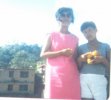
Pix of Yangdu and Ali at our old deera in Swayambu.
The first time I saw Ali he looked little different from any of the myriad of street urchins one runs across in Kathmandu and all of Nepal for that matter. 10 or 11 years old, dressed in rags, barefoot, lice in the thick black hair -- and tearful. He was mopping the cement floor of the dining area. My usual waiter, Govinda, brought my coffee and I asked him about the new boy.
"Sad case," Govinda said. "His name is Ali Tamang. His parents died just recently leaving him and his 14 year old sister alone on the farm. Of course, two children cannot run a farm so they came to Kathmandu to try to find work. He's young and knows nothing of hotel work but the manager took him on out of pity."
A common story in Nepal. Ali was at the bottom of the pecking order in the hotel and most of the other boys tormented him and gave him all the worst possible work -- cleaning the charpis, mopping, all the dirty work. Of course, it broke my heart as did most of what I saw in Nepal.
One morning when I was having my coffee I called Ali over to my table and spoke with him. He told me his story and was very concerned about his well being and future -- if any. A hotel boy barked at him to get back to work. I told the boy he was at my table by my own invitation and to leave him alone. The boy was wise enough to do nothing but nod and smile. I was one of the few who left "boxies" -- tips -- and as such was a preferred customer. If one is wise one does not bite the hand that feeds. Upon leaving I stuffed a 20 rupia note into Ali's hand. "For me?" he said, astounded. "For you and you alone," I said. Maybe 50 or 75 cents at the time but perhaps a week's pay for Ali.
Next AM when I had my coffee I asked that Ali be my waiter. The other boys balked, saying he was not a waiter at all but a common "chami" (cleaning man or janitor -- often the caste to which I was assigned by the Brahmins). I called the manager, Prem, over and put my request to him. The "don't bite the hand that feeds" wisdom came into play again. I was probably the only permanent guest in the hotel. I took many meals at the restaurant and LEFT BOXIES. I drank beer and khukuri rum in the evening with a group of Nepali friends and LEFT BOXIES. Sometimes I would bring guests from the Peace Corps and buy them drinks and dinner and LEFT BOXIES. "If you want this boy for your waiter you may certainly have him, however, it is my duty to warn you that he has no experience as a waiter so if your service is poor you have no one to blame but yourself." I said, "bringing a pot of coffee requires little skill. I'll take my chances."
And so Ali became my coffee server for the mornings and was able to earn the coveted boxies left by the crazy queerie. Ali got rid of the lice and was able to buy come chopples so he didn't have to go barefoot and got a better shirt and pants. He still slept on the bare concrete floor at night with no blanket or pillow. Not an easy life being an orphan hotel boy.
Fall drifted into winter and Christmas was soon upon on us. Some creative fellow on the hotel staff made a cardboard profile of Santa and painted it red and white and set it in the restaurant. A red and blue light bulb decorated the Santa. Not much, but something, and enough to bring the Spirit of Christmas upon me.
A couple of days before Christmas I spoke to Prem. "I want to use Ali for 3 or 4 hours today. I need some help at the market." "Of course, Bill Sahib. No problem."
So Ali and I went to the open market in Assan Bazaar. I bought him some jeans and shirts, sports shoes, socks, a good warm jacket, blanket and pillow. At first he didn't understand what I was doing but when it finally dawned on him these items were for him I've never seen a happier boy. When you have nothing it is strange just how much joy a couple of simple gifts can generate. Bottom line, Ali went back to the Tushita looking like a jewel with a smile that was worth a thousand times more than the few dollars I'd spent.
Back at the hotel I had a little talk with Ali. I said, "Son, nothing in this life is free and neither are these clothes I bought you today. I expect you to repay me. From this day on I want you to deliver my morning coffee to my room. At 7Am I want to hear you knock on the door and I want that coffee to be hot and strong as you know I like it."
"I'll be there every morning" Ali said -- and so he was and with that great smile.
When Yangdu and I got married I took Ali from the Tushita and he became our "house boy." It was his duty to clean the house, do the shopping, run errands and be general handyman and gofer. He became like our own son and we loved him and he loved us.
I had to leave Nepal and return to the US and make arrangements for Yangdu to join me. A life in Nepal seemed impossible for us. I could not tolerate the government corruption which required a song and dance I refused to do in order to stay and gain employment in the country. Ali and Yangdu stayed together and waited. Finally, I got all the papers together and Yangdu joined me in San Diego. Ali went to work for Yangdu's sister, Sanu. He lasted a year or two and disappeared but it was not to be the end of Ali.
Years later Yangdu and I returned to Nepal to visit. For some reason I walked into a trekking shop in Thamel. A young man in the group of Nepali trekking leaders waiting for cutomers jumped up, ran over and hugged me. "Bill, Sahib! It's me, Ali!"
The ragged lice ridden boy had turned into a tall, very handsome young man, well dressed, polite and still with that broad overpowering smile. He turned to the other men in the shop and said, "Boys, I want to tell you this man is like a father to me. When I was a poor hotel boy he took me in and treated me as his own. I will never forget what he did and will always remember him -- And, now he has returned to see me again."
We had a wonderful reunion and Ali told us of what he had done. He had learned a smattering of English when he was with me and had listened to advice I had given him. He had gone to school part time and had perfected his English. He changed his name to better fit a trekker's image, and had got on in a trekking shop as a kitchen boy. He worked hard and learned the routes and as much as he could about trekking. This along with his English language ability soon got him promoted to a trekking guide. He studied and learned Japanese so he could take Japanese trekkers on journeys through the Himalayas and had become a top guide -- well paid and respected in trekking community. He had overcome great adversity and had become by any standard a success.
And therein lies the reward and what a great reward it is. Many thanks, Little One, for making my life so much better.
I forgot one thing: What has this to do with khukuris?
Pix of Yangdu and Ali at our old deera in Swayambu.


 Thankyou Uncle Bill.


