

DeSotoSky
Gold Member
- Joined
- Mar 21, 2011
- Messages
- 7,025
Hello and welcome to the Sunday Picture Show. Share your Buck knives with others by posting pictures of them here. New or old, plain or custom, user or safe queen, one or a collection, we love to see them all. This weekly tradition was started in 2010 by ItsTooEarly (Armand Hernandez) and Oregon (Steve Dunn). Help keep the tradition alive. Feel free to click that 'LIKE' but lets not let it replace discussing and complimenting each others knives. Above all, enjoy the show. DeSotoSky (Roger Yost)
*

On this Day, April 19th, 1775. "The shot heard 'round the world"
Refers to the opening shot of the Battles of Lexington and Concord on April 19, 1775, which began the American Revolutionary War. While the Declaration of Independence was not signed until 1776, actual armed conflict began on this date in 1775.
*
Thomas Gage was appointed Royal Governor of Massachusetts in 1774 and tasked by the British Parliament with stamping out rising unrest caused by restrictive British policies. Gage inflamed tensions between the colonies and the mother country and practiced harsh enforcement of British law. He drafted the Coercive Acts, a series of laws intended to punish colonists for deeds of defiance against the King, such as the Boston Tea Party in 1773. By April 1775, Gage was facing the threat of outright rebellion. He hoped to prevent violence by ordering the seizure of weapons and powder being stored in Concord, Massachusetts, twenty miles northwest of Boston. On the evening of April 18, Paul Revere and other riders raised the alarm that British regulars were on their way to Concord. Colonial militias rushed to confront them early on April 19. Though it is uncertain who actually fired the first shot that day, when the smoke cleared, eight colonists lay dead and dying and ten others were wounded. One British soldier was wounded.
*
After the initial skirmish on Lexington Green, the militia fell back and the British moved on to Concord. What evolved was a full day of running battles as more and more militia arrived. The British retreated the 20 miles back to Boston taking heavy casualties the whole way, out numbered and harassed by by the militia using gorilla tactics. By the end, 3,960 militia had engaged 1,500 British. Militia losses were 49 killed and 39 wounded. British losses were 73 killed and 174 wounded.
*


The phrase "The shot heard 'round the world" was coined by Ralph Waldo Emerson in his 1837 "Concord Hymn", a poem written for the 1837 dedication of an obelisk monument in Concord, commemorating the battles of Lexington and Concord. Shown in the upper left picture it is at the site of the North Bridge skirmish site in Concord. The upper right picture is the Lexington Revolutionary War Monument, erected on July 4, 1799, on the Lexington Battle Green, is recognized as the oldest war memorial in the United States. It is a granite obelisk marking the site where eight militia members fell during the first confrontation. Their remains were reinterred at the monument's base in 1835.
*
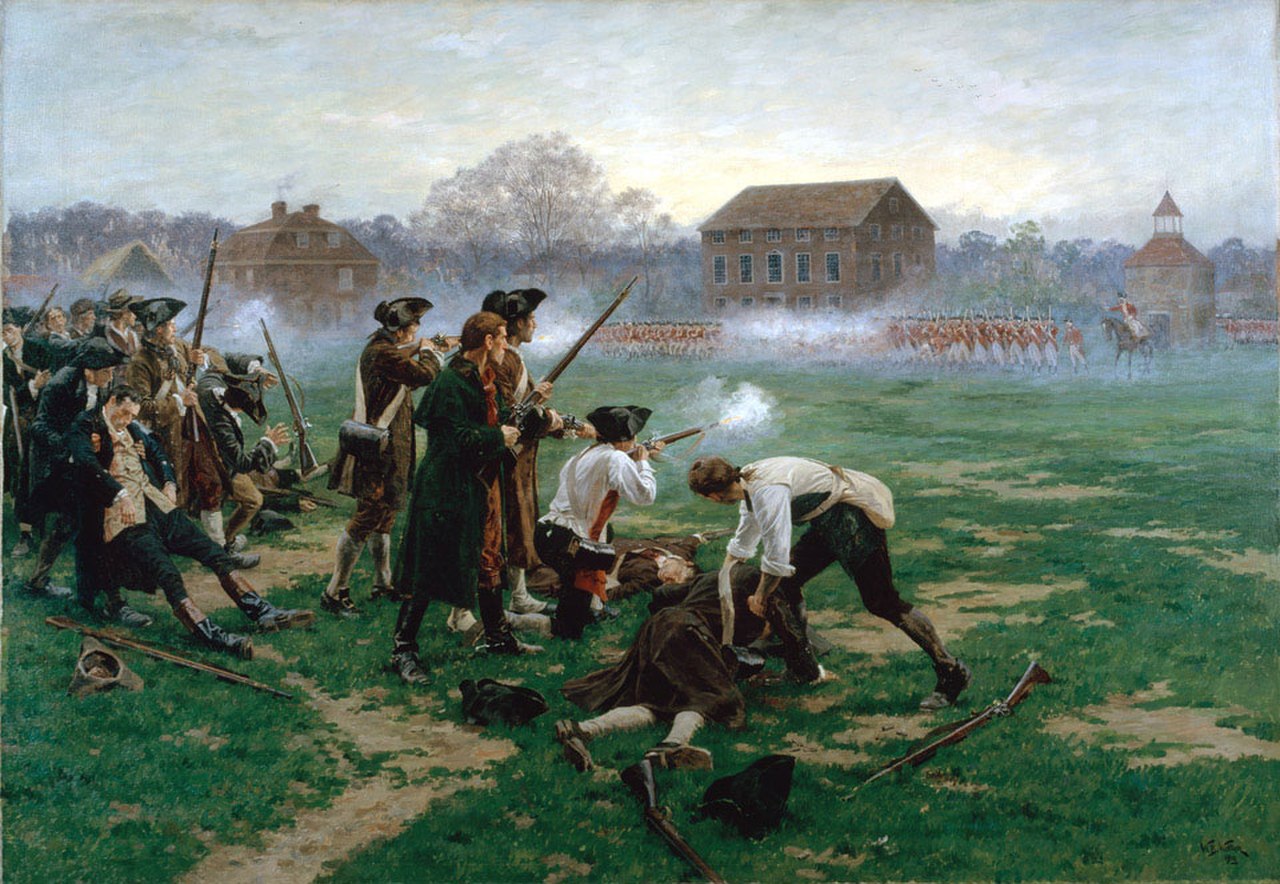
Battles of Lexington and Concord - Wikipedia
*
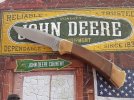
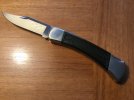
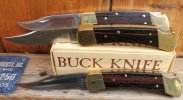
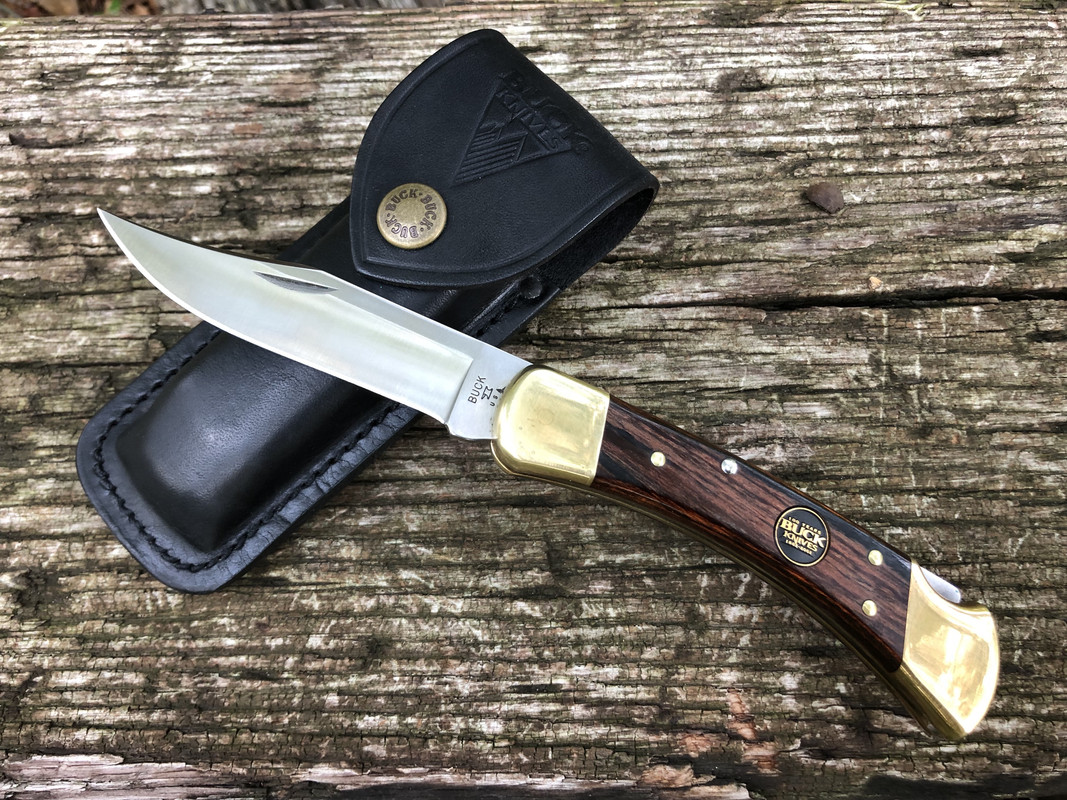
Buck 110 c.1990 with what to me looks like a Minute Man or Colonial Soldier laser etched into the handle. I have searched for this logo elsewhere with no luck. There was another shown here on the forum years ago so it is not the only one.
Last edited:











 Really nice
