- Joined
- Jun 25, 2008
- Messages
- 1,484
Not wanting to hijack Rescue Rileys post about neck knives & axes, I thought I'd start a new post.
This post is an opportunity for us all to share ways of maintaing a fire and building shelters in extended camp without axes (longer handled varieties) or bigger bladed choppers. Please note: This post is not intended to say that axes and / or choppers aren't useful tools, they are and personal preference & location will rightly play a huge role in their selection & use.
However, it is intended to share knowledge of other ways of doing things that might prove useful to someone, someday.
First up, longer branches can be easily broken using the leverage that can be generated with the fork of a tree. I've heard this technique called rowing the boat, but IMO the safest way is to break it by walking forward, rather than pulling backwards. This way when the branch breaks you keep walking forward and don't stand the risk of falling over backwards that can happen when the "row the boat" technique is used,
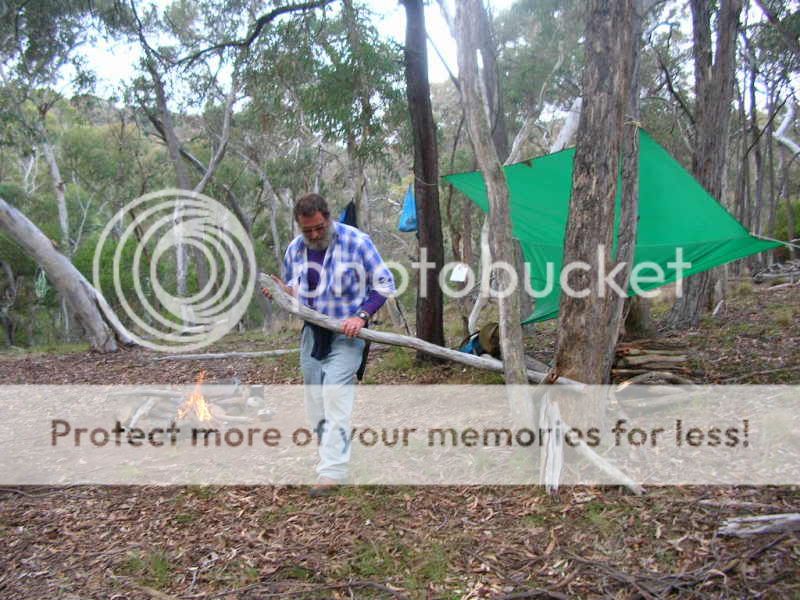
If the wood is too thick to easily break, simply feed it on the fire as it burns, or place it over the fire so that the fire will burn it into two smaller pieces.
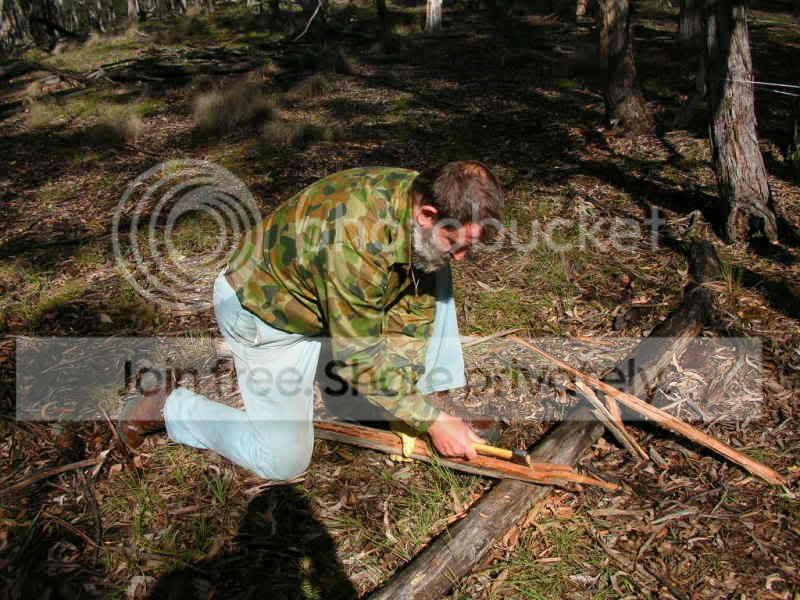
As has already been mentioned, kneeling when using a smaller handled hatchet / axe will reduce the risk of it being able to reach your body if it glances off the target. Having a firm and stable surface (eg chopping block or another limb) under what you are splitting will increase the efficency of the operation and prevent any accidental contact between hatchet and rocks :thumbup:
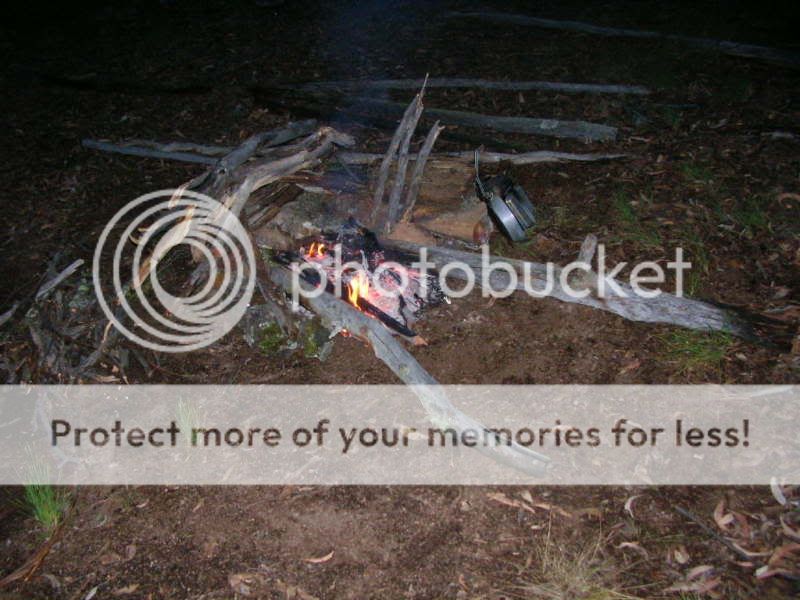
If your staying a while, look at getting some of the wood off the ground near the fire so it can dry for later use. A couple of simple tripods and a cross piece, or even the rocks used for the fire perimeter can be used.
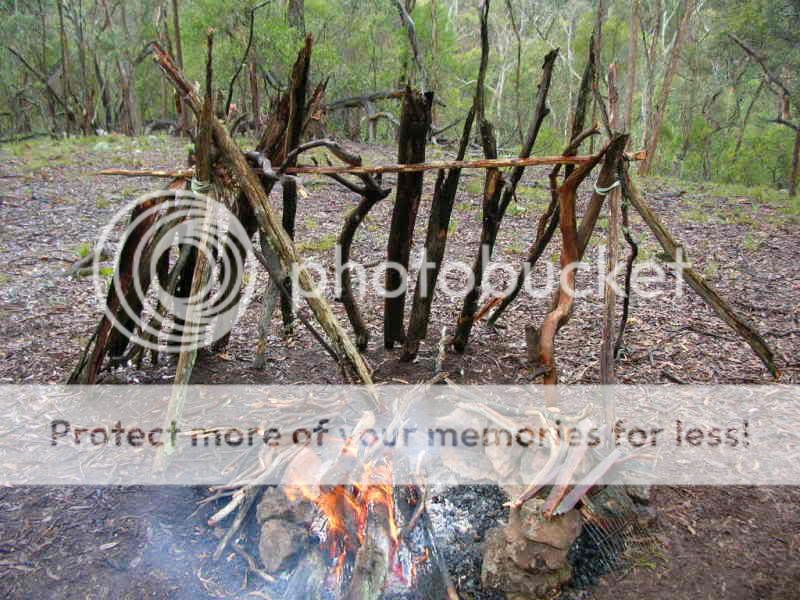
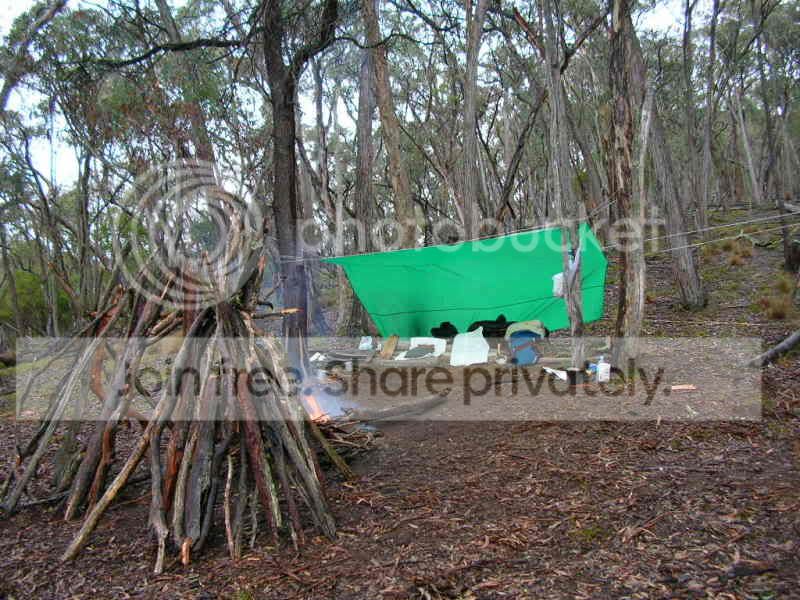
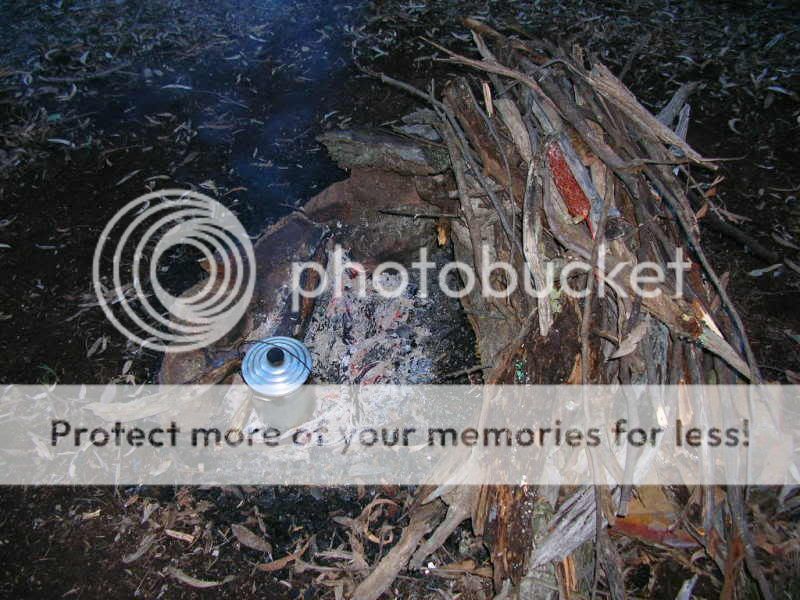
A simple leanto shelter can be made from deadfall limbs and bark. Two tripods (from deadfal limbs), and a pair of cross pieces form the frame. The top of sheets of bark are then placed between the cross pieces, forming a windproof and water proof slanted wall
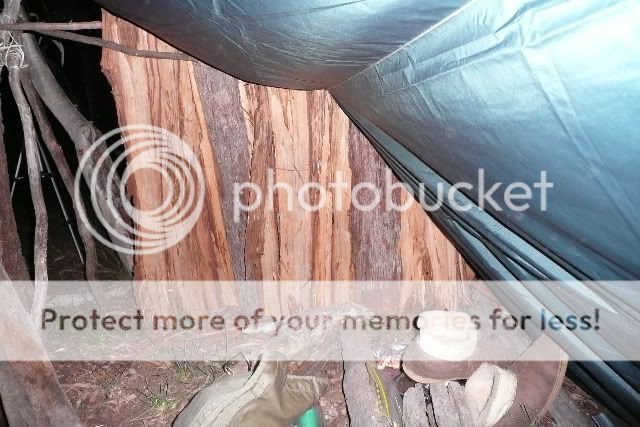
And bark can be stripped from the top of a log by using a stick
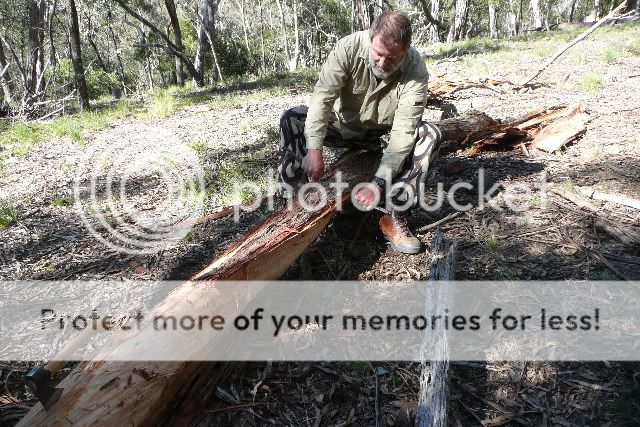
or levering it off the sides of the log with a small hatchet (in this case a GB mini)
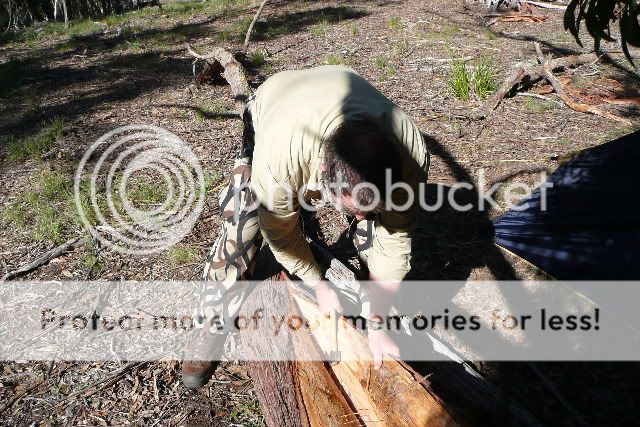
Please fell free to contribute your alternative ways of doing things.
Kind regards
Mick
This post is an opportunity for us all to share ways of maintaing a fire and building shelters in extended camp without axes (longer handled varieties) or bigger bladed choppers. Please note: This post is not intended to say that axes and / or choppers aren't useful tools, they are and personal preference & location will rightly play a huge role in their selection & use.
However, it is intended to share knowledge of other ways of doing things that might prove useful to someone, someday.
First up, longer branches can be easily broken using the leverage that can be generated with the fork of a tree. I've heard this technique called rowing the boat, but IMO the safest way is to break it by walking forward, rather than pulling backwards. This way when the branch breaks you keep walking forward and don't stand the risk of falling over backwards that can happen when the "row the boat" technique is used,
If the wood is too thick to easily break, simply feed it on the fire as it burns, or place it over the fire so that the fire will burn it into two smaller pieces.
As has already been mentioned, kneeling when using a smaller handled hatchet / axe will reduce the risk of it being able to reach your body if it glances off the target. Having a firm and stable surface (eg chopping block or another limb) under what you are splitting will increase the efficency of the operation and prevent any accidental contact between hatchet and rocks :thumbup:
If your staying a while, look at getting some of the wood off the ground near the fire so it can dry for later use. A couple of simple tripods and a cross piece, or even the rocks used for the fire perimeter can be used.
A simple leanto shelter can be made from deadfall limbs and bark. Two tripods (from deadfal limbs), and a pair of cross pieces form the frame. The top of sheets of bark are then placed between the cross pieces, forming a windproof and water proof slanted wall
And bark can be stripped from the top of a log by using a stick
or levering it off the sides of the log with a small hatchet (in this case a GB mini)
Please fell free to contribute your alternative ways of doing things.
Kind regards
Mick
Last edited: