• Happy Thanksgiving to all of you! I hope that you all have something to be grateful for this year and for many years to come
  • America has reached 250 years, and I am grateful to be here, in the best country in the world. Thank every one of you who helps make this country a better place, those who have gone before and risked it all, and those who've paid the ultimate price to make the United States what we are today.

    Happy Birthday America! Let Freedom Ring for all time!

Thinning primary bevel on stones

Joined
Jun 21, 2014
Messages
158
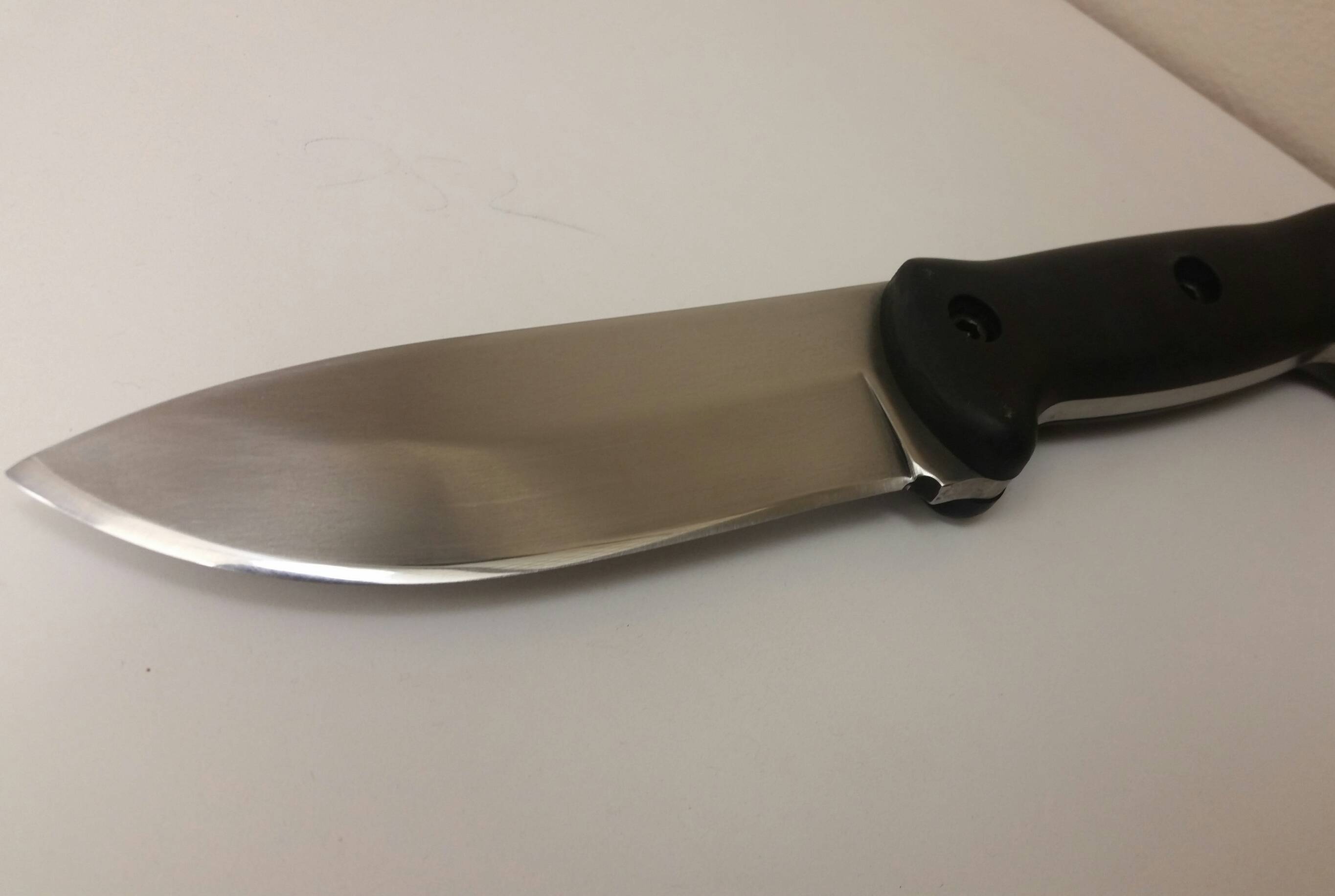
I have decided to go down the road of modifying my esee 4 to fit my preferences a bit more; including stripping the coating, giving it a wood handle, possible doing the bearthedog mod, and thinning out the primary bevel. My trouble is whether I try to thin the primary bevel using bench stones or a belt sander(http://www.homedepot.com/p/Porter-Cable-3-in-x-21-in-Belt-Sander-352VS/100022581). I am leaning toward using the bench stones as I do not want to overheat the blade using the belt sander. Would I be able to make quick work of thinning out the bevel using a set of dmt bench stones?
 
Last edited:
I wouldn't count on it... Stones are typically much slower than powered and especially when you are talking about the primary grind that will take some time!
 
I would use a waterstones like the Shapton 120 or Imanishi 220. Diamond plates are very slow at large bevel stock removal. It's going to take a long time though and if you don't have experience grinding knives it's probably not going to turn out in your favor.

Sometimes seeking professional help is the best option, Josh ^ does exceptional regrinds and for the minimal cost it would prevent a lot of headaches.
 
Ok, that answers what I need to know. I have been researching getting into making my own knives for a while and may be building a 2x72 belt grinder to get into it. I will probably start making a few knives and then use the skills learned to do the modification down the road from now. I would source the work out but it is a skill that I would like to have under my belt at some point or time. On another note, what grit wet/dry sandpaper would you recommend starting with to sand the scratches/grind marks out of the blade from the factory underneath the coating.
 
Ok, that answers what I need to know. I have been researching getting into making my own knives for a while and may be building a 2x72 belt grinder to get into it. I will probably start making a few knives and then use the skills learned to do the modification down the road from now. I would source the work out but it is a skill that I would like to have under my belt at some point or time. On another note, what grit wet/dry sandpaper would you recommend starting with to sand the scratches/grind marks out of the blade from the factory underneath the coating.
I've never stripped an essee but if it's like other knives I've stripped I had to start with 120-220 grit and spend hours with it removing all the pits, grind, and tooling marks. Then progressed up to 800 grit to get a similar finish to this..

M4n7hl5.jpg


If it doesn't have deep grind marks or pits you should be able to start with a finer grit.
 
I initially thought that I would only have to sand down the abrasive finish they put on the blade to help the epoxy stick. I realized I would have to work out the scratches from them grinding the blade after about 30 minutes with 400 grit sandpaper. I was able to get the abrasive finish off but the grind marks are still there. I found a place to purchase coarser grit sandpaper, so I will more than likely stop by and pick up something that will cut a bit quicker than 400 grit. Your Becker 2 came out rather well.
 
I initially thought that I would only have to sand down the abrasive finish they put on the blade to help the epoxy stick. I realized I would have to work out the scratches from them grinding the blade after about 30 minutes with 400 grit sandpaper. I was able to get the abrasive finish off but the grind marks are still there. I found a place to purchase coarser grit sandpaper, so I will more than likely stop by and pick up something that will cut a bit quicker than 400 grit. Your Becker 2 came out rather well.
To strip you might wanna get some jasco or citru-strip next time...I only had to apply it, wait 15 min and scrub it off..all together maybe 20 min total with only 5 min of physical work.
 
I reground the bevel on an old stainless Chicago Cutlery chef knife with stones only. It was a lot of work, I sat on the floor with a Chinese very rough grit stone ( it doesn't say what grit) for the better part of a Saturday to get it like I wanted it. It can be done successfully, I did a great job and it was the first I did too. I have another just like it that needs the same attention before I rehandle it, not really looking forward to it lol..
 
Back
Top