Thunderstruck Knife Scales ShopTalk

Joined
Jun 22, 2018
Messages
40
Hi all,

I operate a small woodworking / fabrication company out of Fort Collins, CO. We've been around for a few years, but are new to BladeForums and knife making in general.

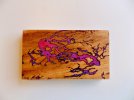
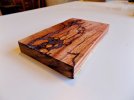
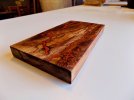
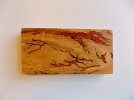
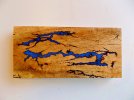
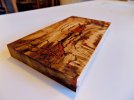
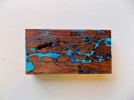
I'll keep this short since our photos are the best description of what we do, but we are now making and selling wood scales, both premade and made to order. We're looking to make some connections with people through this site and hopefully get some collaborations going.

Any feedback / ideas / suggestions are welcome!

Luke
Thunderstruck Studios
20180624_0001_edit-min.JPG 20180624_0011_edit-min.JPG 20180624_0015_edit-min.JPG 20180624_0024_edit-min.JPG 20180624_0025_edit-min.JPG 20180624_0028_edit-min.JPG 20180624_0036_edit-min.JPG
 
Last edited:
Welcome Luke.
What you have shown so far is OK, but keep future photos of wood you sell in The Exchange.
You can post in Shop Talk that you have a new batch of wood for sale in The Exchange, and put a link to the sales thread in the Shop Talk thread.
We try to keep sales and knifemaking separate as much as possible.

A thread with photos about how you make your scales is fine.

If by collaboration, you mean you are looking for makers to use your scales (provided free) and provide photos of the finished knives, that is OK.

Most other product and sales related talk should be by email or through youir website.
 
On your site it show "2 blocks bookmatched" but in the description it is mentioned that you just cut a 3 inch wide piece in half. Bookmatched means that after you cut it in two, you can open the scales like a book and they are identical because they are the same part of the wood. If you look up "bookmatched scales" you will understand what I mean. So they are a set of 2 scales, not bookmatched. Just a friendly tip.

Also, how deep is the inlay? With I highly contoured handle would they possibly be sanded away?

The scales look very nice and I would surely use them on a knife. :thumbsup:
-Ian
 
Last edited:
Ian,
Thanks for the feedback. You're right, the wood isn't bookmatched. I was just looking for an elegant way to describe two halves of the same piece that share a common edge, at least in terms of the resin inlay. Do you have any suggestions for a more fitting description?

The depth of the inlay varies greatly. In general, smaller features on the surface have a shallower depth. Some of the bigger grooves may go past 1/4" deep. Yes, it's definitely possible to sand something away with a highly contoured handle. That could be remedied by (a) creating a scale that's very close to the final size and/or (b) putting inlay on multiple sides. I'm glad you brought that up as that was one of my chief concerns as well.

I should also add, we can control the depth of burn fairly well. The downside is that deeper burns often turn the figures more blob-like instead of intricate.
 
I will say that few knifemakers want a wide scale split down the center if the block has any sort of pattern to it. This makes very mis-matched scales. We far prefer a book matched set where they are a thicker block split in half by thickness into two mirror images. This is what book matched means. This allows the two handle sides to be identical.
 
Welcome Luke. The specific questions about use that you asked over in General are what ya should be asking here. You'll get answers here. Personally a scale 5/8" thick isn't really of interest to me. I'd probably split it but there's waste. Size wise 3/8" by 5" by1.5" seems to cover most projects for me. Types of wood I use are: cocobolo, ironwood, olive, Turkish walnut, bocote, ziricote, various rosewoods, bubinga, box elder, osage orange etc. Some need to be stabalized, many do not.
 
So are these surface burns in the wood that you fill with colored epoxy? Would there be any color penetration into the wood? Is the epoxy applied with pressure or just spread on and allowed to cure?

Aaaaah, I just watched your video... now I get it.

You laser burn in the pattern and fill with epoxy. How well does it stay adhered? Could you potentially do it to a shaped scale?
 
Last edited:
Thanks for the feedback. I see now that I've made blocks the wrong size for what people want...but that's an easy fix! It sounds like the best way to do it if get a block ~5" x 1-1/2" x 1", finish both sides with our design, cut in half through the width, and plane the pieces flat to make two blocks 5" x 1-1/2" x 3/8"? (Assuming you lose 1/4" thickness from cutting / planing / sanding).

Also, for others that happen upon this thread now, here's what I should have posted originally:
I'm getting into the business of making made-to-order custom scales for knifemakers, and looking for some feedback from the knifemakers themselves. Specifically:
  • Which species of woods do you use most often?
  • What are your ideal dimensions for scales/blocks before shaping?
  • What information do you need before purchasing scales?
  • Do you need/want a certain finish/sanding grit on the scales before shaping?
  • How important is stabilized vs. unstabilized wood to you?
I'd appreciate any and all feedback.
 
Rick Marchand Rick Marchand Yes, they're on the surface, but have depth varying from right on the surface to maybe 3/8" deep. I'm not sure what you mean by color penetration into the wood. The epoxy is not applied with pressure.
 
Thanks for the feedback. I see now that I've made blocks the wrong size for what people want...but that's an easy fix! It sounds like the best way to do it if get a block ~5" x 1-1/2" x 1", finish both sides with our design, cut in half through the width, and plane the pieces flat to make two blocks 5" x 1-1/2" x 3/8"? (Assuming you lose 1/4" thickness from cutting / planing / sanding). You got it

Also, for others that happen upon this thread now, here's what I should have posted originally:
I'm getting into the business of making made-to-order custom scales for knifemakers, and looking for some feedback from the knifemakers themselves. Specifically:
  • Which species of woods do you use most often? Maple, ringed gidgee, ironwood and walnut
  • What are your ideal dimensions for scales/blocks before shaping? Blocks I like 5 x 1.75 x 1 to 6 x 2 x 1, scales 5 x 1.75 x .375. Lots of 1.5" wide scale makers out there, they're only wide enough for half of the knives I make without compromising how I'd like the grain to lay on the knife.
  • What information do you need before purchasing scales? How is your wood stabilized prior to casting?
  • Do you need/want a certain finish/sanding grit on the scales before shaping? 120 with a spritz of clear so I can see what I'm buying is all I care. Flat is nice.
  • How important is stabilized vs. unstabilized wood to you? IMO any cast hybrid product requires stabilization due to the nature of different coefficients of expansion. Otherwise depends on the species, wood type, specifics.
I'd appreciate any and all feedback.

Comments above in red.
 
Very cool. I am only beginning to make knives, so I would only echo that of these experienced makers as I they are who I look to for research and advice. In any case, I would look to use them in future projects.
 
kuraki kuraki Good to know about the need for wider scales. Do you think 1-3/4" wide scales would turn some people off because they're too wide and you would waste a lot of material cutting them down?

Right now the wood is not stabilized. It's looking like I'll probably need to do that for most woods, so I'm looking into small stabilizing machines. My plan is to stabilize after casting, as I need the wood to be porous for the electrical burning to work correctly.

Good point about different coefficients of expansion. Another reason to start stabilizing.
 
I would suggest this workflow: Cut, burn, send to K&G for stabilizing, cast on return. I personally will no longer buy anything from anyone unless I know it was stabilized professionally. Burned too many times.

As for the width, maybe. 1.5" seems to be the most popular by consensus but I don't ever see 1.75" stuff go unsold.
 
kuraki kuraki Got it. We usually try to keep our processes in-house as much as possible, but K&G has very reasonable prices. Do you know what the typical lead time is for a 5 lb batch?
 
As said, standard scales are 5X1.5" and between 1/4 and 3/8 inch thick. The inlay pattern needs to go all the way through, as the scales will be shaped to the knife tang and curved. Inlay material must be tough, as the handles get plenty of wear. Finally, cost needs to be reasonable, as normal knife scales run between $10 and $30.
I completely agree with Rick that the scales should be stabilized before the inlay.
 
  • Like
Reactions: TLR
kuraki kuraki Got it. We usually try to keep our processes in-house as much as possible, but K&G has very reasonable prices. Do you know what the typical lead time is for a 5 lb batch?
I just had 15 lbs done and turnaround was under 3 weeks. That order was made up of 4 different dye colors so I don't imagine straight/ undyed wood would take longer.
 
kuraki kuraki Got it. We usually try to keep our processes in-house as much as possible, but K&G has very reasonable prices. Do you know what the typical lead time is for a 5 lb batch?

I think about 3-4 weeks. I don't do it often myself, just large batches infrequently.
 
I will add another post to say that I won't buy wood that hasn't been stabilized by one of a couple different professional stabilizers. K&G are the mot preferred.

In our region it can be 100 degrees with high humidity in the summer and -20 or -30 during deer season in the winter. Even worse is being in a dry warm home/ vehicle and then going into frigid temperatures. Those temp/humidity swings are hard on natural materials. Even worse on materials that are dissimilar.

For those reasons I have been concerned about using hybrid blocks and would never use hybrid blocks that are not stabilized professionally.
 
TLR TLR thanks for your input. That's 2 or 3 votes for K&G, 0 votes for "DIY" stabilizing. You guys made convincing arguments for the necessity of stabilizing.

I'll plan on cutting down the existing blocks I have to 3/8" width and sending them in to K&G for stabilizing.
 
  • Like
Reactions: TLR
Back
Top