
Tough Steel For Use On Hardwod


What the heck . . . I'll leap in to this one.
First of all what is this "Hardwod" that you speak of ? ? ? Sounds mildly obscene.
:p
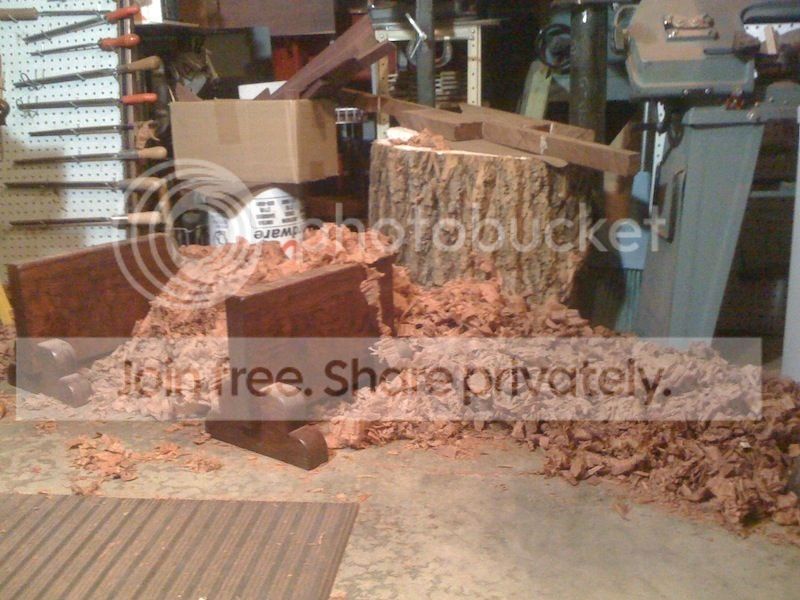
Ok, ok . . . seriously though. All of these are A2. I bought them to use specifically on Bubinga which is right up there with some of the hardest most contancourous to plane hardwood. I have never, ever chipped any of these blades with this wood or other similarly hard projects. A2 is brilliant for this application; mostly because it can stand up to the mineral deposits in these woods as well as about anything and better than most.


Bags and bags of shavings and no problems.

HOWEVER
While using this chisel, made from "Blue Paper Steel". Doesn't get better than that. This is a five hundred dollar woodworking chisel from Japan.
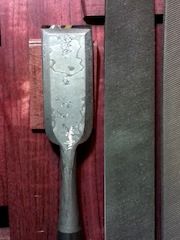


While cutting these very large dovetails in a super hard wood. I experienced what appeared to be chipping in the the edge of that very hard (but tough) world class chisel. What it turned out to be was ROLLING of the edge here and there along the edge. I widened the angle of the bevel just a few degrees with a micro bevel and the whole problem disappeared and I was able to complete the joinery no problem.
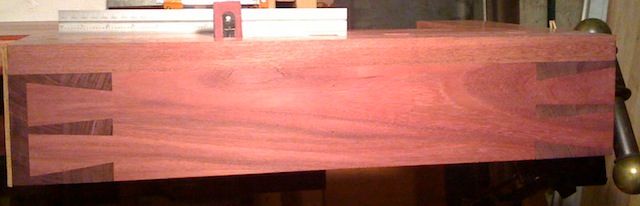


So I would encourage you to experiment with grind angle and avoid hitting any small knots until you get the angle dialed in.

 
to give you an idea of how hard some aussie hardwoods can be, I did some renos on a house framed in iron-bark. Now way back when iron-bark was used to frame houses, they would frame the house with green timber, then let it season. After that the would twist the house back into some semblance of square, lath and plaster the everliving hell out of it, then use it for a nuke shelter. That stuff is insane. At one point I was using a paslode gas nail gun. I weigh 150lbs. With my feet off the ground, full bodyweight on the gun, I could drive a 3.5 inch spike, about 2.5 inches. We would finish them with a 15lb sledge. At one point we needed to cut a notch in one joist to add in a crossmember (just one, the room was really weird, and it was easier to notch the one what was in the way) After smoking the carbides off one skill saw blade, ripping the teeth off a sawzall blade, I suggested we finish with the angle grinder and cutoff wheel. It worked.

A couple of weeks ago I made some feathersticks to get a campfire going. With my fiskars ax. full sized ax, just to knock a few little slivers off. didn't bother using anything else.
 
For dealing with specific species of Australian sand bags, er, that is, I mean hard woods, you could talk directly with my acquaintance and some times jousting pardoner here.

Some woods and even batches of generally workable species one just has to avoid. I think if I were working with wood that had enough mineral deposits sucked up into it (or rocks imbedded in it) that I needed sledge hammers and angle grinders that it would be easier to just build out of block, adobe or rock. But what do I know. Be sides . . . about every twentieth adobe block I pick up has a scorpion under it. The fun part is you don't know it until you lift it over your head to hand it up the scaffolding and are holding it directly over your face.
 
Last edited:
I read another person complaining about A2 chipping. It was suggested that he needed to sharpen his blade a few times beyond the factory edge to improve the situation.
 
I read another person complaining about A2 chipping. It was suggested that he needed to sharpen his blade a few times beyond the factory edge to improve the situation.

Yes, and I stated that above. A2 is a solid steel. If the blade above had a large divot missing from the blade then I might say it was an HT issue, but based on the above pictures I really don't see it as a big deal. I mean we are talking tiny chips. These can be sharpened out very quickly. Put a fine grit edge polish on it and I bet it will not chip like that IMO
 
The OP has showed a desire to look at new steels before trying to change the geometry. That is his/her right but it won't answer any questions about why the chipping was happening and if thickening up the geometry is the answer. Personally I'd try thickening it up first AND buy the new knife with ? steel but that is because I like buying new knives and not because I think A2 isn't an excellent steel for the job. Heck, do we even know there wasn't a burring problem that caused the damage? Too thin an edge?

As much as I love trying new steels I think we , as a group here don't look to the easiest things first, which is problem solving 101 basics.

Other steels to try for wood cutting/shaving/planing etc. are steels with high edge stability like 1080/84, W2, Hitachi white/blue, A2, 52100 on up the carbide fraction ladder with the correct heat treat and geometry. The various popular wood working steels are popular for a reason and should be the first place looked IMO.

Yes, 3V is a great steel too. I have 8 or 10 knives in 3V currently so you can say I like it a great deal but I'm just not sure the change is needed yet.

Joe
 
The OP has showed a desire to look at new steels before trying to change the geometry. That is his/her right but it won't answer any questions about why the chipping was happening and if thickening up the geometry is the answer. Personally I'd try thickening it up first AND buy the new knife with ? steel but that is because I like buying new knives and not because I think A2 isn't an excellent steel for the job. Heck, do we even know there wasn't a burring problem that caused the damage? Too thin an edge?

As much as I love trying new steels I think we , as a group here don't look to the easiest things first, which is problem solving 101 basics.

Other steels to try for wood cutting/shaving/planing etc. are steels with high edge stability like 1080/84, W2, Hitachi white/blue, A2, 52100 on up the carbide fraction ladder with the correct heat treat and geometry. The various popular wood working steels are popular for a reason and should be the first place looked IMO.

Yes, 3V is a great steel too. I have 8 or 10 knives in 3V currently so you can say I like it a great deal but I'm just not sure the change is needed yet.

Joe

I am totally open to re-profiling my current knife. I just thought I might try something new, however I have now decided that I would rather fix it then replace it.

Thanks for the advice.
 
Gadgetgeek - I have no suggestions on steel to use, but your biggest challenge there would be to work with Gidgee. That is the only tree from Australia that is on the list of the fifteen hardest woods on the planet. I bet that would laugh at sharp edges when fully cured. I have a few pieces of it but I haven't tried doing anything with them yet.
 
I can tell ya, it was a big shock coming from canada where the hardest stuff I ever cut in the field was dry willow. Everything else, birch, poplar and pine are like butter compared to a lot of the timber here. I've heard that gidgee is tough stuff. I've got some furniture here made of Jarra, just guessing by weight, that is pretty nasty as well, its beastly heavy.


What the heck . . . I'll leap in to this one.
First of all what is this "Hardwod" that you speak of ? ? ? Sounds mildly obscene.
:p
Ok, ok . . . seriously though. All of these are A2. I bought them to use specifically on Bubinga which is right up there with some of the hardest most contancourous to plane hardwood. I have never, ever chipped any of these blades with this wood or other similarly hard projects. A2 is brilliant for this application; mostly because it can stand up to the mineral deposits in these woods as well as about anything and better than most.


Bags and bags of shavings and no problems.


HOWEVER
While using this chisel, made from "Blue Paper Steel". Doesn't get better than that. This is a five hundred dollar woodworking chisel from Japan.


While cutting these very large dovetails in a super hard wood. I experienced what appeared to be chipping in the the edge of that very hard (but tough) world class chisel. What it turned out to be was ROLLING of the edge here and there along the edge. I widened the angle of the bevel just a few degrees with a micro bevel and the whole problem disappeared and I was able to complete the joinery no problem.


So I would encourage you to experiment with grind angle and avoid hitting any small knots until you get the angle dialed in.

Good advice and beautiful work. Thanks for the pics.
 
Back
Top