- Joined
- Oct 20, 2008
- Messages
- 5,547
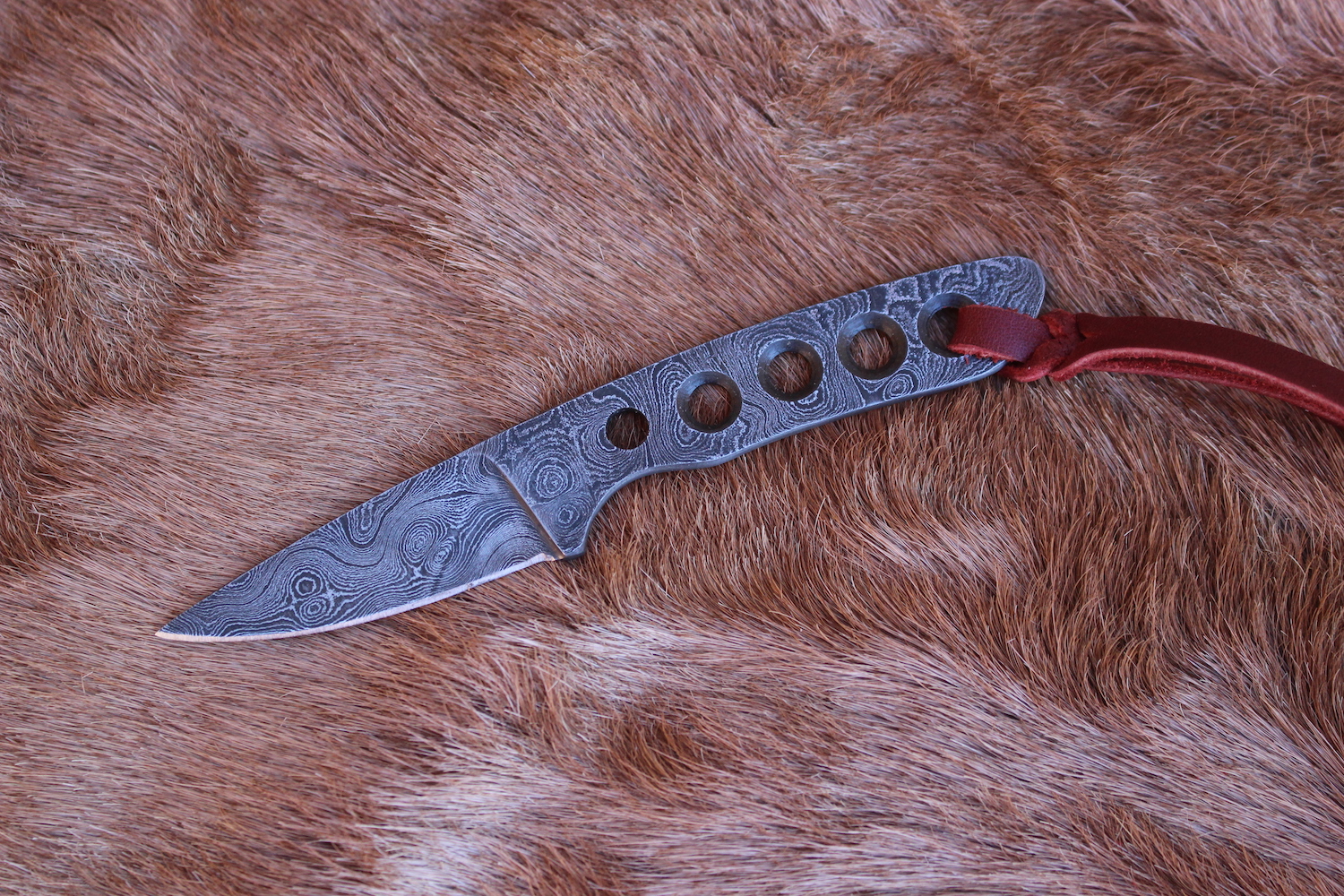
Coffee finish is another method of etching or blackening otherwise etched steel. Some go right into coffee from a hand sanded finish, and etch outright in it, getting a little depth and good contrast in one process.
I like to etch pretty deep on my blades, for a higher contrast with more durability. So, I first etch in ferric chloride to get to the depth I like, and then neutralize and go into coffee for 3-4 hours.
The coffee used is nothing you'd want to drink. Instant works best, as it's got a real acidity with nasty tannins, which are great for industrial uses and not so much as a beverage. You mix it up strong, I use Great Value instant in the quart size jars, and use one of those per gallon of water. I simmer the water, stir the coffee in, cool it down, and use it as an etch cold. Some etch in it hot, but since it works for me cold, the process is a bit simpler and the evaporation rate of the mixture is way less. You can re-use it many times, although store it in the fridge or at least a cool dark place between uses.
What I've noticed about it is this... it's not quite as durable as parkerizing, if you're sanding with 2000 at the end to brighten the highs for contrast. It really works well if after the ferric etch you sand the highs until good contrast is achieved, and then go into the coffee with the blade already looking pretty good. The lows will blacken more, and the highs will stay shiny, so sanding after coffee will be minimal and in some cases not even necessary. That will help to preserve your nice black areas, especially on blades with bold pattern.
Warm and oil. I prefer coffee finish on kitchen knives, as it's a food after all- other blades still get parked. Kitchen knives get coconut oil rubbed on to finish, others get turbine oil or sometimes ren wax.
I like to etch pretty deep on my blades, for a higher contrast with more durability. So, I first etch in ferric chloride to get to the depth I like, and then neutralize and go into coffee for 3-4 hours.
The coffee used is nothing you'd want to drink. Instant works best, as it's got a real acidity with nasty tannins, which are great for industrial uses and not so much as a beverage. You mix it up strong, I use Great Value instant in the quart size jars, and use one of those per gallon of water. I simmer the water, stir the coffee in, cool it down, and use it as an etch cold. Some etch in it hot, but since it works for me cold, the process is a bit simpler and the evaporation rate of the mixture is way less. You can re-use it many times, although store it in the fridge or at least a cool dark place between uses.
What I've noticed about it is this... it's not quite as durable as parkerizing, if you're sanding with 2000 at the end to brighten the highs for contrast. It really works well if after the ferric etch you sand the highs until good contrast is achieved, and then go into the coffee with the blade already looking pretty good. The lows will blacken more, and the highs will stay shiny, so sanding after coffee will be minimal and in some cases not even necessary. That will help to preserve your nice black areas, especially on blades with bold pattern.
Warm and oil. I prefer coffee finish on kitchen knives, as it's a food after all- other blades still get parked. Kitchen knives get coconut oil rubbed on to finish, others get turbine oil or sometimes ren wax.