Treating wood handles???

Joined
Aug 9, 2013
Messages
78
Hey gents. It's been a while! Boy howdy, having a second child in December really put more of a damper on my knife making than I thought it would. I am way behind on my orders. Thank God the customers aren't beating me up about it as much as I am. The biggest lesson I've learned through this is that I am not ready to take orders with deadlines at this point in my life. It's a WHOLE LOT less stress to just make what I want and offer what I have done when I get it done.

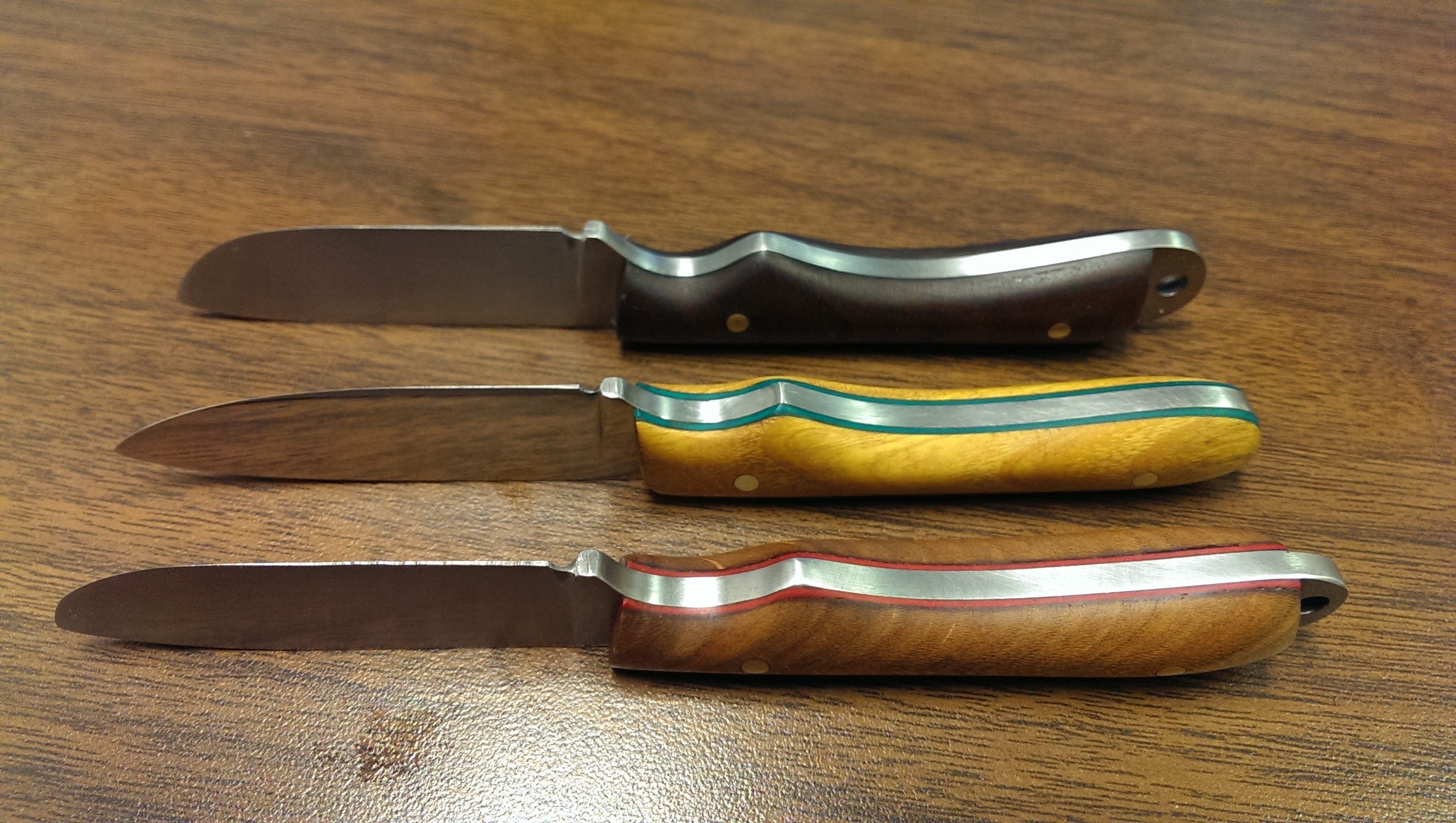
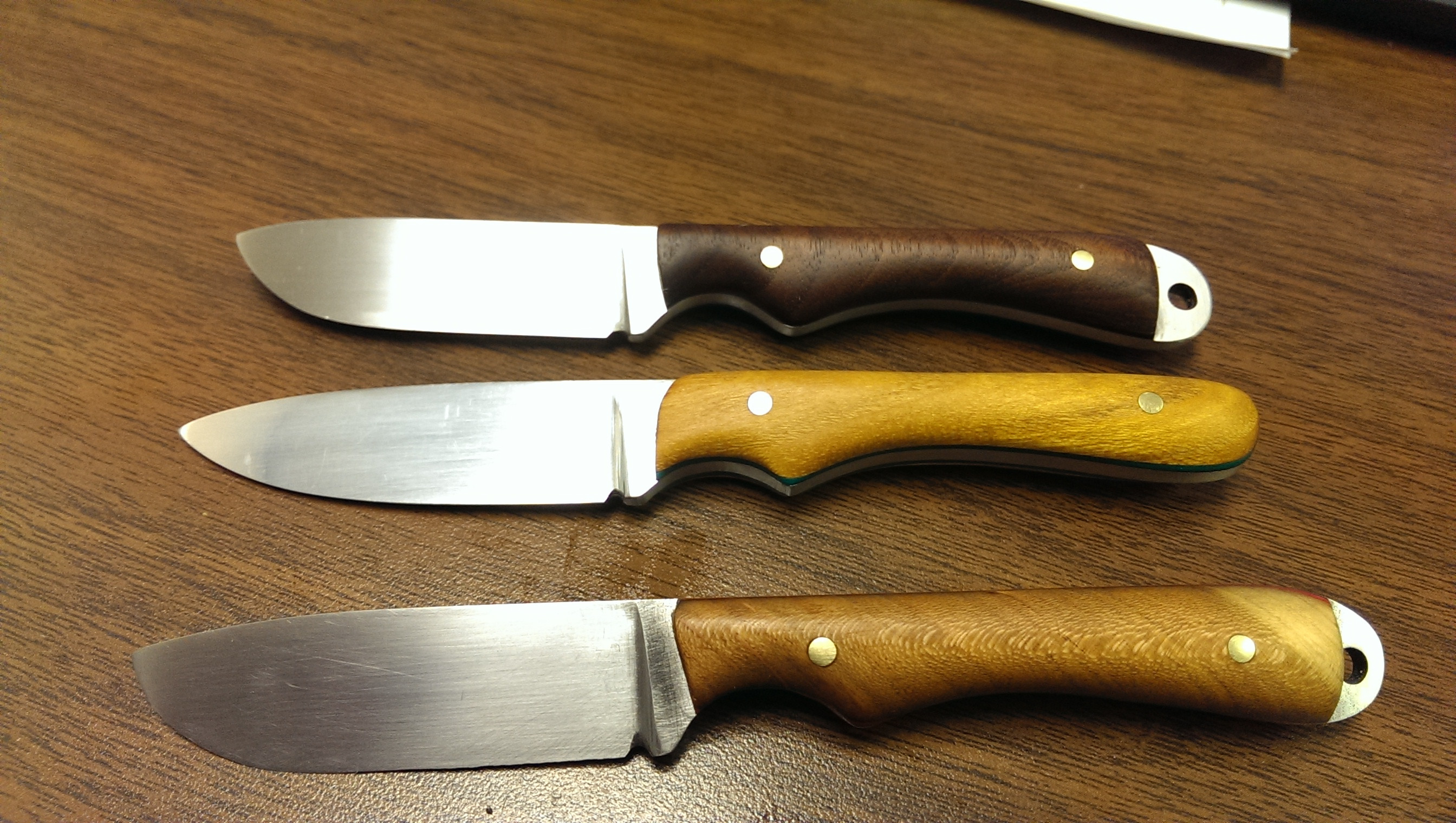
Anyway, I got some of these little EDC blades done this weekend and I need some help finishing the handles. I read on here about the armorall and and Tru-Oil trick. I tried about 10 coats of that rubbed in by hand on another black walnut handle and I'm not getting the results I'm looking for. The three below are Black Walnut, Bois d'arc, and Cherry. I sanded them all down to 1000 grit and rubbed them all with a few coats of Boiled Linseed Oil last night and I can't really tell that the BLO made any difference.

What can I do to get a protective and beautiful deep finish out of these woods
iiOByud.jpg


tJ2F0eX.jpg
 
You will probably have to apply more coats as it is soaking in pretty good. Also, if you have buffer and clean wheel, it should bring up the luster
 
You could put them in a pressurized, vacuum locked vessel & use an air conditioning vacuum pump, w/ the necessary acrylic resins and penetrate deep enough into your handles, to where they wouldn't absorb any dirt/warp/etc. Of course, that's going around it a bit backwards, better off starting off w/ stabilized woods to begin w/.
 
If you want a built up finish, like a gin stock, you have to build it up :)
Apply light coats of a drying oil finish ( tru-oil, tung, etc.), wiping off the excess each coat.....and letting the coat dry before the next coat is applied. It takes time between coats and many coats to get a deep lustre finish. You can read all sorts of "tricks" and things people do to speed up the process, but the best and toughest finish will be made slowly.

I don't use any finish at all, as I use stabilized wood almost exclusively. The wood can be sanded to 1000 grit and lightly buffed for a nice glow. All character in the grain shows, and the wood looks stunning.
 
Last edited:
Gun stock finish often uses additional driers, like Terebene, and waxes, such as beeswax in the oil. It is a slow build up, over a couple of weeks to a month. Wet sanding or other method to fill grain and pores with slurry. Turmoil builds a bit fast and can look plasticky if not rubbed down well and between coats.

Deep finish can be had with Danish oil 24 hour soak, then build a finish on top once it has dried out (several days).
 
I have had nice results rubbing in superglue then buffing it. Don't know yet how durable that will prove to be though.
 
I have used CA glue as a finish when I use to make pens. It is a hard but brittle finish....would be leery as a knife finish. Just make sure with oily woods that you wipe down with denatured alcohol or acetone before you apply CA...doesnt like oil.
 
I have been using teak oil lately. Liking it a lot particularly for lighter colored woods like your cherry there. I just finished using it for the first time on some stabalized wood and it kind of had that dipped in liquid glass look you are talking about. I have used just about everything over the years, CA, poly, linseed oil, Tru oil, just wax, Danish oil. Thinking I'm liking it the best for me and how I work.
 
The nice thing about teak oil is that it has UV protection additives. I don't think stabilized wood needs oil,since the pores are all filled with the stabilization fluid. Oil would not soak in, it would just be a surface coat. Ask Mark at Burl Source.
Tim
 
Back
Top