Trekking Poles

Joined
Feb 5, 2007
Messages
283
Any users? Was a non-user but now see the advantages when going up and down hills. Can't be beat in loose soil and muddy contitions. Now I go up grades that would have been avoided. Using them is like having four wheel drive. Don't use them on level ground, they slow me down.
 
I have been looking at trekking poles for a week or so, bum left knee. I'm thinking of Leki or Cabella's. Any opinions of either?
 
Leki and Komperdell are the big two along with Black Diamond.

They also manufacture poles for companies like REI, L.L. Bean et al under their own company names.

I have Komperdells through REI. Rarely use 'em but they are fine when I do.
 
Check Backpacker magazine reviews. Not familiar with brands, bought a set at REI for $55 and received 20 percent off by joining their club. These were the least expensive on display. Made in Austria.

Trekking poles are supposed to help knee and back problems by taking 30 pounds or more onto the arms and off of the back and legs/anckles etc.
 
REI's (at least mine) are made by Komperdell (Austria).
 
I use them, sometimes. Greater stability in difficult terrain; less shock on lower body joints. I find them worthwhile.
 
I only use em while snowshoeing or x country skiing. There are the advantages and everyone has their preferences but I think if you use them too much you're knees and ankles will become weak from not using them as much. If I were to use them in the future it would just be on steep terrain JMO.
-Ron
 
Very useful, particularly if you're backpacking across rough ground. My wife saved herself from an icy dunking and maybe worse on the Chilkoot Trail a couple of years ago, when an ice mass she was crossing at the edge of a lake broke right at her feet. She was able to jam her pole into the sound (shore) side of the ice pack and jump to safety. Probably several thousand people had made the same crossing without any problem. We share a pair of simple Lekis.
 
I've have had a set for a number of years and think they are wonderful. They have saved me from a few bad spills and they relieve a lot of stress on mountain descents. I usually only bring one, not both and it conveniently telescopes and fits in a side pocket of my pack when not in use.

I have Leki brand and they are very well made. Often you can find them discounted through Sierra Trading Post [catalog and online].
 
I use a pair of leki for snowshoeing, I did try them for treks on the trail with the tip converters but found a good old walking stick to be my best bet for the trail.
 
I started to use them afew years back after i hurt my knee very bad. I traveled same trail i did before when i were in much better shape. Using the poles in worse of shape i coverd twice the distance in a little over one and a half the time. So the poles realy help. I been told that the poles would take about 25% of the weight off your legs. Thats alot if you realy think about it and you must add the extra support you get on iffy trails. The swedish military is using poles for the mountains soldiers, that must say something too. I also use ski poles seem to work realy great in very rough areas as they dig in and help support more.

sasha
 
I've used poles on a couple 100+ mile treks and they made all the difference for my bad knees. I hike in sneakers and the extra stability was a comfort. I also use poles as part of my shelter system. Black Diamond's "flicklock" adjustment system on their collapsible poles is the best I've used.
For DIY folks, alot of people have luck making single section poles out of carbon fiber arrow shafts or replacement shafts for golf clubs. Just add the handle of your choice and buy some tips from Leki. Cheap (relatively) carbon fiber ski poles can also be chopped up and epoxied to work.
 
I Use only One right now and its an inexpensive Swiss Gear model from walmart but it does make a difference While hiking and does improve traction and saftey both up and down hills. Most are collapsable so if you dont want to use them on a long flat strech you can stow them.

Dont forget they can also be tent poles.

I definitley recomend trying them.
 
I've got the cheapest REI branded trekking poles. They are awesome on the up's and down's. I highly recommend getting some.
 
I have some REI poles. Mine are not shock absorbing. I had surgery on both of my knees and these really help. I can't imagine hiking or backpacking without them. Particularly in the mountains. When I bought mine Komperdell was making REI's poles for them, not sure who is now. Like Rescueguy said they can also be used for tent or tarp poles and also fishing, spear, cane, splint... the list goes on and on. Even when I am not in the mountains I take them. Worst that happens is I shorten them and put them on my pack. Great, light emergency gear.
 
I have borrowed a set from a friend. He bought them a couple years ago and never uses them. I used them a couple times, and I can see how they might be good for steep up and down, but I don't know how much they help on the flat. I would say that they have enough utility to warrent purchasing a pair.
 
Sierra Trading Post often puts the Komperdells on sale. Both my wife and I have Komperdells (anti-shock, cork handles) we bought there, and have been satisfied with them. I like the cork, which grips well even when wet.

In several reviews, however, I have read that the Lekis tend to perform better. No idea if that's true or not.

With weight on your back, they take A LOT of pressure off your knees. When my little boy was small enough to ride in a backpack carrier, I used my Kompers every time we went hiking. Not only did they save my knees and reduce fatigue; they also made me feel more stable and safer since I always had two points of contact with the ground. Nobody wants to fall down with a baby on his/her back.
 
Trekking poles are part of my hiking shelter scheme and I use at least one for hiking now. They are great for rock-hopping creeks and they make those root-and-rock-bound sections of trail a lot easier to navigate-- going up or down. You know that feeling that you are going to fall on your face going down rough sections of trail? Trekking poles turn it into a ballet. You plant a pole, brace with the other pole as needed, step down and repeat. With a little practice (one good hike), they become an extension of you body and you don't think much about it.

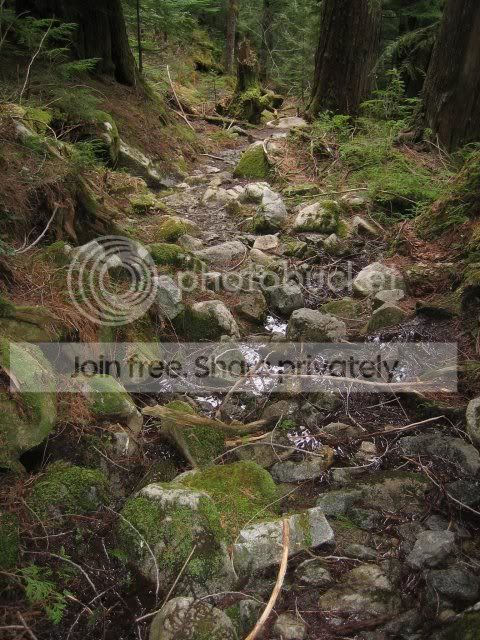
Here's a nice bit of trail to Lake Snoqualmie in the Washington Alpine Lakes Wilderness last May. You are looking down the trail with snowmelt running right down the middle. Trekking poles made this much easier to manag

rough.jpg


I use Black Diamond poles and I like the locking mechanisms much better. The lower lock on the Black Diamond poles is a spring-loaded pin that snaps into preset holes. The upper lock is a screw tensioned cam/lever, all on the outside and it can be adjusted with your SAK or even a thumbnail, as you adjust it with the lock slacked off.

The Komperdell locks are flaky, IMHO. I have a single Komperdell/REI staff and it is too easy to overtighten the lock and have it slip. With plastic-on-plastic threads, it is easily damaged. I think the shock features are just extra weight and hype--- I want a good solid feel when I plant the pole, not some spongy travel to compensate for.

Bicycle gloves (with as little padding as possible) are great to use with hiking poles too.

 
I did a 370 mile through hike of the Long Trail and I would consider trekking poles an absolute necessity for solo long distance hiking. The number of times they saved me from falling to a river while crossing, saved me from falls, were used for makeshift tent poles, etc etc is amazing. Thats not even counting the amazing amount of stress they take off your kneees and ankles. You may not notice it right away, but taking a few pounds off those areas over the course of days and weeks makes a big difference.

I use TI Leki trekking poles. No shock springs in mine.
 
Back
Top