
-
The BladeForums.com 2024 Traditional Knife is available! Price is $250 ea (shipped within CONUS).
Order here: https://www.bladeforums.com/help/2024-traditional/
You are using an out of date browser. It may not display this or other websites correctly.
You should upgrade or use an alternative browser.
You should upgrade or use an alternative browser.
Two Questions for the Price of One
- Thread starter Lenny
- Start date


- Joined
- Mar 1, 2008
- Messages
- 4,566
My understanding is safety for the half stops. The wood question I can not help ya with, sorry.

- Joined
- Apr 12, 2009
- Messages
- 13,529
Some very interesting insights about half stops in this thread -->: Half-stop?
In particular, note the comments from member 'zerogee'.
In particular, note the comments from member 'zerogee'.
Last edited:

- Joined
- Jul 25, 2010
- Messages
- 7,432
OK, the question about halfstops could have been answered by David 
About the whittling wood - I can say - I get into my firewood-shag and search for a piece of hardwood, branchets or something like this... and use it as a whittling piece. Though I don´t really whittle too much, my skills there are horrible If you don´t have any firewood you could ask someone how is heatening with wood if you may have look in their places. Or you go outside to the woods and try to find a dry piece. I don´t know the enviroment you live. So little pieces of wood - I wouldn´t pay any money for that.
Kind regards
Andi
About the whittling wood - I can say - I get into my firewood-shag and search for a piece of hardwood, branchets or something like this... and use it as a whittling piece. Though I don´t really whittle too much, my skills there are horrible
If you don´t have any firewood you could ask someone how is heatening with wood if you may have look in their places. Or you go outside to the woods and try to find a dry piece. I don´t know the enviroment you live. So little pieces of wood - I wouldn´t pay any money for that.Kind regards
Andi

- Joined
- Jan 9, 2012
- Messages
- 3,331
Thanks for the link David. That response by zerogee is probably one of the best and most concise statements on the matter I have ever read. Probably worth quoting here.
Here is the link to the precise post, and here is the quote:
"Many people will tell you that it's for safety and all that, but really, originally, it had to do more with ease of construction and reliability. For a very long time, blades - particularly the tangs - were filed to match hardened patterns. It's a heck of a lot easier to file a square tang profile (the half stop is the flat end of the tang) than a rounded one (actually the profile isn't quite square, but we'll ignore that for now). Also, for a long time the old mark of quality construction was the "clean and square" joint - basically the square tang was matched to a square bolster, essentially filling the joint, even when closed. This meant that if you dropped your knife in the dirt, the dirt didn't get into and around the joint to foul up the mechanism. (Remington "discovered" this early last century. )
A square tang is largely self cleaning -- the corners sweep debris either toward the end of the knife or back into the body - either way, the debris gets moved out from under the tang/joint mechanism where it can then be removed. Properly cleaning up an old, gunked up knife and getting all the crud out of the mechanism is a lot easier with one that has square tangs.
Also, a square tang causes less wear and tear on the spring over time - assuming the corners of the square tang were rounded a tiny bit in construction. The corners sweep back and forth along a length of the spring in operation. spreading the wear evenly along that length. A round or cam end tang concentrates the wear in a much smaller area of the spring - becoming a problem when proper maintenance and oiling is neglected."
Here is the link to the precise post, and here is the quote:
"Many people will tell you that it's for safety and all that, but really, originally, it had to do more with ease of construction and reliability. For a very long time, blades - particularly the tangs - were filed to match hardened patterns. It's a heck of a lot easier to file a square tang profile (the half stop is the flat end of the tang) than a rounded one (actually the profile isn't quite square, but we'll ignore that for now). Also, for a long time the old mark of quality construction was the "clean and square" joint - basically the square tang was matched to a square bolster, essentially filling the joint, even when closed. This meant that if you dropped your knife in the dirt, the dirt didn't get into and around the joint to foul up the mechanism. (Remington "discovered" this early last century. )
A square tang is largely self cleaning -- the corners sweep debris either toward the end of the knife or back into the body - either way, the debris gets moved out from under the tang/joint mechanism where it can then be removed. Properly cleaning up an old, gunked up knife and getting all the crud out of the mechanism is a lot easier with one that has square tangs.
Also, a square tang causes less wear and tear on the spring over time - assuming the corners of the square tang were rounded a tiny bit in construction. The corners sweep back and forth along a length of the spring in operation. spreading the wear evenly along that length. A round or cam end tang concentrates the wear in a much smaller area of the spring - becoming a problem when proper maintenance and oiling is neglected."
- Joined
- Mar 1, 2008
- Messages
- 4,566
Wow, I did not see that post when I searched this last week. The safety thing made since and I moved on. I want to handle a square tang, square bolster knife now. Thanks for this great info guys

- Joined
- Dec 19, 2006
- Messages
- 8,210
Dwight's comments are always worth quoting.
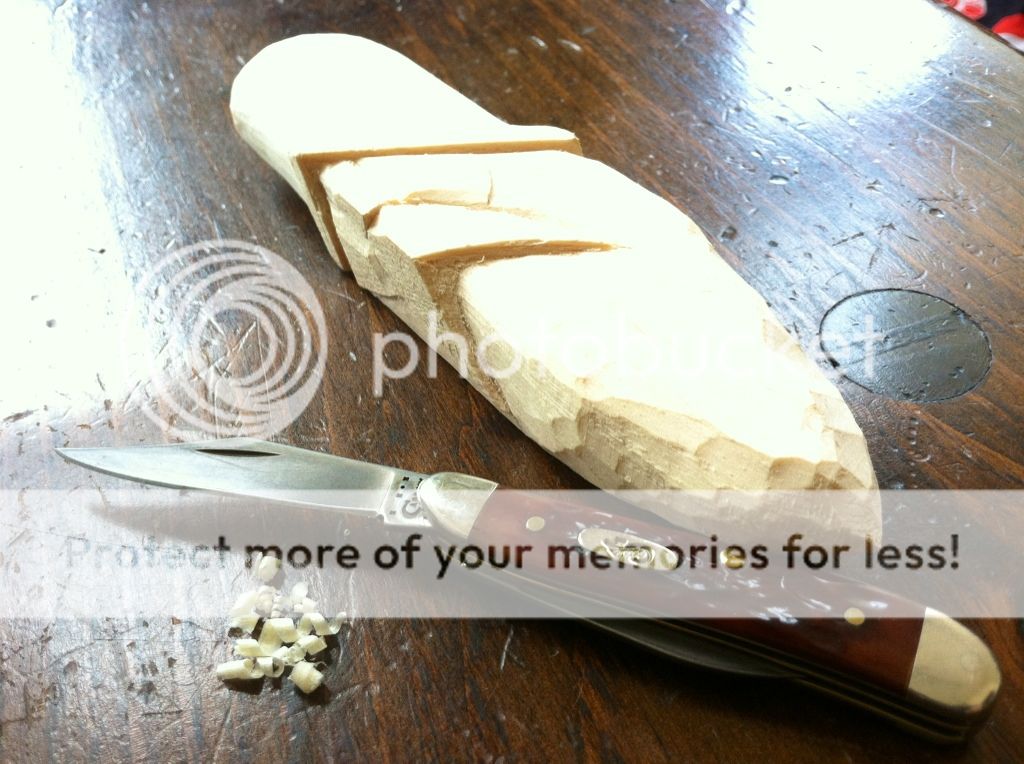
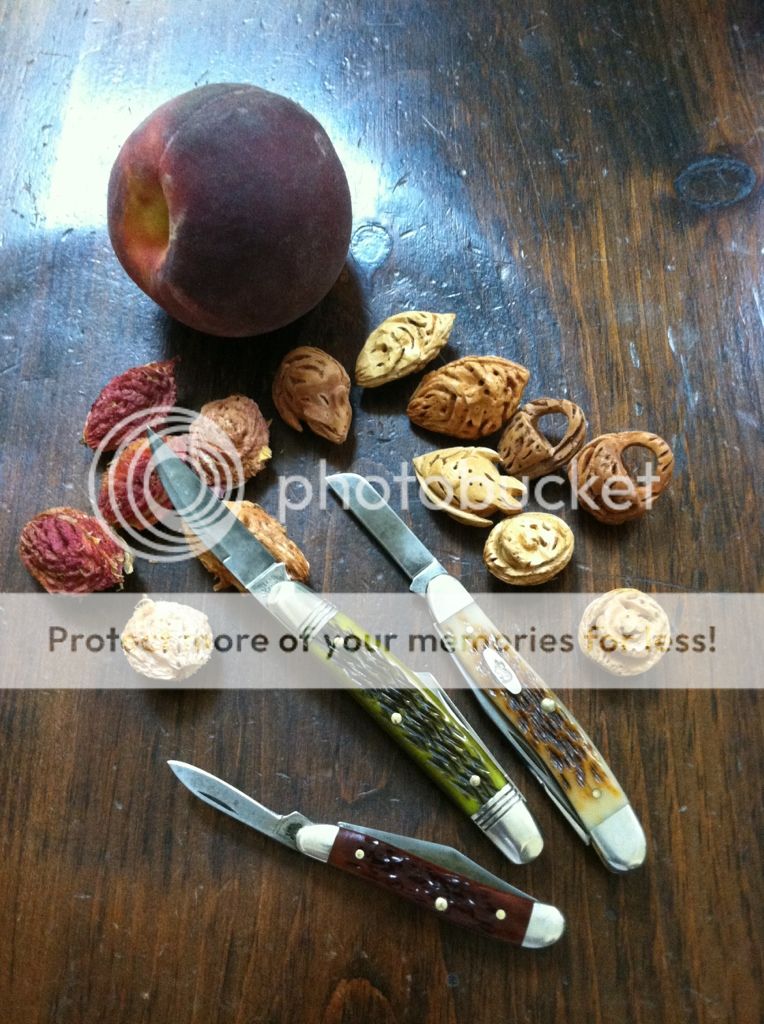
- Joined
- Dec 19, 2006
- Messages
- 8,210
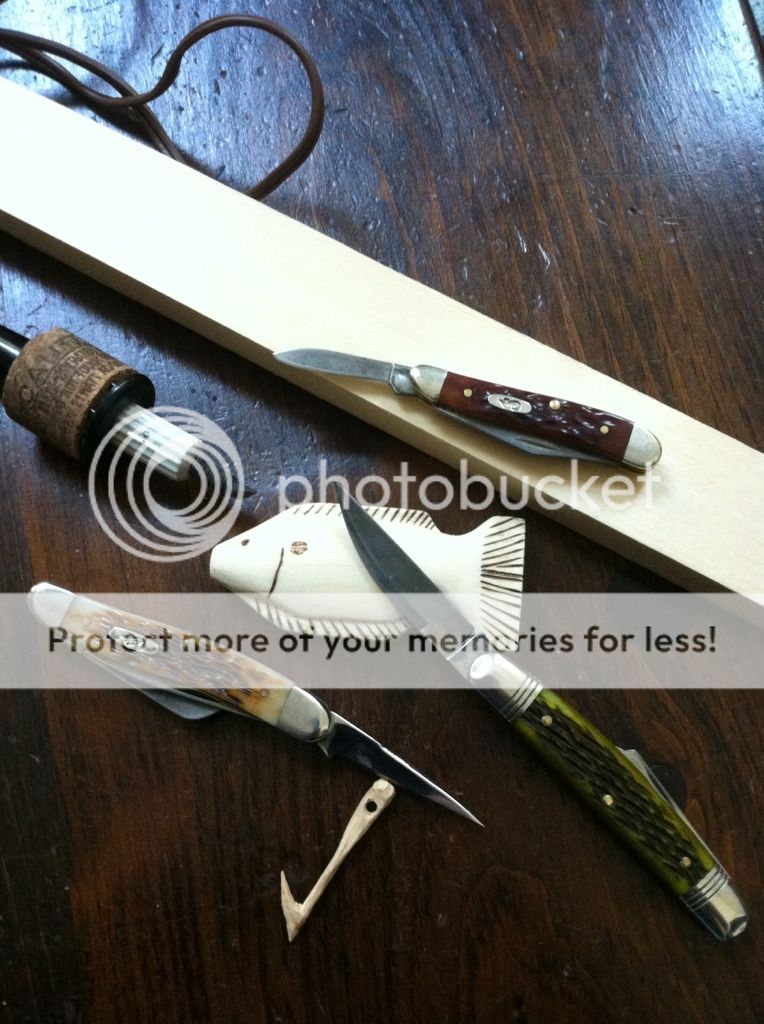
stich, that fish carving is pretty cool!

- Joined
- May 6, 2012
- Messages
- 3,557
stich, that fish carving is pretty cool!
Thank you, here is a lure I need to finish, I need to get some paints and some hardware.
Made from pine scraps
- Joined
- Oct 9, 2011
- Messages
- 2,189
I think that modern knives have square tangs to remind you to get your fingers outta the way of the blade while closing your knife.
I get my wood from many places- scraps from a construction site (only if it's approved for me to take some so rare), scraps from other projects, dead wood from parks, and from my backyard. I have yet to pay a cent for wood bought specifically to whittle.
I get my wood from many places- scraps from a construction site (only if it's approved for me to take some so rare), scraps from other projects, dead wood from parks, and from my backyard. I have yet to pay a cent for wood bought specifically to whittle.

yablanowitz
Platinum Member
- Joined
- Apr 14, 2006
- Messages
- 10,037
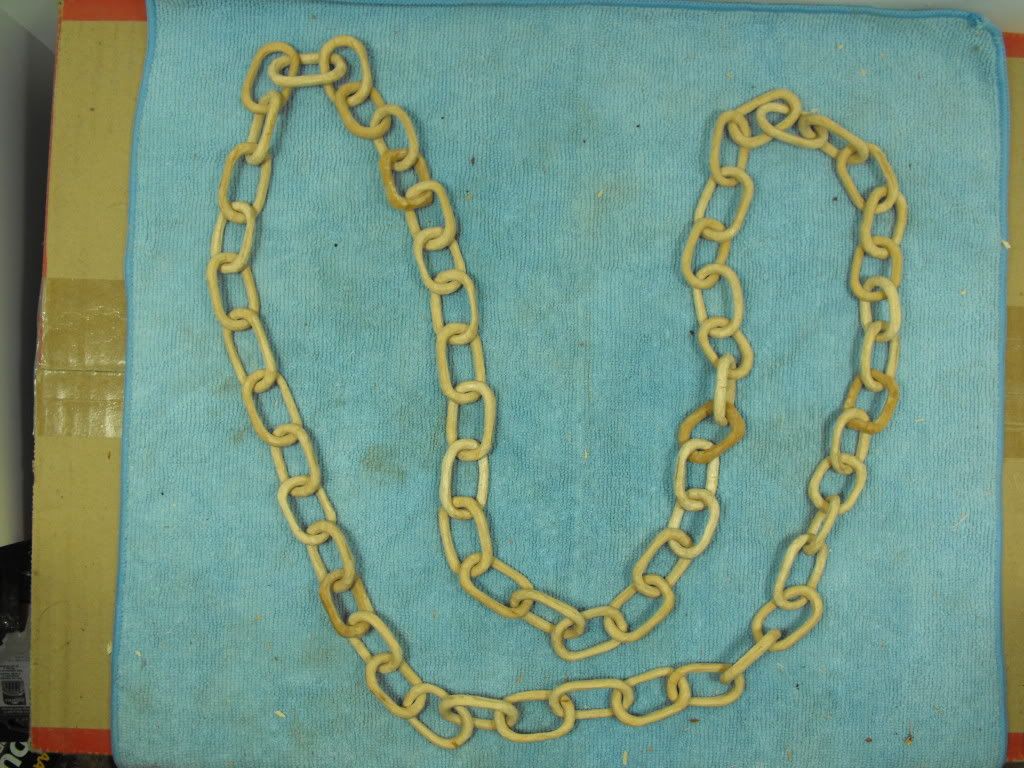
I use a lot of random sticks, but good wood is rare here (heck, any wood is rare here) so I buy basswood carving blocks any time I'm near a Michael's or Hobby Lobby. Pretty tough to do something like this with a random stick.

- Joined
- Mar 1, 2008
- Messages
- 4,566
A closed loop chain. Wow. Very nice yablanowitz. Impressive to say the least
yablanowitz
Platinum Member
- Joined
- Apr 14, 2006
- Messages
- 10,037
I blame that on Fausto.  He asked if I'd ever done one.
He asked if I'd ever done one.- Joined
- Oct 9, 2011
- Messages
- 2,189
Impressive. I can't even do a regular chain (or a decent ball-in-cage). That's incredible.
- Joined
- Mar 1, 2008
- Messages
- 4,566
How long did it take you? I remember seeing a few chains you have done that where open ended, I know you have alot of practice
yablanowitz
Platinum Member
- Joined
- Apr 14, 2006
- Messages
- 10,037
Once you figure out how, it's not that hard. Here's a tutorial I did a while back: http://www.bladeforums.com/forums/showthread.php/839119-or-maybe-how-NOT-to-whittle-a-chain and a larger scale so it's easier to see: http://www.bladeforums.com/forums/showthread.php/843330-Carving-chain-(take-2)
Knife content to try to keep the thread from getting deported: even without the practical benefits of half-stops, I like them just for the way they feel.
Knife content to try to keep the thread from getting deported: even without the practical benefits of half-stops, I like them just for the way they feel.
yablanowitz
Platinum Member
- Joined
- Apr 14, 2006
- Messages
- 10,037
I remember that picture, but it wasn't me who posted it. Rockgolfer, that took about a month, probably a hundred hours or so.