Understanding stabilization questions

Joined
Sep 27, 2014
Messages
1,108
A couple questions about stabilized wood.

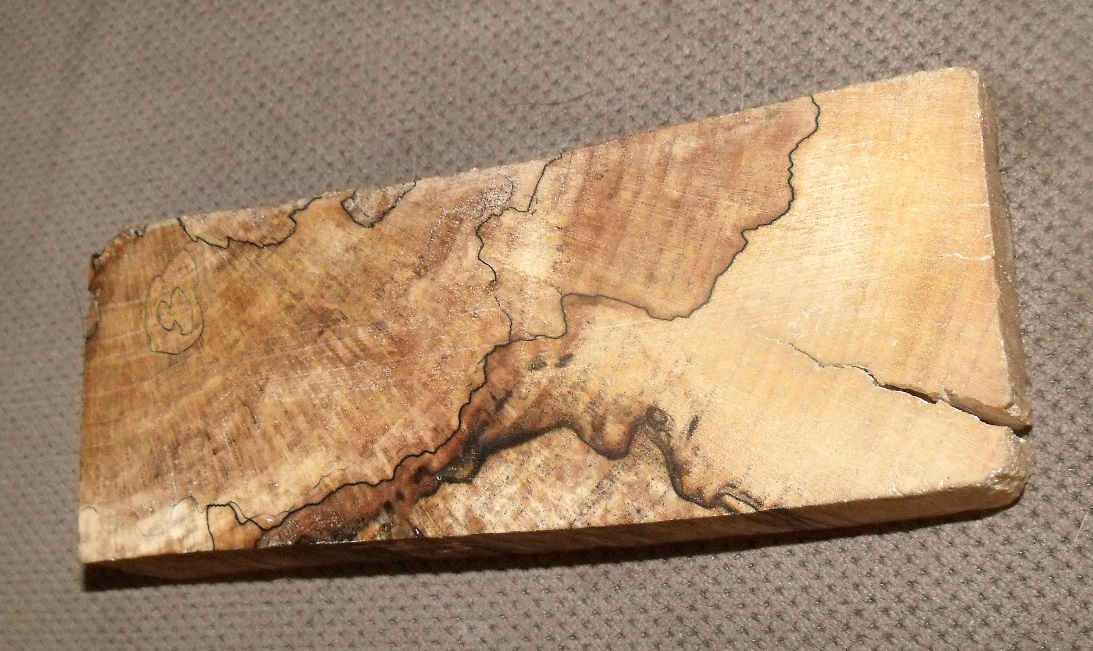
First, "Don't try to stabilize spalted wood that has become punky." Is this because it crushes under the pressure when they are forcing the stabilization fluid in? I have a couple pieces of spalted maple burl...never seen it like this before. Not really punky but different. I can sort of press my nail into it. I added a picture. Is this something I can't stabilize? Photo on 2016-01-09 at 11.46 AM.jpg
Second. Dyeing. Do you still get interesting effects if you dye wood that is more straight grained than curly/fiddled/burl. Or do you dye more to emphasize the contrast that happens in the wildly figured stuff?

Thanks
Randy
 
First, I've used plenty of pieces of wood that look like your pic that were stabilized.

Second, The WHOLE point of Stabilization is to be able to use woods that are punky, soft not ready for prime time.

As far Dye goes, There are as many reasons to use in as there are people doing it.

Go for it and see what happens! :)
 
I guess it's probably impossible to answer my second question. I bet some pieces turn out amazing and others okay. I am going to try out dyeing some different pieces and see what I get. Not the end of the world if some doesn't turn out pretty.

Punky wood though. I've seen a couple comments about not stabilizing punky spalted wood. Don't know why though. I hand some dowel I had made with punky wood and got it stabilized. It came out sort of a crushed oval shape instead of round. I just guessed that it was because of the pressure on soft wood.
 
The piece you showed in the photo will probably stabilize well. After stabilizing the areas like the right portion of the block will have a different texture than that on the left. After sanding the right portion will be more of a satin (duller) look and the other will get shinier. That can usually be evened out by wet sanding with an oil blend like Danish oil or Tru-oil when you finish your handle.

Watch out for the stuff that gets kind of crumbly when you cut and sand it. That tends to change shape and separate causing cracks and voids when the stabilizing solution is cured.
 
Last edited:
The piece you showed in the photo will probably stabilize well. After stabilizing the areas like the right portion of the block will have a different texture than that on the left. After sanding the right portion will be more of a satin (duller) look and the other will get shinier. That can usually be evened out by wet sanding with an oil blend like Danish oil or Tru-oil when you finish your handle.

Watch out for the stuff that gets kind of crumbly when you cut and sand it. That tends to change shape and separate causing cracks and voids when the stabilizing solution is cured.

I wound up sending in 4 pieces of this wood along with 23 other pieces of more solid spalted and burled maple. Worst that will happen is these 4 pieces don't turn out and the rest do! I'll only be out a few bucks and it will be worth the try if it does. This wood isn't useable as it is, but it will be incredible if stabilizing does work.

I get what you are saying about the difference in how it will respond to sanding. You see the same thing if you have two different species of wood that are different hardnesses. The soft one will wear away at a different rate that the hard one and won't shine up the same when you get to finer grit.

I am excited to see what I get from the wood I sent in. It is all local wood that I harvested and dried except the pieces related to the picture I posted in this thread. Those came from a local sawyer.
Randy
 
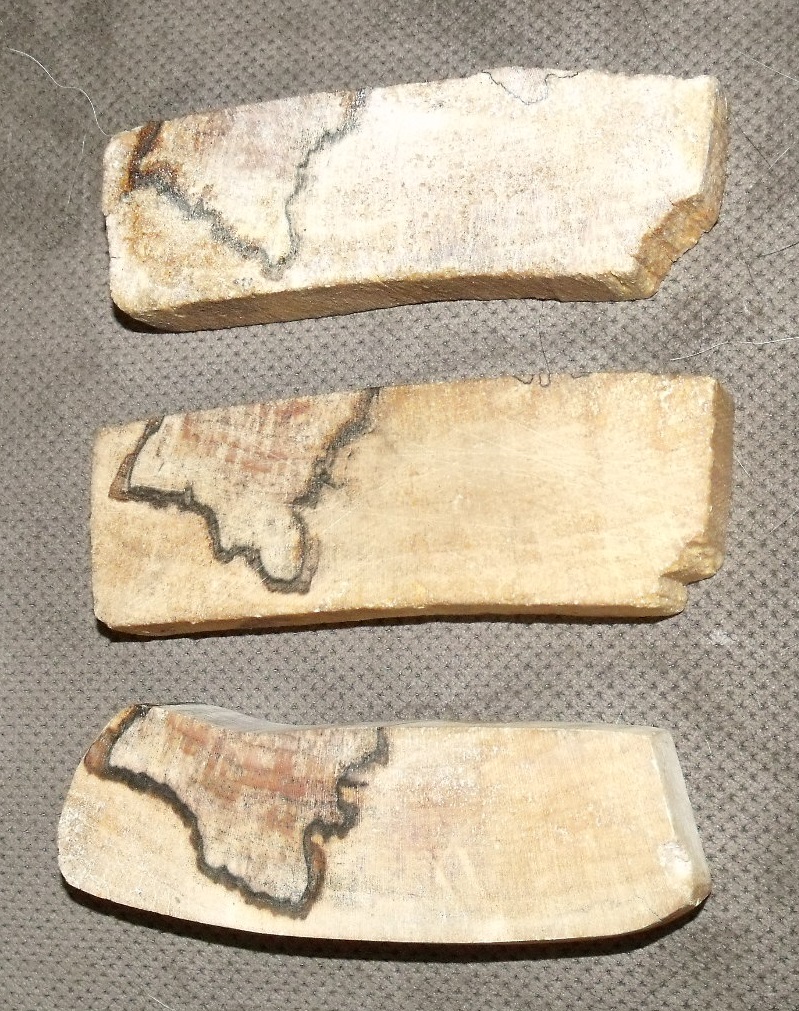
Here's a few examples of some maple that had some punky wood. The first picture shows what can happen to the soft crumbly stuff.
1W05Kmv.jpg

The second picture is a group of pieces where the yellow was punky enough to crush in my fingers but as the bottom piece shows, it shapes and stands up to sanding pretty well.
VepZINW.jpg

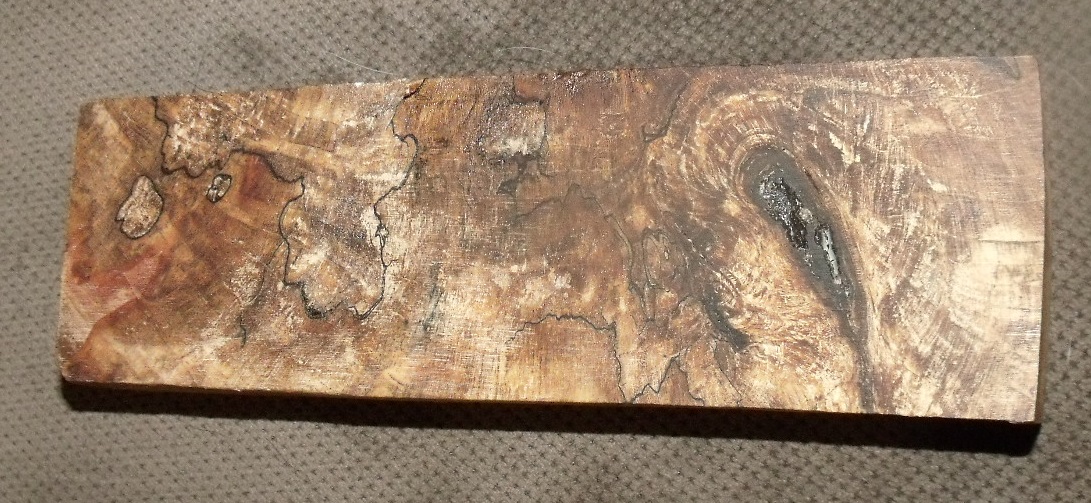
The third one had some pretty soft areas that did shrink below the surface of the rest, but here it is after a bit on the belt sander and it's getting pretty solid.
tvhJpgs.jpg


So in MHO, punky wood CAN work, but don't be disappointed if it doesn't.
 
I'm beginning to understand now. I think those pieces I sent will be fine...but I get it if they crack or have problems. Grand scheme of things it isn't that expensive to get it stabilized and I paid nothing for my wood in the first place, so if a couple piece fail it's not a big deal.
 
I'm beginning to understand now. I think those pieces I sent will be fine...but I get it if they crack or have problems. Grand scheme of things it isn't that expensive to get it stabilized and I paid nothing for my wood in the first place, so if a couple piece fail it's not a big deal.

My thoughts exactly (even the wording...are we related???):confused:. I've still got about 50 chunks of spalted maple and burl off my property and reading this thread you have inspired me to send some more off to K&G and trying some coloring this time, thanks!
 
My thoughts exactly (even the wording...are we related???):confused:. I've still got about 50 chunks of spalted maple and burl off my property and reading this thread you have inspired me to send some more off to K&G and trying some coloring this time, thanks!

I spent a lot of years living between Tacoma and Lynden Washington so who knows if we are related...or maybe it is just a washington thing :) . I look at the downed and rotting wood in the forest so differently now! Spot the figured stuff everywhere. Dad laughs at me when I did chunks of wood out of his wood pile and drag them home to cut up.
 
...or maybe it is just a washington thing :)

That's probably it, as I was born/raised in the western 'burbs of Chicago.
Nice meeting you.
I wonder what folks think while walking my pups around Longview during the week when I stop and stare at one the many old trees with big burls.
 
My students were building forts. I spotted a nice piece of spalted wood in one Fort. Cost me 20 Timbits (donut holes) to get it off the kids fort and into my truck. The beggars drive a hard bargain!
Weo. My wife doesn't even pretend to understand when I point out burls and parts of trees that will be figured. She only cares once it looks like a coffee table

I don't know if it my eye Shane or just a matter of spending so much time in the bush that I can't help but get lucky and stumble upon stuff.
 
I use only stabilized wood done by WSSI and have never had a problem. Both hard and soft wood turns out great.

Like I said in another thread, I use a lot of Osage orange and the chemical is pulled completely through the wood, a real test for such a hard wood. Stabilized burl has never been any problem, either. I buy most of my stabilized burl.
 
I stabilise my wood using an acrylate resin designed for sealing engine blocks by impregnation. On most types of wood this works very well providing the blocks are well dried in a drying oven. I recently started stabilising and double dyeing spalted birch. I found that in some small spots the spalting mould seals the area in the wood off so effectively that the resin will not penetrate under released vacuum only and that pressure is needed and significant pressure at that. About 40% of the blocks that I put through the process have this problem.

As far as dyeing is concerned it is a matter of taste. I do not like the highly coloured, highly figured wood and therefore dye to accentuate the natural grain and in the case of spalted wood the different colour zones and lines.e the natural grain and in the case of spalted wood the different colour zones and lines.
 
Back
Top