
- Joined
- Apr 14, 2006
- Messages
- 7,021
At work, we are down to a 4 day week, so the silver lining is that it is one more day to hike. So, today, I went for a hike, and it was kind of strange. More of that later. It was a beautiful day in Southern Ontario. I don't know what the temperature was but no jacket was needed and at the same time, I saw no black flies and very few mosquitoes.
This is one of the first plants I noticed. I'm sure everybody knows what this is
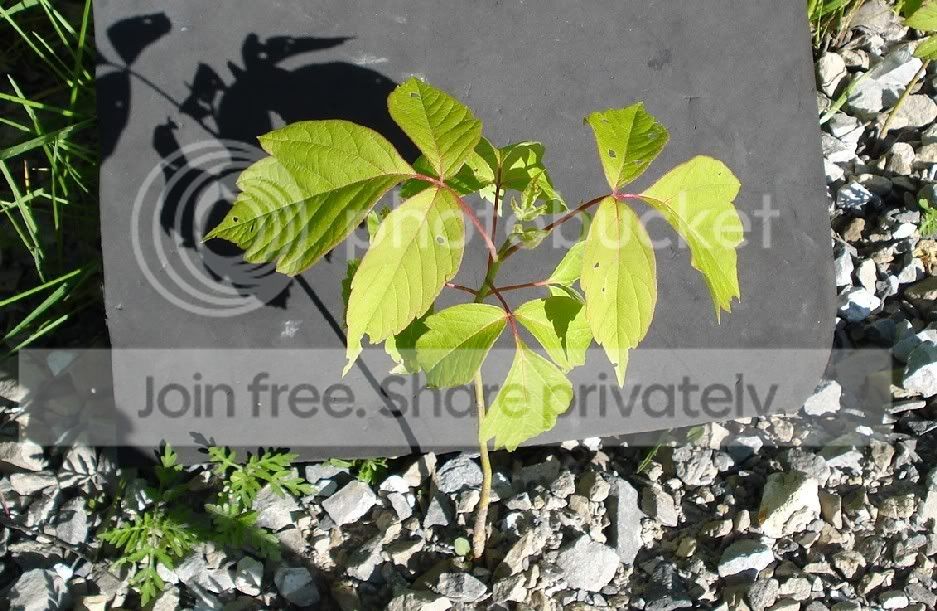
If you guessed Poison Ivy, you would, of course be ..WRONG! But you wouldn't be alone. Other people also think this is Poison Ivy, including me at one time. This is the tip off for this picture. Poison Ivy has alternate leaves, not opposite ones, like in the picture. This is probably Manitoba Maple/Box Elder (Acer negundo) and its leaves are very much like Poison Ivy. Even the full grown ones sometimes have leaves that look like PI.
I haven't had a digital camera for long, and I'm really getting into it. You can take a gazillion pictures and delete the ones you don't like. Also you can resize, crop, invert, etc., etc., etc. but you know that already. So, I'm on the look out for ethnobotanicals to put in the new Plants of the Northeast thread. And what do you know, here's one:

This is Common Buckthorn (Rhamnus cathartica) You will notice they have toothed margins (edge of the leaf) and the veins all curve towards the tip. One of the ways it is differentiated from Alder-leaved Buckthorn (R. alnifolia) and Glossy Buckthorn (R. frangula) is that Common Buckthorn has mostly opposite leaves, whereas Glossy and Alder-leaved have mostly alternate leaves. Also, Common often has spines at the tips of the twigs. Here's another picture of the leaves.

This is the bark:

The bark will burn as it is, not as well as Birch (Betula spp.) but somewhat like Cherry (Prunus spp.). It could have some applications as a torch, but I have not tried it yet. Also, to get any amount of bark would require a lot more effort to gather than Cherry or Birch.
Common Buckthorn is an invasive plant often forming dense thickets under which few other plants can grow. Apparently it was brought to North America as an ornamental plant in the 1800's.
As per Venomous Animals & Poisonous Plants, Steven Foster / Roger Caras, Peterson Guides, 1994, ISBN# 0-395-35292-4, page 180, the fresh bark or berries of buckthorns can be violently laxative and may irritate the skin or mucous membranes. Deaths in children from eating berries are reported from Europe. Such poisoning is rare. I will be adding this to the Northeastern plants thread.
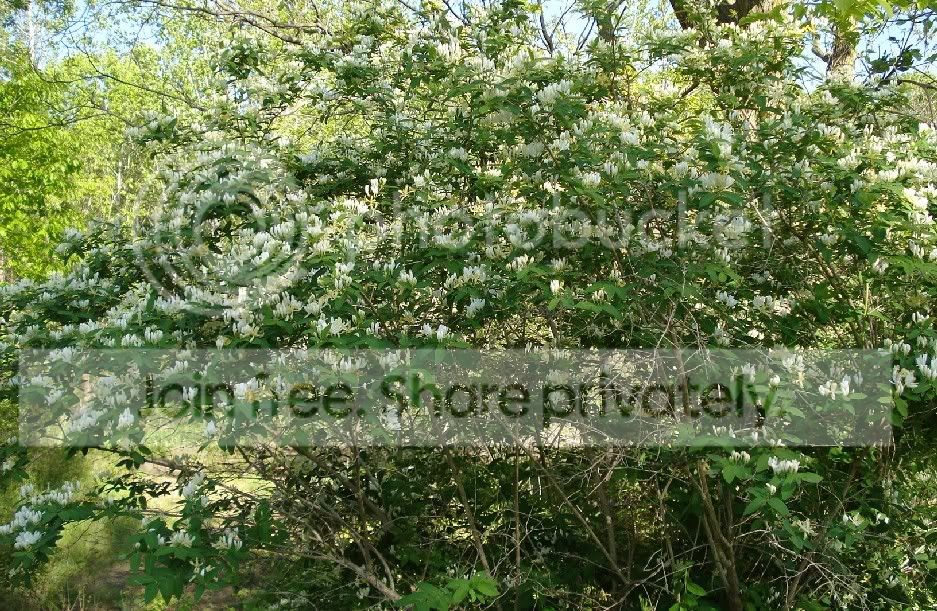
There are a lot of trees in blossom at the moment. It makes for a very picturesque hike, not to mention all the nice smells in the air. Here is one particularly striking example, although the picture doesn't do it justice - Honeysuckle (Lonicera sp.) although I'm not sure which species it is.
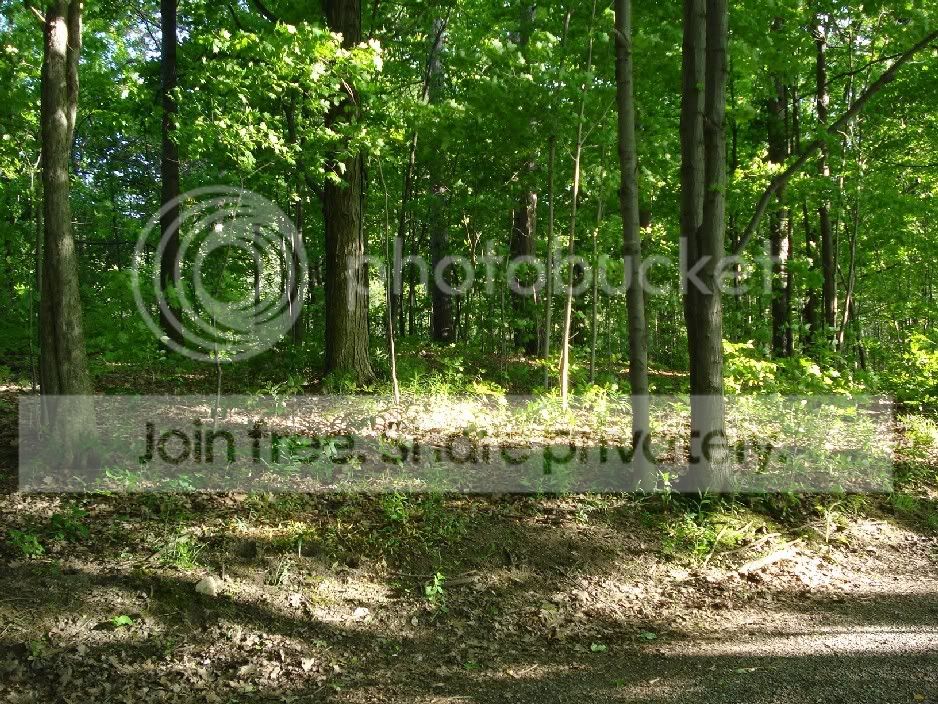
This is a shot of the woods.
Almost forgot, I mentioned it was a bit of a strange hike. I was squatting down taking a picture of some Catnip (Nepeta cataria) when I heard this strange noise, so I looked up to the left and this is what I saw:

For those of you that thrive on the details, it is a miniature horse, 7 years old, about 250 pounds. This guy rides it all over the place and it happened today when I had a camera!
Anyway, that's it. Hope you enjoyed.
Doc
This is one of the first plants I noticed. I'm sure everybody knows what this is
If you guessed Poison Ivy, you would, of course be ..WRONG! But you wouldn't be alone. Other people also think this is Poison Ivy, including me at one time. This is the tip off for this picture. Poison Ivy has alternate leaves, not opposite ones, like in the picture. This is probably Manitoba Maple/Box Elder (Acer negundo) and its leaves are very much like Poison Ivy. Even the full grown ones sometimes have leaves that look like PI.
I haven't had a digital camera for long, and I'm really getting into it. You can take a gazillion pictures and delete the ones you don't like. Also you can resize, crop, invert, etc., etc., etc. but you know that already. So, I'm on the look out for ethnobotanicals to put in the new Plants of the Northeast thread. And what do you know, here's one:
This is Common Buckthorn (Rhamnus cathartica) You will notice they have toothed margins (edge of the leaf) and the veins all curve towards the tip. One of the ways it is differentiated from Alder-leaved Buckthorn (R. alnifolia) and Glossy Buckthorn (R. frangula) is that Common Buckthorn has mostly opposite leaves, whereas Glossy and Alder-leaved have mostly alternate leaves. Also, Common often has spines at the tips of the twigs. Here's another picture of the leaves.
This is the bark:
The bark will burn as it is, not as well as Birch (Betula spp.) but somewhat like Cherry (Prunus spp.). It could have some applications as a torch, but I have not tried it yet. Also, to get any amount of bark would require a lot more effort to gather than Cherry or Birch.
Common Buckthorn is an invasive plant often forming dense thickets under which few other plants can grow. Apparently it was brought to North America as an ornamental plant in the 1800's.
As per Venomous Animals & Poisonous Plants, Steven Foster / Roger Caras, Peterson Guides, 1994, ISBN# 0-395-35292-4, page 180, the fresh bark or berries of buckthorns can be violently laxative and may irritate the skin or mucous membranes. Deaths in children from eating berries are reported from Europe. Such poisoning is rare. I will be adding this to the Northeastern plants thread.
There are a lot of trees in blossom at the moment. It makes for a very picturesque hike, not to mention all the nice smells in the air. Here is one particularly striking example, although the picture doesn't do it justice - Honeysuckle (Lonicera sp.) although I'm not sure which species it is.
This is a shot of the woods.
Almost forgot, I mentioned it was a bit of a strange hike. I was squatting down taking a picture of some Catnip (Nepeta cataria) when I heard this strange noise, so I looked up to the left and this is what I saw:
For those of you that thrive on the details, it is a miniature horse, 7 years old, about 250 pounds. This guy rides it all over the place and it happened today when I had a camera!
Anyway, that's it. Hope you enjoyed.
Doc


