Want to jump in, but frustrated with equipment choices

Joined
May 19, 2010
Messages
31
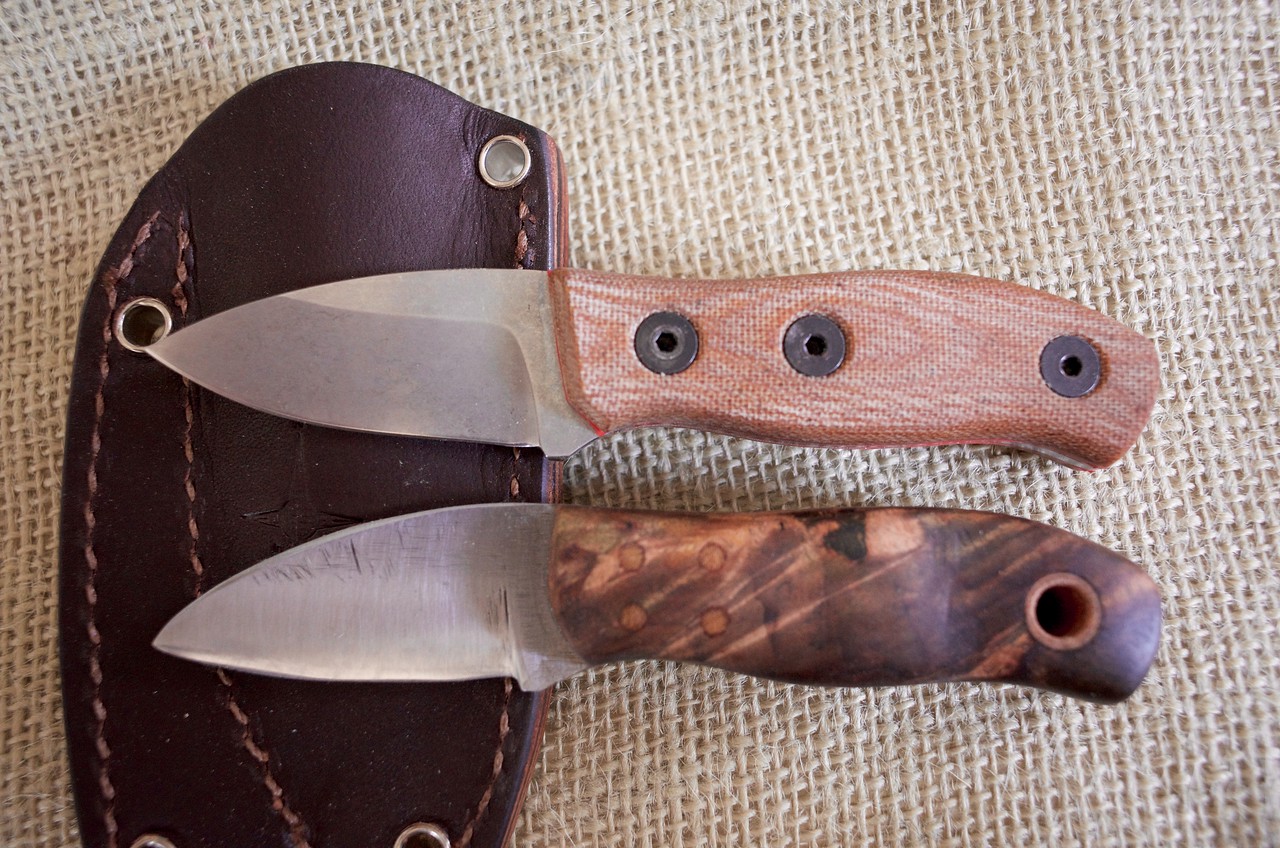
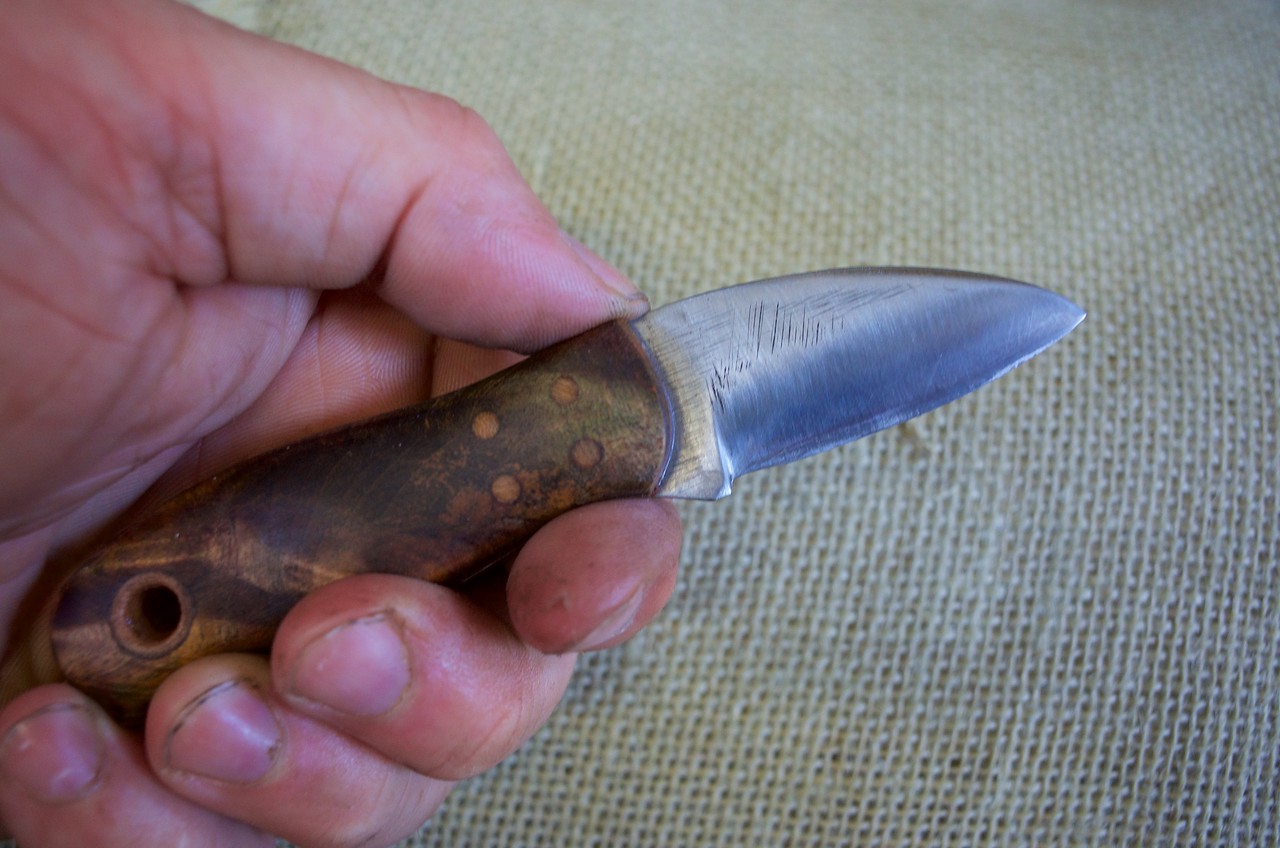
I posted about a grinder and then decided to play with hand files. I hand worked handle scales for a paring blade I ordered from somewhere. With all the work I just put into these scales, it pains me to put them on such an incredibly thin, cheesy blade. Now I want to make a real, somewhat substantial blade that will fit my handles.

On to bolsters for my premade tanto blade. I want to make cool bolsters. Maybe try that japenese pattern weld with copper and brass. Or maybe not; but I'd like the option to try things. So I look at some retail forges and read a few threads here. So I need one forge for regular forge work, and an additional forge for forge welding. Really? So I went from hobbling together a coffee can forge, to needing at least two semi-specialty forges.

So I think I need help somehow, or some guidance, or maybe a chance to see things up close. Mokume-Gane interests me, cable (because regular damascus forging is beyond what I care to invest in equipment) damascus interests me, heat treating and edge harding techniques really interest me, making everything from just about scratch totally interests me.

So what should I do? Like I mentioned in my first post after a long period, I've essentially been waiting and saving until the proper time, and now that time is here. I'm getting some dedicated "shop" space in order, and would like to at least have some reliable equipment before winter especially in the heat department. When I drag out the forge in 20 degree weather, I would like to be past the tweeking and testing stage and just get down to business.

A good portion of advice to others leads me in the direction that I should buy tools and equipment so I can build knife making specific tools and equipment. Is that the proper road of the padawan? If I knew exactly how I wanted to do this, it might be easier. Used equipment would be best, but I imagine used items are bought before they are even advertised. I do know that I don't want to hand file nickel/brass bolsters to even complete some of the kit pieces I have now. It took a lifetime to make perfect handle scales from a plank of redwood I bought from woodcraft, and those could easily be destroyed with one mistake during assembly.

Bah...
 
The best answer, "It depends". What are your goals? What's your budget? Where do you live?

I have made a few dozen knives more for the fun of learning than anything else, but then my father is a pretty accomplished knife-maker so I get "free" lessons whenever I get to his place and can fight of his grandkids for shop time.

I enjoy the process. I enjoy the research and building my own tools as much as I enjoy making knives. I enjoy prowling flea markets, auctions and garage sales looking for old tools that can be rejuvenated for my purposes.

But, I'm just making knives for "fun" and learning as I have time. If I can ever get to a point in my career that I can start turning this hobby into a business, then the plan will change significantly.

my $.02
 
The tools you DON'T have, don't necessarily need to dictate the knives you CAN make. That said, certain tools do make certain tasks a lot faster and easier.

What tools do you already have? There are certain "basic" tools that I would probably prioritize above others. Tools, for instance, that can be used for several different tasks and/or steps in the knife making, or for every knife you make.

For example, I use a drill press for every knife and sheath I make. A drill press can be VERY versatile. You can drill, ream, tap, grind, cut, etc... using a drill press. You need it to make holes for blade tangs, handles, sheaths, etc...

Now, can I build a drill press for less than I can buy one? Not really. So the answer would be "buy a drill press".

You can then keep on going down the list of what tools you might want, need, use, etc.. and decide what the cost of building vs buying would be, and whether you need it right away or not.

There's usually several ways to skin a cat though, so again, don't necessarily limit yourself because you don't have a full blown machine shop and heat treat facility already. Start simple, make some good knives, and you'll soon discover what might make the process a little easier or better for you.
 
The best answer, "It depends". What are your goals? What's your budget? Where do you live?
Well that's tricky. My goals would be the best I can possibly produce, and outside of fundamental skills, where ever creativity pulls me. Budget? Space and experience is be a problem before budget. Part of me really wants to get an Ellis or similar forge, a good 2 x 72, a drill press, maybe a small band saw solution, and all the basic fittings, accessories and safety for those components. The other side of me says I have no sweat equity yet. Detroit, Michigan area is where I live.

If I had more out of each day, I'd probably be more into the process of acquiring things over time, but I don't; I'd like to get up and running and have what I need to where I'm not stopped in my tracks for a shopping trip.

The tools you DON'T have, don't necessarily need to dictate the knives you CAN make. That said, certain tools do make certain tasks a lot faster and easier.

What tools do you already have? There are certain "basic" tools that I would probably prioritize above others. Tools, for instance, that can be used for several different tasks and/or steps in the knife making, or for every knife you make.

For example, I use a drill press for every knife and sheath I make. A drill press can be VERY versatile. You can drill, ream, tap, grind, cut, etc... using a drill press. You need it to make holes for blade tangs, handles, sheaths, etc...
I have files, sandpaper, hand drill, dremel, vise, basic hand tools. I almost bought a drill press, but I'm not sure how much drill press to get. I thought about getting a cutoff wheel style grinder, but the thought of sparks neatly flowing towards a water bucket instead of all over my garage is attractive. I'll happily build a hand file jig to cut bevels, but what about heat treat? I think that is something I'd like to spend time with.

I can say for certain that I don't want to do much more with off-the-shelf blades. Maybe one more that I can do a hidden tang handle. Maybe that is the short term answer: get a drill press and do a hidden tang. I can do another week of hand filing hardwood. Maybe a combo belt/disk/buffer? But if I'm going to buy spinning sandpaper, shouldn't I buy "the" spinning sandpaper?

I wouldn't be asking all this if I knew I could hobble together a safe and working grinder, a safe and working forge, and decent beating surface. It seems a lot of folks in this community are skilled that way to where knife making is just another thing. Weld this up, wire that up, re-purpose this and that and away we go. Every time I see someone say you can build that $800 item for $100, I get discouraged and think I don't belong here. I know I won't be successful as a machine builder or tool maker, prior to making knives. Shoot, and now that I re-read that, what the heck am I doing here?
 
You likely wont need two forges, as a good forge set up for welding can always be turned down a bit for normal forging, its just that welding in a forge tends to wear it out faster because of the corrosive nature of the flux. For a drill press, I would look for a good older used one on CL or the like. You should be able to pick one up fairly easily on the cheap. A grinder is not too hard to build if you are handy, due to the large number of plans available online now. If building one is not something that interests you, there are quite a number of affordable options available as well currently.
 
A grinder is not too hard to build if you are handy, due to the large number of plans available online now
Am I going to spend close to the amount of an RTR grinder if I did it myself? And as far as wiring a motor and VFDs, that is far beyond my confidence. Electricity scares me enough to want to avoid all of that.

As far as fabricating parts for a grinder, can I cut all the pieces I need with a hack saw and drill with the drill press I would buy? Or will I now need a metal cutting band saw?

I am programmer by day, and a photographer, and all things keyboard and digital. I fear that building a grinder will be so monumental, that I will never get it complete or working properly. That's why I originally thought I would skip it and go with hand files, but just doing handle scales by hand is cumbersome. I can't imagine doing bevels more than once or twice by hand.

No, I think I need to talk myself out of this one somehow. It's hard though; I want to try some things.
 
When I built my grinder, I used a a cheap angle grinder from Harbor Freight (still goin strong after years of use) using cutt-off wheels to cut the tubes to length (I made a No Weld Grinder from USA Knifemaker. Then I used a belt sander and a file to clean & square up the cuts. My drill press is the cheap one from HF as well and it s enough to get me by, I do wish I had a better one but it still works, a drill doctor is a good investment though since you really need sharp bits.

And no you don't need two forges, I just use one for everything, heat treating, forging, and forge welding, and I can swap out the ceramic kiln shelf floors when I don't want flux all over everything for normal forge work and heat treating, (I got 3 kiln shelves (about 5"x12" an inch thick for like 2 bucks each!!! If you were to order those from a place that sells forge supplies online they would earch cost A LOT more and shipping is a PITA or many forge building materials) Look for a pottery making supply place near you and you will save a lot on shipping for these specialty supplies like kaowool, kiln shelf, fire brick etc, what you need for "your" forge. And ask them if they have and kiln shelf cut offs, which is how I got mine.

For the burners I'd say buy the "side arm burner" kit from "Zoeller Forge" as it comes already drilled and tapped ready for assembly as opposed to the exact burner kit at the same price from high temp tools that requires you to drill and tap, which if not done correctly can make the burner fussy and even not run properly.


Craiglist you can find plenty of cheap belt "sanders" and drill presses and band saws to get ya on you feet and they will aid you in builingd the things you want/need.

It sounds like for "Your" specific situation that spending a few dollars to acquire some of the above mentioned tools can be the way to go to get you feet even more wet and help you really have a good idea to decide what you will really want to spend you hard earned cash on when it comes to a real belt grinder etc.

Find a cheap ass 4x36, & 1x30 or 1x42 from craigslist, geta drill press from their or HF... I would start with a HF drill press since you can always return and or use the warrenty if something happens and on sale they can by had for like around $40.. like I said I'm still using my to make knives, and they are hsandy later on dorm the road if and when you want a more powerful one.. Also, an angle grinder from HF can go a loooong way for many chores.. I use one to cut away a lot off the excess steel of the blade profile before refining with my grinder, and even files still sometimes..

lol sorry if it sounds like I'm just shooting ya with answers but from the way it sounds, these suggestions could really help ya save money in the long run and give you a few important tools to help make knives along the way, as well as speed up the process on handle shaping etc

~Paul

My YT Channel Lsubslimed
 
Last edited:
Here's what I did -- and I'm at the very new starting stage.

Buy the harbor Freight 1x30 grinder. It will make your life easier and the 40 bucks are money well spent. When you upgrade, the ability to hit a switch and round, debur, tweak, is very useful. Easily the most used tool in my shop over the last year and a half.

Start with simple. I'd love to do wood veneer inlays, but I've got to master plywood kreig joints first and build up from there.

I'd suggest finding a small knife you love and then trying to make it into something else - Change blade shape, handle materials, etc.. Copy the proportions and style as you build skills.

Keep it small and you can get by without too much special tools. A MAPP torch works without a forge if you can get the whole blade in the flame. I started with Aldo's 1084 and a canola oil quench since there is lots of information out there on it.

Most of all, take your time. Watching video (I think Nick Wheeler's) on sanding a blade is time well spent. I watched it after I finished my first knife and marveled at how many marks were on it.

Here's my take on a Fiddleback Forge Production Runt.

Whitty8-X2.jpg

Whitty11-X2.jpg
 
It sounds like you have a lot of interests, and buying all the equipment to pursue all of them at once, especially without any experience using similar equipment...probably will lead to much frustration... as The Count said "one thing at a time"

Before jumping in and buying equipment, I'd suggest maybe taking a few classes if there's a local community college or "maker space" around. Doesn't have to be knife-making; blacksmithing, artistic metal work & sculpture, and woodworking are all applicable to knife making. It gives you a chance to work on your projects on someone else's equipment. It would be a shame (for example) to find out you don't care for pounding on hot metal after buying a forge and anvil, but a blacksmithing class would give you the chance to try it and form some opinions about what features you do or don't want in the equipment you may eventually buy
 
I have read your post several times, ands it seems to me you don't need tools, you need patience and perseverance. You will do a lot of hand filing and hand sanding in making knives...especially in the bolsters and handles. Buying $10,000 in equipment won't eliminate that. The first thing you need t do is make a plan and them follow it.

You have a pre-made tanto blade. That is a good project. Break it down into the steps and supplies needed.....and remember to keep it simple.
1) make a sketch of your desired finished knife.
2) make a list of the tools, supplies, and materials you will need.
3) make a list of the order of assembly/construction
4) start at the beginning and slowly work toward the end.

It will take time, elbow grease, and yes - there will be mistakes. That is where a big box of perseverance will be necessary. A very nice knife can be made in a couple of weekends with files, a stack of sandpaper, and basic hand tools. The only power tool needed is a drill and some bits. A cordless hand drill will work.

Filing the bolsters and sanding them is relatively easy. Making mokume-gane is an advanced skill that requires advanced equipment. Buying mokume is expensive. Save it for much later on in your path. Brass and nickel silver are easy to work and relatively inexpensive.

Make a plan and post it here for help and guidance.
 
Thank you for all of the replies. I do appreciate the time everyone has spent giving me advice.

I don't mind hand filing, but going from plank to shaped handle scale with only a file is a little extreme time-wise. But, per Coldsteelburns, I'll get the HF special, along with the HF drill press. Those items should help for several things.

Also per Coldsteel burns, I'm going to buy the side burner kit from Zoeller. I will also buy parts to setup a propane connection kit, and proceed with the coffee can forge or 5gal pail forge (I don't know which would be better). The drill press will help there.

"The Count", lol. Thank you for the huge list of links and videos that I found in your responses on other threads. Lot's of good fun there.

1084 steel? Can I use 1075 from McMaster Carr? I have a list of items that I need to buy, and if I can get a peice of steel as well, that would be nice. I'm just not interested in the kit blades at the moment. I want to try gridning down the bevels with whatever tools.

Yes, I have to many interests built up. I'm the type of person that when something pops in my head, I want to go try it. Normally this involves Programing or Photoshop or photography or making music, or even draw an idea in cad, or anything I'm already equiped in, so this new thought process of substituting patience for actual tools is awkward. I give you resourceful folks a lot of credit.

Speaking of cad, I have my modernized, sleek, 24" scimitar style blade all modeled out. But I think that falls under swords, and I believe the Count says no.

I think I just want to do "something" that involves tools and work, and something that I can learn a lot about. I've been writing code for months straight in my spare time, and honestly, the thought of beating hot metal, and grinding and the like sounds like a wonderful change of pace now that it's getting warm out. So since I have waited and saved for this "hobby", I kind of want to throw everything at the wall to see what sticks, and then carry what sticks along with me. Like I mentioned in my other post, this has been an interest in waiting for like 8 years. At this point in my life, and especially taking interest in something that is 180 degrees from my normal day-to-day, I'm thinking dig in or go home.

So the "plan" would be: buy forge parts, build forge (coffee can or 5gal bucket), buy HF drill press and some sander maybe from CL, although not much on CL at the moment. Find a piece of steel to file, buy a small amount of brass, copper, nickel silver to practice bolsters and guards, and handle up the tanto while I figure out where to buy durablanket and plistix. Although, the more I think about it, the tanto probably needs a traditional wrap, so all I need for that is silk and rayskin. Lol.
 
Every item you need to build a forge can be bought from www.hightemptools.com
Don't make a paint can forge. You need a lot more chamber size. A 5gal pail will be plenty. Normally a starter forge is make with a piece of 10"X16" pipe or similar tube.

1075 will work just as well as 1084.

If you don't have it, this search engine is how to find Bladeforums threads and info:
https://cse.google.com/cse/home?cx=011197018607028182644:qfobr3dlcra


Filling out your profile will be helpful to you and to us.
 
Every item you need to build a forge can be bought from www.hightemptools.com
Don't make a paint can forge. You need a lot more chamber size. A 5gal pail will be plenty. Normally a starter forge is make with a piece of 10"X16" pipe or similar tube.

1075 will work just as well as 1084.

If you don't have it, this search engine is how to find Bladeforums threads and info:
https://cse.google.com/cse/home?cx=011197018607028182644:qfobr3dlcra


Filling out your profile will be helpful to you and to us.

All I'm going to do is read and never get anything built. I found your recommendation post on another forge thread, so now I'll need a blower as well. And a fab shop...

Speaking of a well built forge, are they usable inside of the garage area with adequate ventilation? I first had plans to carry it all outside to the back yard for use, but if I'm going to get all crazy with a cart, etc, that is not practical any longer. The tips in the other post I read seem like gold for heat treating. I need to search plans for the type of forge you explain.
 
All I'm going to do is read and never get anything built. I found your recommendation post on another forge thread, so now I'll need a blower as well. And a fab shop...

Speaking of a well built forge, are they usable inside of the garage area with adequate ventilation? I first had plans to carry it all outside to the back yard for use, but if I'm going to get all crazy with a cart, etc, that is not practical any longer. The tips in the other post I read seem like gold for heat treating. I need to search plans for the type of forge you explain.

If I may suggest,
There are knife maker hammer ins and grind ins that you can go to and figure all of this other stuff out.
For now, Finish your Tanto blade kit knife and then go from there.
 
2x42 craftsman grinder is like 120 bucks and you can get high quality belts from trugrit.com. many makers, myself included, started with one. It should be much better than the HF 1x30.
 
It's strange to me that so many folks that want to get into knifemaking have so little patience. I suppose that's why we see so many posts showing injuries sustained by fledgling makers. I'm sure that for every injury we find out about there are probably several that people are too embarrassed to share.

I received advice about watch collecting and repair that fits with just about any hobby, including knifemaking. Your first and most important investment in ANY hobby is the investment in your education. Sadly, it is the investment so many folks refuse to make. They think spending a little time on YouTube or reading a few internet posts makes them qualified to do dangerous and complicated things.

Take a moment to consider the Count's post with its numerous links to all that useful information. Why does it seem so daunting? Yes, it will take time to get the information. You NEED that information. Are you really in such a hurry to get hurt? Take the time. Read what others have taken even MORE time writing. It will save you time, money and pain in the long run. What's more, it will give you the ability to learn to do things properly, so you won't need to spend even more time unlearning the poor techniques that lead to disappointing results and inferior quality,

Have fun, but please be safe.

- Greg
 
It's strange to me that so many folks that want to get into knifemaking have so little patience. I suppose that's why we see so many posts showing injuries sustained by fledgling makers. I'm sure that for every injury we find out about there are probably several that people are too embarrassed to share.

I received advice about watch collecting and repair that fits with just about any hobby, including knifemaking. Your first and most important investment in ANY hobby is the investment in your education. Sadly, it is the investment so many folks refuse to make. They think spending a little time on YouTube or reading a few internet posts makes them qualified to do dangerous and complicated things.

Take a moment to consider the Count's post with its numerous links to all that useful information. Why does it seem so daunting? Yes, it will take time to get the information. You NEED that information. Are you really in such a hurry to get hurt? Take the time. Read what others have taken even MORE time writing. It will save you time, money and pain in the long run. What's more, it will give you the ability to learn to do things properly, so you won't need to spend even more time unlearning the poor techniques that lead to disappointing results and inferior quality,

Have fun, but please be safe.

- Greg

Yep, watching the safety video every day for 10 days. I have been reading, and reading, and watching. And I appreciate the extra words of caution. I'm generally over cautious anyway, which keeps me away from trying many things.

I just realized last night, while reading about kaowool/ceramic blanket and what sort of respirator I'd need to work with it, and found out that since I have a beard I cannot even participate in knife making safely, so I'm probably out at this point.

I just saved myself a ton of money by having a beard.

And if I could still participate, it's not that I'm in a hurry just to be in a hurry. I've been thinking about a forge for some time. I have a few months of warm weather and it would be time to get it done. Small propane tanks perform badly as is from what I read; I bet it won't get better when it's cold out. Putting a propane tank in a tub of soon-to-be ice probably won't help. There are reasons to expedite things.
 
You seem to panic and throw your hands up in surrender easily.

If you read the info on respirator safety, you would see that many of the makers have beards. That doesn't stop any of them from making knives. A positive pressure hood (the overall favorite) or a Resp-o-rator will work fine. The 3M L-series is excellent for a reasonable price.

Relax, and make some knives before diving into bigger equipment and forges. The sticky on "How to make a knife instructions" is where you should start.
 
Last edited:
Back
Top