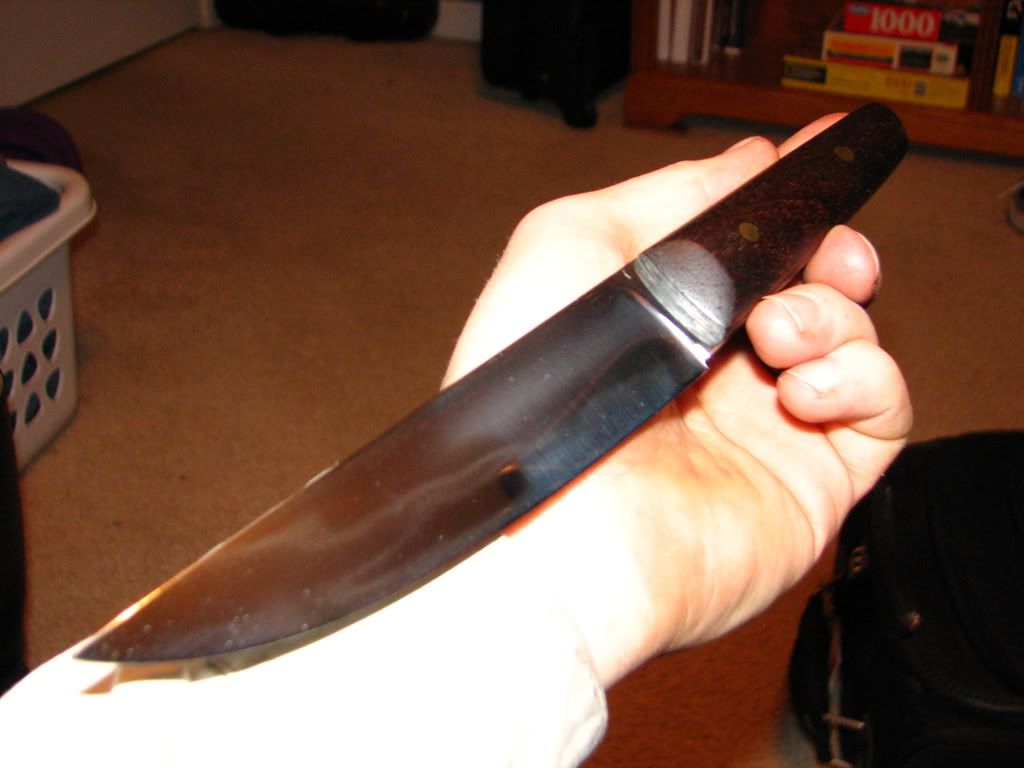
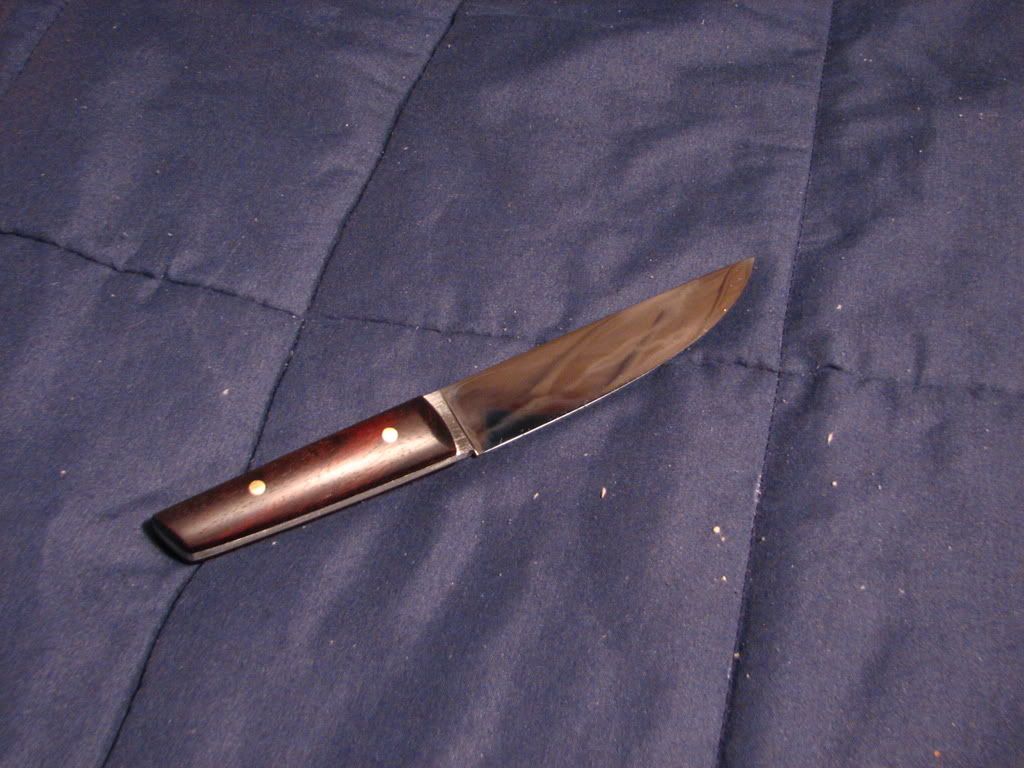
water quenched 1095; wierd hamon: need analysis

Joined
Jan 2, 2006
Messages
1,073
okay i quenched a 1095 high carbon blade in water and got a wierd hamon. i am not quite sure what to make of it. here are some pics. any help would be appreciated. the entire edge is hard.
i got 2 gal of 11 sec quench oil for McMaster Carr, so i wont break as many blades. thanks!

also, what is the best way to get the hamon on film?

i have more pictures of the knife in the gallery here:
http://www.bladeforums.com/forums/showthread.php?t=459354
but these are the pictures i got of the hamon.

~Chris
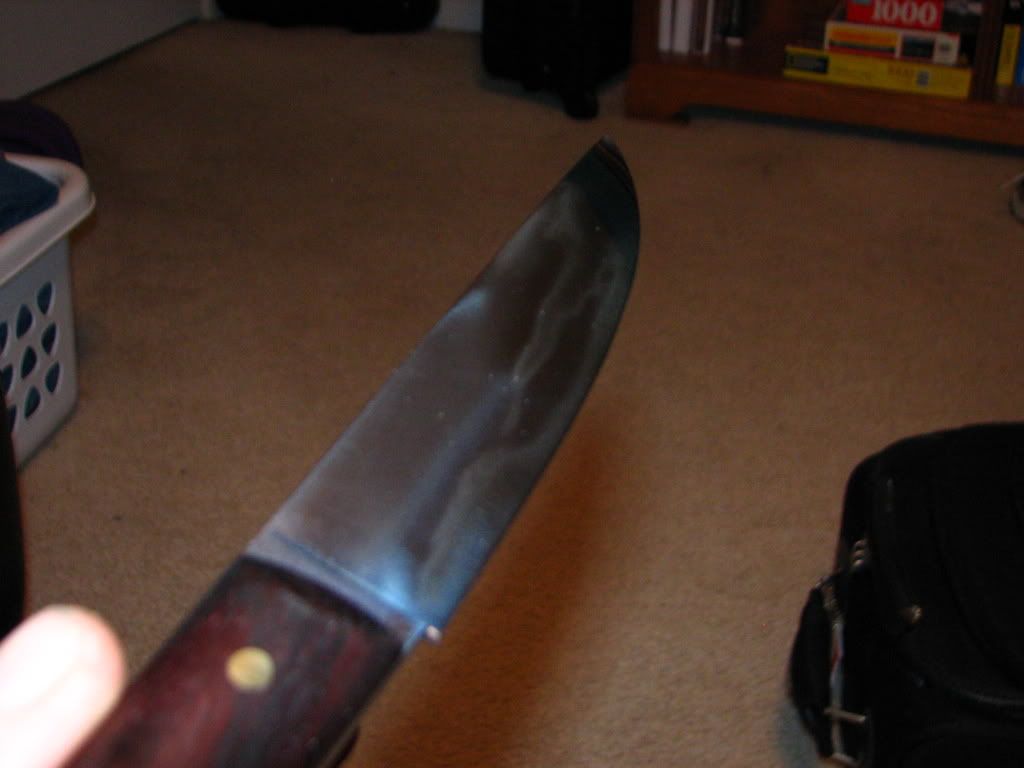
IMG_1262.jpg

IMG_1265.jpg

IMG_1272.jpg
 
Without knowing how the clay was applied, it is hard to say for sure, but I would guess that either the clay wasn't uniform or it developed cracks which allowed water in under it. Sometimes too the way the surface of the clay interacts with the water vapor layer against the blade in the quench tank can have an effect.

Next time please take a picture of the blade as coated with clay before you heat treat it....that would help...

Japanese smiths aim to control the shape of the hamon and would probably redo this. People not brought up in that environment and/or ingrained with that tradition would probably see nothing wrong with it....

Keep at it!
 
hell i like it no matter what caused it.

Ive not done any sort of hamond etc before but if i had to guess id say you had the clay come loose some durign the heating. In effect the heat is acting as more heat mass for the blade material. More mass takes longer to heat up and to cool down.
 
the clay was tapered down, with a wavy edge. it wasnt as wide at the tip as it was at the base. i didnt wire it to the blade like i normally do, so that makes sense that some water got it. personally i dont like i how it looks but by the time i saw exactly what it looked like it was too late to go bad and do it over again.

so it i had the chance, i would do it again. but as i dont... it is a good lesson.
thanks for the help
~Chris
ps... i like the handle too
 
Photographing Hamon is not simple, but it's not hard when you know what is all about, and that is: light. You just can't have haphazard light hitting the knife at whatever an angle it happens to be at the moment.
You need a stand to rest your knife upon, a camera tripod, and a controlled source of light (it may simply be a convenient window, but the light must come from ONE direction.
Modify the position of the knife looking through the camera till the light reflects in the best way, than shoot.
DO NOT use a flash!
It's that simple. Even better, use a portable photographic lamp. Expensive, but gives you the best control upon light angle.
 
Back
Top