What are the most impressive grinds on production knives?

Joined
Dec 19, 2006
Messages
8,210
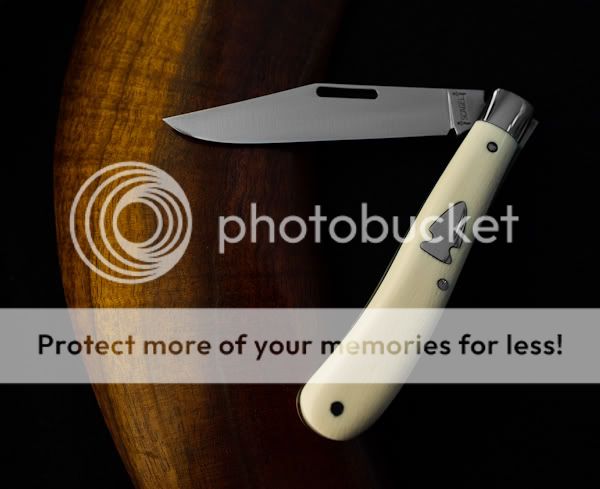
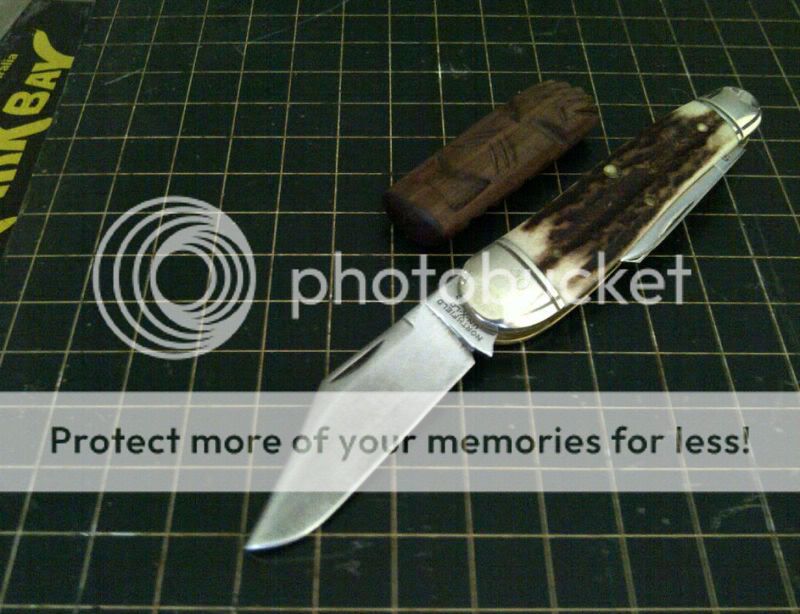
I've been pretty impressed by the grind on this D2 classic Queen whittler and it got me wondering about the grinds on other Queen knives and knives from other makers. My GEC Calf Roper has a pretty nice grind. I also have a 1970s Case stockman with an impressive grind but I've misplaced it (hope it turns up soon!) so it's not shown in the photos.

Are all the Queen D2 blades ground this thin or is it just the whittler pattern or the classic series? I'm especially curious about the grinds on the amber bone whittler and stockman.

What production knives have the best grinds that you've seen? (aside from Case/Bose collaboration knives ;) )


q-whttler.jpg


grind-1.jpg

left to right: Case Mini Trapper, Queen Whittler

Here's a shot of the spine of the blade. Notice how narrow it gets toward the tip. By the way... I'm not sure why the blade would be crinked in a split back whittler but there's a slight curve in the Queen blade.

Spine:
img286.jpg

left to right: Queen Whittler, GEC Calf Roper

Edge:
img285.jpg

left to right: Queen Whittler, GEC Calf Roper

The Roper has a pretty nice edge though it's slightly uneven at the tip. I haven't tried evening it out on bench stones yet.

img284.jpg

left to right: Queen Whittler, GEC Calf Roper, Schrade 8OT, Case Mini Trapper

It would be best to compare whittlers to whittlers but these were the knives that I had readily available.
 
Last edited:
Most of the Queens in D2 that I've seen & owned have had pretty thick blades, thicker than the grind on your whittler.
 
I think the 'standard' size whittler patterns (around 3-3/8"), such as Case's '83 pattern and your Queen, are typically ground pretty thin. Suits the designated task pretty well. Larger whittler patterns, such as the Case '091, have very stout main blades (often spearpoint, instead of clip), and secondary blades are noticeably thinner (usually). As for how it compares to other Queens, my Cattle King stockman is more 'typical', compared to similar patterns from Case and others.

The 'slight curve' in your Queen's blade is not likely due to deliberate crinking. More likely due to uneven cooling after heat treat, which is VERY common with very thin blades in particular. The clip blades on two of my Schrade stockmans (8OT, 108OT) are very thin also, and exhibit a similar curvature, more-so near the tip, as I see also in your pic (thinnest there). Crinking is usually a more abrupt 'bend' close to the tang, as if done in a vise.
 
Last edited:
Thank you, guys! Very informative. Thank you for also explaining the curved blades--I wondered why they were curved at the tip and not at the tang.
 
Most of the Queens in D2 that I've seen & owned have had pretty thick blades, thicker than the grind on your whittler.
I agree, that is why I got rid of my #9 Stockman and kept this little sweet heart. It has a wonderfully ground clip blade and pen blade; they're thin for Queen D2.
005-10.jpg
 
I thought about this thread some more... In general, I think the vintage knives are hard to beat. As far as modern production knives... it's sort of funny but I think my standards are Opinels and the alox Victorinox Soldier -- both inexpensive knives. If it's as good or better than those knives, it gets a thumbs up.
 
The clip blades on both of these knives impressed me a lot. The spey and pen blades were not as exciting.

117.jpg

Primble (Queen) Texas Jack

0011494.jpg

GEC Northfield White Owl
 
Here's a well shot of the White Owl. I'll see if I can take some scans from the other side of the blade.

0031545.jpg
 
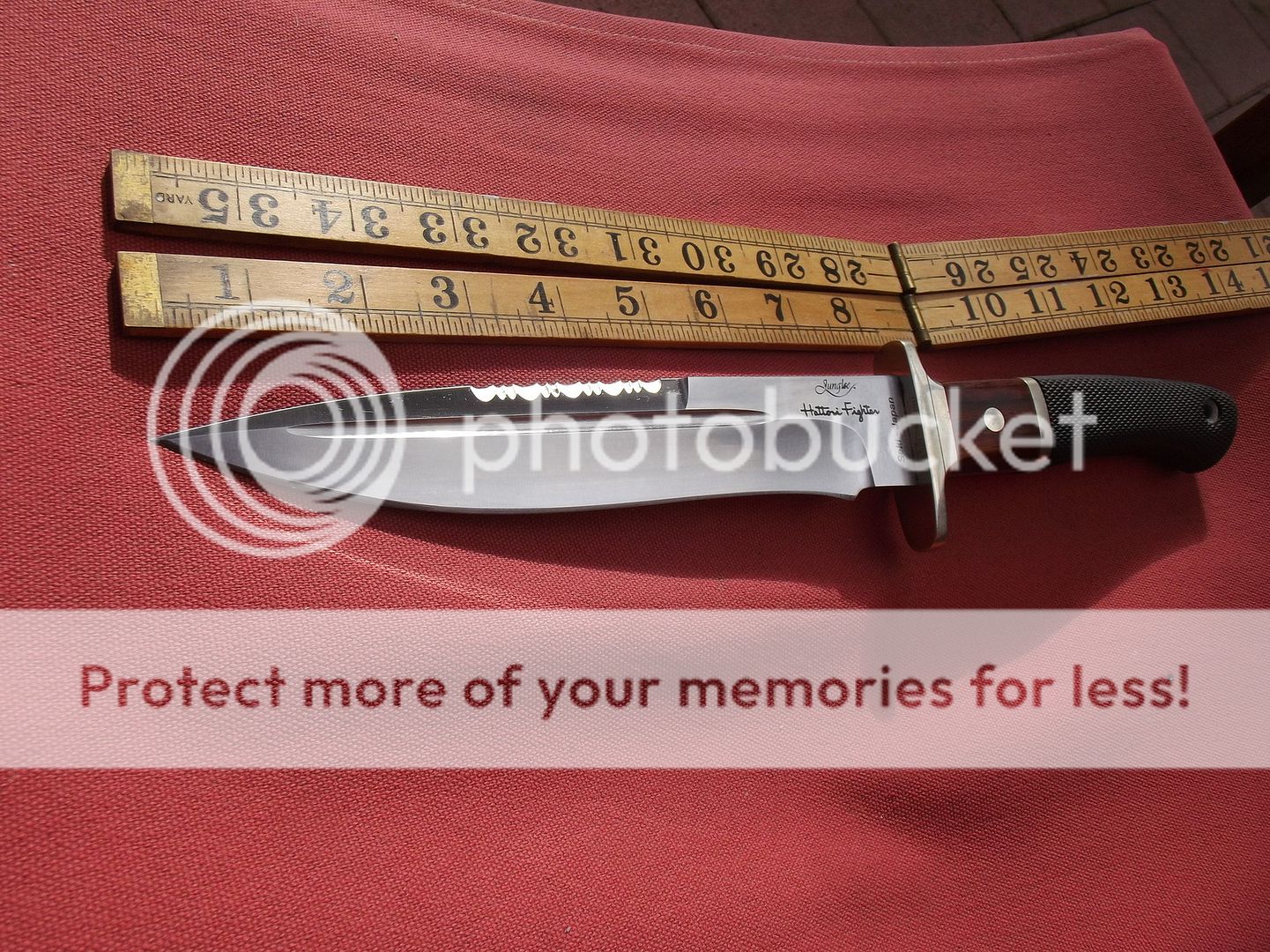
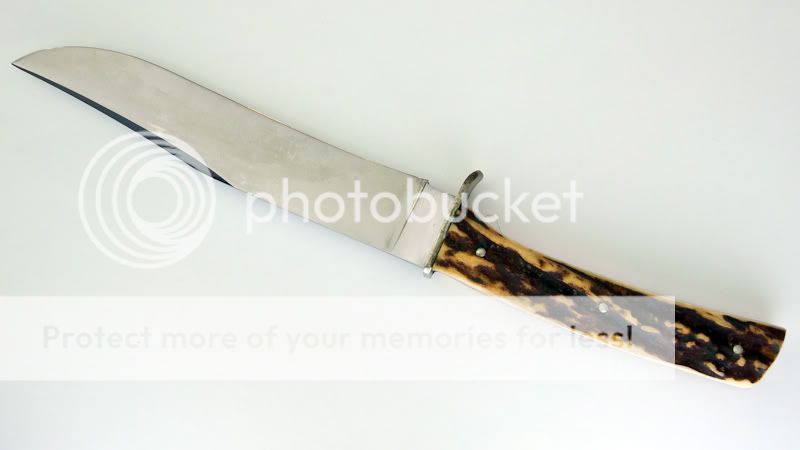
Fixed blades allowed??....i really like the grind on this knife...hard to capture in a pic...as good as any Al Mar ive owned..........FES

grinds005.jpg
 
So, out of curiosity, what is the criteria for an impressive grind?

Thin and flat? Convex? Scandi? Concave?

All of them seem to have their fans.

Day in day out, I seem to prefer the Convex grind of my Opinels over all others. Right balance of slicing ease and beef.
 
If fixed blades are in then I will add this one:

L1020551.jpg


I would be basing "impressive" on a nice thin grind right down to the edge.

Im a huge fan of zero edge blades. The closer a production knife gets to that the more impressed I am.
 
Pinnah,

I didn't look at that link, but I will try to explain. Zero edge is a term I learned about outside of the traditional knife world. I am sure the custom makers here are familiar with the term though. Zero edge could be flat ground, convex etc. What it means to me is when the blade grind goes from the spine all the way to the very cutting edge with no secondary bevels. The main blade grind IS the cutting bevel. The scagel I pictured above is a zero edge convex done by Bark River. There is a slight secondary bevel from the belly to the tip, but for them most part its zero edge.

Make sense? Zero edge knives take a lot more skill to sharpen if you want to keep them as zero edge. They are also good for putting a secondary bevel on. If this doesn't make sense I will try to explain it better.

Kevin
 
I'm in agreement with Kevin.

I'd like to stick with modern production knives (1980 or later) but the best examples are probably vintage production knives.
 
Kevin, I'm following you.

And I agree with you. I prefer either flat or convex ground blades for EDC use. My (more modern) hunting knives are all hollow ground. Buck and Case. Don't understand the virtue of hollow grind though.

I've never used a Scandanavian ground blade though. Some folks rave about them.
 
Here are pictures of a couple of zero ground knives for illustration. The first is a puukko, the second is a whittler blade I convexed myself. Both are among the sharpest knives I own.

mypekkatuominenpuukko4.jpg


queendanburkehalfwhittl.jpg


- Christian
 
Back
Top