What is your favorite prototyping method?

Joined
Nov 12, 2012
Messages
88
So, I've been messing around with cardboard and electrical tape to help figure out comfortable handle shapes, lengths, blade aesthetics , etc. I'll probably be going out soon and just getting some cheap wood to play around with. I'm curious what other people use to prototype their blades and handles. Do you use cardboard? wood? plastic? steel? or something more unconventional? I'm just curious what mediums work best for others.
 
I use basswood sheets for the blade, balsa wood for handles, and double sided tape to hold it together. Once I have a design down I'll make blade and handle templates out of some cheap 1/8" micarta I have.
 
Av few years back when I still made straight knives I used anything I could to make up an " idea " now I guess I would call it a prototype. I would make it up in size and shape hoping it would lead me to better results. Now I only make liner locking folding knives. I draw them up on paper, use masking tape to cover the bad parts and draw over that until I see what I want. I then separately transfer the outlines of the blade and the hand shape to some counter top micarta. This stuff works super. It is easy to drill and shape, is not affected by water or other liquids, you can trace around it a zillion time without destroying it, and most often you can get free pieces plenty big enough from cabinet making shops. Frank
 
You can go to the Home Depot type places and get a 1/4 sheet (2'X4') of 1/8" Masonite. They cost about $5. It is the pressed hardboard stuff used for drawer bottoms and floor underlayment. It is also called "Tempered Hardboard". This makes blade templates easily, as it cuts with any band saw, scroll saw, coping saw, etc. It sands pretty well. These prototypes can then be saved to use for drawing out blade shapes on steel bars and sheets.

Another good material is Lucite - AKA plastic window glazing. It makes see through templates for marking the bars and sheets.

Almost any reasonably firm , but soft enough to work easily material will do the job. I have used cardboard a lot, thin plywood, thin poplar sheets, aluminum, and whatever was laying around the shop.

I would try to avoid using glass or carbide for making templates :D ;)
 
Thank you for the input! I like all of these ideas so far and I'll just have to go out this weekend and experiment. I'll have to go out and look for some cabinet making shops and peruse craigslist for scraps. I'd rather get free materials to play with instead of playing with my own money :D
 
Paper first for me and then thick cardboard (cardboard boxes). Majority of the design is done on the computer. The rest, or 3D part is done while building.
 
I really like white acrylic sheet. The stuff I've gotten is mostly about 3/16" thick and makes good patterns for fixed blades, and can be drilled for pivots and stop pins for folding knife patterns. If you have a sign maker locally, an inquiry may yield a good bit of scrap acrylic sheet for free.
 
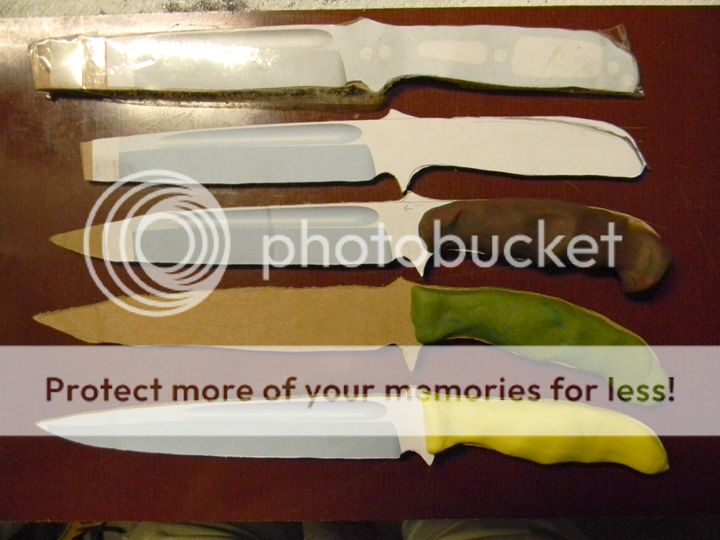
You also mentioned trying to build up the handle with tape. Have you tried modelling clay to work out handle designs? I like the stuff, but then I've been using it for years sculpting and whatnot.

attachment.php
 
Oho I didn't even think to use clay for the handle, that is fantastic. I'll be able to see how the hand naturally forms when gripping and I can subtract or add as necessary. My wife even has 50lbs of sculpting clay for a ceramics class she's taking.
 
You also mentioned trying to build up the handle with tape. Have you tried modelling clay to work out handle designs? I like the stuff, but then I've been using it for years sculpting and whatnot.

attachment.php

If you scroll down and just glance at that picture it makes you double take.
 
Cardboard and Playdough!

Seriously:

playdough_zps868aae88.jpg


This is an iterative process where you start with your best guess, pass the work back and forth between your two hands and hold it in the main grips you intend the blade to be used and after a few revisions the grip ergo works itself out. This is not an exercise in aesthetics, it gets you in the right neighborhood, you still have to develop clean lines yourself. If you've never done this before you should, it will change the way you think about handle shapes!
 
Depends on what it is.
These days, it's mostly CNC or, if I just want a quick reference model for scale or feel, it's FDM (plastic printing).
 
I'm really liking the play-doh and cardboard. I can reuse the play-doh and cardboard is easy to come by. I've always been taught that one should prototype early and often and this will help keep the cost down. Clay will be a great prototype when I'm just about settled on the shape and want to get the final feel down; since play-doh doesn't harden too well.
 
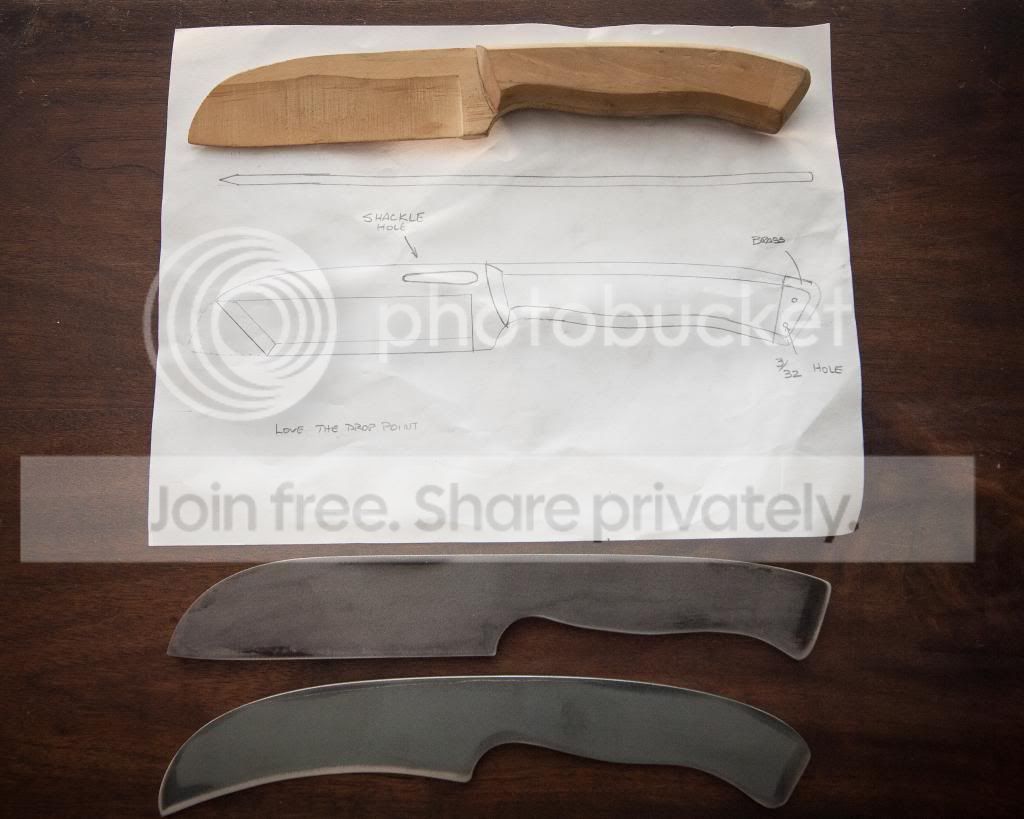
When I go to Home Depot, I grab paint sticks - large and small. They are free and are good for mock-ups. Lucite seems to me a nice template material, I would use something hard enough and water resistant for templates that is easy to tool.

Here's a paint stick mock up.

EEE_0791_zps84e6d54b.jpg
 
I am using clay for prototyping. It has the benefit of being a little more mass compared to card box plus you get to simulate the thickness of blade too. It is possible to do fine sculpting on one piece and compare to my CAD drawings later. THe only issue i have with the clay is that they tend to shrink slightly when drying. And if you really want to stinge, you could actually recycle the clay by socking them in water and let it dry out again to a putty
 
Back
Top