What is your PID controller HT process?

Joined
Nov 26, 2012
Messages
548
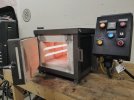
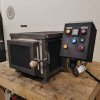
I recently finished the build of my HT oven (photos attached). I am using an Auber ramp/soak controller, and am curious about the autotune functionality. I haven't used the oven enough to determine if the preloaded PID values will work well enough, or if I need to autotune.

From what I have been reading, PID values for one temperature, will not necessarily be good for another. It may work, but fluctuations in the temp can happen. How are people dealing with this? What is everyone's process for HT different types of steels? For example, if I want to HT O1, and then the next day HT stainless, should I be running an autotune for each of those temperatures?

Just curious how the DIY kiln crowd is dealing with this. Or is it more important to just let the oven soak at a temp and stabilize itself?
 

Attachments

  • IMG_20180604_225029_566.jpg
    IMG_20180604_225029_566.jpg
    73.8 KB · Views: 22
  • 2018-06-04 10.46.55 1.jpg
    2018-06-04 10.46.55 1.jpg
    87.5 KB · Views: 22
The parameters for the PID should be the same. Only the target temp and soak times would change. Once tuned for O-1, it should be the same for 5160, or 52100, etc. with only the target and soak time modifications to the program.
 
What about heattreating stainless where the temperature could be around 500f more? Should one autotune to for carbon around 1550f be fine for around 1950f?
 
I have found large temp changes affects the pid. For example, i have one pid i, until yesterday, used for heat treating and tempering. I austenized at 1475 and tempered springs at 675. The pid was tuned for 1475 and rarely deviated more than 1 degree. At 675 with the same tune, it would overheat from room temp by almost 100 degrees and then would oscillate a lot longer until it settled down. Once it reached 675 it held it good enough, within 5 degrees or so. Really, i should have retuned it every time but i didnt, i just waited.

Now i have 2 pid and a separate tempering oven so it isnt an issue.

I would expect your case you may be ok, unless it is a 120vac oven and it is tapping out at stainless temp.
 
Thank you guys for the feedback.

My oven is 220v, 3600W. Its 8" wide, 6" tall, and 19" deep. It shouldn't have issues going to stainless temps.

I actually dont know what is involved in returning either. It sounds like its an easy thing to do. So doing it every temp change may not be such a big deal.
 
If you only have a single parameter set, always tune at the lowest temperature you will ever want to run. Run the autotune from cold, rather than with the oven already at temperature.

If you are going to temper in the same oven as you Austenitize, that means your lowest tempering temperature.

Doing this means that the approach to setpoint will tend to be somewhat slower at the higher temperatures, compared with autotuning at the Austenitizing temperature, but it will not overshoot at the lower temperatures.

It does not take much overshoot at tempering temperature to lose a Rockwell point, or several, so I tend to regard the slightly slower approach to Austenitizing as an acceptable price to pay.

I think the Auber only has one set of PID parameters.

I tend to use controllers from Omega (CH7823) or AutomationDirect (Solo 4848VR) which can be autotuned at up to 4 different temperature and which will automatically use the PID parameter set from the autotune temperature closest to the setpoint. This means I don't actually need to accept the slower approach to the higher temperatures. As far as I can tell, they are the same controller with different badges and I buy whichever is cheapest at the time.
 
Honestly, it will probably take longer setting the temp than to retune. I forgot to mention, when i ran at lower temp i would kill power before it reached temp and waited a bit, then let the temp rise and stabilize a minute or two and then turn it back on. If it is over temp you can open the door and let it cool, the bricks havent warmed up so it will cool quickly and not rise dramatically when you close the door again.

To retune the pid, it should be at temp and stabilized when you start the tune. So retuning isnt exactly a comprehensive solution. Retuning is necessary though if once you get to temp it oscillates more than you want.

Edit
I read the post above that tuning should be done at the lower temp. I agree if the temps are 1550 and 1950. If the temps are 675 and 1475, as in my case, i dont really know what is best, i never tried, but the way i did it worked well enough for me.
 
I wont be tempering in my HT oven. I currently use my house oven, but I am building out a toaster with PID control for this in the near future.

Tuning for the lowest range, which would be around 1500f in my case, or just autotuning again sounds like the way to go. When I start heat treating stainless, I will need to experiment. I may just be overthinking based on what I have read.
 
Back
Top