what's the secret to the plunge line

Joined
Jan 10, 2010
Messages
1,818
I'm trying to improve my grinding and finishing

and this is my first blade that I've done now that I have a grinder... before I was using angle grinders and files. I have a Craftsman 2x42 and this blade was done with 50, 180, 120 on the grinder and 150 hand sanding. So how do you get a clean plunge? I have some jewelers stones (Flex cut??) from 150 to 400. I'm playing with em... but I really don't have a feel for the best way to use the stones yet.

And originally I was hoping for more of a flat grind going up to a hard 'grind line' coming off the plunge.... But I sanded the hard line away once I started hand sanding... despite being careful and using a flat stone sanding block.

Anyway... this is coming out nicer than my last one, so I'm improving.
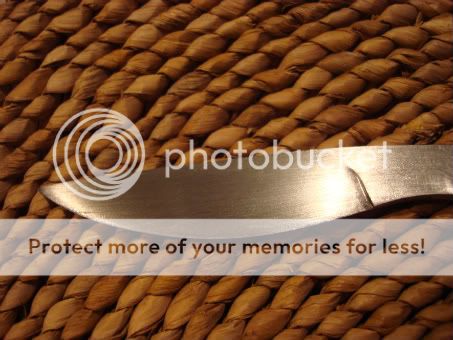
DSC01228.jpg


Looking forward to your input!
 
I also just noticed, from looking at that picture, that I'm starting to round off my tip. That must be from not supporting the tip of the blade on my sanding board???.... usually I've been putting a wedge under there to support it....
 
Use a file guide and file them in. Rule of thumb, if wanting a concave rounded plunge, use a round file the diameter of your blade stock. That will give you a crisp edge. Use sand paper and dowel rod to polish out.
 
I know a lot of makers use the edge of the belt and finesse it... I personally am not there yet, so what helped me was to make a sanding bar with handles. I rounded one edge of the bar, and with sandpaper wrapped around it, it polishes the plunge into a nice small radius.
 
Thanks guys... I did use a file to cut them in after I started their basic location with with the grinder. But the problem I'm having is getting the file marks out of the plunge line groove. This might be more challenging due to the size of this blade... It's only 2 inches from the plunge line to the tip.

The round file is a good idea... maybe it's time to invest in some nice jeweler's files....

Robert... with that rounded sanding bar... are you sanding from the tip to the line or from the back to the front along the plunge line???

It just occurred to me... With my Flexcut jeweler's stones...I can shape those and round em off....
 
I use a file guide when I'm grinding. That will ensure the lines will be the same on each side of the blade. For me the plunge line is naturally rounded when ground down. Just make sure your belt is tracking perfectly on the edge of the platen. I just recently got Fred Rowe's bubble jig and besides maybe my KMG that is the best tool I have. Check it out in the For Sale section. I use his spring style guide on every grind now. I'll tell you what works for me about not rounding off the tip is that I wrap sandpaper around a flat peice of metal and clamp the blade in a vice then use a back in forth sanding motion. I start with 150 then 220, then 400 with the back in forth method. Don't let the sanding block fall off the tip with these aggressive grits. When i get to 600 I go in one motion from tang to tip to straighten out the lines from the previous grits. This grit is not aggressive enough to round the tip too much but I'm still careful. I use a thin piece of steel with wrapped in sandpaper to get all the grind lines out of my plunge. Good luck and that looks like a fine knife by the way. I wish I had a pic of my first flat grind.
 
Last edited:
I to have a craftsman 2 X 42 and I glued a glass platen on mine. I got a couple of pieces of glass from my local hardware store and JB welded them to the steel platen that come with the grinder. You will be able to make a nice sharp plunge line without having to do much work with a file.
 
I put a ceramic platen on. But I guess I just need to get more experience using this grinder.

But now that I have used the file... does anybody have any ideas on how I can clean that area up mo better???
 
Oh Jason... Yeah... I sand the same way. I either wrap the paper around a small piece of steel or a stone. But I was using 150 grit when that happened and wasn't thinking about what it would do to the tip. And thanks for the compliment.
 
I've used small cratex points and cylinders in the past if I had some stubborn scratches in the plunge. I need to restock... kinda pricey, but nice results.
 
I to have a craftsman 2 X 42 and I glued a glass platen on mine. I got a couple of pieces of glass from my local hardware store and JB welded them to the steel platen that come with the grinder. You will be able to make a nice sharp plunge line without having to do much work with a file.

Zanderman think you could post a picture of the glass in place? I'm thinking about getting a 2x42 and have worked with glass for 12 years and have no problem cutting glass for any project. John
 
if you do a search on here you will find a tutorial on how to put that ceramic (thermal glass) platen on. It's easy....
 
Your plunge is just fine but to get that sharp transition from the grind to the flats most people use a smaller diameter contact wheel. This is usually 8 or 10 inch diameter. The geometry of the transition makes it easier to avoid washing out the line.

George
 
Thanks George. Contact wheel eh? I guess I'm not exactly sure what that is...

Yeah.. I'm kinda happy with the geometry of my plunge line... It's trying to clean the scratches out of there so that it blends with the rest of the finish. I'm starting to see that the real trick might just be getting as much of the plunge cut with my grinder at increasingly smaller grits and staying away from the file.

Anyway... I will try shaping my Flexcut jewelers stones in different ways until I get it...
 
Thanks George. Contact wheel eh? I guess I'm not exactly sure what that is...

Yeah.. I'm kinda happy with the geometry of my plunge line... It's trying to clean the scratches out of there so that it blends with the rest of the finish. I'm starting to see that the real trick might just be getting as much of the plunge cut with my grinder at increasingly smaller grits and staying away from the file.

Anyway... I will try shaping my Flexcut jewelers stones in different ways until I get it...


Check this site out,

http://www.beaumontmetalworks.com/index.html

In theroy a contact wheel is the surface on which you are grinding. On a conventional grinder it would be the wheel itself, on a belt grinder it can be a wheel of many deminsions, including those on a platen.

The flat grind is usually achieved on a flat surface of the platen. Most platen use a wear surface, thus the (platen backer) such as a ceramic or glass backer.

A convex grind can be achived on the slack belt surface.

The hollow grind is achieved by the blade being ground perpendicular to the contact wheel, this achieves a concave grinding effect or a hollow grind. This often achived with a wheel 8" - 10" in diameter. Some even use larger for larger deminsion knives.

I hope all this helps to straigten things out a little!
 
okay... I'm using a 2x42 Craftsman and I have a ceramic, rectangular platen... no way to use the contact wheel on my set up then I guess....
 
The short answer would br NO, not without modification. The time and money to do such a modification would be better spent on purchasing another grinder. Do not get discougarged as most makers have more than one grinder. You will find that as you progress in experience you like doing certain procedures of knife making on different grinders!
However while unable to do a convex (hollow grind), you can still do a flat grind and a convex grind. Both of these are commonly used in knife making.
 
Zanderman think you could post a picture of the glass in place? I'm thinking about getting a 2x42 and have worked with glass for 12 years and have no problem cutting glass for any project. John


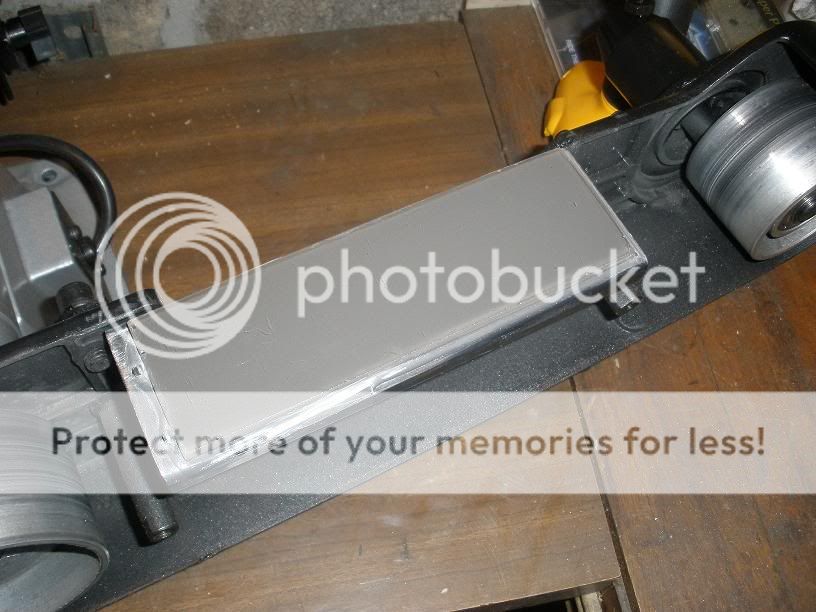
Here's mine. The grinder is laying flat in the pic. Basically a piece of ceramic glass with a whole bunch of JB Weld all over the back of it. If you look close at the bottom you'll see 2 pieces of metal. Those are the self tapping metal screws I put in. I ran them through the back of the platen with a lock washer on each. When you put it on just be sure to wiggle it around a bit, it will squeeze out any excess and at some point you'll feel it almost wants to suck up against the metal platen.

platen.jpg
 
Last edited:
Zanderman think you could post a picture of the glass in place? I'm thinking about getting a 2x42 and have worked with glass for 12 years and have no problem cutting glass for any project. John

John, I could post a pit but it would look the same as Fletch's. I used 2 pcs. of glass to be sure that my work was not obstructed by the metal platen.
 
Back
Top