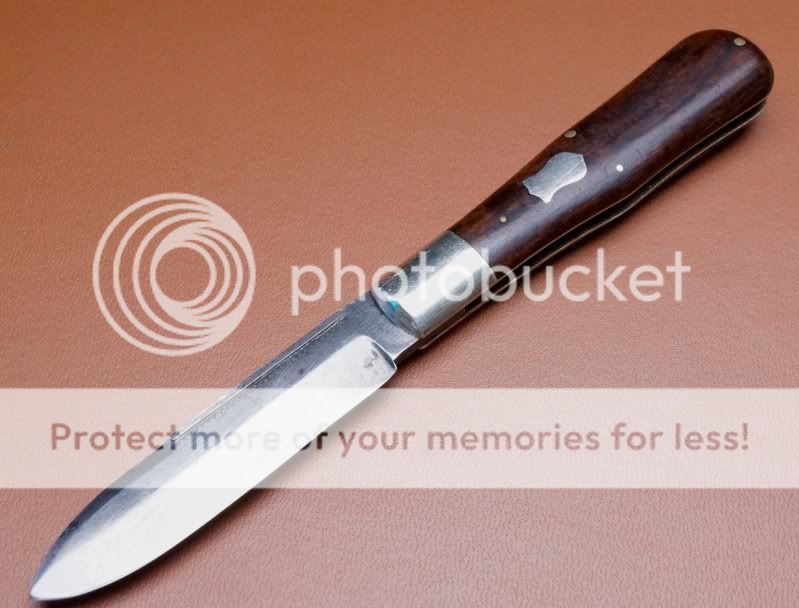
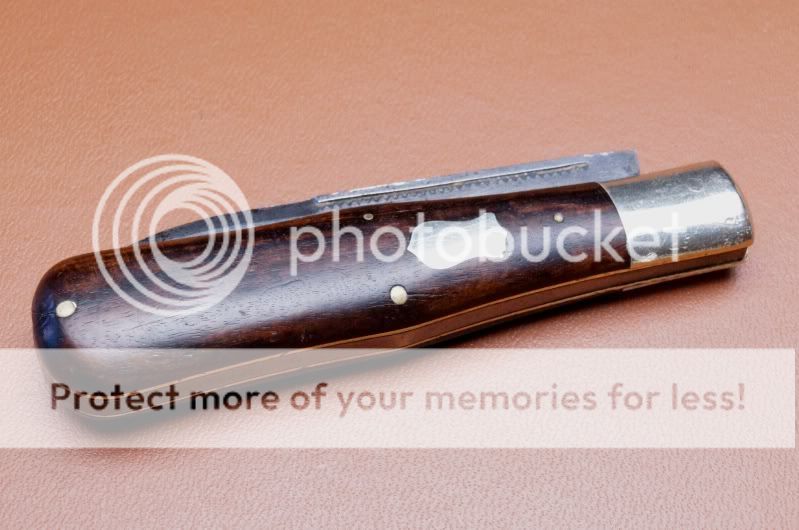
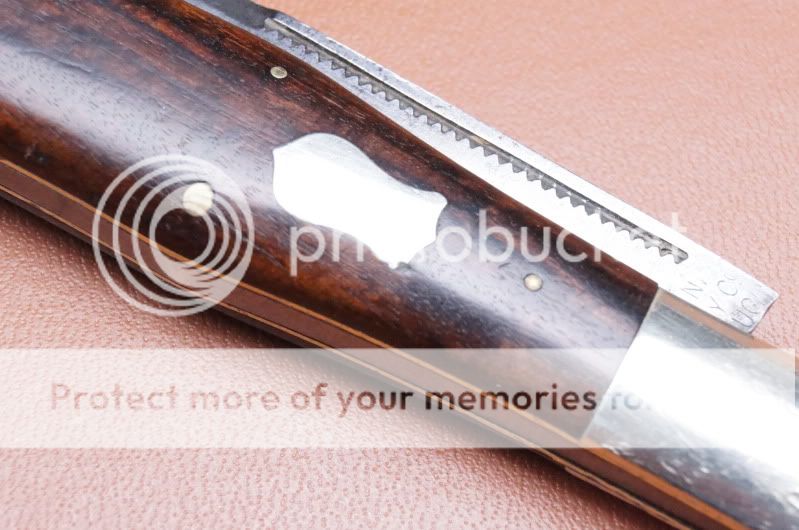
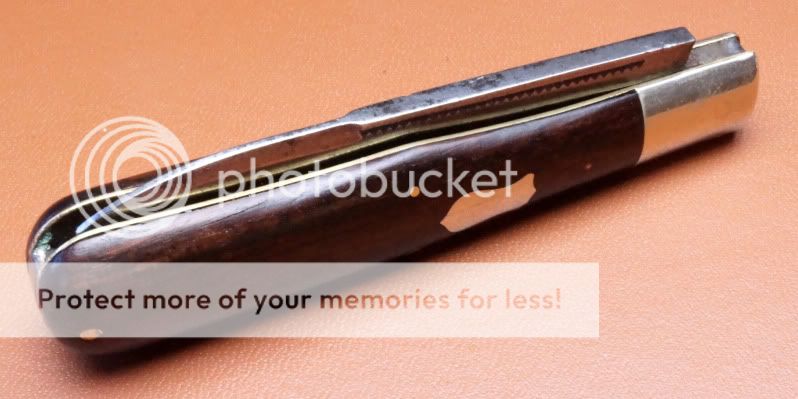
And those were just from two sources - Maher & Grosh and Hibbard, Spencer, & Bartlett. Imagine what else you could find from the myriad of other brands at the time.
For those I have the original pages. The Maher & Grosh are 1887/1888, and the HSB pages are from the 1886 catalog. I also have electronic versions on CD for an 1884 HSB catalog, and a 1902 catalog from another hardware wholesaler. The 1902 catalog is mostly New York Knife Company with a few pages of Wostenholm.
For the 1880s catalogs that I have, it is apparent that spear master blades are the rule. Most patterns were available in ebony and cocobolo (cocoa in the HSB catalog), with a few pearl and bone. Later catalogs, like my 1902 catalog, show a gradual shift toward bone handles and clip master blades. It is interesting to note that the NYKC offerings in the 1902 catalog are primarily bone or cocobolo, with not many available in ebony. HSB has a very slight price increase for ebony, but NYKC has ebony and cocobolo at the same price. Of course, those are the wholesale prices, I don't know about retail.
Another trend is the wood/bolster/liner combination. Often, especially with HSB, there is not much differentiation. But in other catalogs, and in a few cases with HSB, if there is a premium version with nickel silver bolsters (especially fancy bolsters) and brass liners, ebony is more common. And if there is a budget line with iron bolsters and liners, cocobolo is more common.
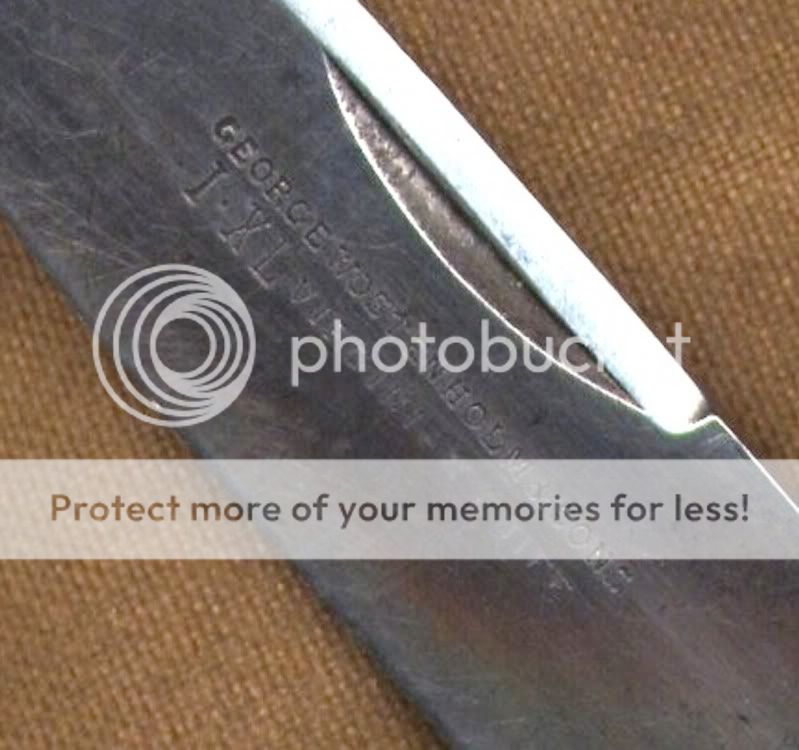
The Wostenholm patterns in my 1902 catalog show one difference - most of the wood handles are cocobolo, and for the fancier handles they are mostly buffalo, not ebony.
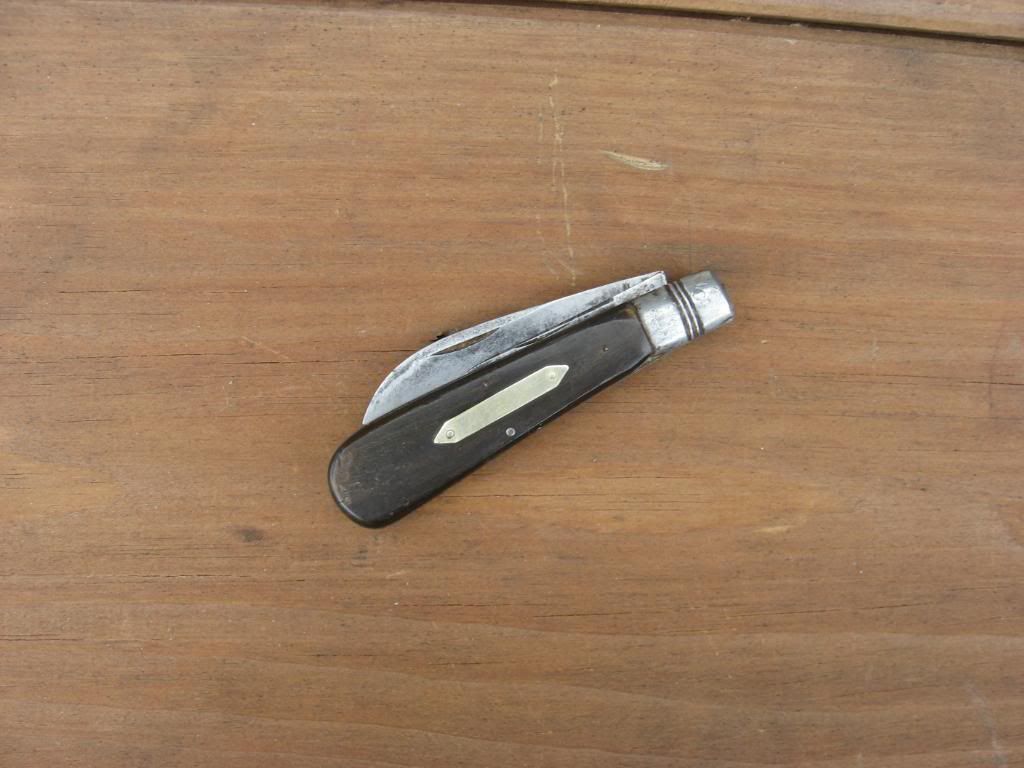
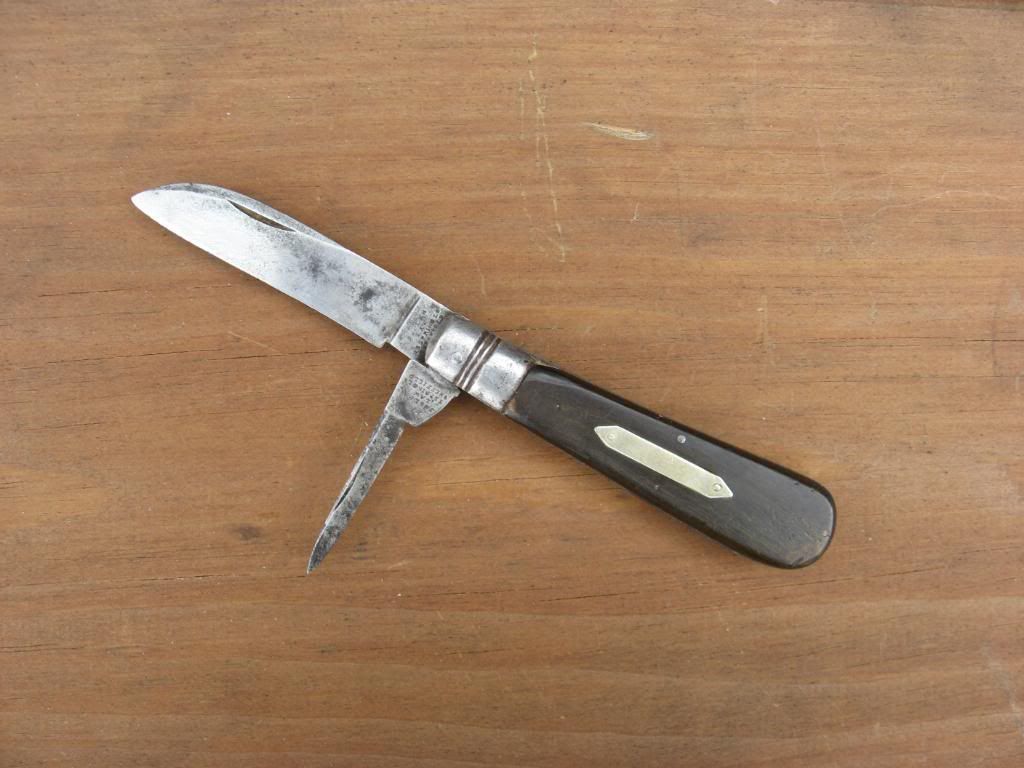
I have a couple of those knives from the catalog pages. I have a dogleg HSB OVB in ebony, and a teardrop Ulster in cocobolo.