
Which tires are good for wet weather?

One of the first things we spent time on during a Defensive Driving course I took was tyre pressure. Apparently the manufacturer's recommendations are low - something to do with ride comfort I gather.

We were told that instead of 26psi, 35psi was safer to avoid hydroplaning. For full size four wheel drives using light truck tyres, 45psi is preferable to the usual manufacturer's recommendation of 35psi. It seems that when brakes are applied suddenly and forcefully, the road surface of underinflated tyres will curl up in the middle so only the outside rims of the tyre rubber actually remain touching the road. Hence the hydroplaning effect when the road is wet. Inflating to the recommended pressure is meant to prevent this curling up.
 
These are the results that I came up with. One is the results for the TireRack and the other is available at Costco. The Costco prices include s/h, installation and disposal. My shipping quote for TireRack is ~$62.00 and I'm figuring installation to be ~$20 a tire (that sound right?). Any opinions on these specific tires?

Oh, and I'm not the type who takes the word of any salesperson, but I always ask anyway.

As far as rotation goes, I had originally just assumed (yeah, dumb--I know :rolleyes: ) that they had been doing it during my semi-annual maintenance visits, but looking at the tires I would guess that they've never been rotated. I did just rotate them a little while ago. And wouldn't you know we have a flash flood watch going today and will probably have rain all next week so I'm in for some fun.
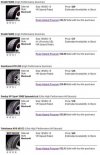

Oh yeah, the screenshot/thumb on the left are the TireRack results and the one on the right the Costco.
 

Attachments

  • tirerack.jpg
    tirerack.jpg
    38.6 KB · Views: 14
  • costcotires.jpg
    costcotires.jpg
    46.7 KB · Views: 14
I have had Nokian tires on three different vehicles and they are amazing in wet and snow. Highly recommended.
 
How much tread is there? If the edges are worn down the water may be sealed under the tire. Anti hydro-planing is done by evacuating the water from under the tire as rapidly as possible. The best wet tires are currently favoring tread that is on the diagonal, from center out, thus a pathway for the water to be evacuated. If there is too much water on the road this can tax any tire though some less than others. Thirty thousand miles is a sufficient length of time such that the tire will also have hardened and what stick you would have had is reduced. Go to the Tire Rack.com and read their reviews of tires in the wet and dry. Bridgestone is one company that specializes in wet tires. Their RE 750 is such a tire, and their flagship is the SO-3 Pole Position, with varying tread hardness (the second half of the tread is softer than the outside, to compensate for hardening). The RE 750's aren't cheap but they are less than the SO-3. Since one's tires are the ONLY thing connecting one to the road, I've always regarded a high quality tire as part of my insurance program (literally).

BTW, a good wet tire and a good all season tire are not the same thing. The best wet tires, sometimes called summer weather tires, are not ideal in the snow, although I've found them to do quite well in a pinch.
 
Zenghost, that's weird, I've got the same tires without any major problems. I've gone up to 75mph in the rain with them with no problems. The only time I've hydroplaned is when I'm doing about 50 and go thru a deep puddle while on the throttle at cruising percentage or anything over 25 mph(about) with about 25% or more throttle.... :confused:
 
Zenghost,

I've bought tires from the tirerack.com, twice. The service is very good. They also have an extensive database of consumer reviews of specific tires.

In fact you find review by a person with the same car make and model year for a given car. I would call and ask the salesperson for a recommendation and then do some homework.

For my car, I have bought the Dunlop SP5000s and Continental Contiextremecontacts.

They are both good. The Dunlops are better for spirited driving, have better all season grip and brake at a shorter distance, at the expense of longevity.

The Continentals are not as good as the Dunlops but have a much higher wear rating.

I am currently on the Continentals and am getting better gas milage and my brake pads are lasting longer. Without the extreme performance tire, I tend to drive less spirited. I think these tires will fit your driving style.

Check your tire pressures once a month and rotate your tires every 3000-5000 miles if you can.
 
Back
Top