I'm thinking about getting a Whittler and I was wondering what uses there are for the blades. For example, when I use a Stockman, I use the large clip blade for food cutting, I use the spey as a backup blade and I use the sheepsfoot for general cutting. What uses do you guys find for the blades on a whittler?

-
The BladeForums.com 2024 Traditional Knife is available! Price is $250 ea (shipped within CONUS).
Order here: https://www.bladeforums.com/help/2024-traditional/
You are using an out of date browser. It may not display this or other websites correctly.
You should upgrade or use an alternative browser.
You should upgrade or use an alternative browser.
Whittler blade uses?
- Thread starter Kube
- Start date

Will Power
Gold Member
- Joined
- Jan 18, 2007
- Messages
- 33,686
Different types of carving demand different blades.
However, I think the Whittler is a very useful&versatile pattern as it's compact for a 3 blade knife and it excels as a general pocket knife. There is variation with blade types too I believe. Some have Clip,Pen and Cope others come with Clip, SmallClip and Modified Pen. Of current production, I find Böker Germany do a really good Whittler in carbon with a number of bone alternatives. Well put together in serpentine form with tapered backspring rather than split.
However, I think the Whittler is a very useful&versatile pattern as it's compact for a 3 blade knife and it excels as a general pocket knife. There is variation with blade types too I believe. Some have Clip,Pen and Cope others come with Clip, SmallClip and Modified Pen. Of current production, I find Böker Germany do a really good Whittler in carbon with a number of bone alternatives. Well put together in serpentine form with tapered backspring rather than split.


yablanowitz
Platinum Member
- Joined
- Apr 14, 2006
- Messages
- 10,038
I'm thinking about getting a Whittler and I was wondering what uses there are for the blades. For example, when I use a Stockman, I use the large clip blade for food cutting, I use the spey as a backup blade and I use the sheepsfoot for general cutting. What uses do you guys find for the blades on a whittler?
Uhhh...
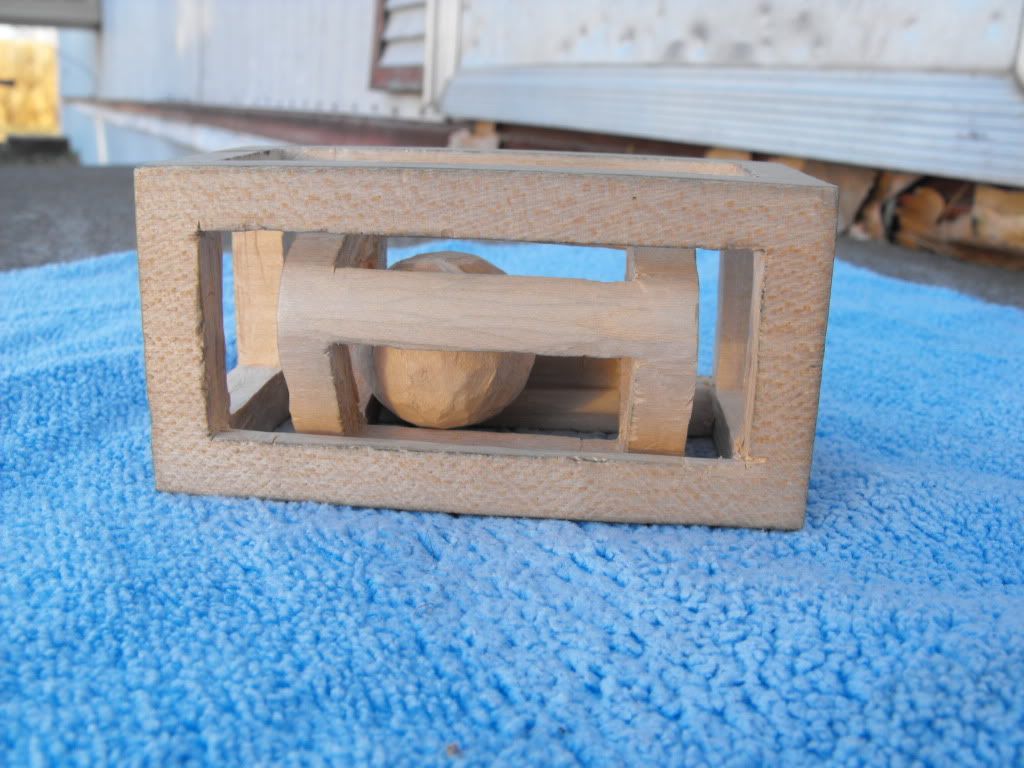
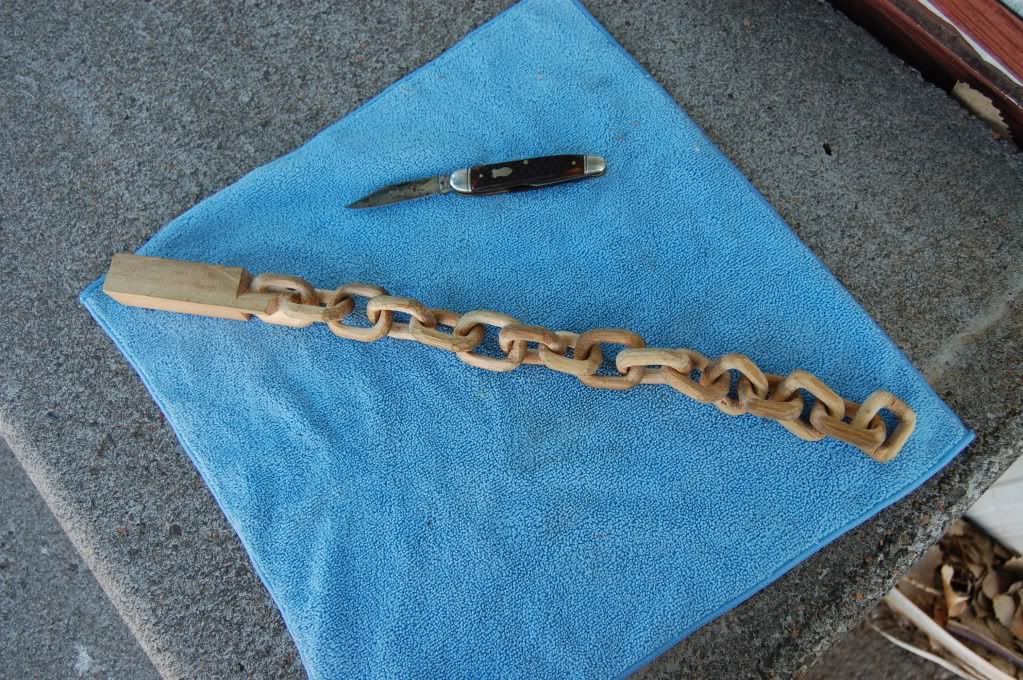
Whittling?


Campbellclanman
Platinum Member
- Joined
- Mar 10, 2007
- Messages
- 15,870
Wow...there are a few hours in that work!!!
Fantastic Jack!!
Fantastic Jack!!

yablanowitz
Platinum Member
- Joined
- Apr 14, 2006
- Messages
- 10,038
The ball in cage pieces are. The chain is a random wood scrap that was reasonably soft. I have no clue what kind of wood it is, but it didn't smell like cedar or pine.

- Joined
- Aug 19, 2007
- Messages
- 39,174
The ball in cage pieces are. The chain is a random wood scrap that was reasonably soft. I have no clue what kind of wood it is, but it didn't smell like cedar or pine.
Do you naturally have a lot of patience or does the whittling help you develop some?
I always look at your pics of things you've whittled and want to try my hand at it but I have no patience and soon give up.
Any advice?
yablanowitz
Platinum Member
- Joined
- Apr 14, 2006
- Messages
- 10,038
I've always been pretty patient, which helps a lot. Mostly it gives me a way to shut out the world and focus my attention. It isn't rocket science, and what I do doesn't require any artistic ability (I've always been more draftsman than artist). If I can do it, anyone can. Just keep your knife sharp and work slowly. I realize that in this age of instant gratification it seems amazing, but tiny steps add up. I think it's good training for life.
- Joined
- Aug 19, 2007
- Messages
- 39,174
I've always been pretty patient, which helps a lot. Mostly it gives me a way to shut out the world and focus my attention. It isn't rocket science, and what I do doesn't require any artistic ability (I've always been more draftsman than artist). If I can do it, anyone can. Just keep your knife sharp and work slowly. I realize that in this age of instant gratification it seems amazing, but tiny steps add up. I think it's good training for life.
Great advice.:thumbup:
DennisStrickland
BANNED
- Joined
- Jun 24, 2009
- Messages
- 5,040
jack your efforts in wood & your comments on life in general make a lot of sense. the mighty boulders eventally dissolve from the course of water.
dennis
dennis
- Joined
- Jul 27, 2010
- Messages
- 458
Wow those are really interesting. I might have to try something like that, if nothing else it must improve knife skills. I saw a book for sale somewhere that was a tutorial about whittling things like that. Have to watch for it.
Paul
Paul


- Joined
- Feb 3, 2001
- Messages
- 32,359
This was my first attempt and the only pic of something I whittled:

Jack, how do ya layout the chain links, I have no problem with the caged balls, I can't seem to to get the links right?
Jack, how do ya layout the chain links, I have no problem with the caged balls, I can't seem to to get the links right?
yablanowitz
Platinum Member
- Joined
- Apr 14, 2006
- Messages
- 10,038
Layout? What is this "layout" you speak of? 
If I was a better photographer you'd be able to see the links are all different lengths, with the shorter ones at the start. I didn't mark anything, I just started whittling at one end and lengthened the links until they started working the way I wanted. All trial and error.
Kube, I apologize for derailing your thread. Personally, I keep my whittlers sharpened at a very low angle. It makes them great for whittling, but leaves the edges a bit thin for general utility use.
If I was a better photographer you'd be able to see the links are all different lengths, with the shorter ones at the start. I didn't mark anything, I just started whittling at one end and lengthened the links until they started working the way I wanted. All trial and error.
Kube, I apologize for derailing your thread. Personally, I keep my whittlers sharpened at a very low angle. It makes them great for whittling, but leaves the edges a bit thin for general utility use.

beestokk
Gold Member
- Joined
- Sep 20, 2009
- Messages
- 942
in general are the blades on a whittler (or most whittlers) thinner, thicker, or the same thickness when compared to a stockman, or does it vary significantly by maker and/or model? i've been looking at the boker tree brand whittlers and stockmans as of late but am leaning toward the whittler...a large part b/c i like that the main blade is on two backsprings (from what i know) which i imagine gives it a little more support during use.
Kube, you may find the below link helpful...i had asked a similar question recently in the thread:
http://www.bladeforums.com/forums/showthread.php?t=781164
any other responses to the OP's initial question are greatly appreciated on my end as well, especially when compared to a stockman's uses/applications...thanks!
Kube, you may find the below link helpful...i had asked a similar question recently in the thread:
http://www.bladeforums.com/forums/showthread.php?t=781164
any other responses to the OP's initial question are greatly appreciated on my end as well, especially when compared to a stockman's uses/applications...thanks!
yablanowitz
Platinum Member
- Joined
- Apr 14, 2006
- Messages
- 10,038
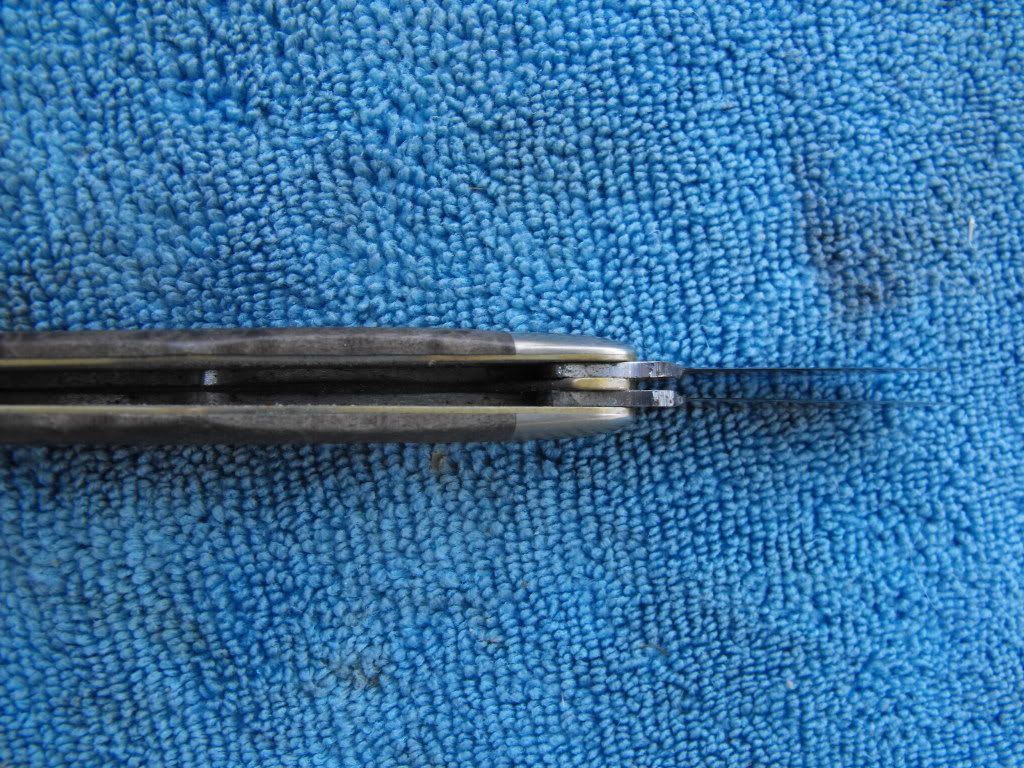
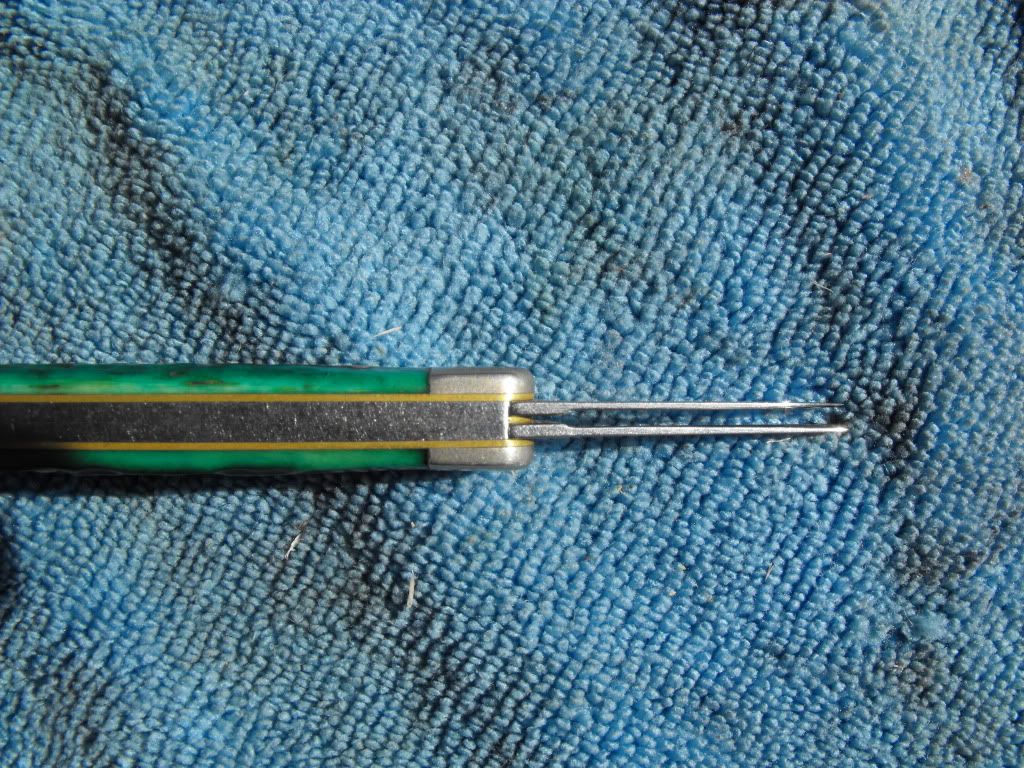
I don't have comprehensive knowledge of whittlers in general, but on all the ones I've handled, the main blades are quite sturdy but the secondary blades are quite thin, generally much thinner than the spey or sheepsfoot blades ona stockman. That's why I just use them for whittling rather than general utility.
Here's a pic of the secondary blades on my Queen Whittler.
On the Case Seahorse Whittler
The Case compared to an old Spyderco Ladybug
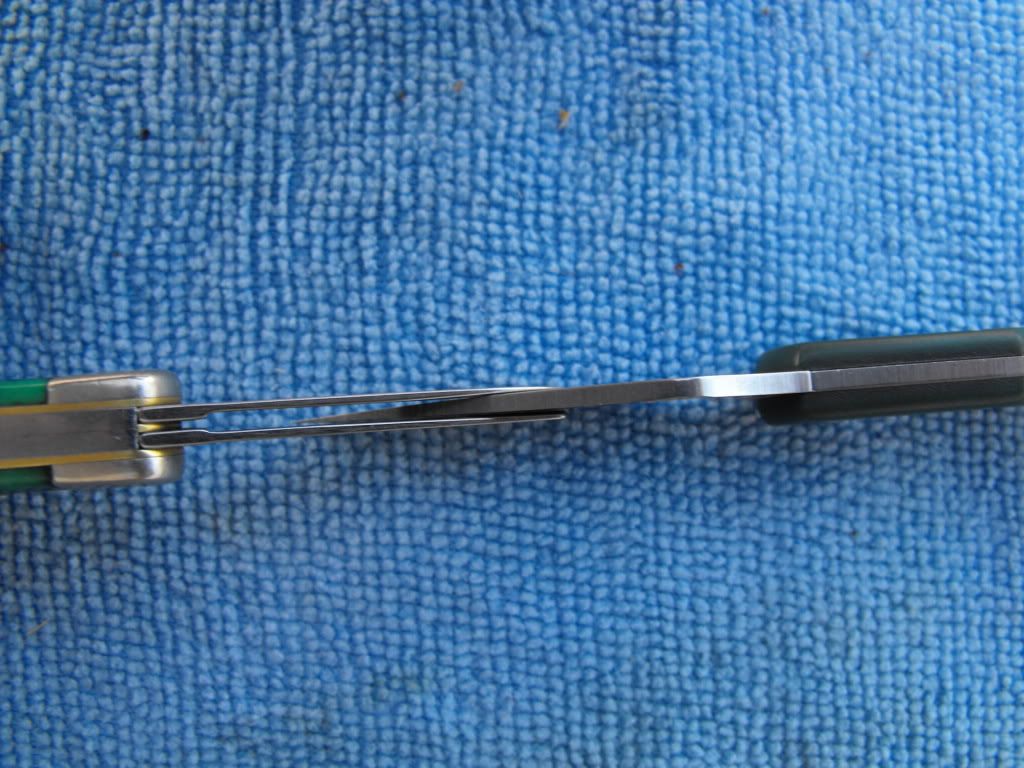
Here's a pic of the secondary blades on my Queen Whittler.
On the Case Seahorse Whittler
The Case compared to an old Spyderco Ladybug