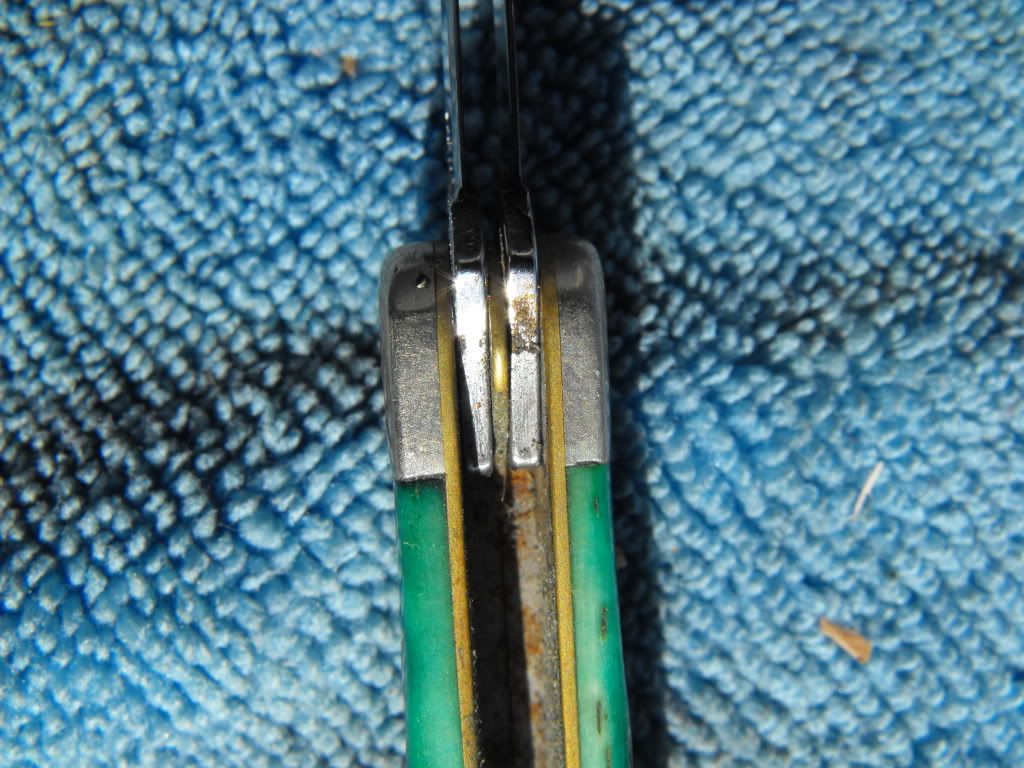
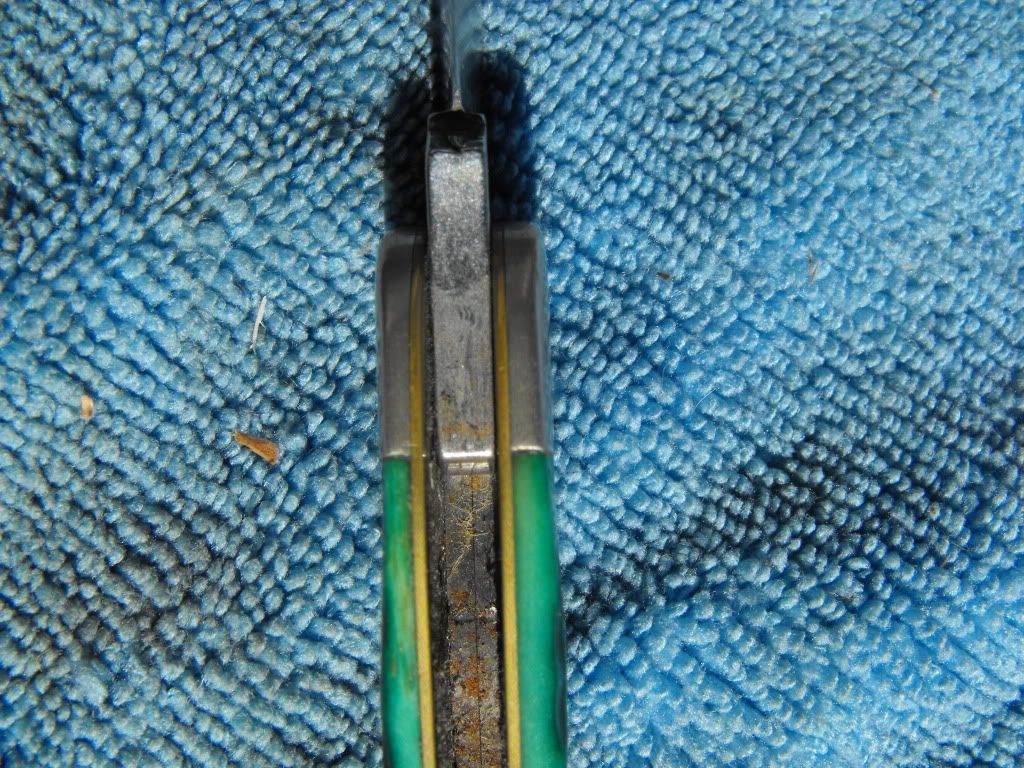
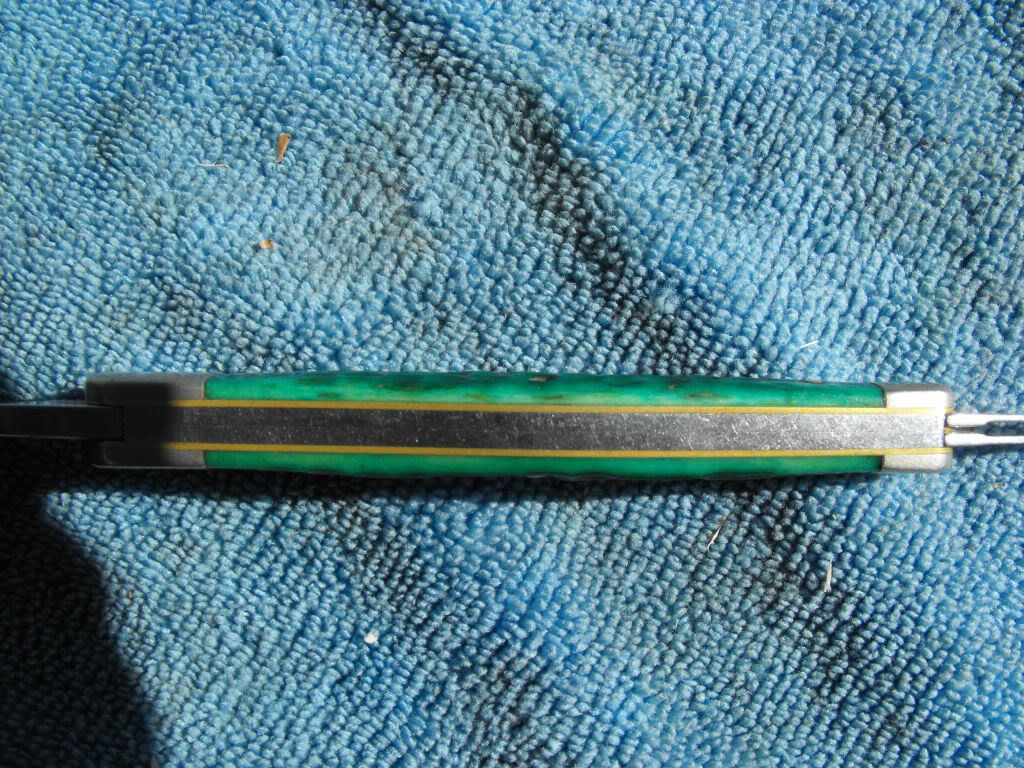
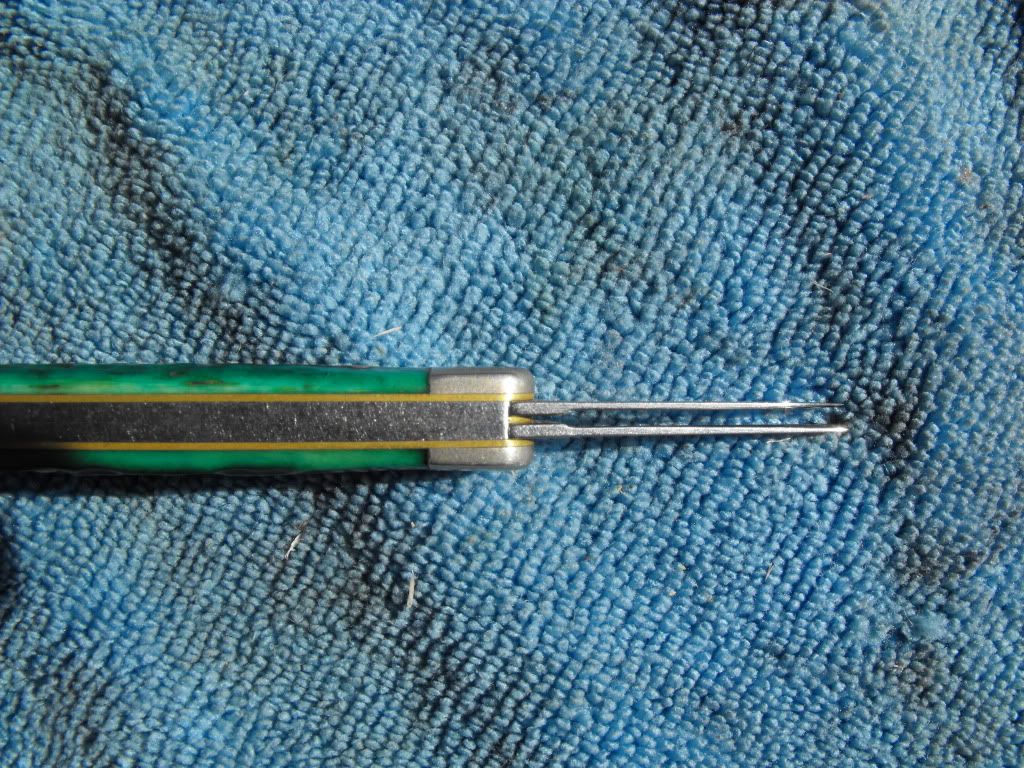
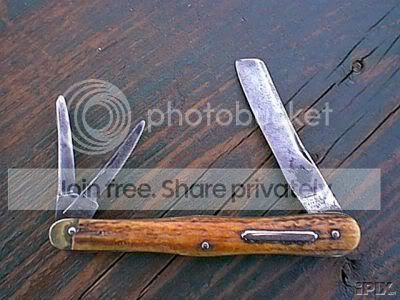
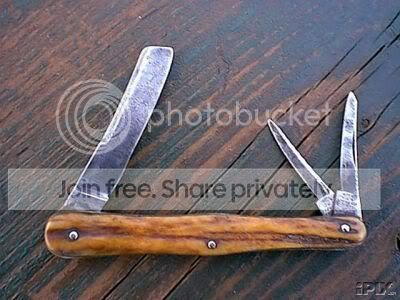
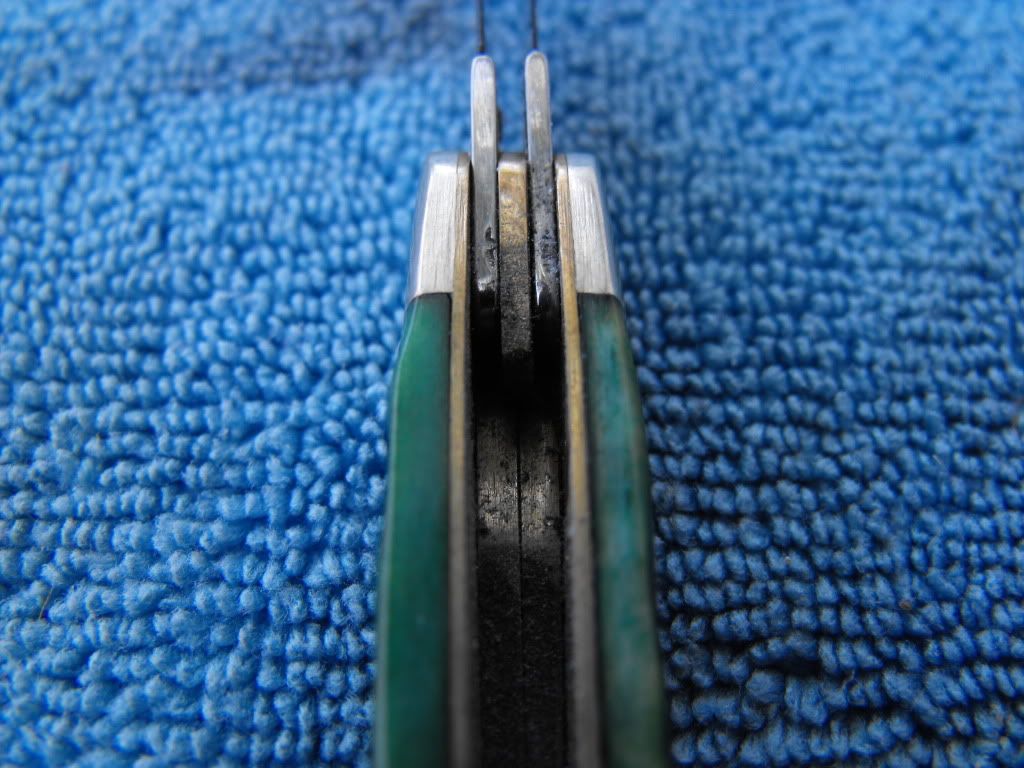
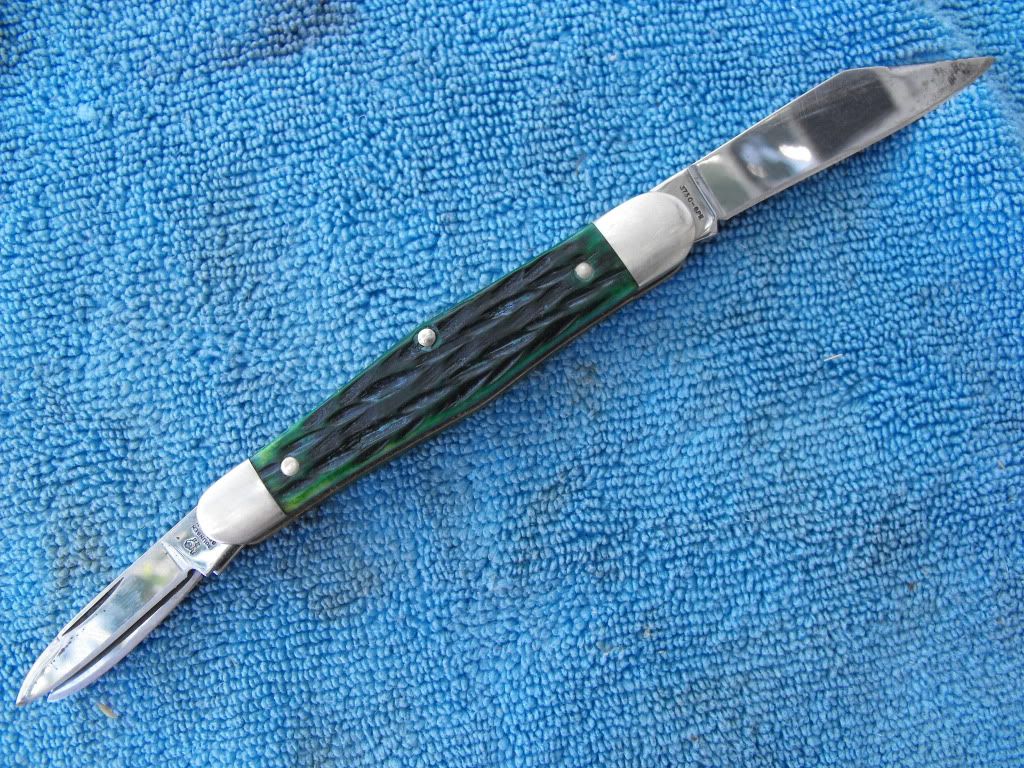
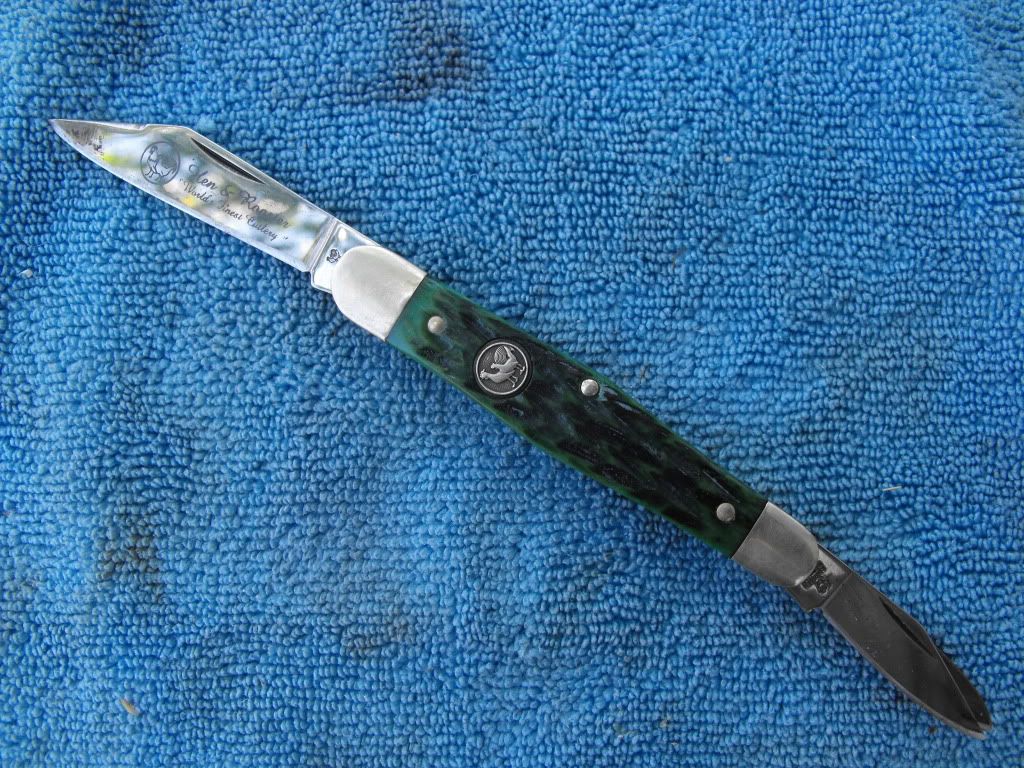
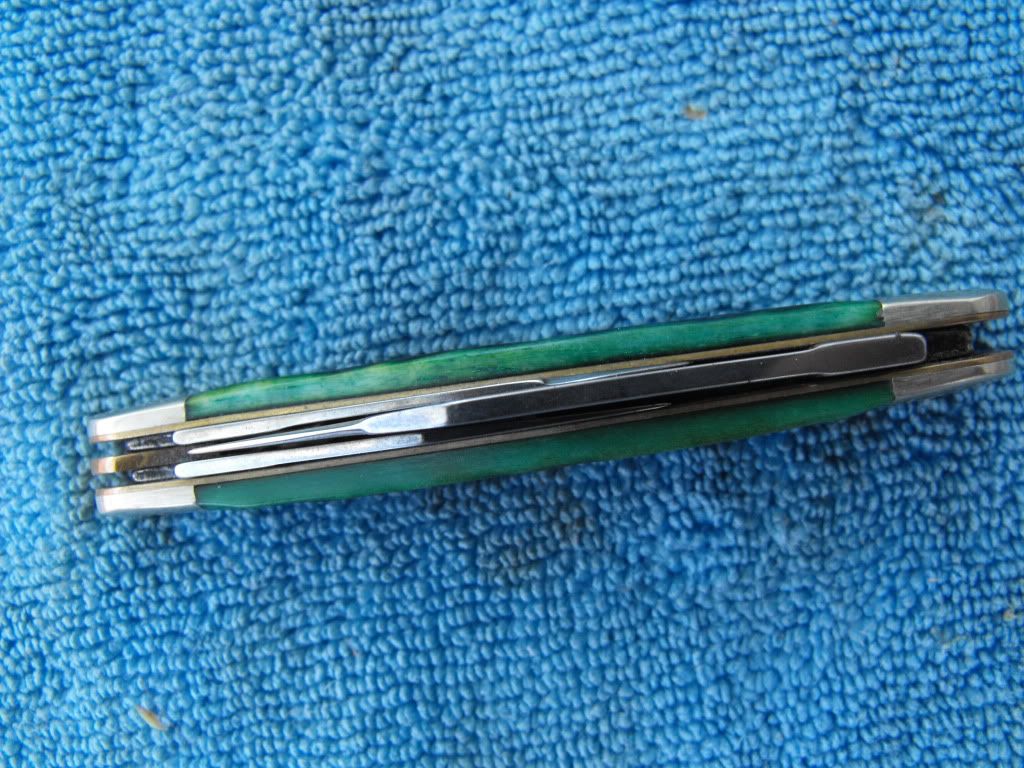
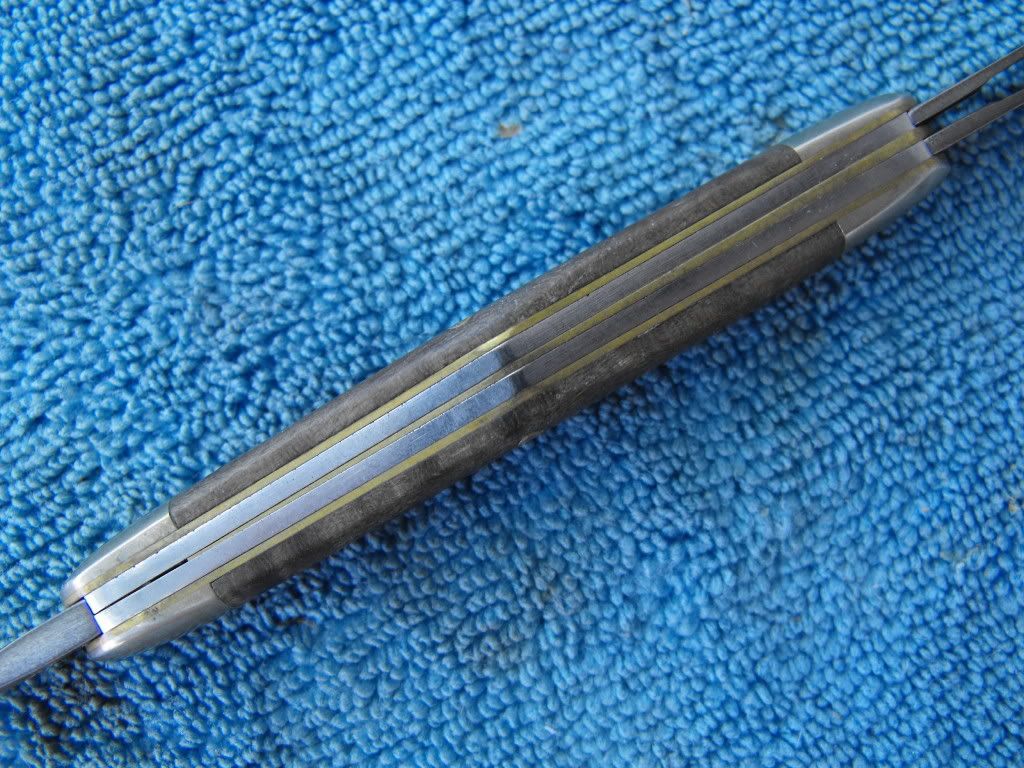
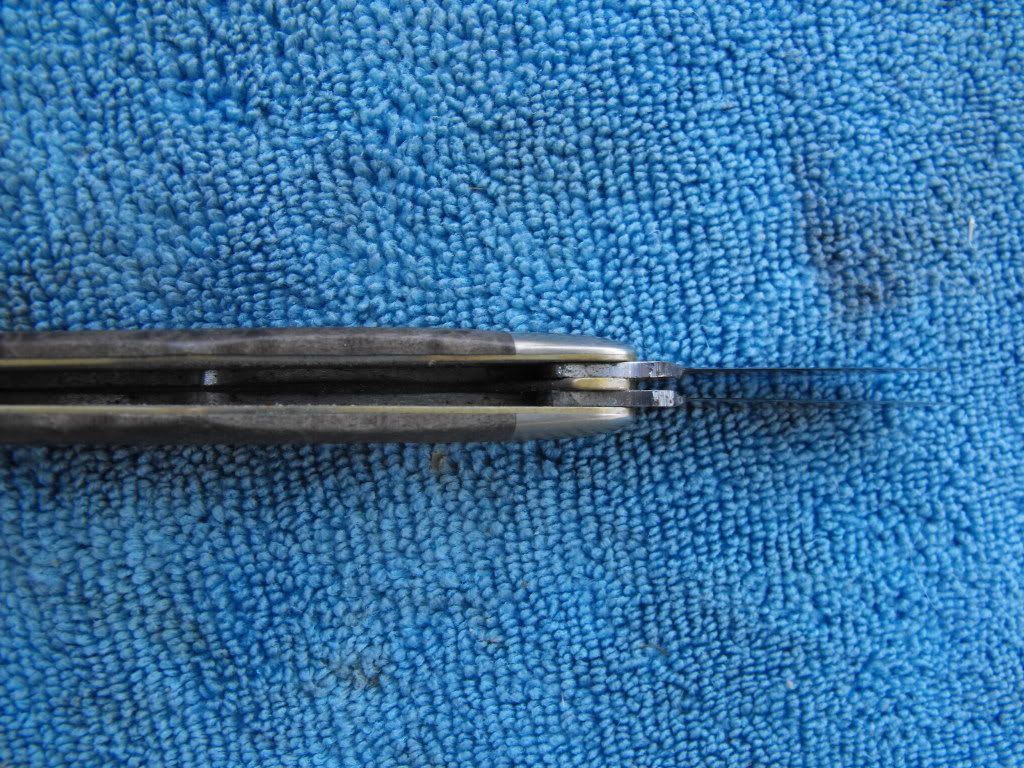
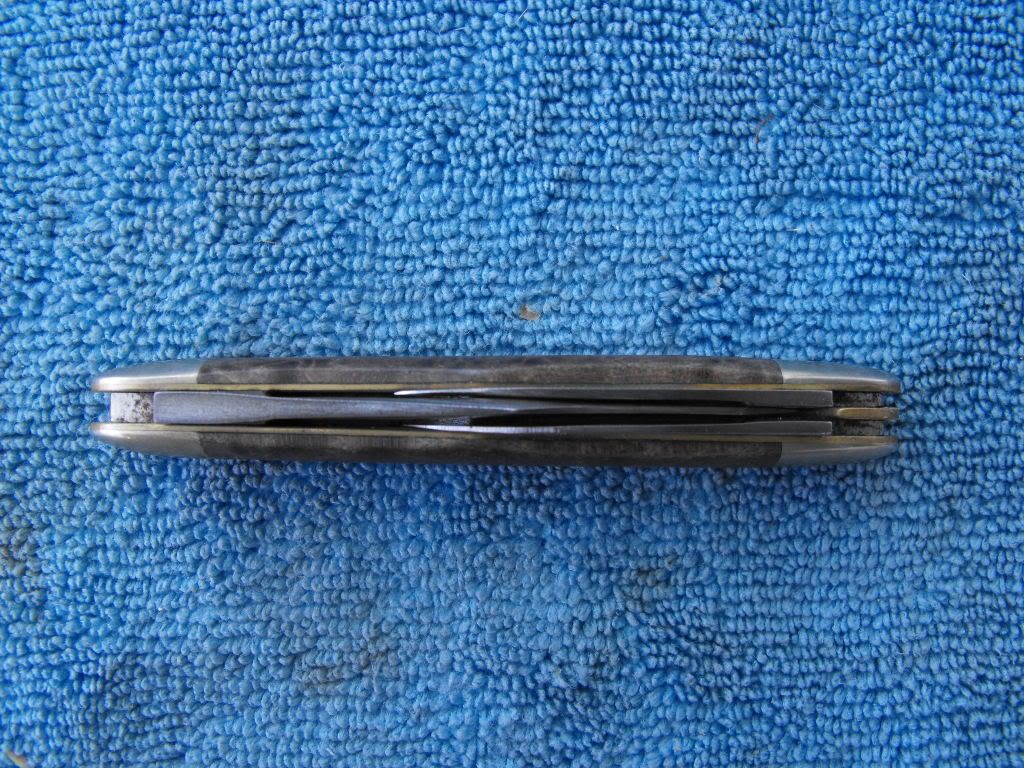
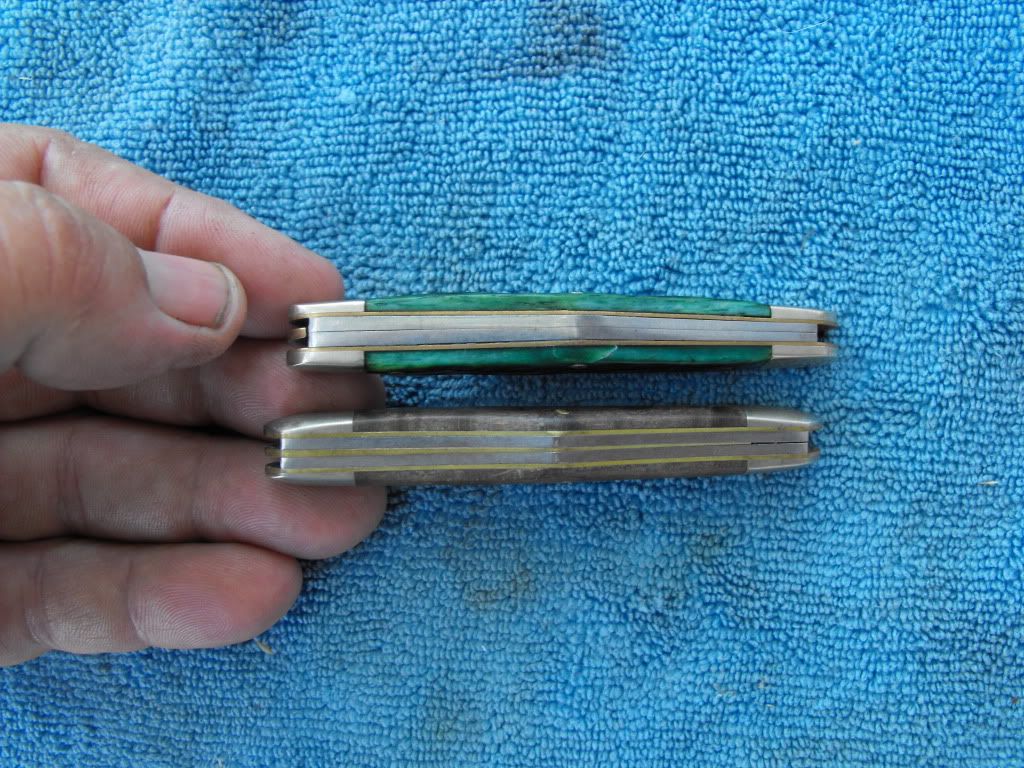
The Case Seahorse construction is the easiest (most straightforward anyway) construction possible for a true three blade whittler. Well, that's not quite true - you could omit the floating catch bit and have the small blade tangs in contact with each other. This was done on the old original true splitspring whittlers (which used a single wide spring which was split partway to form the two springs for the secondary blades) -- seemed to work out ok really. I have one and the small blades open and close quite nicely with plenty of snap (a very old Ashton Jackson wharncliffe - someday when I have a working scanner I'll put it up, sigh).
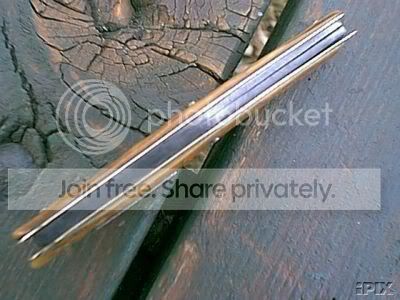
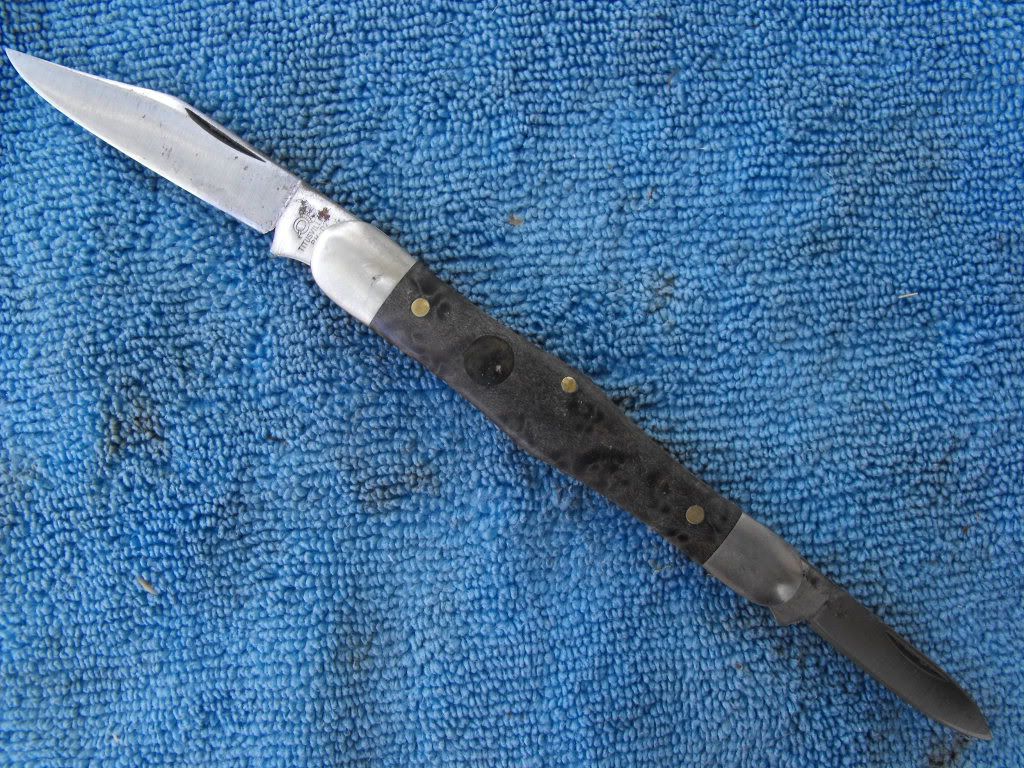
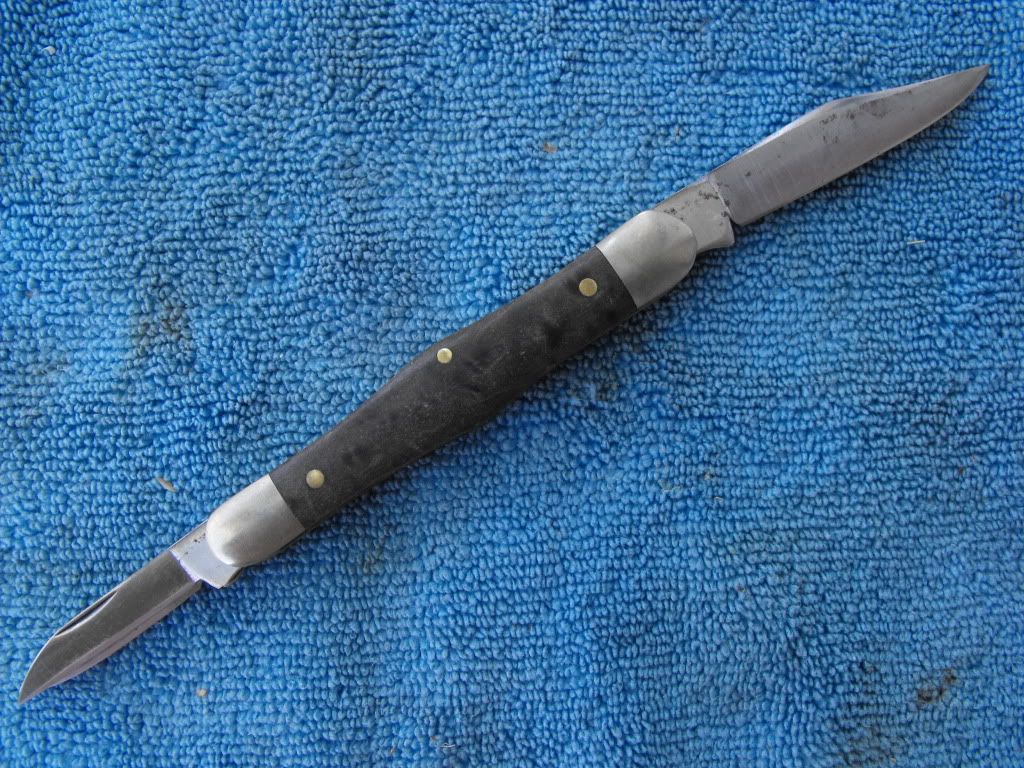
Actually Rusty, as a nearly Journeyman smith, you just might want to give one of the old true splitsprings a try, since you seem to want a challenge. Here's a WS Horvath Sheffield (I think - it was very difficult to read) whittler - neat pattern also (posted this before but it was a while back and the images are gone):
You could be the first to try this in almost 150 years (AFAIK anyway). (We need a tempting devil smilie for this.)
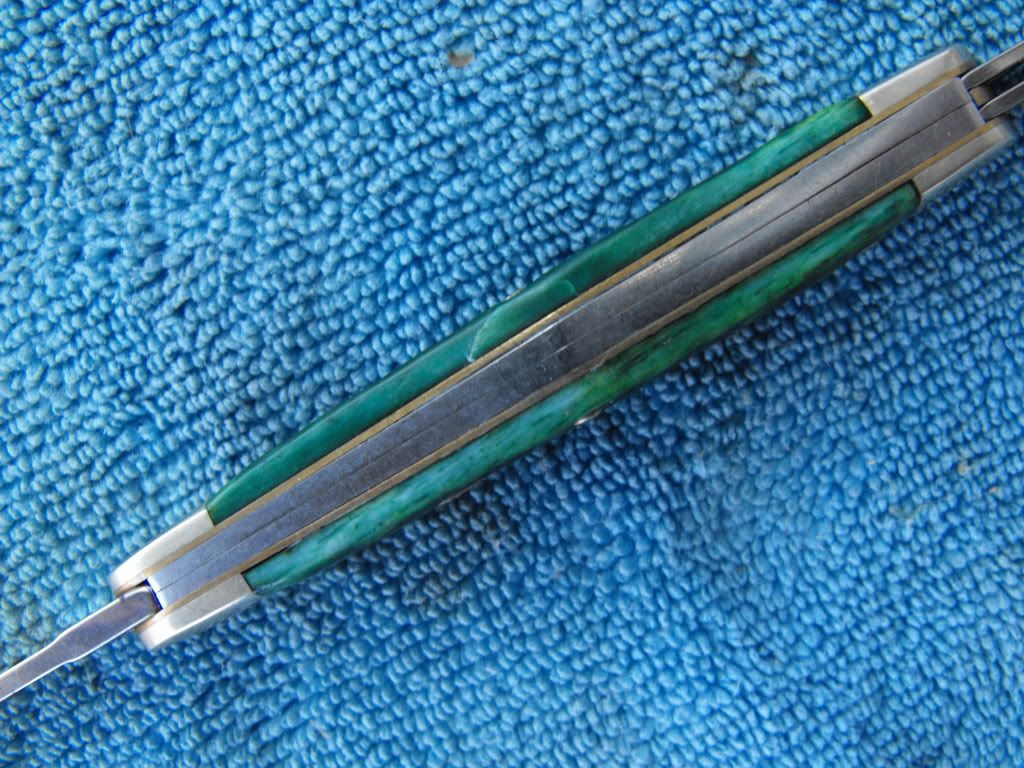
So you have several possible whittler constructions: 1) the old true splitspring - one wide untapered spring hot split into two springs at one end; 2) two straight untapered springs with a floating catch bit between the secondary blades (note: both 1&2 have similar weaknesses -- for example, you have to have a fairly short main blade relative to the frame length in both designs because there's little or no room between the secondaries); 3) same as 2, but with both springs tapered on the outside to leave them thicker on the secondary blade end - giving much more latitude to secondary blade thickness - and allowing the floating catch bit to also be thicker (which now needs to be a bit wedge shaped), which then allows the primary blade to be longer since there's more space between the secondary blades - but now you get into the more complex full tapered whittler construction; and 4) is what most call a "splitspring" whittler today - springs are not tapered, but the divider between the secondary blades is a tapered, wedge shaped center divider/liner that goes between the springs (rather than sitting on top of them like 2&3 above) and is anchored in place by both the secondary blades' pivot pin and the center pin -- while most modern "splitspring" whittlers don't taper the springs at all (meeting only at a point at the very end of the springs under the main blade tang), many older ones would fit the inside of the springs together once past the end of the center wedge divider.
Ken Erickson gives a very nice tutorial/WIP of building a Case 6380 pattern whittler here:
http://www.bladeforums.com/forums/showthread.php?t=637990
Sorry, sometimes when I get going, I just *keep* going.
-- Dwight