who's really done it?

My wake up call.

Smoking, drinking and hunting in my 20's in Canada. I got separated from my hunting party. I was going to track a deer and "followed" tracks until dusk. It started raining sleet, November-ish and night time. My Oh Shit factor kicked it. I knew a little about survival at that time.

I cut some branches with my CS SRK and made a shelter, found some corrogated metal to add to the shelter. I carried about 5 of those awful old style power bars and ate 2 or 3 right away. The winds kicked up so when I fired my shotgun a few times it was not heard. After bouts of crying and jumping around to keep warm. The winds and rain slowed down and I fired a shot and then my buddies fired a shot and I knew I was safe.

I ran through the woods at break neck speed I heard animals moving but I could care less. I would have eaten the nose off a grizzly at that point.

My friends were about to give up on me. I was out there for about 4-5 hours. It seemed like a week. That experience shaped me in many ways. When I got back I quit drinking and smoking and haven't since. I was soon to order a Busse. When you are in an emergency at night you don't have time to look around for batons. You need a tool that will do it NOW! Though now I realize a good saw would have worked. I also would not panic as fast.
 
There were ten of us that were all wet and very cold. Not only were we trying to warm up but we wanted our clothes to get dried out also. It had to be big to accomplish all that. The wind was the bigger problem, that will bring on hypothermia when wearing wet clothes in minutes.
 
I've never been very far from "civilization" except when backpacking. I carry a knife, matches, lighter, compass, and whistle on me. The rest is in my pack. Never lost the pack, so I can't tell stories of survival on minimal gear. I do sincerely try to have that be the situation.

Never lost -- if temporarily confused on a couple of occasions. But I love maps and study routes repeatedly and well in advance. As a result, I hardly ever use a compass, navigating primarily by terrain. (I know there are places that doesn't work. Never been there.)

I know myself to be risk averse. I have never backpacked solo. Not colorful, I know.

I have used "survival" gear from my car at a couple of accidents (and learned that it's hard to get blood out of a wool blanket). Nothing beyond compression and covering up victims to try and help with shock until the pros arrive.

I have used a hand gun to discourage unwanted attention on two occasions. No one got hurt, but I had a better time than the other guys.
 
closest I ever came was using my firesteel because my lighter died on a backpacking trip.
 
I don't really have a PSK but when I go backpacking I cook on fires a lot, eat wild plants some, use most of my outdoor stuff.
 
Never really been in to deep over my head, but back in my teens, me a a few buddies were hiking in fairly cold weather, when they both took a fall into a REALLY cold creek. At the time I was carrying a hollow handle "survival" knife with gear in the handle. (Hey it was the mid 80's, Rambo fever was epidemic! :D )

Using matches from the handle, I got a nice fire going and thawed them out PDQ.
 
All of the gear in the world does not compensate for knowledge. A small amount of gear and lots of knowledge and some imagination will get you farther than the opposite.

Tried that once, had all the gear and no clue how to use it. Lesson learned; know how to use what you have.
 
i often use my gear and psk when in the wilderniss

but to say that i have actually used it in a real survival situation, probably not

well maybe, that one time when at night i went mad on absinthe and lost all my gear AND BOOTS(!!)
xcept my knife, cell, ipod, camera, compas and map
so in the morning, there i was, on my socks with a hangover, in the middle of nowhere at least a day or half a day away from the city and every tree looked alike

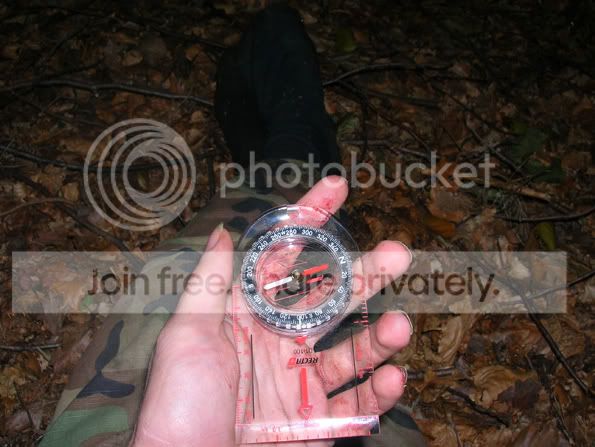
i used the compass and map to go into the opposite direction of where i had to go to and by miracle i found my camouflaged shelter and stuff back again

DSCN1925.jpg
 
I've been in quite a few situations over the years where a basic kit made a difference to myself or to others. This is bound to be true of anyone who spends much time "outing", away from the comforts and securities of civilization. I've also practiced and learned skills that allow me to compensate for the loss of kit. And I've made do in those real situations as well.

It is a fact that most people spend more time dreaming of "adventuring in the wilds" than actually doing so. There is a great temptation to throw money at the aquisition of... kit, than to take the time to acquire skills, believing that an excess of one will compensate for the lack of the other.

Learning skills takes time, patience and attention. Acquiring... kit... only takes money. And buying bits and pieces for a kit is fun, like assembling a puzzle. Add this, take this away. Somewhere, somehow... there is a "magic formula", a "perfection of proportions" of ... kit... that will promise survival in whatever situation you can imagine finding yourself in.

I admit that knife knuts are sometimes prime examples of this. Strapping on thirty pounds of... kit... does not seem like much to a young athletic type. And it may not be for a day's jaunt in the park. They've spent a lot of hard earned cash building their kit and trying it out is a great... make that the only way... to see what works and what doesn't.

I swim and dive for a living while repairing swimming pools. I can tell you what thirty pounds of weight does in the water. Or twentyfive. Or twenty. I've also performed more than my share of swift water rescues and know how added weight aggravates a water survival situation exponentially.

Learn to carry less, and depend on the kit even less. You can't make up for the lack of skill and knowledge with... kit.

Codger
 
Sorry, I cannot give you a story involving a PSK or knife. I was alone in the mountains of BC for 5 days with just a sleeping bag, tarp, matches, and water... However I was close enough to civilization that I could have walked out at any time as long as I was uninjured (2 miles or so to a hwy, and others knew where I was), so it is not a true survival situation in that I was only challenging myself. The fear of being unable to get help was not present. It still was a little scary at night by myself, and I was hungry!

I would say that an experience like that one is good as far as psychological prep is concerned. I now know that I can exist and maintain my life with minimal supplies and be alone in the woods without panicking. I think preparing psychologically is the most important part of preparedness.
 
yeah at that time, when lost in the middle of nowhere on my socks

my mind worked in a very efficient way, completely different to the "lets try this new toy from my kit" mindstate

there is a HUGE difference to actual survival, where u count up the few things u have and their possibilities that will help you get back to civilisation then when just hiking in the wild enjoying yourself.

in a real survival situation, u have just one thing on your mind; how to get back home as fast as possible and in one piece.
 
True, but I think in a heavy rain one can be forgiven for building such a fire.:D

Don't get me wrong. This same friend usually said it while building a bonfire that could be seen for miles. :) (We were only teenagers. And wood was never a concern where we were.)
 
A compass is a really handy thing IMO. Probably the one thing I have improved the most on is my orienteering. Traditionally I have relied on my wife who has a really good sense of direction. However being conscious of where I am going, the terrain and using maps and a compass I have even caught a few turns my wife missed in the last few years.

That would not be a survival situation but maybe a situation that avoided a survival situation:D

Also another thing that kind of avoids a survival situation is to be able to cover enough ground that you don't get stranded somewhere on the trail where you can't camp or there's no water.
 
I've always been a student of history. I found many years ago that some of the greatest wisdom of the ages was stated by, or memorably restated by great men in times of chaos and change.

Stonewall Jackson, at the beginning of the valley campaign during the War Of Northern Aggression (Civil War) in the spring of 1862, made this statement, "the road to glory can not be followed with much baggage."

What he meant was that in order to be the Army they needed to be, they were going to have to be able to move from one point to the next in the scheme of the battles that they were facing.

Stonewall Jackson was considered one of the greatest generals of that war because he was able to move his Army from one battle field to the next confusing the enemy into thinking that there were two Armies led by Stonewall Jackson not one. Therefore, speed was of the essence. His generalship in this area has been studied in West Point even to this day.

What did he mean? He meant if we are going to have the glory of victories we are not going to be able to carry a lot of extras that will weigh us down (and slow us down) from getting from Point A to Point B. "We're going to have to travel light" he is saying to his troops.

It is said that the line of march of green troops was easily followed by the trail of discarded items they had left home with. I've seen this up close and personal with armies, and with civilians who hit the AP trails as well.

But again, I will sympathize with the love of, if not need for toys. Baggage. Just don't let it weigh you down.

Even if you have a top of the line GPS and a sack of batteries, learning to use a basic compass and map is essential IMHO. After all these years I believe I could still call in HE and Willy Pete close enough to singe my eyebrows (this was done with maps and compass). I can also travel with dead reckoning using the sun, stars, knowledge of the terrain and the "compass in my head" and get along quite nicely, thank you. While a bit of it is inborn, most is acquired skill and knowledge. Even a cave man could do it.

Codger
 
I once used zip ties from my BOB to repair a busted fuel line on an outboard motor. It was late september and I was bombing down a cold remote lake in Northern Ontario checking bear baits. All of a sudden the motor dies and I coast to a stop. Turned out vibration had cracked and separated the fuel line from the filter cup and I was dead in the water. I was miles from anywhere habitable and not expected back for hours. Luckily 3 zip ties and my Ritter Grip were all I needed. Not a life or death situation, but I'm glad I had my bag with me. My fellow guides were always poking good natured fun at "Mr. Boyscout" and his funny drybag. When I got back they started calling me McGuyver :D
 
I just got back from a hike today and never saw so many people that were completely un-prepared in all aspects. We were in one of the most remote areas of the national park with a not so good weather forecast looming. Shorts, tank tops, no pack, one small bottle of water in thier hands. I think these people exist just keep search and rescue teams and the news media busy.

It is nothing more then pure dumb luck that more people don't die in that park. We experienced a 34 deg temperature fluctuation throughout the day as the altitude changed and the clouds slammmed into us on the ridges. I was changing clothes more often then a runway model during a fashion show.
 
I find that I use the basics quite often to keep situations from becoming too bad. I have used plastig bags as ponchos, and ponchos as short term shelters, started warming fires on winter hikes, etc etc. none of tem were life threatening.

I agree that skills are the most important thing in wilderness and that traveling light has advantages. but there are some supplies I have so often found useful I just wont travel without them.

Knife
Multi tool
Fire starter
Tinder
Plastic trash bag
chord or string
Flashlight
Bandana
First aid Kit
 
I just got back from a hike today and never saw so many people that were completely un-prepared in all aspects.

Yeah, I agree. I do day hikes at a park nearby, but it has 30 miles of trails. I see all sorts of people miles from the trail head wearing flip flops, tanks tops, no water and no hats, etc. Yes, the majority always come out OK, but I think of how easy things can change one minute from the next.
 
My backpacking companion came down (or nearly) with hypothermia, on an exposed hillside in the middle of nowhere (as much as one can be on the Pennine Way). The weather was really foul: driving, horizontal rain; bitterly cold; just downright grim.

We weren't really well equipped, hence his lack of protection from the weather.

When I realised he had a problem, he had turned blue, was slurring his words and said he couldn't feel his arms (cheap ex-army bergen cut the blood off from his shoulders!)

Anyway, a few minutes later he was lying in a lean-to made from my survival bag, hastily errected on the downwind side of an old drystone wall. I got a brew on, with hot chocolate sachets from my 'emergency' kit, and gradually he warmed up while I got the tent up.

I think it was only a matter of minutes before he would have got in a really serious state, so the emergency kit in my sack's side pocket did the trick. Getting out the 'proper' camping kit took too long.


On another occasion, in Scotland, I used the metal saw on my SAK to cut an old roll of barbed fence wire that a young deer had got itself badly caught up in.

Personally, I have never been in a true survival situation, only ones that I more-or-less deliberately put myself in. So I don't think they count.
 
Back
Top