

- Joined
- Jan 6, 2005
- Messages
- 9,680
It's been a while since I posted any wip's. There is not much to this one. The idea popped into my head yesterday (inspired by Scott Roush) and grabbed the camera before heading out to the shop. I only had the presence of mind to snap a few pics(one, very much out of focus) but you get the idea.
I started with a piece of 1084FG, 1/4" x 1/2" x 3"...
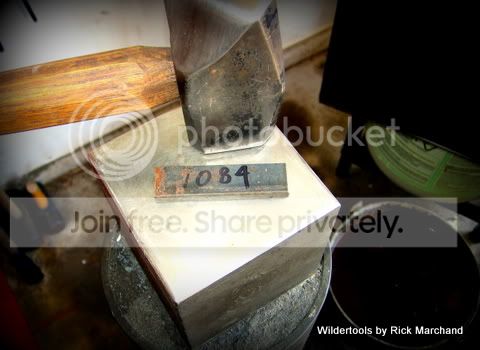
Add heat and hammer blows...
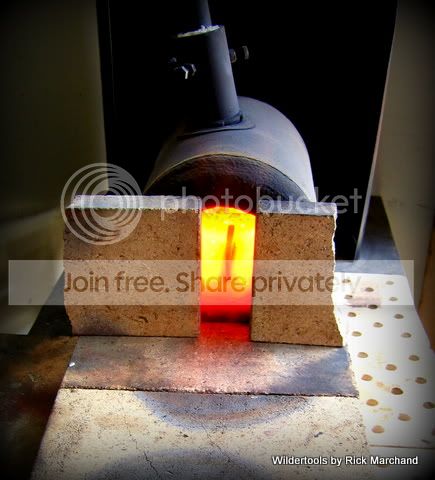
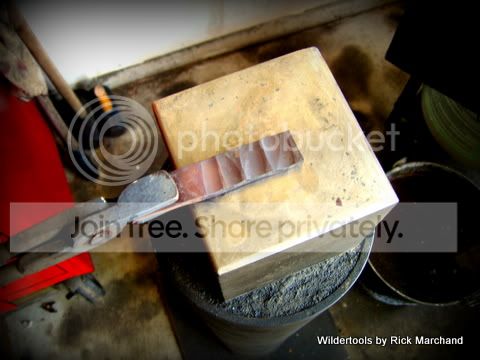
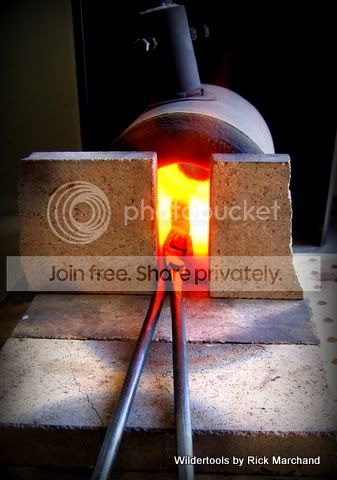
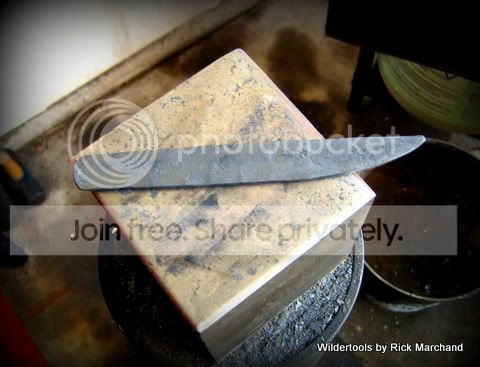
After a little more refining to thin the bevels...
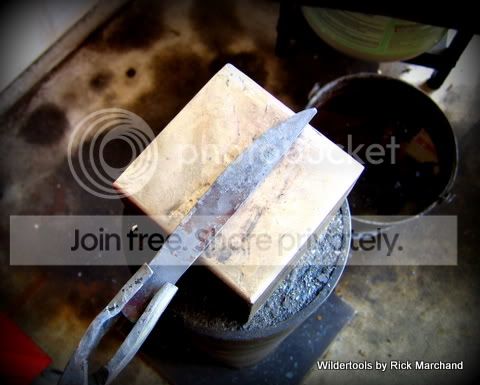
I chewed off a couple pieces of copper..
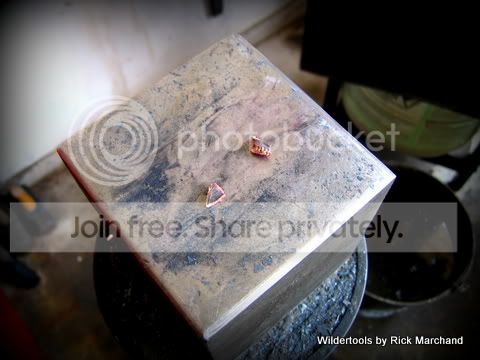
and placed them on the the blade (sorry for the pic... it makes my eyes itch)...
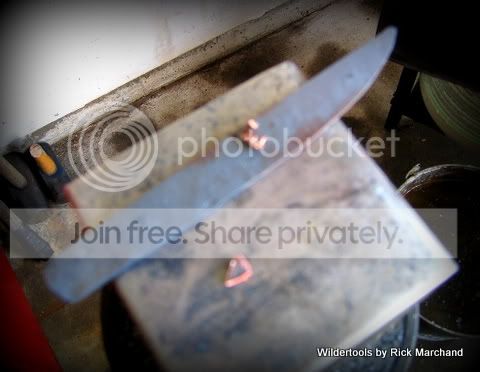
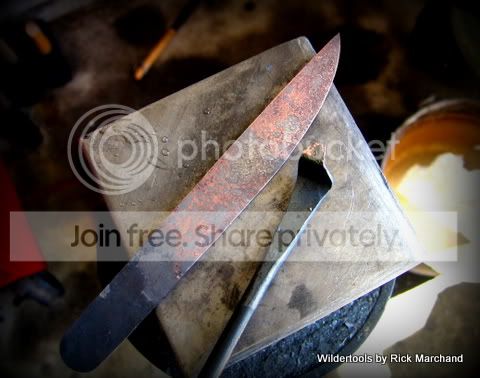
I apologize for not getting shots of the next step but I needed two hands and it happens quick. Without a photographer, I was SOL... so let me break it down for you. I heated the whole blade to the melting point of copper(just past 1900F). Once it started dancing around, I used a poker to spread it like butter on a pancake. I repeated this for the other side. This was the result...
After that kind of heat, a few normalization are in order to right the wrongs and refine the grain.
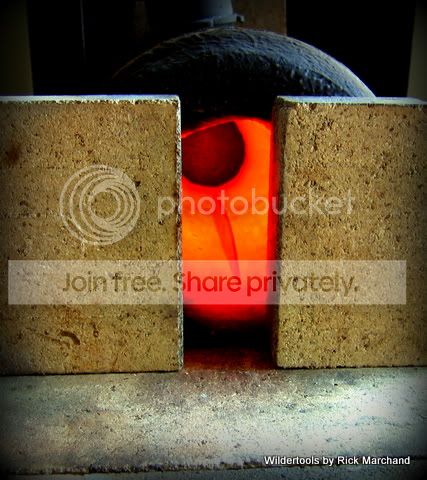
I am kicking myself for not capturing the heat treat. After normalizing, I drilled the tang hole and stamped my name/logo. Then I clay coated the spine, leaving about 3/8" of the edge exposed. I then ran it through the forge and oil quenched. My reasoning for the clay was to reduce the chance of blowing the copper off during the quench. My previous experiments showed that it could happen if over heated. I got lucky!! Here is the heat treated blade.
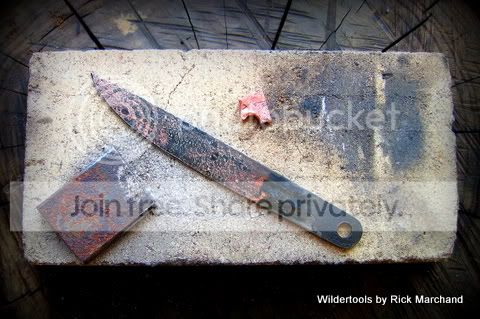
Yes, my name is crooked... look away, if you must...
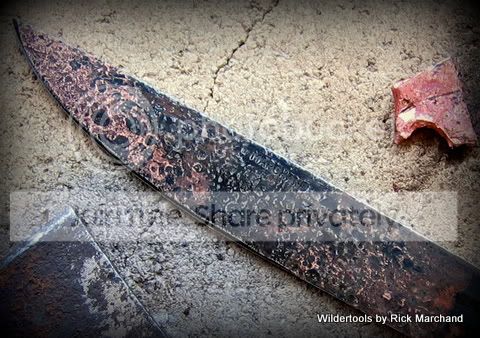
The next installment will be sanding in the edge and making the handle.
Thanks
Rick
I started with a piece of 1084FG, 1/4" x 1/2" x 3"...
Add heat and hammer blows...
After a little more refining to thin the bevels...
I chewed off a couple pieces of copper..
and placed them on the the blade (sorry for the pic... it makes my eyes itch)...
I apologize for not getting shots of the next step but I needed two hands and it happens quick. Without a photographer, I was SOL... so let me break it down for you. I heated the whole blade to the melting point of copper(just past 1900F). Once it started dancing around, I used a poker to spread it like butter on a pancake. I repeated this for the other side. This was the result...
After that kind of heat, a few normalization are in order to right the wrongs and refine the grain.
I am kicking myself for not capturing the heat treat. After normalizing, I drilled the tang hole and stamped my name/logo. Then I clay coated the spine, leaving about 3/8" of the edge exposed. I then ran it through the forge and oil quenched. My reasoning for the clay was to reduce the chance of blowing the copper off during the quench. My previous experiments showed that it could happen if over heated. I got lucky!! Here is the heat treated blade.
Yes, my name is crooked... look away, if you must...
The next installment will be sanding in the edge and making the handle.
Thanks
Rick
Last edited:


