WIP - my very FIRST knife project - handle restore - feedback welcome

myright

Gold Member
Joined
Jan 31, 2008
Messages
5,164
Alright fellas - it started here:

http://www.bladeforums.com/forums/showthread.php?t=648947

My dad gave me all the old knives from my grandfather's butcher shop and the handles are pretty well used. Some of them are beyond repair since there are large gaps between the wood and the tang. I'm going to eventually try a rehandle, but one step at a time.

Below are some pictures of a boning knife that I chose to start working on. I started with this one because it had the worst blade so I wouldn't be too upset if it didn't come out right.

The handle on these knives are covered in some kind of oil or wax so sanding this knife is proving to be very difficult. I'm starting with 220 grit paper by hand and am burning through paper left and right since the waxy stuff on the handle is really clogging up the handle.

I sat on my deck with a cigar, a beer, and a bunch of sand paper.

The before pics are while the sun was still up so I got decent pics but the after pics are in the house and I'm a terrible photographer.

I'm really looking for some good feedback here and tips.

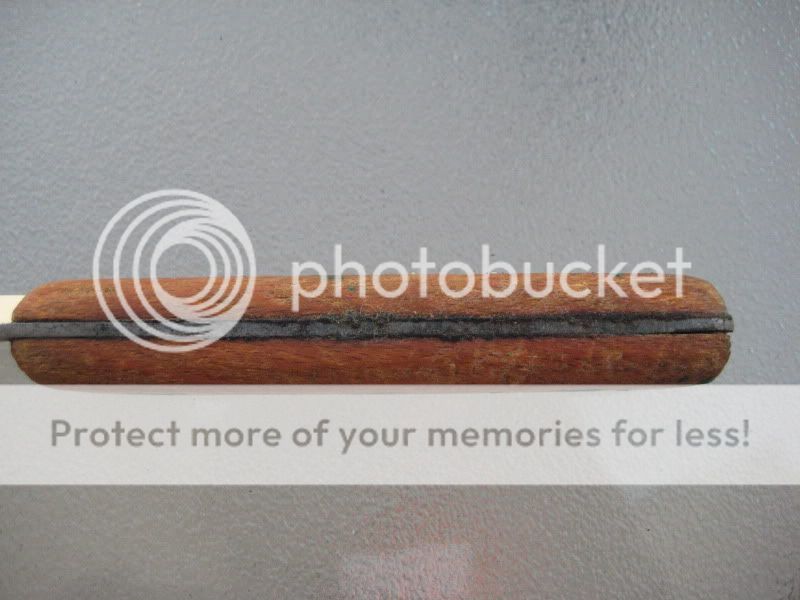
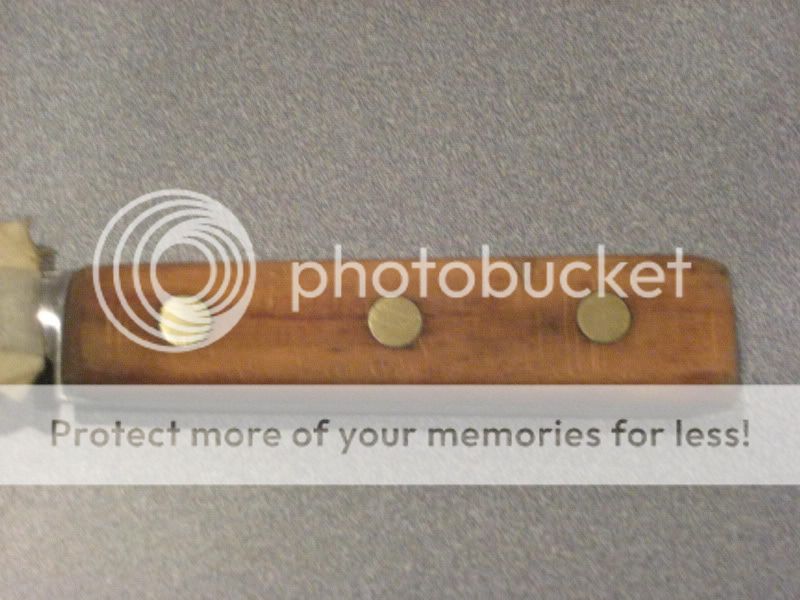
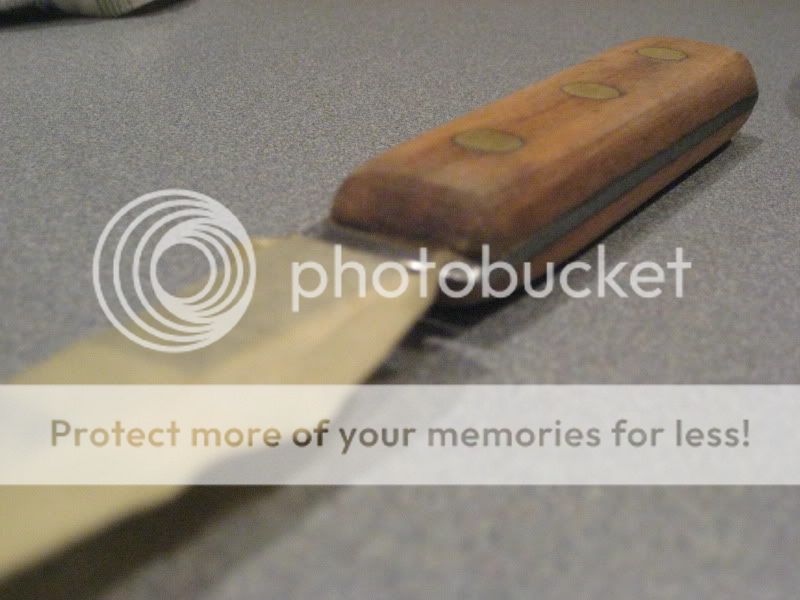
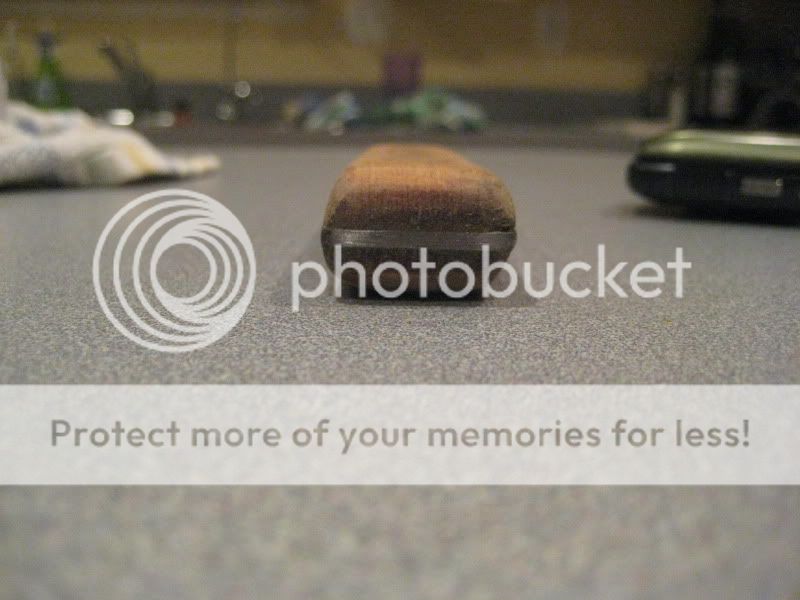
Here are some pics before (blade covered to protect my digits :thumbup: )

032-3.jpg


033-3.jpg


There is green stuff everywhere which I'm guessing is the green felt from the roll they've been stored in
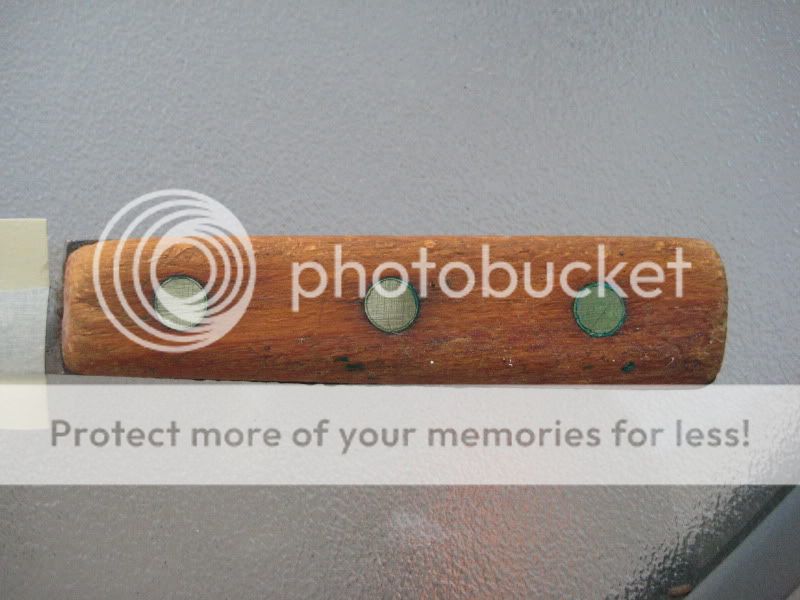

034-3.jpg


035-2.jpg
 
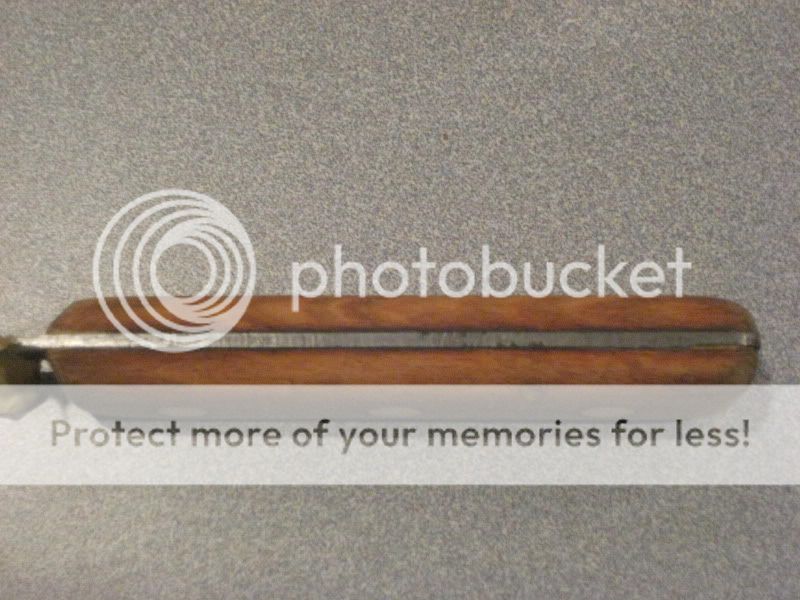
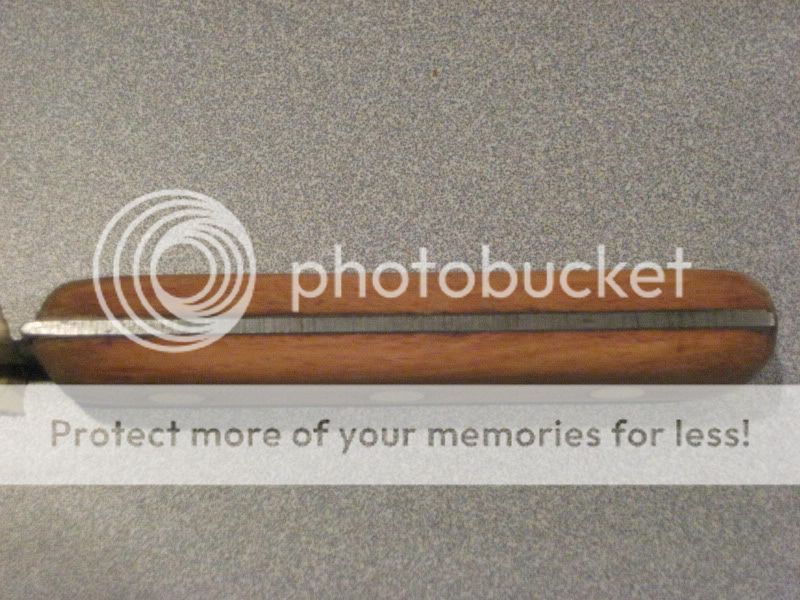
Here are the after pics - Well.. .sorta after since I'm not really done here.

The pins cleaned up well as expected

036-2.jpg


The tang cleaned up fairly well as well
037-4.jpg


038-4.jpg


039-3.jpg


The really hard part is trying to get both ends of the handle. I know some may say there is too much of a gap between the wood and the knife but this is a trial knife

040-6.jpg


Again - this is pretty difficult for me to sand the ends.

041-6.jpg


Feedback is welcome.

The of the tang is square and the handle is not so it protrudes just a bit.
 
Hey man! It's great work to reconstitute an antique knife and bring it back to usefulness.

To speed up your work, I would suggest the following. Get a bench vise and mount it so you can position the knife handle in various angles, easily accessible.

You can pick up belts for belt sanders from Home Depot or other places similar. These belts come in various widths, lengths, and grits.

Tear the belt so you have a strip rather than a loop, hold the strip by each end, and start sanding the handle like you were shining it like a shoe.

You can start with fairly rough grit, then slowly move to finer and finer to work the scratches out of the handle. Be careful of removing too much wood making the slabs too thin.

Once you've sanded the handle to the way you like it, I suggest you seal them with superglue, which will fill the gaps between the handle and the tang. It will also water proof the handle.

You can sand the handle down smooth and polish it with 0000 steel wool.

About the ends; you can work them with those soft spongy sanding blocks, also from Home Depot or similar, they come in many different grits as well.

Andy
 
Hey man! It's great work to reconstitute an antique knife and bring it back to usefulness.

To speed up your work, I would suggest the following. Get a bench vise and mount it so you can position the knife handle in various angles, easily accessible.

You can pick up belts for belt sanders from Home Depot or other places similar. These belts come in various widths, lengths, and grits.

Tear the belt so you have a strip rather than a loop, hold the strip by each end, and start sanding the handle like you were shining it like a shoe.

You can start with fairly rough grit, then slowly move to finer and finer to work the scratches out of the handle. Be careful of removing too much wood making the slabs too thin.

Once you've sanded the handle to the way you like it, I suggest you seal them with superglue, which will fill the gaps between the handle and the tang. It will also water proof the handle.

You can sand the handle down smooth and polish it with 0000 steel wool.

About the ends; you can work them with those soft spongy sanding blocks, also from Home Depot or similar, they come in many different grits as well.

Andy

Hey Andy - thanks for your input - very good ideas there.

I've got a belt sander and also have some belts for it. I never once thought of using it for this. I'll sacrifice one of the belts to try it. I've got a vice that is not mounted yet so I'll have to mount it to my bench. That will prove much easier than trying to sand it while holding on to the blade and sanding with the other hand.

It's good to hear I can go with a pretty coarse grit - I was scared of going to coarse at first for fear of taking off too much material but really I wasn't removing too much material since the paper was getting clogged up with whatever was used to treat the wood.

This is proving to be an exciting project and I hope it turns out for the best. I've been holding off doing anythign like this for fear of screwing it up, but when the heck - you only live once right?

Anthony
 
Hey Andy - thanks for your input - very good ideas there.

I've got a belt sander and also have some belts for it. I never once thought of using it for this. I'll sacrifice one of the belts to try it. I've got a vice that is not mounted yet so I'll have to mount it to my bench. That will prove much easier than trying to sand it while holding on to the blade and sanding with the other hand.

It's good to hear I can go with a pretty coarse grit - I was scared of going to coarse at first for fear of taking off too much material but really I wasn't removing too much material since the paper was getting clogged up with whatever was used to treat the wood.

This is proving to be an exciting project and I hope it turns out for the best. I've been holding off doing anythign like this for fear of screwing it up, but when the heck - you only live once right?

Anthony

Well, be careful because the "shoe-shine" method can remove material very quickly if you put a lot of pressure on or use very aggressive grit. You might have to replace some of the handles if the scales have been cracked or so worn than they won't leave you much to work with after sanding.

You can remove the scales very easily using your belt sander. Simply press one of the scales flat down against the belt so it sands away the heads of the rivets. Then just knock the pins out of the handle using a punch and a light hammer.

Also, I don't know what size belts you have for your sander, but I like to use 1" belts myself. When sanding a handle I will wrap the blade in masking tape, chuck it in the vise, but be sure to insert the blade into the vise far enough that the sanding belt won't contact the blade while you are working on the handle.

Andy
 
Well, be careful because the "shoe-shine" method can remove material very quickly if you put a lot of pressure on or use very aggressive grit. You might have to replace some of the handles if the scales have been cracked or so worn than they won't leave you much to work with after sanding.

You can remove the scales very easily using your belt sander. Simply press one of the scales flat down against the belt so it sands away the heads of the rivets. Then just knock the pins out of the handle using a punch and a light hammer.

Also, I don't know what size belts you have for your sander, but I like to use 1" belts myself. When sanding a handle I will wrap the blade in masking tape, chuck it in the vise, but be sure to insert the blade into the vise far enough that the sanding belt won't contact the blade while you are working on the handle.

Andy

My belt sander accepts 3 inch belts so I have 3 inch belts.

First I want to try bringing the handle back instead of removing it altogether, but removing the entire blade is an option if I screw up :( I don't plan on screwing up though.... I stopped early tonight because I found myself wanting to sand the crap out of tha handle and I didn't want to get carried away.

I've got the blade covered in masking tape now and it protects the blade suprisingly well.

The real reason for this project is to be able to redo the handle on the knife my dad uses from his dad's shop. I know I've got a ways to go before I can do that knife, but nothing would make me happier than to be able to redo that handle for him.

Practice, practice, practice.
 
I've done this to many old family knives and others I have acquired.

Your pretty much doing it right, there are a variety of ways to seal the wood on the handles if you choose to keep the existing wood.

To get that wax off , or whatever it is try a rag with de-natured alcohol prior to sanding.

I think the green stuff your seeing might be brass mold ( for want of the proper term) no big deal , polishes off easy enough.

Would like to see pics of the entire collection :)
 
I've done this to many old family knives and others I have acquired.

Your pretty much doing it right, there are a variety of ways to seal the wood on the handles if you choose to keep the existing wood.

To get that wax off , or whatever it is try a rag with de-natured alcohol prior to sanding.

I think the green stuff your seeing might be brass mold ( for want of the proper term) no big deal , polishes off easy enough.

Would like to see pics of the entire collection :)

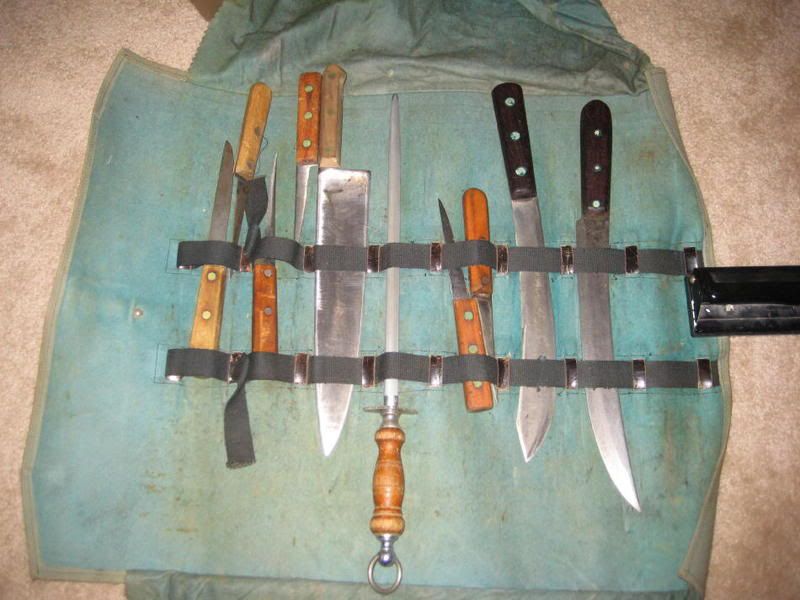
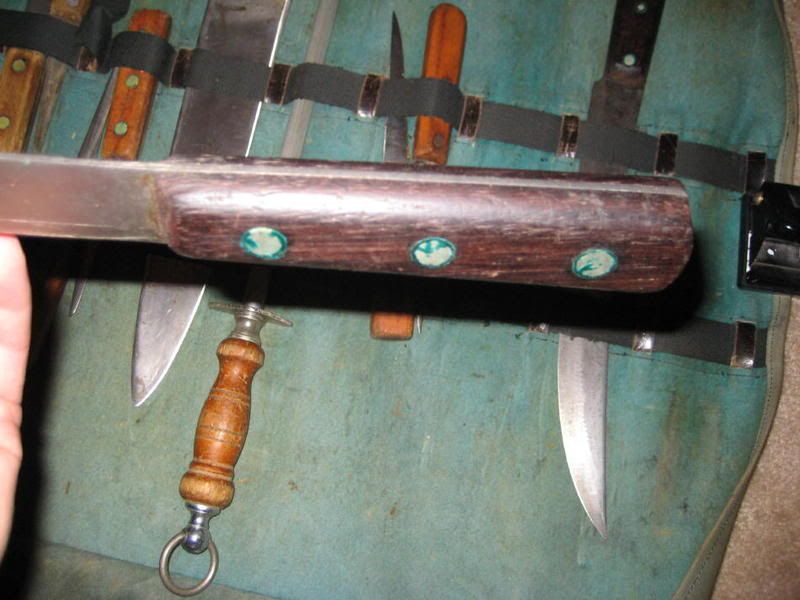
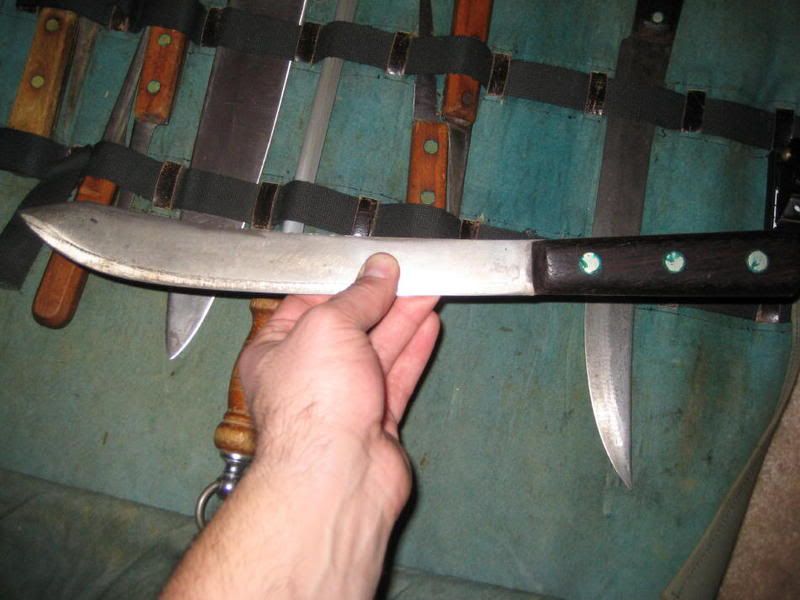
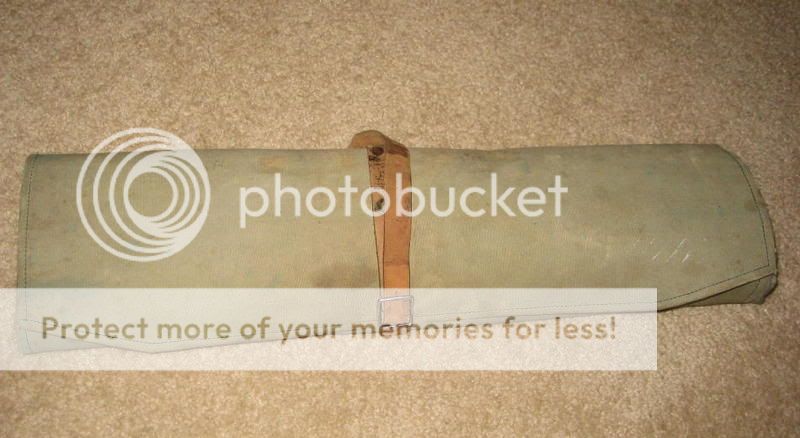
Ask and you shall receive, my friend. If I can get this one right, I'll be psyched if I can he rest of the handles done! I use the sharpening steel FREQUENTLY!

Open_Roll.jpg


Handle_4.jpg


Handle_3.jpg


Roll_Closed.jpg
 
Wow what a nice set of butcher knives ! :) I stand corrected the green stuff is felt huh :)

I think my favorites are two rightmost in the carrying case.

That's a project I would love to do. :thumbup:
 
Thanks for your kind words. I really love the fact they were knives from my grandfather's shop, it makes them that much more special.

I'm in agreement - I like the two on the right as well. The one I really want to get right for me is the one second from the right. I think it would be awesome for watermelon and other melons as well as LARGE cuts of meet.

I'll keep you guys updated on the progression of this project.
 
The one I really want to get right for me is the one second from the right

That's my favorite out of all them too.

When my Grandma passed I inhereted two big 'kitchen' knives from her , one an old Ka-Bar that could easily be used as a camp/brush knife ( that I re-handled in desert ironwood ) and a slightly shorter PAL , the PAL takes a ridiculously scary edge :D

I also inhereted a bunch of 'grape knives' that on more than occasion I have cut myself with.
One of which I rehandled in stag but it looks a little odd so in my drawer it sits. :D
 
That's my favorite out of all them too.

When my Grandma passed I inhereted two big 'kitchen' knives from her , one an old Ka-Bar that could easily be used as a camp/brush knife ( that I re-handled in desert ironwood ) and a slightly shorter PAL , the PAL takes a ridiculously scary edge :D

I also inhereted a bunch of 'grape knives' that on more than occasion I have cut myself with.
One of which I rehandled in stag but it looks a little odd so in my drawer it sits. :D

Let's see some pics, bro!


I think you're getting hooked. :D

Yes sir, I believe I am. :thumbup: Let's hope I can get it right.
 
I think that it is awesome that you have all your Grandads butcher knives. The best knives are the ones that have been passed down through the generations!!
 
Yes sir, I believe I am. :thumbup: Let's hope I can get it right.

I think you picked a great way to get started! Your Grampa would be proud that you're restoring his prized knives. Good carbon blades like that are getting hard to find, which s a shame because they generally take a very fine edge and are easy to keep sharp.

By all means get your vise mounted up as solid as you can! It makes a huge difference. You can work faster and keep things straighter when your work-piece is firmly vised-up.
Pad the jaws of the vise with scraps from an old leather belt to prevent damage to the work-piece.

Alternately, you can clamp the blade to a table near the edge, at the corner. Put a scrap board under the blade so your handle fits on the table, too. If there's a gap between the handle and table, you can shim it with cardboard or something so it doesn't flex or wobble. This can actually be more stable than having the handle sticking out of the end of the vise.

Don't be stingy with the masking tape wrapped around the blade to protect it. More is better. The blue painter's tape leaves less residue to clean up when you're done.

Have fun!
 
I think the green stuff your seeing might be brass mold ( for want of the proper term) no big deal , polishes off easy enough.

It's actually called 'verdigris'. It's harmless, and should wipe off with any good solvent. (A long time ago, verdigris was used as a pigment.)

thx - cpr
 
Last edited:
So I've got the handle pretty well cleaned up and there are a bunch of gaps between the handle and the tang. Nothing huge but they are there.

I saw a tip about using superglue to fill the gaps. Is that the best option? Do I just fill the gaps and then sand off the excess?
 
It's actually called 'verdigris'. It's harmless, and should wipe off with any good solvent. (A long time ago, verdigris was used as a pigment.)

thx - cpr

I learnt somethin new ! :) Thanks bro. :thumbup:


So I've got the handle pretty well cleaned up and there are a bunch of gaps between the handle and the tang. Nothing huge but they are there.

I saw a tip about using superglue to fill the gaps. Is that the best option? Do I just fill the gaps and then sand off the excess?

Well superglue is thin , it may run ? Epoxy might be a better option , you can add various colorants to it so it will blend in better.
i.e. I have used bubinga dust in epoxy to fill the fileworked gap on a knife I made , with bubinga scales. Looked pretty nice when it was done.
 
Good suggestion, T.

What type of epoxy are you using? Will pretty much any type of epoxy work?
 
Back
Top