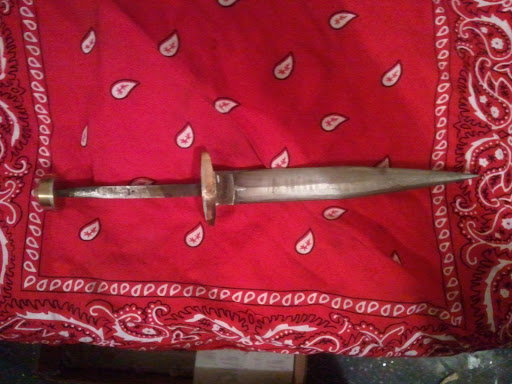
Here is a great way to do stacked leather handles:
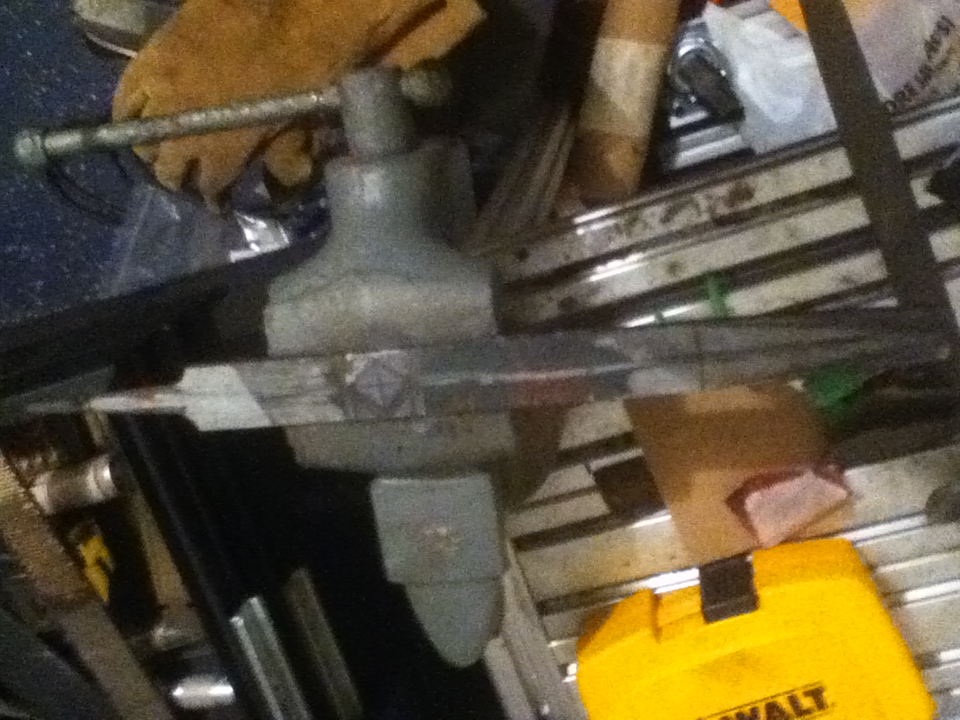
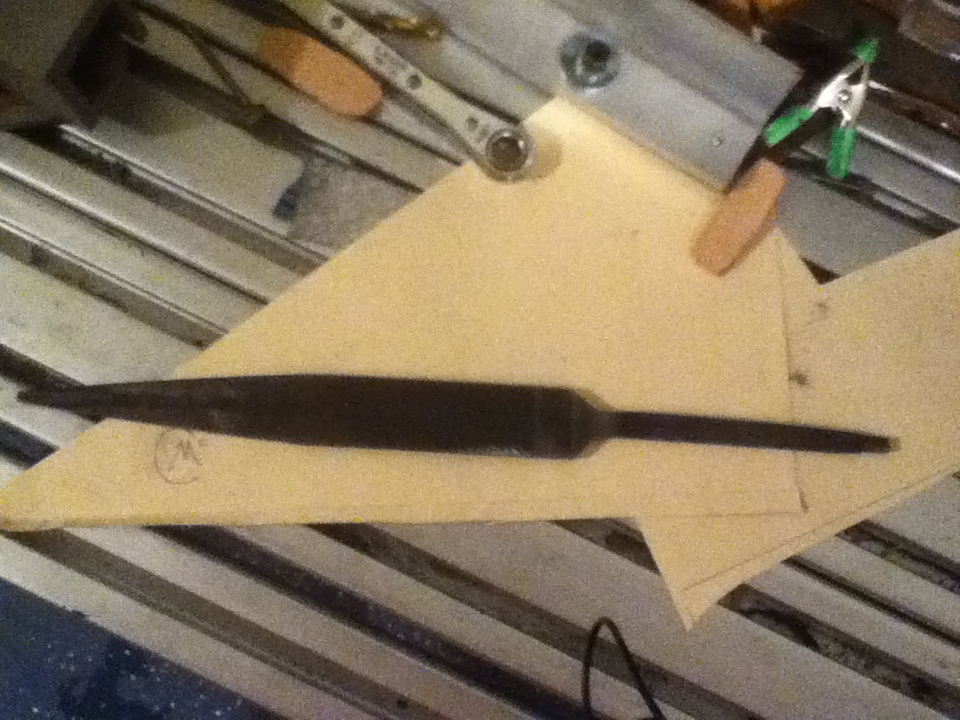
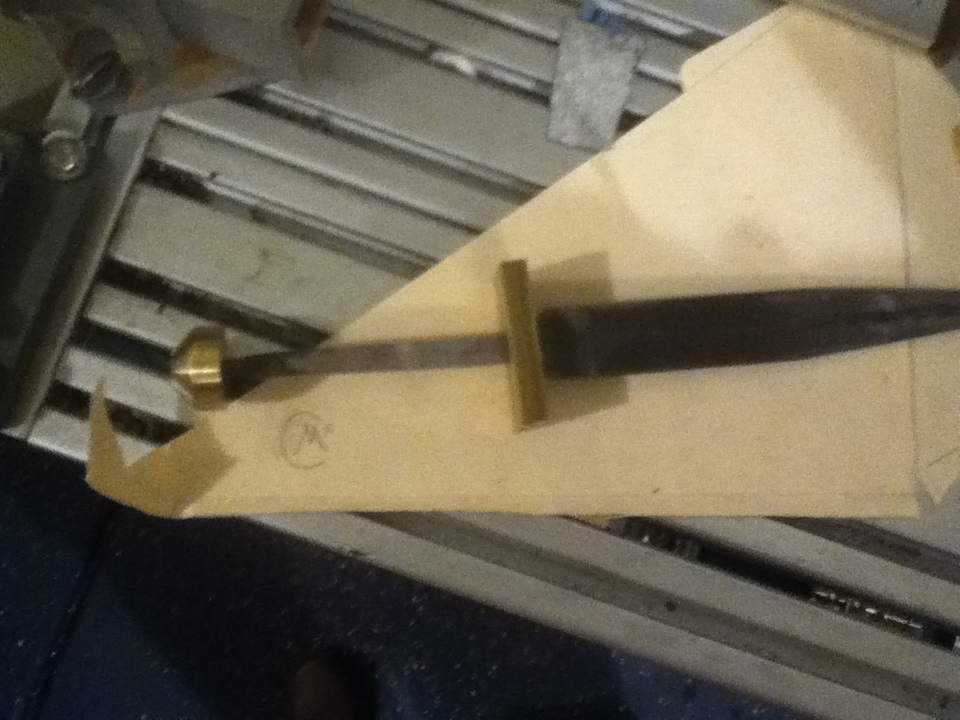
Make a replica tang in mild steel with a good shoulder for the guard. It does not need to be fancy, just a pretty close match for the knife/sword tang in measurements. Leave a 2-3" extension as would take the pommel nut, and thread it for a wing nut, say 1/4-20. Leave enough "blade" section to hold onto while assembling the handle. About 6" is fine.Make a simple guard like a big washer with a slot. Make a similar round piece that fits the top of the tang where the handle will end.
Cut the leather into rectangles or squares (no need to make rounded) , and slot them so they fit the tang. Slide them on the actual knife/sword tang as you cut them, to make sure they fit.The stack should be about 3/4" longer than the desired handle length.The fit does not need to be all that precise. The hole will be filled in the next steps. You can just cut the slots with an X-Acto blade. Do any dying now, and let fully dry before assembly.
Keeping the leather pieces in order (if the slots vary in size to fit the tang), slide the stack onto a piece of wire or dowel. Set aside the knife/sword blade.
Coat the two washers and the mandrel with some sort of epoxy release agent. You can dip them in melted wax, or coat them with several coats of car wax.This is to allow the mandrel to be removed once the handle is cured.
Mix up a batch of slow set epoxy in a plastic container wide enough to easily reach into.You want one hour minimum set time, longer is better. What works best is slow set fiberglassing resin. It is thin and sets reasonably slow. I recommend System Three Clear Coat. Woodcraft Supply carries it. It can be thinned,too.
Whatever you use, mix enough to do the whole handle in one operation.
Put on rubber gloves. You will need to have them.
Have a helper drop the leather pieces in the epoxy one at a time. You will dunk it in the epoxy, wipe off the excess, and slip it on the mandrel, sliding it down to the guard washer.While you do this the helper will drop in the next leather piece. This will go really fast once you get the rhythm going. Continue until all the leather is on the mandrel. Slip on the top metal washer, wipe off the threads with a acetone soaked rag, and thread on the wing nut. Hand tighten it. Wipe off the excess epoxy from the leather and the mandrel parts. Put the "Blade" part in a vise, and snug down the handle by tightening the nut. You don't need to go any tighter than necessary to compress the leather pieces snugly together. When the epoxy is partly set,remove the wing nut, wipe the exposed threads on the mandrel well with acetone, and give the threads a little spritz of WD-40, and put the wing nut back on. This will make removal of the wing nut much easier later.
Check the epoxy pot regularly, and when it is set, but not cured (it should just have just stopped being real tacky), take off the nut , and screw on a piece of threaded tubing about 1" long (1/4-20 coupling nut works perfect). This is just for the purposes of striking the end without damaging the threads, and nearly anything threaded will work. I just like to have about 1/2" of the threads engaged. Loosen the vise and set the "guard" washer against the jaws, with the "blade" loosely between them. Strike the threaded end gently with a mallet. It usually comes loose easily. If needed, strike a little harder. You are not going to take it off, you just want to break any grip the epoxy might have. Once it has moved about 1/2" move it in and out a few times, put the nut back on and tighten things back up. Set aside to cure for a couple days at 70-80F.
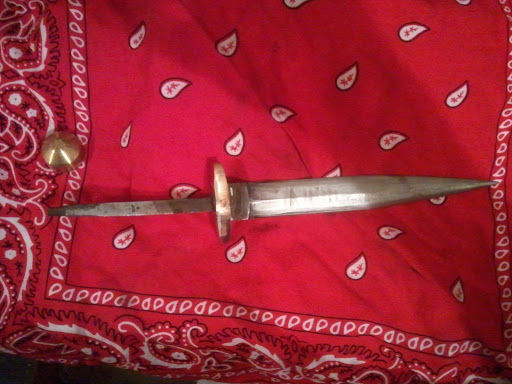
Once all is hardened, take off the mandrel ( you may need to drive it out again) and clean the mandrel well with acetone. Put the handle back on the mandrel, leaveing the metal washers off, and rough shape it on the belt grinder. Now, test the handle on the actual sword tang. If all is well, it should be a tight fit. If it is too snug, file the inside with a riffler file. Shorten the length to the exact fit desired. Put back on the mandrel for further shaping and sand to final shape, going to about 400-600 grit. There will be exposed areas of un-epoxied leather in the center of each piece, so work in a protective and conditioning coat of bag balm ,or similar leather treatment, and let dry. Give it a buff with a soft cloth, and assemble the knife/sword.
This make a very strong and grippy sword/knife handle. The handle is also removable for a takedown. This is the only practical way to do a D-guard with a stacked leather handle.