

I am withdrawing this for now because the watch is running slow and I’m going to have it serviced.
Up for sale is this ultra rare 130th anniversary Seiko Ananta diver. This is an automatic chronograph which is my favorite complication. I am the second owner of this watch. I am going to cut and paste info about the watch below from a watch website and put my own pictures and videos. This watch has some wear on the clasp. There a dot of wear on the folding part of the clasp that says Seiko, and some wear along the side of the deployment thing. Otherwise it is pretty close to new. Looks amazing. See pics and videos.
——
To commemorate Seiko's 130th Anniversary, Seiko brought two of Japan's oldest forms of artistry to the Ananta series, applying them to one very special limited edition... SRQ013.

Karatsu or "blade" polishing is something found the rest of the Ananta brand as well as Grand Seiko. For those not familiar, the Karatsu technique is the beautiful, yet labor intensive, polishing you will generally find in high quality katana blades. This over 800 year old craft is done by hand and leaves the blade (or watch) with a true mirror finish. For the blades, this is used to help defensively to show reflections around corners and offensively to reflect sunlight and blind enemies.
What truly separates this piece from most others in the Ananta series (exception being SPS009), is that Seiko uses an in house, black hard coating process similar to PVD coating. This gives the case and bracelet a beautiful black matte finish. The Karatsu polishing on this black coating gives the piece an unusual, polished lacquer type finish in certain areas of the watch. It creates tremendous detail and also helps lead me into the next artistic attribute of the piece, the dial.
——-
The bezel has two superficial scratches which you can see at certain angles. One is at about the 34 hash mark and the other is by 12-12:02 or so.
More cut and paste copy to follow:
——-
The dial of the SRQ013 is done by Mr. Isshu Tamura, who is highly renowned for his traditional Kaga Maki-E lacquer & Yamanaka Maki-E lacquer ware. The Kaga Maki-E lacquering process dates back as far as the 1620's and is still used prevalently today. More commonly used in dinner ware, the black lacquer is hand painted on, layer after layer, and then polished out completely hand. As you would guess, it is very time consuming and takes true dedication. Overall, it gives a deep, jet black and glossy finish to the product. Mr. Tamura has individually applied this process to all 700 dials in this limited edition.
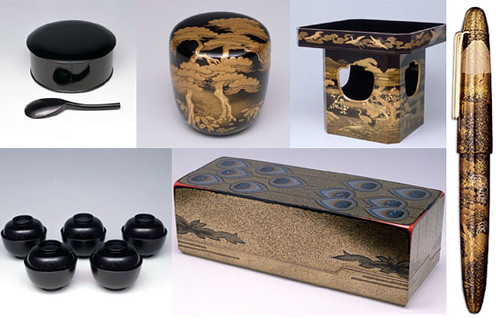
Traditionally, you will see most Kaga Make-I lacquer items with gold or silver powder decorations, even mother of pearl. Mr. Tamura has an extensive background with many different items, but his work with Sailor pens of Japan, which started in 1992, is some of the most amazing I've seen. On the right hand side of the image above, you will see his "Sessho Fuji" Winter limited edition of 50 from 1997. There were 4 variations (each to represent one season) and were near $5,000 per pen.
This Seiko is not Mr. Tamura's 1st dial creation in the watch world. His work, generally more elaborate, can be seen in some high-end Swiss manufactures, such as BOVET. For Seiko, however, there was intention behind the pure black dial in the Ananta. The black lacquer gives the piece much clarity and legibility, which would be lost if there were gold decorations applied. The dial truly does have tremendous depth. It allows the lumed indexes and hands to really jump out of the dial. One of my most favored attributes of the dial is that if you look very close, under bright light and with an eye loupe, you can see light brush strokes in the dial. This, to me, gives the dial the true "hand made" feel and makes each dial unique to itself.
Mr. Tamura is certified as a Traditional Craft Artist by the Minister of International Trade and Industry, a member of the Kanazawa Lacquer Art Association, and a Trustee of the Kanazawa Lacquer ware Trade Association. His studio is in Kanazawa, one of the most renowned regions for this traditional craft.
The SRQ013 is the housing behind a new and spectacular movement labeled the 8R39. Seiko basically took a Grand Seiko escapement and put it to use in the highly regarded 8R28 (an in-house manufactured self-winding chronograph), creating the 8R39. Consisting of SPRON 610 for the balance wheel and MEMS generated escapement gear and pallet fork, the piece is built to sustain the extreme conditions of diving. It is highly shock resistant and anti-magnetic. The SPRON 610 alloy (developed in-house by Seiko) is one of the leading quality balance springs on the market. The MEMS technology provides for smoother, stronger constructed parts, helping prevent maintenance in the future.
Another unique quality to the movement is how it is fixed to the case. This model uses 3 clamps to secure the movement which helps add to the shock resistance. Most other chronographs only use 2.
——-
This 44mm model was a Limited Edition of 700 pieces with only 35 in the US. Retail was $4,700.
WITHDRAWN
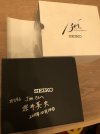
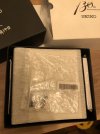
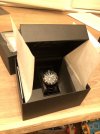

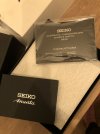
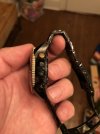
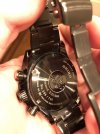
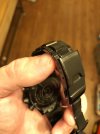
Up for sale is this ultra rare 130th anniversary Seiko Ananta diver. This is an automatic chronograph which is my favorite complication. I am the second owner of this watch. I am going to cut and paste info about the watch below from a watch website and put my own pictures and videos. This watch has some wear on the clasp. There a dot of wear on the folding part of the clasp that says Seiko, and some wear along the side of the deployment thing. Otherwise it is pretty close to new. Looks amazing. See pics and videos.
——
To commemorate Seiko's 130th Anniversary, Seiko brought two of Japan's oldest forms of artistry to the Ananta series, applying them to one very special limited edition... SRQ013.
Karatsu or "blade" polishing is something found the rest of the Ananta brand as well as Grand Seiko. For those not familiar, the Karatsu technique is the beautiful, yet labor intensive, polishing you will generally find in high quality katana blades. This over 800 year old craft is done by hand and leaves the blade (or watch) with a true mirror finish. For the blades, this is used to help defensively to show reflections around corners and offensively to reflect sunlight and blind enemies.
What truly separates this piece from most others in the Ananta series (exception being SPS009), is that Seiko uses an in house, black hard coating process similar to PVD coating. This gives the case and bracelet a beautiful black matte finish. The Karatsu polishing on this black coating gives the piece an unusual, polished lacquer type finish in certain areas of the watch. It creates tremendous detail and also helps lead me into the next artistic attribute of the piece, the dial.
——-
The bezel has two superficial scratches which you can see at certain angles. One is at about the 34 hash mark and the other is by 12-12:02 or so.
More cut and paste copy to follow:
——-
The dial of the SRQ013 is done by Mr. Isshu Tamura, who is highly renowned for his traditional Kaga Maki-E lacquer & Yamanaka Maki-E lacquer ware. The Kaga Maki-E lacquering process dates back as far as the 1620's and is still used prevalently today. More commonly used in dinner ware, the black lacquer is hand painted on, layer after layer, and then polished out completely hand. As you would guess, it is very time consuming and takes true dedication. Overall, it gives a deep, jet black and glossy finish to the product. Mr. Tamura has individually applied this process to all 700 dials in this limited edition.
Traditionally, you will see most Kaga Make-I lacquer items with gold or silver powder decorations, even mother of pearl. Mr. Tamura has an extensive background with many different items, but his work with Sailor pens of Japan, which started in 1992, is some of the most amazing I've seen. On the right hand side of the image above, you will see his "Sessho Fuji" Winter limited edition of 50 from 1997. There were 4 variations (each to represent one season) and were near $5,000 per pen.
This Seiko is not Mr. Tamura's 1st dial creation in the watch world. His work, generally more elaborate, can be seen in some high-end Swiss manufactures, such as BOVET. For Seiko, however, there was intention behind the pure black dial in the Ananta. The black lacquer gives the piece much clarity and legibility, which would be lost if there were gold decorations applied. The dial truly does have tremendous depth. It allows the lumed indexes and hands to really jump out of the dial. One of my most favored attributes of the dial is that if you look very close, under bright light and with an eye loupe, you can see light brush strokes in the dial. This, to me, gives the dial the true "hand made" feel and makes each dial unique to itself.
Mr. Tamura is certified as a Traditional Craft Artist by the Minister of International Trade and Industry, a member of the Kanazawa Lacquer Art Association, and a Trustee of the Kanazawa Lacquer ware Trade Association. His studio is in Kanazawa, one of the most renowned regions for this traditional craft.
The SRQ013 is the housing behind a new and spectacular movement labeled the 8R39. Seiko basically took a Grand Seiko escapement and put it to use in the highly regarded 8R28 (an in-house manufactured self-winding chronograph), creating the 8R39. Consisting of SPRON 610 for the balance wheel and MEMS generated escapement gear and pallet fork, the piece is built to sustain the extreme conditions of diving. It is highly shock resistant and anti-magnetic. The SPRON 610 alloy (developed in-house by Seiko) is one of the leading quality balance springs on the market. The MEMS technology provides for smoother, stronger constructed parts, helping prevent maintenance in the future.
Another unique quality to the movement is how it is fixed to the case. This model uses 3 clamps to secure the movement which helps add to the shock resistance. Most other chronographs only use 2.
——-
This 44mm model was a Limited Edition of 700 pieces with only 35 in the US. Retail was $4,700.
WITHDRAWN
Last edited: