

- Joined
- Sep 28, 2005
- Messages
- 4,527
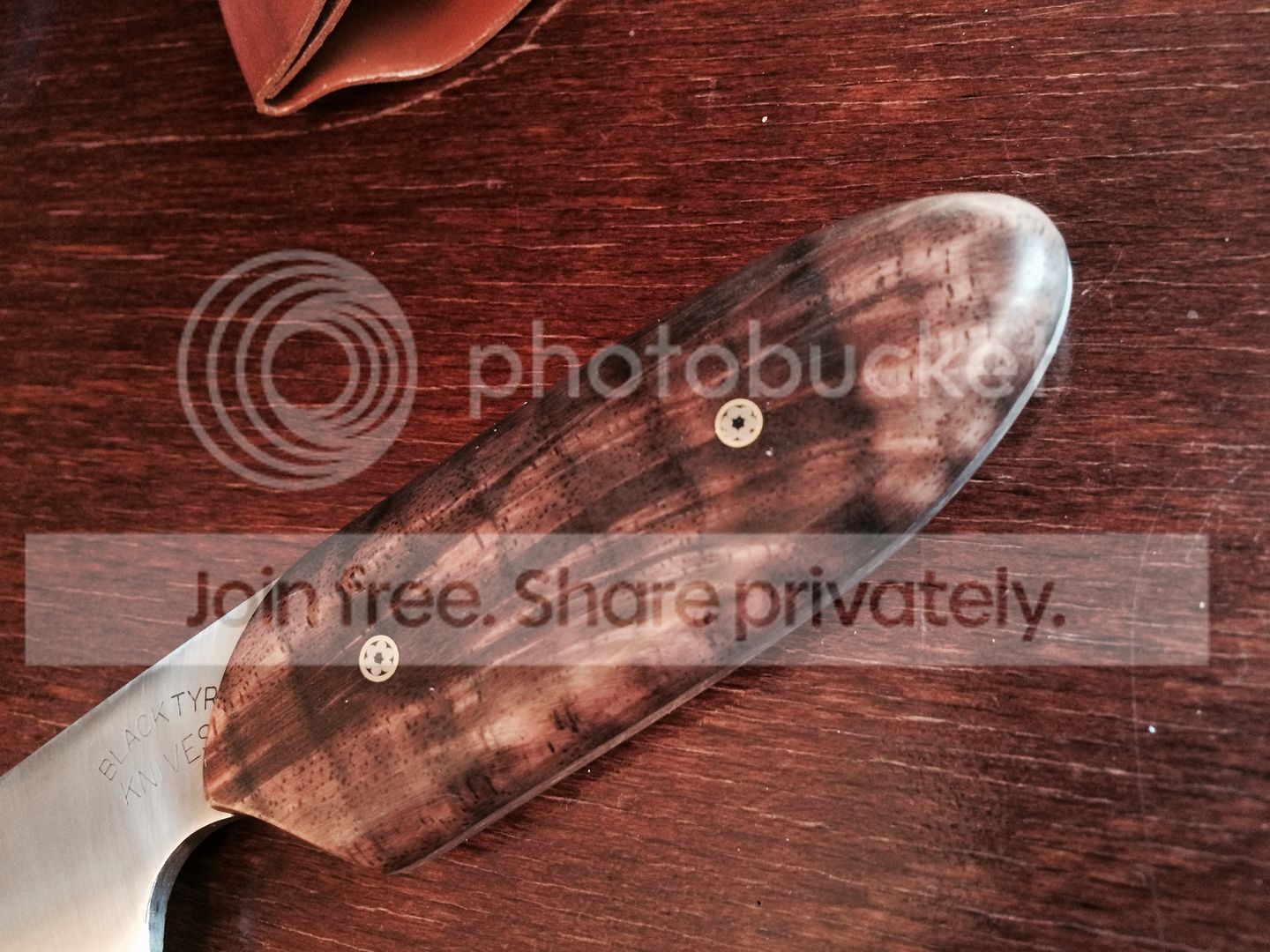
I've been away from active making for a couple of years and finished my first of the year at the beginning of last month. Walnut scales were chosen and as I was looking through the threads on gunstock finish etc, I noticed one conversation that stated that it was really not needed or useful taking Walnut past a 600 grit finish.
I was wondering if there has been a list of woods and when it's wasted labour to continue sanding. I think this could help people not waste money/time/effort, as I probably would have taken the walnut to 1000 or so at least, but was very happy with the results at 600
Seen here (critiques welcome) both sides cut from the same piece of wood, I was surprised at some of the hidden rays that appeared:

So if walnut is best finished to 600 grit, is there rhyme or reason for other woods? I would assume chatoyant woods such as padauk, maple, koa, gidgee, snake wood etc are best at the 1500-2000 grit finish, while figured non chatoyant woods are better stopped lower? Such as cocobolo, spalted wood, zircote, bocote perhaps? Is in more of a species/family determination. I've read that certain woods only start to pop at high grit as well, so obviously do not want to stop too soon as well.
I'm looking to improve the quality of my finishes now that I'm back playing with making dust, but want to be efficient as well. I've taken the little snake wood handled knife I'm working on to 1500 so far, hopefully to do the wood Justice!
Any charts/lists/ideas are very welcome. I searched but only find the common threads of "what woods need stabilizing/What type of finish used" but nothing stating how different woods take different levels of sanding/prep.
My client showed up early so I have to go, but hope I've explained myself well!
I was wondering if there has been a list of woods and when it's wasted labour to continue sanding. I think this could help people not waste money/time/effort, as I probably would have taken the walnut to 1000 or so at least, but was very happy with the results at 600
Seen here (critiques welcome) both sides cut from the same piece of wood, I was surprised at some of the hidden rays that appeared:
So if walnut is best finished to 600 grit, is there rhyme or reason for other woods? I would assume chatoyant woods such as padauk, maple, koa, gidgee, snake wood etc are best at the 1500-2000 grit finish, while figured non chatoyant woods are better stopped lower? Such as cocobolo, spalted wood, zircote, bocote perhaps? Is in more of a species/family determination. I've read that certain woods only start to pop at high grit as well, so obviously do not want to stop too soon as well.
I'm looking to improve the quality of my finishes now that I'm back playing with making dust, but want to be efficient as well. I've taken the little snake wood handled knife I'm working on to 1500 so far, hopefully to do the wood Justice!
Any charts/lists/ideas are very welcome. I searched but only find the common threads of "what woods need stabilizing/What type of finish used" but nothing stating how different woods take different levels of sanding/prep.
My client showed up early so I have to go, but hope I've explained myself well!
Last edited:


